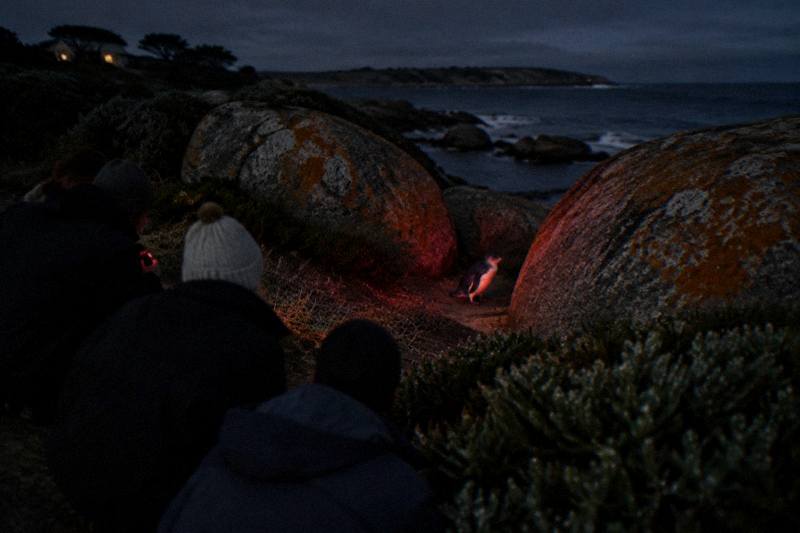
What Time Of Day Do Penguins Come Ashore?
Little penguins leave the water at last light and most come ashore in small groups within about an hour of darkness. Here is how dusk timing works in Tasmania and when the guided tours at Bicheno and Low Head actually start.
What Time Of Day Do Penguins Come Ashore?
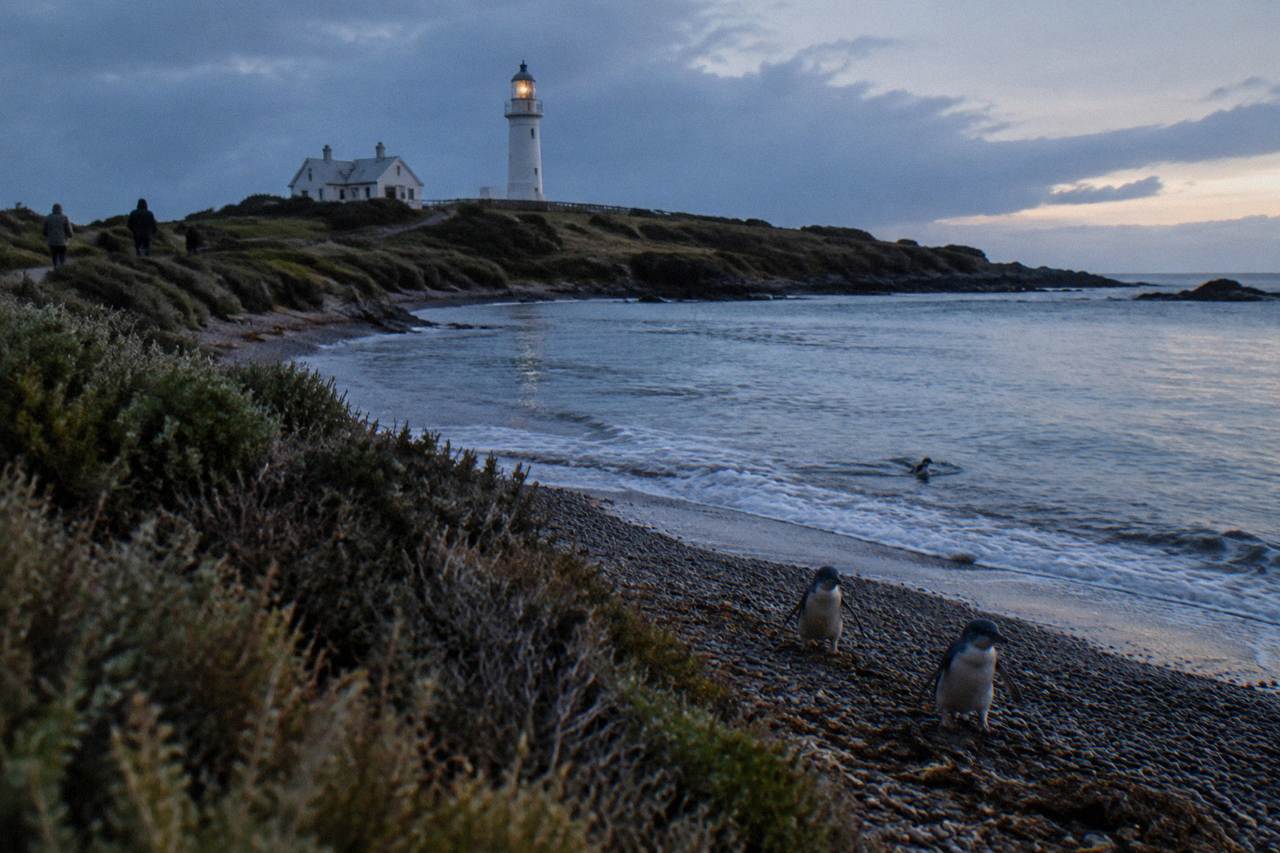
Little penguins leave the water at last light, and most birds come ashore in small groups within about an hour or so of darkness. There is no fixed clock time, because the trigger is light level, not the hour. In practice that means early evening in winter and close to 9pm at the height of a Tasmanian summer. If you're planning a shoulder-season trip, the guide to seeing penguins in Tasmania in May explains what still runs once the winter crowds thin out.
That single fact explains almost everything about planning a penguin night. The birds have spent the day fishing at sea, sometimes dozens of kilometres out, and they time their return so the fading light hides them from predators. The first raft of penguins usually appears on the water just after the sun drops below the horizon. Then they arrive in batches, a handful at a time, hurrying across the sand to their burrows. If you'd like more ideas for filling the daylight hours before the penguins arrive, the guide to other things to do in Bicheno has plenty of suggestions.
The state's own wildlife guidance is plain about the mechanics: penguins leave the water at last light, and a disturbed bird will stay at sea longer, which stresses it and delays feeding of chicks. That is why every serious viewing site in Tasmania, from the Tasmania Penguin Tours roster through to the free volunteer platforms, runs its sessions around dusk rather than around a convenient dinner hour. The full set of rules for watching without causing harm is in the penguin watching guidelines from NRE Tasmania.
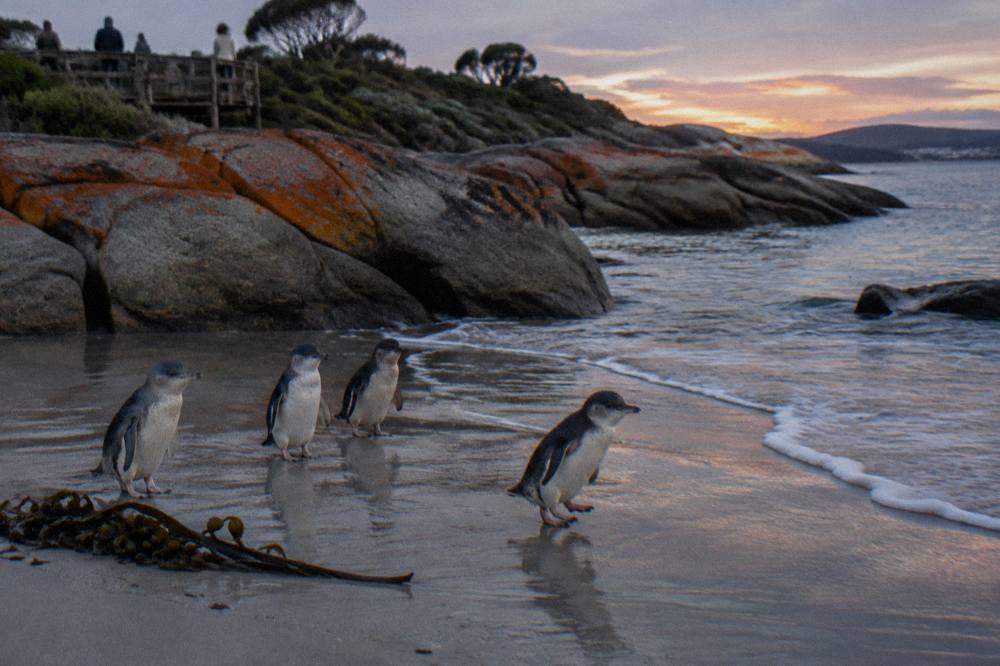
It also explains why tour operators publish departure windows instead of exact times. Bicheno's operator lists departures between 5:00 and 7:30pm in its Feb to Aug season and between 7:30 and 9:30pm from Sep to Jan, with the exact start confirmed at booking because it is adjusted to dusk. Low Head runs every night just after sunset, year-round. Neither is being vague to be difficult; they are chasing a moving target. If you're planning your visit around this shifting schedule, the seasonal guide to Bicheno penguin viewing explains how the calendar and dusk timing interact throughout the year.
If you are still choosing where to see this happen, the two guided options on this site cover both coasts and both formats.
How Does Sunset Timing Change Through The Year?
Because penguins follow light rather than clocks, the viewing time swings by well over an hour across the Tasmanian year. Sunset in the Hobart area sits near 6:20pm in early October, peaks around 8:50pm in late December and early January, and falls back to about 7:30pm by late March. Winter sessions start even earlier. If you're planning around Burnie's little penguins, the month-by-month guide to Burnie penguin arrival times shows how last light shifts through the year.
Those figures are approximate examples for the Hobart area, and the exact minute varies with your location and the date. But the shape of the curve is what matters for planning: a summer tour is a genuinely late night, especially with children, while a winter tour can start before you have finished dinner. Add the roughly hour-long window after darkness for the main arrival, plus the tour's own running time, and a midsummer Bicheno night can end close to 10:30pm.
| Period | Approximate sunset, Hobart area | What it means for viewing |
|---|---|---|
| Early October | About 6:20pm | Tours start mid evening; arrive by last light |
| Late December to early January | Up to about 8:50pm | Latest sessions of the year; a late night |
| Late March | About 7:30pm | Comfortable middle ground, moult season underway |
| June to August | Early evening | Winter sessions start soon after 5pm at Bicheno |
For day-specific times, check a sunset table for your exact date and town rather than relying on these rounded examples. The Bureau of Meteorology and any astronomical calendar will give you the minute. What you should take from the table is the planning range, not a promise.
The other thing that shifts with the season is how many birds you are likely to see. The operator framing at Bicheno calls September to January the breeding season with the most activity, and February to August the quieter winter. Moulting runs roughly February to April, when adults stay ashore for two to three weeks replacing all their feathers. None of this changes the hour the penguins come in, but it changes the show you get when they do. Our best months to see penguins in Tasmania guide breaks the calendar down month by month.
What Time Do The Bicheno And Low Head Tours Actually Start?
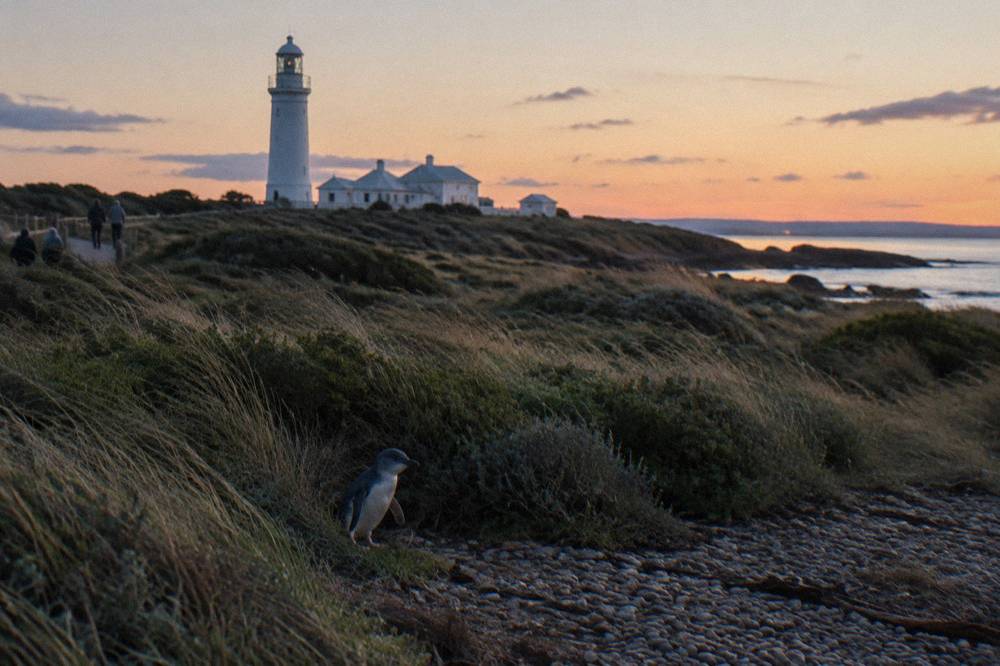
Bicheno's guided walk departs between 5:00 and 7:30pm from February to August, and between 7:30 and 9:30pm from September to January, always adjusted to dusk. Low Head's tour runs every night just after sunset, about an hour of guided viewing, with the Launceston transfer version taking about three hours door to door.
The two products suit two kinds of traveller. The Bicheno tour, booked as the 70-minute guided beach walk, meets at the operator's shop on Burgess Street in Bicheno. From there it is a short bus ride to a private rookery, then a guided walk of about 500 metres over roughly 50 minutes. It runs from $53 per person, is rated 4.8 from 26 reviews, offers free cancellation, and the listing is flagged as often selling out, so booking ahead is genuinely wise rather than marketing pressure. Enclosed comfortable shoes are required and there are no accommodation pickups.
Low Head works on a different rhythm. The tour itself is a small-group experience at the Low Head Coastal Reserve near George Town, with about an hour of guided penguin viewing starting just after sunset, and the version sold on this site adds central Launceston pickup and transfer for a total of about three hours door to door. It runs from $83 per person, is rated a perfect 5.0 from 22 reviews, caps groups at a maximum of 10 guests, and also carries free cancellation. Guides supply the low-intensity lights; visitor torches, selfie sticks and tripods are not allowed, and flash photography is prohibited at both rookeries.
| Tour | Departure window | Time on site | Price and rating |
|---|---|---|---|
| Bicheno guided beach walk | 5:00 to 7:30pm Feb to Aug; 7:30 to 9:30pm Sep to Jan | 70 minutes total, about 50 minutes walking | From $53, 4.8 from 26 reviews |
| Low Head with Launceston transfer | Just after sunset, nightly | About 3 hours door to door, about 1 hour viewing | From $83, 5.0 from 22 reviews |
One practical note for the north coast: the Low Head Pilot Station cafe, accommodation and toilets have been closed since 22 April 2026 pending a new lessee, while the tours and grounds remain open. Plan your dinner and bathroom stops around that. The operator's own tour details are on the Low Head tour site, and the Bicheno operator's FAQ page confirms the seasonal departure windows quoted above.
If you are basing yourself in Launceston and do not want to drive out to the coast at night, the transfer version is the one that removes the dusk-driving problem entirely, which matters in a state where wildlife on country roads after dark is a real hazard.
Why Do Disturbed Penguins Stay At Sea Longer?
A penguin that sees movement, light or noise on the beach will simply turn around and stay at sea, sometimes for hours, because it weighs the risk of crossing open sand against the safety of the water. That delays feeding of chicks and stresses the bird. It is the single biggest reason viewing rules are so strict.
The state guidance describes the mechanism directly: disturbed birds stay at sea longer, which stresses them and delays the feeding of chicks. The rules that follow from it are not bureaucracy. Wear dark clothing so you do not glow against the skyline. Approach from the land side rather than walking up the beach, use existing tracks, and never walk through the colony. Pick a spot at least 3 metres from any burrow, and not blocking one. Settle in before last light, stay quiet, and keep movement to a minimum.
Light is the sharpest tool in the box. Only dim red-light torches are permitted, red cellophane over an ordinary torch is an accepted fix, and the beam should never point toward the water or directly at a penguin. Flash cameras should not be used on the beach at all, and video without spotlights is fine. Dogs and cats are banned under any circumstances, even leashed, because they can kill many birds in a single night. Catching or harassing a penguin is illegal; they are protected wildlife, and anything concerning should be reported to a ranger.
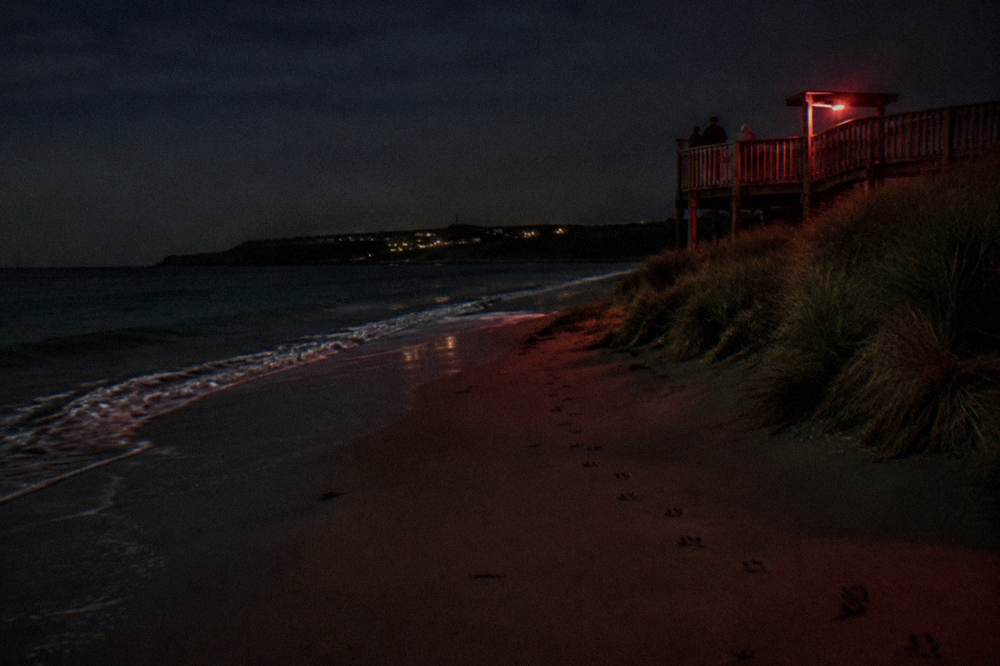
Guided tours exist largely to make these rules easy to follow without thinking. A guide positions the group, supplies the correct lighting, and knows where the birds will cross. At the free volunteer-run sites, such as Lillico Beach near Devonport, the guides on the platform in season hold the red torches and visitors use none at all. If you want the full rule set in one place, including why flash is such a problem, our penguin photography rules page covers it.
What Time Should You Arrive Before The Penguins?
Settle into your viewing spot before last light, not at the moment the first penguin appears. The guidance is explicit: be in position while you can still see, stay quiet, and let the birds arrive around you. For guided tours that means turning up at the stated departure time; for free sites it means arriving around 30 minutes before dusk.
The reason is the disturbance logic in reverse. A group that shuffles into place after the birds have started crossing the sand is a group that sends them back to the water. Burnie's volunteer program, for instance, asks visitors to arrive about 30 minutes after sunset for its free nightly guided viewing from 1 October to 31 March, with guides at the Observation Centre from 30 minutes before dusk. That pattern, arrive early, wait in the dark, is the same everywhere.
What you wear matters almost as much as when you arrive. Warm layers, because you will stand still in the dark for an hour or more, and enclosed footwear, because both guided tours walk you over sand and rough ground. Our what to wear on a penguin tour guide has the full packing logic, but the short version is that a Tasmanian evening at any time of year is colder than the day suggested it would be.
The waiting itself is part of the experience. The first sign is usually noise, a braying call from the dunes, then small shapes bobbing in the swell, then the dash across the sand. Bird numbers peak through the breeding months of September to January and thin out over winter, but the timing of the arrival barely changes. Light runs the schedule.
Does The Season Change When Penguins Come Ashore?
No. The season changes how many birds come ashore and what they do when they get there, but the hour is set by light, so it tracks the sunset all year. Breeding months from September to January bring the most activity, moulting from February to April keeps adults ashore for weeks, and winter nights are quieter but earlier. The same light-driven rule applies at Stanley's Godfreys Beach viewing platform, and the season and sunset timing guide for penguins at Stanley explains what to expect there month by month.
The biology comes from NRE Tasmania's little penguin pages. Breeding commonly starts with nest preparation in winter, clutches of two eggs can be laid as early as May or as late as December, incubation runs about 35 days with parents sharing shifts of up to a week, and chicks fledge at about eight weeks. Breeding has become increasingly asynchronous, with winter breeding more frequent in recent years, including eggs recorded as early as late May or June on the north-west coast and at Low Head.
Moulting is the other fixed point. Adults fatten at sea first, then remain ashore for roughly two to three weeks in the February to April window while they replace every feather, unable to fish and visibly shabby. You can still see penguins in this period, and the moult is genuinely interesting to watch, but the birds are not coming and going the way they do in spring. Our page on seeing penguins in Tasmania in May covers the shoulder-season question in detail.
For the two guided tours, the practical translation is simple. Bicheno's winter departures start as early as 5:00pm because the sun sets early; its spring and summer departures push back to between 7:30 and 9:30pm. Low Head starts just after sunset every night of the year. Pick your season for the crowd level and the hour for your bedtime, and the penguins will handle the rest on their own schedule.
If you are comparing the two guided options side by side, including price, format and which coast suits your itinerary, the choice comes down to this.
Whichever way you book, the evening itself follows the same arc: arrive in daylight, wait in the dark, and watch the sea give the birds back to the beach.
Common Questions About Penguin Timing In Tasmania
What Time Of Day Do Penguins Come Ashore?
Little penguins leave the water at last light, and most birds come ashore in small groups within about an hour or so of darkness. The clock time varies with the season, from around 5pm starts in winter to sessions beginning near 9pm in high summer.
Do penguins come ashore before or after sunset?
After. The birds wait for last light so the low light hides them from predators, and the main arrival happens in the hour after full darkness. The first raft often appears on the water just after the sun goes down.
What time do penguins come ashore in winter?
Much earlier than in summer. Sunset in Tasmania falls in the late afternoon from June to August, so viewing can begin soon after 5pm. Bicheno's winter departures run between 5:00 and 7:30pm, adjusted to dusk.
Why do penguins wait until dark to return to land?
Open sand is the most dangerous part of a penguin's day. Darkness protects them from aerial and shore-based predators while they cross the beach, so they time the return to the fading and failed light.
What happens if penguins are disturbed at dusk?
They stay at sea longer, which stresses them and delays feeding of their chicks. That is why the rules require settling in before last light, staying quiet, keeping 3 metres from burrows, and using only dim red light.
How long should I plan for a penguin viewing night?
Allow about two hours from arrival to finish: roughly 30 minutes to get into position before dusk, the hour after darkness when most birds cross, and time to walk back. The Bicheno tour runs 70 minutes in total; the Low Head tour with Launceston transfer runs about three hours door to door.