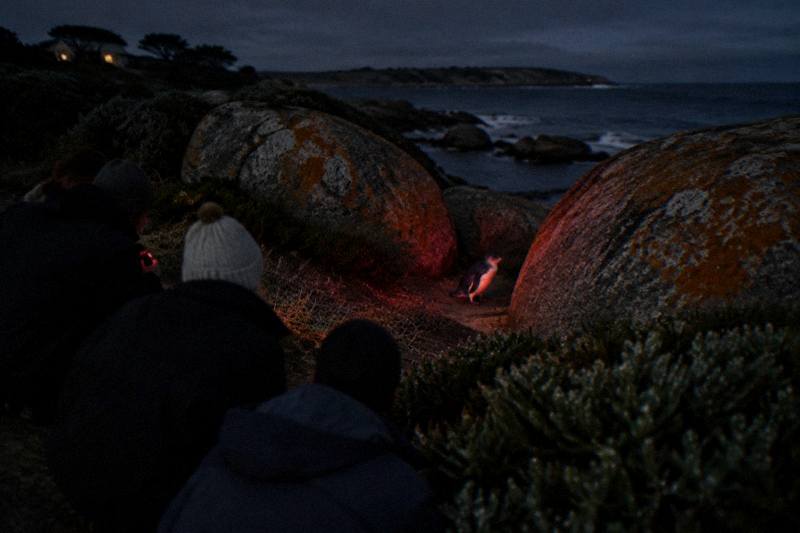
Things To Do In Bicheno: A Full Day Plan That Ends With Penguins
Bicheno is small enough to see in a day and interesting enough to fill one well. This plan stacks the town's free coastal sights, short walks and nearby day trips into daylight hours, then hands the evening over to the penguins.
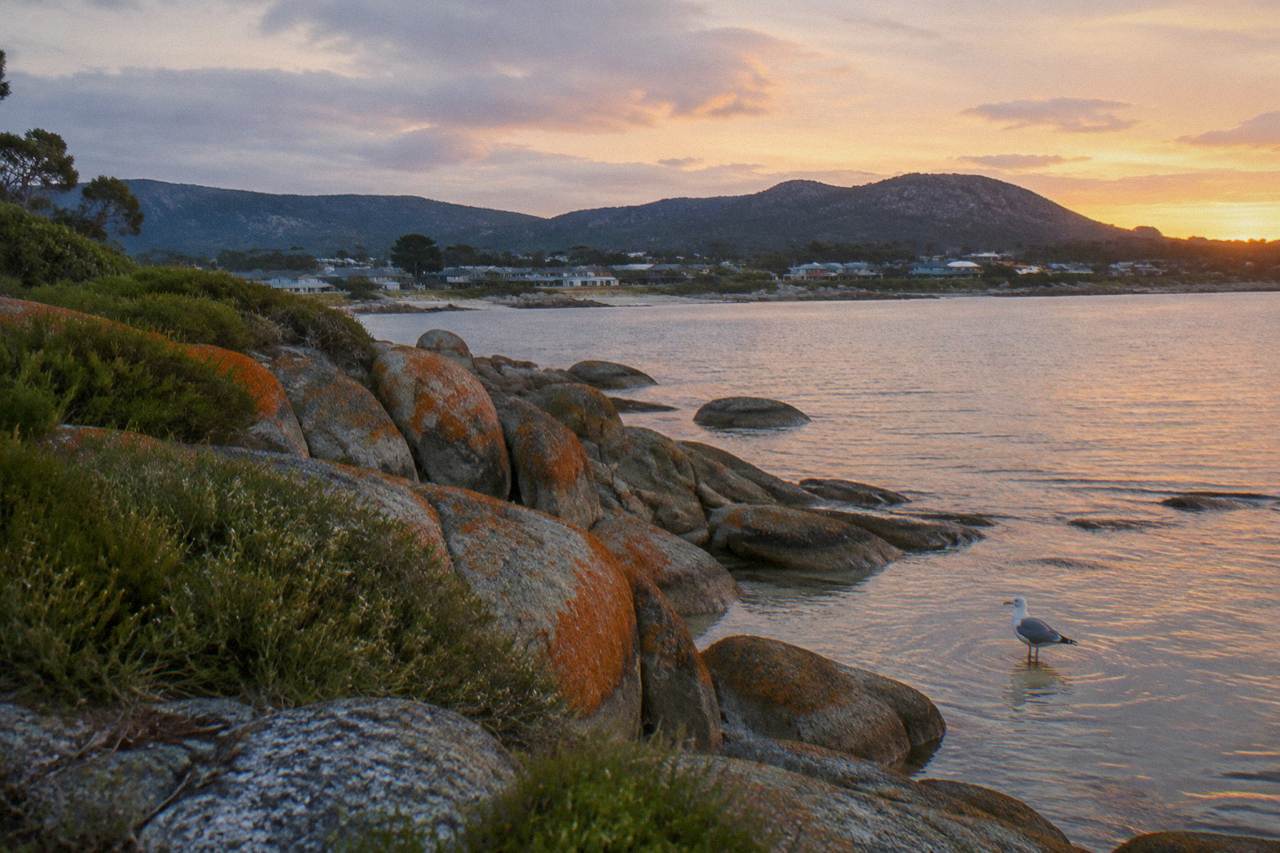
Short answer
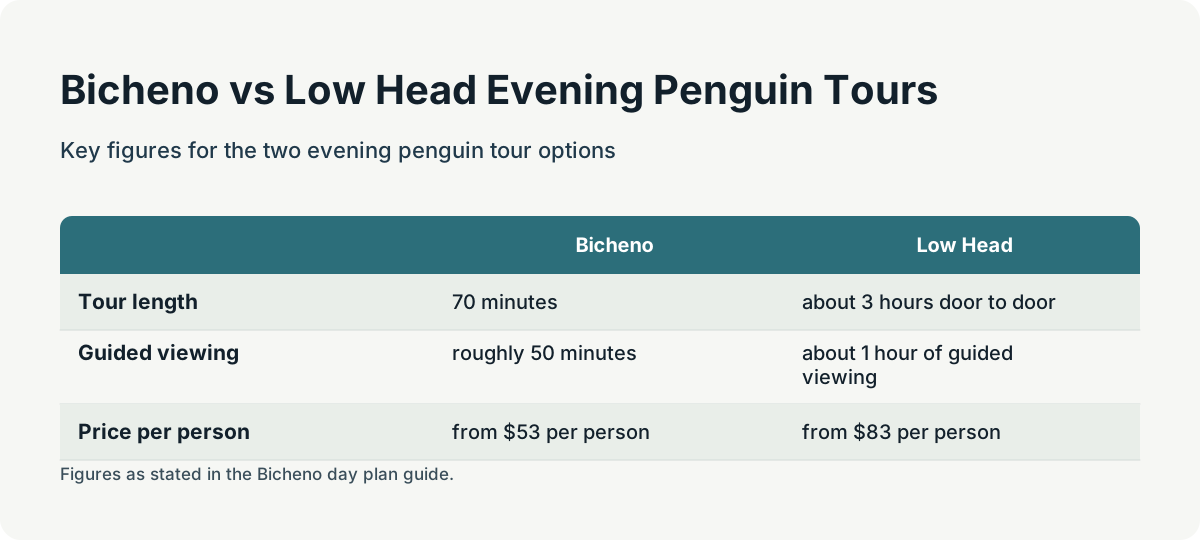
Bicheno packs a full day around three free sights, the blowhole, the foreshore walk and nearby beaches, plus day trips toward Freycinet. The evening belongs to the guided penguin tour: 70 minutes from $53 per person, departing from the operator's shop on Burgess Street, and the listing is flagged as often selling out, so book weeks ahead.
Bicheno sits on Tasmania's east coast with a working fishing harbour, a granite shoreline that produces one of the state's most reliable free spectacles, and a little penguin rookery within a short bus ride of the main street. The town's own penguin operator has run nightly tours since 1992, and the colony it walks visitors through fell to about 40 birds in the early 1990s after dog attacks before recovering through land restoration, a story the operator tells openly. That history is a good reminder of why this town treats its wildlife seriously, and why the practical rules in this guide matter. If you're unsure what to call these birds, the little penguins versus fairy penguins explainer clears up the naming confusion.
The plan below fills daylight hours with things the official sources actually support, then hands the evening to the tour. Plan a Bicheno day around the blowhole, the coastal walk and an evening penguin tour, and check park and road notices before setting out, and it avoids the invented "must do" lists that float around travel content. Where a detail is not verifiable, this guide says so.
What Can You Actually Do In Bicheno In One Day?
Bicheno supports a genuinely full day without any paid attractions: the blowhole and granite coast east of town, the foreshore walking track between the town beach and the gulch boat ramp, the lookouts over the harbour, and the beaches north and south of the centre. Add one half day trip toward Freycinet or Coles Bay, then finish with the evening penguin tour from Burgess Street, 70 minutes, from $53 per person, rated 4.8 from 26 reviews.
That is the honest shape of the place. Discover Tasmania's east coast page names Bicheno as a base for the surrounding region, and the town's own attractions are mostly free, unfenced and open at all times. There is no ticketed museum or paid lookout, and the town does not need one. The scale is the point: the foreshore track, the blowhole and the beaches are all within an easy walk of the shops on Burgess Street, which is also where the penguin tour meets.
The one evening commitment anchors everything else. Tours depart in a seasonal window, 5:00pm to 7:30pm from February to August and 7:30pm to 9:30pm from September to January, adjusted to dusk, with the exact start time confirmed at booking. That means your daytime plan needs to bend around a departure that moves with the seasons: in winter the tour can start before dinner, in midsummer it can start close to 9:30pm and leave the late afternoon free for a longer drive. The deeper planning detail, including the breeding season calendar and what the quieter months look like, is covered in the Bicheno penguin tours guide, which this daytime plan is built to complement.
One practical note before the itinerary: the tour meets at the operator's shop at 1/70 Burgess Street, across from the IGA, with free parking and no pickups from accommodation. Build your day so you end within a short drive or walk of that spot.
How Do You Plan A Day Around The Evening Penguin Tour?
Work backwards from the tour's seasonal departure window: 5:00pm to 7:30pm from February to August, and 7:30pm to 9:30pm from September to January, adjusted to dusk with the exact time confirmed at booking. Book the tour first, because the listing is flagged as often selling out, then fill the day in around that confirmed start time.
The order matters more than the itinerary. The tour is the one thing in this plan that can sell out, it carries free cancellation, and its start time is only confirmed at booking, so it is the anchor, not the afterthought. Everything below assumes you have that slot locked in. In the winter window, aim to be back in town by 4:30pm for a 5:00pm departure; in the summer window you have until roughly 7:30pm, which frees the whole afternoon for Freycinet or a long lunch.
A sample day looks like this, and it bends by season:
| Time block | What to do | Planning note |
|---|---|---|
| Morning | Blowhole and granite coast east of town | Free, unfenced, open at all times; go in daylight |
| Midday | Lunch in town, foreshore walk to the gulch | Track runs between the town beach and boat ramp area |
| Early afternoon | Beach time or the lookouts | No facilities at the rookery, so use toilets in town |
| Late afternoon | Day trip toward Freycinet or Coles Bay, season permitting | Check a mapping service for drive times before committing |
| Evening | Penguin tour from 1/70 Burgess Street | Enclosed shoes required; seasonal departure window applies |
Two things this table hides. First, the tour involves a short bus ride from the shop to a private rookery, then a guided walk of about 500 metres over roughly 50 minutes, so it is a 70 minute commitment with the guide, not an all night one. Second, there are no toilets at the rookery, which is the single most useful thing to know at 7:45pm with children in tow.
If you are building a longer east coast route rather than a single day, the east coast Tasmania itinerary guide places Bicheno in context between Freycinet and the Bay of Fires.
What Can You See At The Bicheno Blowhole?
The blowhole is a natural, unfenced granite formation on the coast east of town, open at all times and free, where ocean swell forces spray through a rock channel. Parks and Wildlife Service advice for granite coastal attractions is to exercise caution with waves and swell and never turn your back on the ocean. It is a five minute stop or a half hour one, depending on the sea.
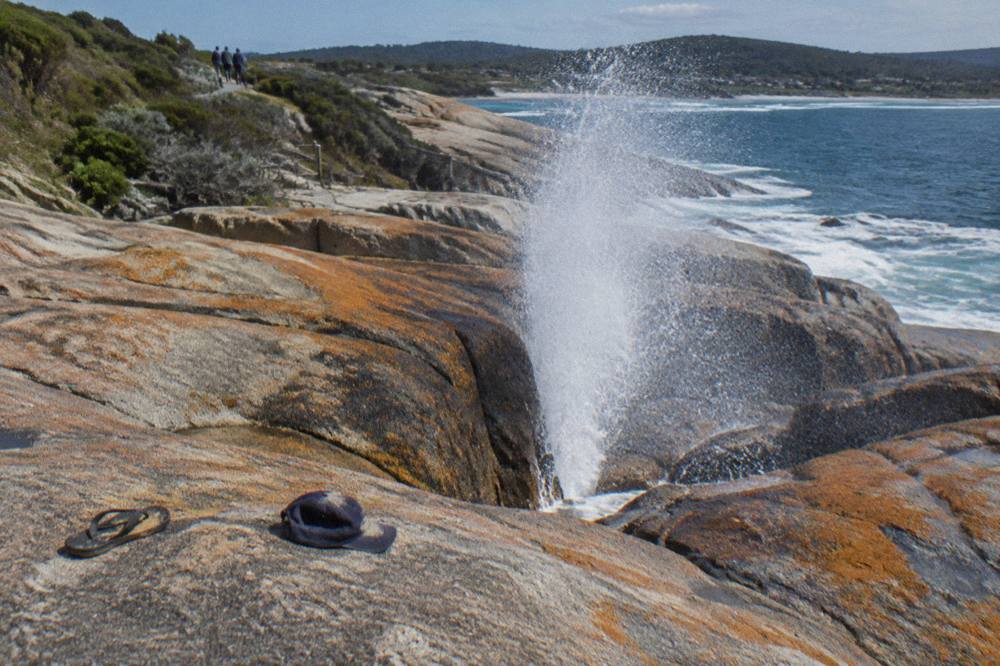
The honest caveat: a blowhole performs on its own schedule. On a flat calm day you may get a damp sigh; on a big southerly swell it can throw spray well above head height. There is no tide table or swell forecast attached to the attraction on the official page, so treat it as a lookout with a bonus rather than a guaranteed show, and pick a day when the sea has some energy in it. The surrounding granite shelf is worth the visit on its own, sculpted and pale, with the ocean working at it constantly.
Safety is the part worth repeating because the site is unfenced. Parks and Wildlife Service advice for coastal granite sites is blunt about waves and swell, and the standing rule for any Tasmanian granite coast applies: watch from a distance, keep your back to the land rather than the sea, and keep children well back from wet rock. Wet granite is slick, and the spray zone is not the place to be reading a phone.
The blowhole pairs naturally with the coastal walk east of town, and it is close enough to the centre that you can walk to it from Burgess Street. Go in the morning while the light is on the water and the day is still cool, then let the afternoon carry you further afield.
Where Are The Best Daytime Walks Around Bicheno?
The main daytime walk is the Bicheno foreshore track, which links the town beach to the gulch boat ramp area along the harbour, an easy, mostly flat stroll with lookout detours. Beyond town, the Douglas Apsley National Park inland of Bicheno offers bush walks, though specific track conditions should be checked with the Parks and Wildlife Service before you go. Neither walk costs anything.
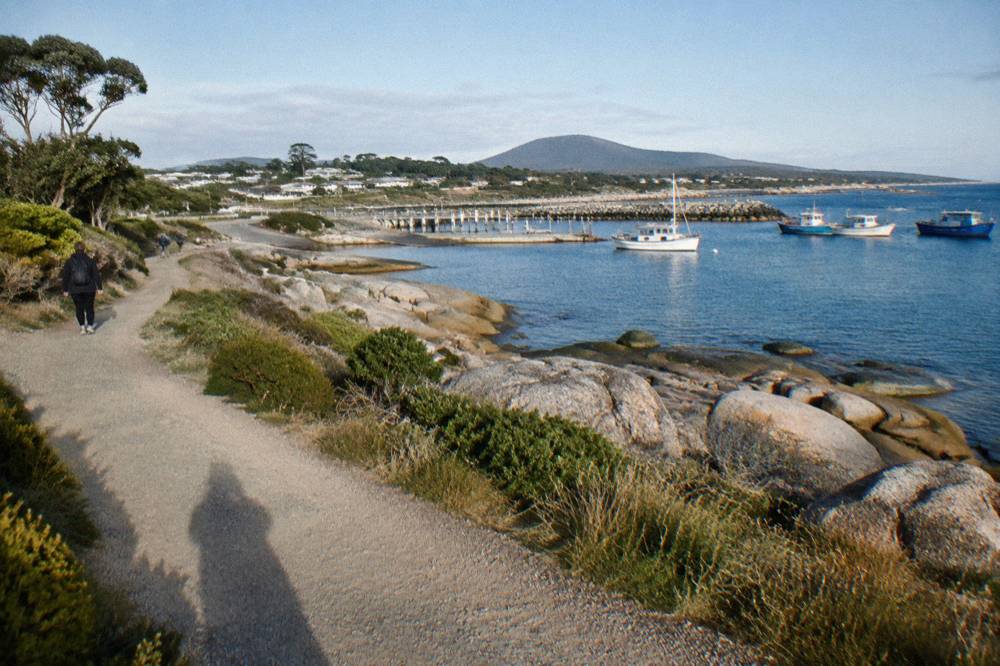
The foreshore walk is the town's spine. References to "The Gulch" in local sources describe Bicheno's natural sea harbour and boat ramp area, used for water tours focused on marine life and seals, not penguins, which is a useful distinction when you are reading brochures. The walk between the town beach and the gulch passes the working side of the harbour, and at the right hour you will see the fishing fleet that gives the town its reason to exist. Allow an unhurried hour with the lookouts.
Inland, the Douglas Apsley area gives the region its bush option, and the Apsley River country is the same country that gives the nearby highway upgrade its name. Track conditions, closures and any pass requirements should be confirmed with the Parks and Wildlife Service rather than assumed; a daily parks pass costs $49.15 per vehicle for up to 24 hours where a pass is required, though a pass requirement has not been verified for the specific coastal viewing sites around Bicheno, which are council, operator or reserve land.
The practical rule for all of these walks: finish them in daylight. Tasmania's wildlife, including penguins, becomes active at dusk, and the standing advice for Tasmanian roads is to drive cautiously at dusk and dawn because of wildlife on the road. That advice is exactly why this plan front loads the walking.
Which Day Trips Work From Bicheno?
The two day trips the official record supports from Bicheno are Freycinet and Coles Bay to the north, reached via the Tasman Highway, and the east coast beaches south of town. One caution applies to the highway itself: the Apsley upgrade package on the Tasman Highway between Bicheno and the Coles Bay Road turn off has been under construction since early 2025, with completion expected 2027, so check the state roadworks register before you drive north.
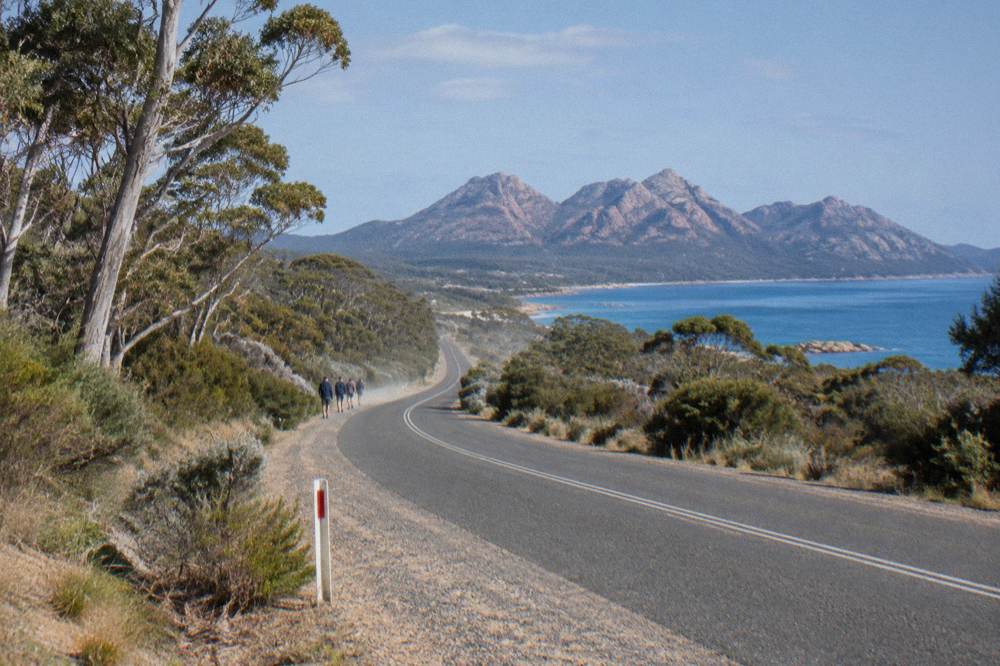
The roadworks detail is not a footnote, it is the planning fact. The Apsley package includes widening, the east coast's first Hobart bound overtaking lane and curve realignments on sections of the Tasman Highway from Bicheno to the Coles Bay Road turn off, plus a corner improvement north of Glen Gala Road, all part of the Great Eastern Drive program. A second package near Triabunna began in April 2026. The state's road improvement pages carry current status, and checking them the morning you drive north is the difference between a relaxed loop and an unplanned hour of lane closures. Allow extra time and check the transport authority's road improvement register for the live picture.
Driving times vary with traffic and road works, so check a map app on the day you travel, whether you are going Bicheno to Freycinet or Hobart to Bicheno. Check a mapping service on the day, and add a margin for roadworks and wildlife. The rest of the planning pages sit on Tasmania Penguin Tours.
The day trip menu, honestly framed:
| Day trip | What it offers | Planning note |
|---|---|---|
| Coles Bay and Freycinet | Granite mountains, beaches, walks | Tasman Highway upgrade works in progress since early 2025; check status |
| East coast beaches south of town | Free, uncrowded swimming and walking | Unpatrolled; standard surf caution applies |
| The Gulch harbour area | Working fishing fleet, boat ramps, water tours focused on seals and marine life | Not a penguin site, despite some brochure confusion |
| Bicheno township itself | Lookouts, foreshore track, shops on Burgess Street | Everything is walkable from the centre |
Worth knowing: Bicheno is the main east-coast penguin tour, with no confirmed operators at Freycinet, Coles Bay or Swansea. Bicheno's operator is the primary east coast option, which is exactly why this plan guards the evening.
For travellers based in Launceston rather than the east coast, the Low Head tour is the equivalent evening product on the north coast: about 3 hours door to door including central Launceston pickup, about 1 hour of guided viewing, from $83 per person, rated 5.0 from 22 reviews, with a maximum of 10 guests. The comparison between the two evenings is laid out in the Bicheno versus Low Head penguin tours guide.
What Should A Day In Bicheno Cost?
The paid core of a Bicheno day is small: the evening penguin tour from $53 per person, plus fuel and food. The blowhole, foreshore walk, lookouts and beaches are free. A parks pass is only required for national park entry, and a pass requirement has not been verified for the coastal viewing sites around Bicheno, so budget for the tour, a meal and a tank of fuel, and the day is otherwise close to free.
The honest budget frame, using only figures the verified record supports:
| Item | Cost | Notes |
|---|---|---|
| Penguin tour | From $53 per person | 70 minutes with the guide; free cancellation; often sells out |
| Blowhole and granite coast | Free | Unfenced, open at all times |
| Foreshore walk and lookouts | Free | Town beach to the gulch boat ramp area |
| Beaches north and south | Free | Unpatrolled; swim with usual surf caution |
| Meals | Varies by choice | No verified price range for Bicheno eateries; budget as you would anywhere |
| Fuel and vehicle costs | Varies | Day trips add distance; roadworks may add time |
Notice what is not in the table: no ticket for the blowhole, no parking fee beyond the free parking at the Burgess Street shop, no entry charge for the rookery beyond the tour itself. The operator's own direct pricing pages conflict with each other, so this site prints only the from price on the live listing, $53 per person, and directs every other price question there. If you are weighing the full cost picture across both of Tasmania's bookable penguin evenings, the penguin tour cost guide breaks down what drives the difference between a $53 beach walk and an $83 small group evening with transfers.
When Should You Visit Bicheno?
Visit between September and January if you want the most penguin activity: that is the operator's breeding season, with busier rookeries and later tour departures of 7:30pm to 9:30pm. February to April is the moulting window, when birds stay ashore replacing feathers, and February to August is the operator's quieter winter season with earlier departures of 5:00pm to 7:30pm. There is no official month ranking; this is the seasonal pattern the sources describe.
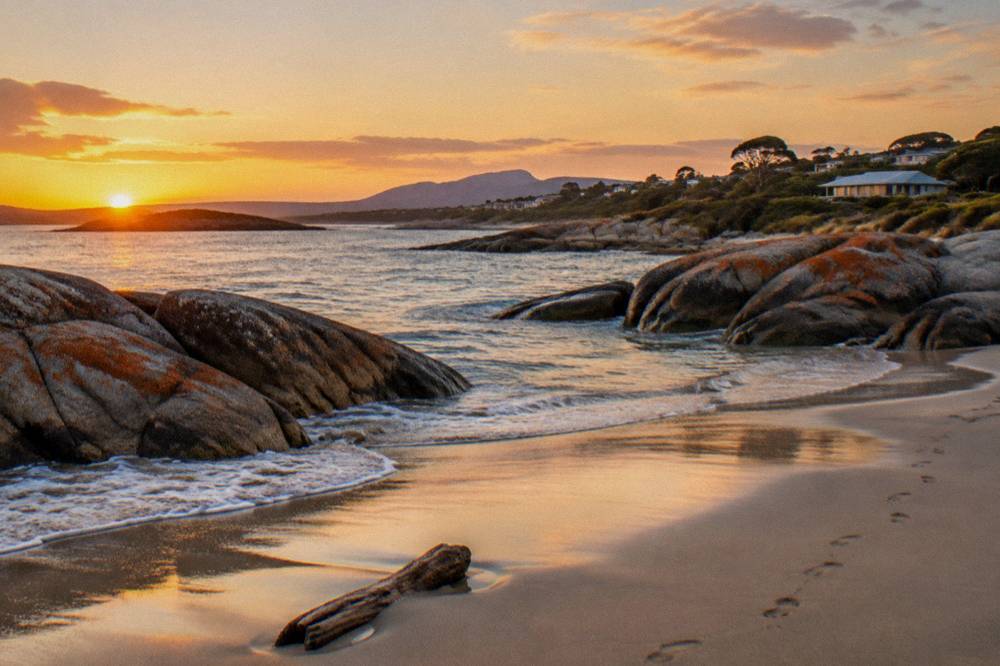
The season shapes the whole day plan, not just the evening. In the September to January window, sunset over the Hobart area runs from about 6:20pm in early October to peaks near 8:50pm in late December and early January, and the tour start times follow dusk, so a midsummer day gives you a long afternoon. In the February to August window the departures start as early as 5:00pm, which pulls dinner to after the tour and makes the daytime plan shorter and slower.
The wildlife calendar has one more planning angle. The NRE biology record says clutches of two eggs can occur as early as May or as late as December, incubation runs about 35 days, and chicks fledge at about eight weeks, which is why activity stretches across the whole September to January window rather than peaking in a single month. Moulting runs February to April, when adults stay ashore for roughly two to three weeks replacing all their feathers, so birds are present but the spectacle is different: quiet birds at burrows rather than rafts coming ashore. The full seasonal breakdown, including what a May visit realistically offers, is in the best time to see penguins in Tasmania guide. Once you've picked your season, the guide to fitting penguins into a wider Tasmania trip helps you slot a Bicheno stop into a full island itinerary.
What Should You Wear And Pack For A Bicheno Day?
Pack for two climates in one day: sun protection and swimwear for the beaches, then warm layers, dark clothing and enclosed comfortable shoes for the evening tour, which requires enclosed footwear and prohibits flash photography. The state's penguin watching guidelines add the detail most visitors miss: settle into your viewing spot before last light, stay quiet, and keep any torch dim, red and never pointed at the water or the birds.
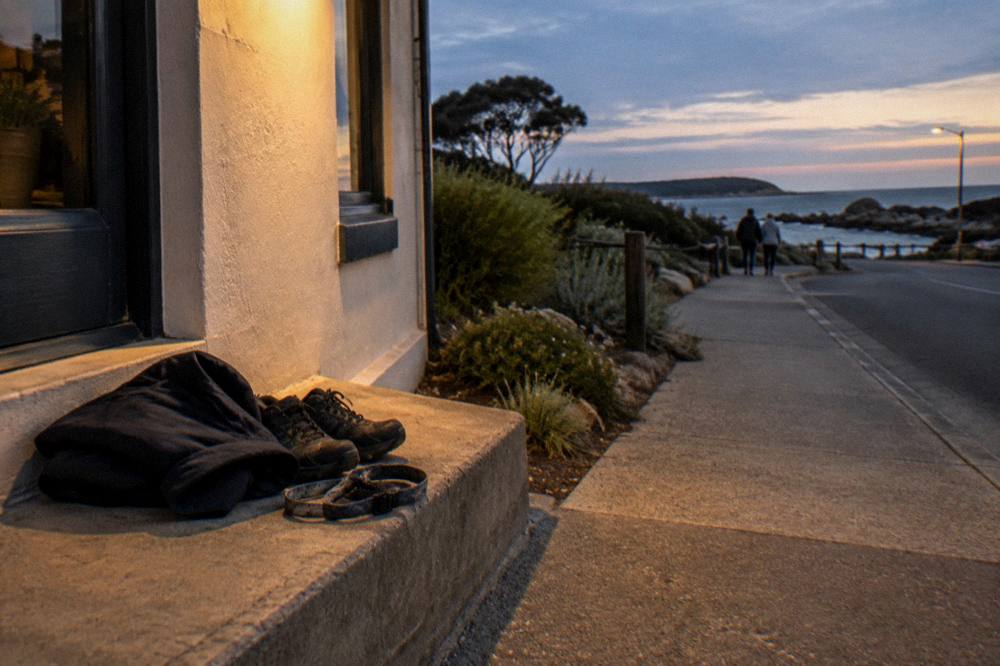
The evening kit list is short and non negotiable, because the operator states it plainly: enclosed comfortable shoes are required, and photography is permitted only without flash. Warm clothing is recommended for the walk, which covers about 500 metres over roughly 50 minutes on a coastal night, and Tasmania's evenings drop fast even after a warm day. The what to wear on a penguin tour guide covers the full layering logic for every season.
| Time of day | Wear and pack | Why |
|---|---|---|
| Morning blowhole walk | Sun protection, grippy shoes | Granite is slick when wet; spray zone is unfenced |
| Midday and beach | Swimwear, towel, water | Beaches are unpatrolled; swim with usual caution |
| Afternoon drive | Layers, snacks | Roadworks can add time on the Tasman Highway |
| Evening tour | Warm dark clothing, enclosed shoes | Operator requirement; dark clothing is in the state guidelines |
The state guidelines from NRE Tasmania's penguin watching page are worth reading once before any penguin evening anywhere in Tasmania, guided or not: approach from land rather than along the beach, use existing tracks, pick a spot at least 3 metres from burrows, and never bring dogs or cats, even leashed. On a guided tour the guide handles the hard rules, but knowing them makes the evening make sense, and it explains the red light discipline: disturbed birds stay at sea longer, which stresses them and delays feeding of chicks.
That is the whole day, morning granite and spray, a harbour walk at midday, an afternoon that bends around the highway works, then a dusk appointment with about 500 metres of coastline and the smallest penguins in the world. Build it once around the tour's confirmed start time and the rest of Bicheno falls into place around it, which is more than most towns of its size can promise. For the wider east coast picture, this site's comparison of free penguin viewing spots across Tasmania shows what else the region offers once the evening is booked.
Common Questions About Things To Do In Bicheno
What Can You Actually Do In Bicheno In One Day?
You can walk the foreshore track from the town beach to the gulch boat ramp area, visit the free blowhole on the granite coast east of town, swim or walk the beaches north and south, and take a half day trip toward Freycinet or Coles Bay, then finish with the evening penguin tour from Burgess Street, 70 minutes from $53 per person.
How Do You Plan A Day Around The Evening Penguin Tour?
Work backwards from the seasonal departure window: 5:00pm to 7:30pm from February to August and 7:30pm to 9:30pm from September to January, adjusted to dusk, with the exact time confirmed at booking. Book the tour first because the listing is flagged as often selling out, then fill daylight hours around the confirmed start time.
What Can You See At The Bicheno Blowhole?
A natural, unfenced granite formation where ocean swell forces spray through a rock channel, free and open at all times. Performance depends entirely on the swell, from a damp sigh on a flat day to serious spray on a big southerly. The Parks and Wildlife Service advises caution with waves and swell and never turning your back on the ocean.
Which Day Trips Work From Bicheno?
Freycinet and Coles Bay to the north via the Tasman Highway, and the east coast beaches south of town. The Apsley upgrade on the Tasman Highway between Bicheno and the Coles Bay Road turn off has been under construction since early 2025 with completion expected 2027, so check the state roadworks register and a mapping service for drive times before you go.
When Should You Visit Bicheno?
September to January brings the breeding season, the most penguin activity and later departures of 7:30pm to 9:30pm. February to April is the moulting window, and February to August is the quieter winter season with departures from 5:00pm. There is no official month ranking; these are the patterns the operator and the state biology record describe.
What Should You Wear For A Day In Bicheno?
Two kits in one day: sun protection and swimwear for the beaches, then warm dark clothing and enclosed comfortable shoes for the evening tour, which requires enclosed footwear and prohibits flash photography. The state guidelines also say to settle before last light, stay quiet, and use only dim red light, never pointed at the water or the birds.