Bicheno Penguin Tours: The Complete Guide To The Nightly Rookery Walk
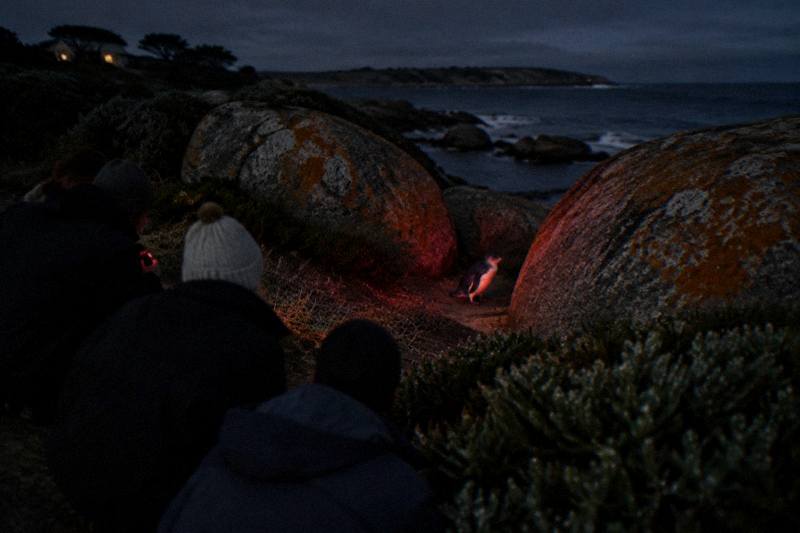
Bicheno runs the best known guided penguin experience on Tasmania's east coast: a short bus ride from a shop on Burgess Street to a private rookery, then a guided walk of about 500 metres over roughly 50 minutes, with no flash and quiet groups. Here is how the whole evening works.
Short answer
The Bicheno penguin tour is a 70 minute guided walk, from $53 per person on the listing, rated 4.8 from 26 reviews. You meet at the operator's shop at 1/70 Burgess Street, take a short bus ride to a private rookery, then walk about 500 metres over about 50 minutes. Tours run nightly except Christmas Day and New Year's Eve.
Bicheno, a fishing town of granite headlands on Tasmania's east coast, hosts the state's longest running commercial penguin experience. The operator, established in 1992, takes small nightly groups to a private rookery a short bus ride from its shop on Burgess Street. What follows is a walk of about 500 metres over roughly 50 minutes in near darkness, watching little penguins come ashore at last light. The full session runs about 70 minutes with the guide.
This guide covers the mechanics of the evening, what the tour really costs, when departures run each season, and the photography rules, and the story of how this colony collapsed to about 40 birds in the early 1990s and recovered. It also compares the Bicheno walk with the Low Head tour near George Town, because most travellers can only fit one penguin night into an east coast or northern itinerary. For the wider picture across the state, the Tasmania Penguin Tours homepage holds a side by side comparison of every viewing site, from guided rookeries to the free volunteer platforms.
What Is The Bicheno Penguin Tour?
The Bicheno penguin tour is a small group, guided walk to a private little penguin rookery on the edge of town, run nightly year round except Christmas Day and New Year's Eve. It is bookable from $53 per person on the listing, which carries a 4.8 rating from 26 reviews, and the whole session with the guide runs about 70 minutes from the Burgess Street meeting point. If you're weighing up whether those seventy guided minutes justify the price, our honest verdict on the Bicheno penguin tour covers who it suits and who should save their money.
The product is deliberately simple. You arrive at the operator's shop, at 1/70 Burgess Street, across from the IGA with free parking out front. A short bus ride takes the group to the rookery, which is private land, not a public reserve. From the drop off, the guide leads a walk of about 500 metres over about 50 minutes along the colony's edge, positioning the group where penguins are most likely to come ashore.
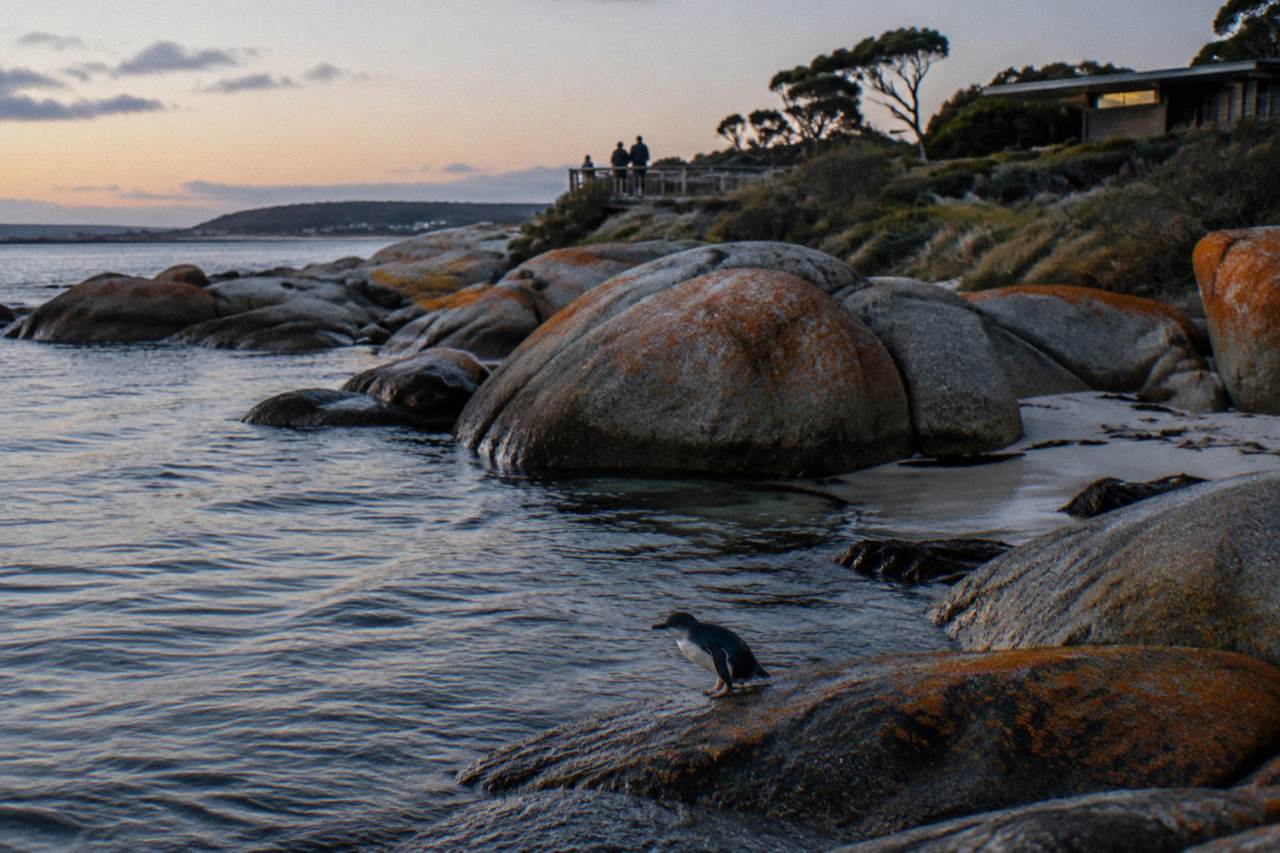
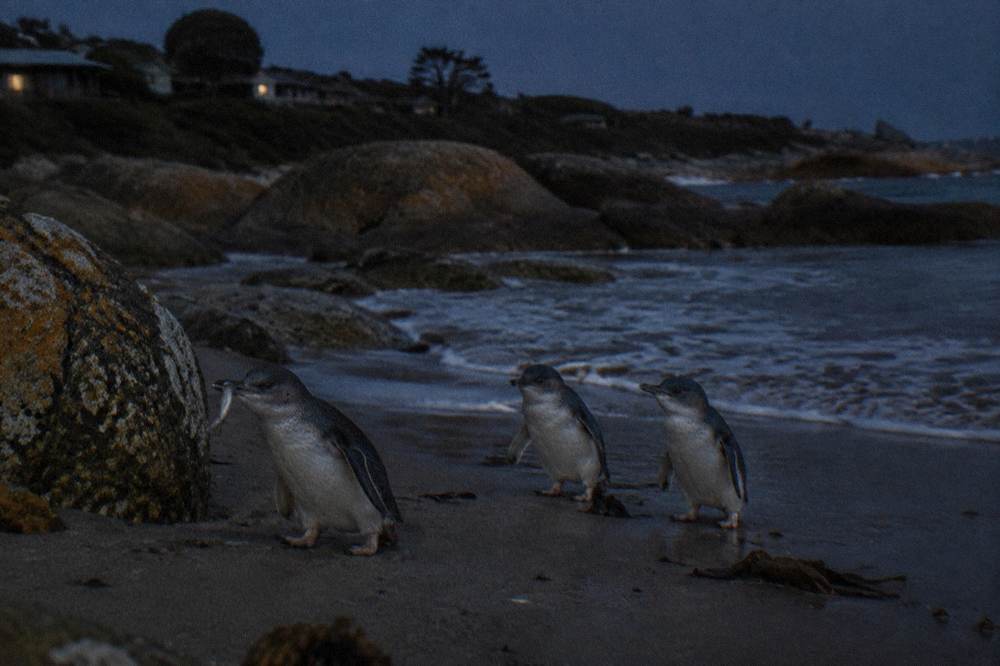
Little penguins, the smallest penguin species at about 1 kg and 40 cm as adults, spend daylight hours fishing at sea and return to their burrows at dusk, usually in small groups within an hour or so of darkness. The tour is built entirely around that rhythm. The Department of Natural Resources and Environment notes that the majority of the Australian population lives in Tasmania, with past state estimates of 110,000 to 190,000 breeding pairs, most of them on offshore islands and under 5 percent on mainland Tasmania. The same department's guidance is blunt about the best way to watch them: join a guided tour, because guides know where the birds land and how to keep disturbance low.
Two practical points shape the whole evening. There are no pickups from accommodation, so you must make your own way to Burgess Street. And there are no toilets at the rookery, only at the shop, so plan around that before the bus leaves.
How The Evening Works: Shop, Bus Ride And The Rookery Walk
Check in happens at the operator's shop at 1/70 Burgess Street, in the middle of Bicheno opposite the IGA, where parking is free. A short bus ride takes the group to the private rookery, and from there the guide leads a walk of about 500 metres over about 50 minutes, with the full session lasting about 70 minutes. Enclosed, comfortable shoes are required.
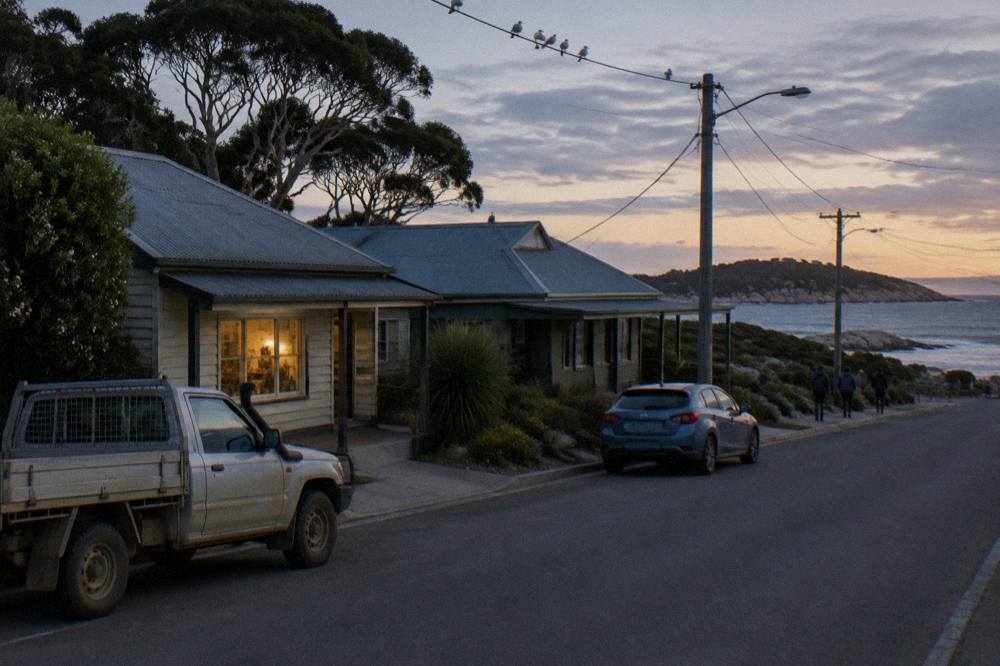
The sequence matters more than visitors expect. Check in happens at 1/70 Burgess Street, across from the IGA, where there is free parking. This is the only meeting point: the operator offers no transfers from accommodation anywhere in Bicheno, which keeps the tour's start simple but puts the logistics on you. If you are staying outside the town centre, allow time to drive in and park, and in peak summer that takes longer than the map suggests.
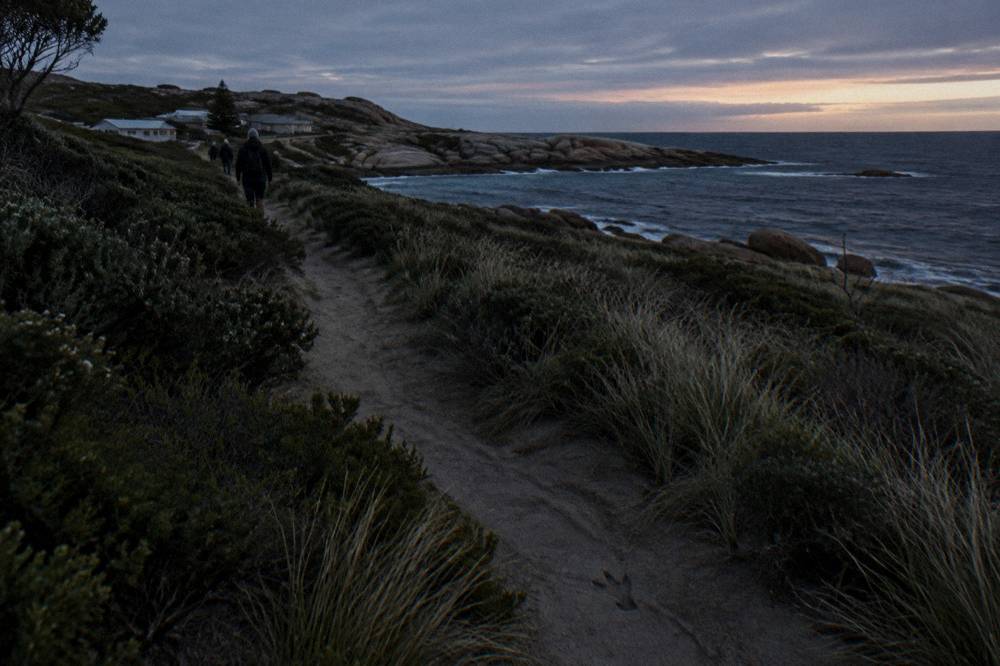
From the shop, a short bus ride takes the group to the rookery. The rookery itself is private land, restored and managed for penguins, which is why the operator can control access, lighting and group behaviour in a way that public beaches cannot manage. Once off the bus, the group walks about 500 metres over about 50 minutes with stops where the guide has learned the birds tend to gather. The pace is slow and quiet by design: disturbed penguins stay at sea longer, which delays feeding of chicks, so the guide's instructions about stillness and voice volume are conservation practice, not fussiness.
Wheelchair access is handled case by case, according to the operator's FAQ, because the rookery track is natural terrain rather than a built boardwalk. If mobility is a concern for anyone in your group, raise it when booking rather than on the night. The same goes for very young children: the listing allows them, but an hour of standing still in the dark is a big ask of a four year old.
The listing for this exact tour, with its from price of $53 per person and free cancellation, is bookable online: see the Bicheno guided beach walk tour page for the full details of the meeting point, the walk and the seasonal departure windows.
What It Costs And When Tours Run
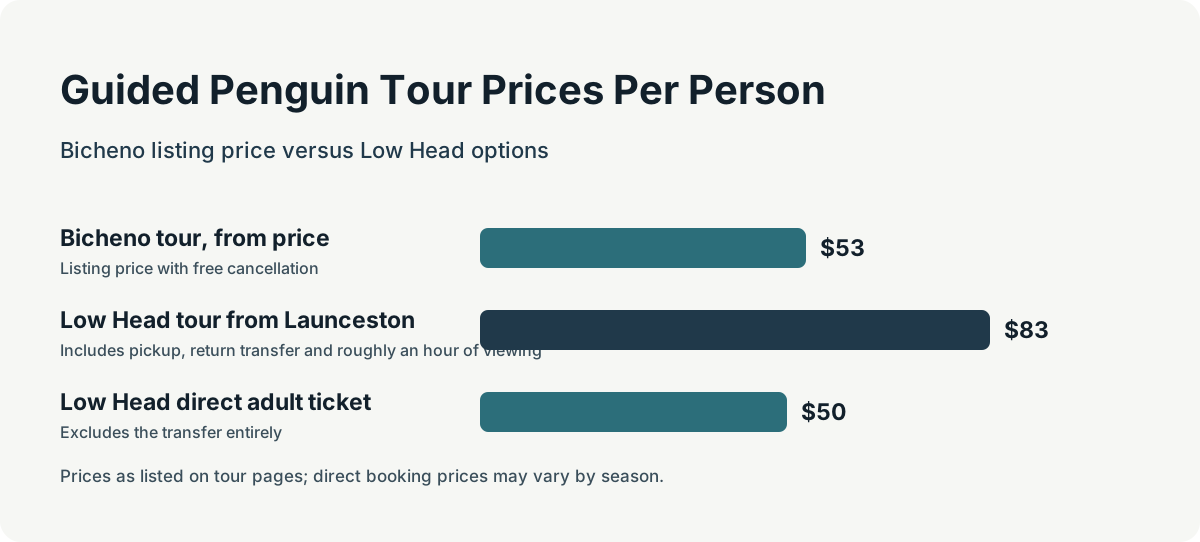
The listing shows a from price of $53 per person with free cancellation; the operator's own website shows conflicting figures, so treat any direct booking price as something to confirm on the page. Departure times shift with the seasons: 5:00pm to 7:30pm from February to August, and 7:30pm to 9:30pm from September to January, always adjusted to dusk and confirmed at booking.
The price point deserves a plain explanation. The operator's own FAQ page lists season specific prices that differ from what its home page shows, and the two conflict, which is why this site quotes only the verified listing price of from $53 per person. Child and senior prices on the direct booking pages vary by season and are not reproduced here for that reason. If you book direct, read the price on the checkout page before paying; if you book through the listing, the from price and the free cancellation terms are shown up front.
| Season | Dates | Departure window | What drives the timing |
|---|---|---|---|
| Fall and Winter | February to August | 5:00pm to 7:30pm | Early sunsets; penguins come ashore earlier |
| Spring and Summer | September to January | 7:30pm to 9:30pm | Late sunsets; later return of the birds |
The exact start time is confirmed when you book, because dusk moves week by week. Sunset in southern Tasmania swings from roughly 6:20pm in early October to near 8:50pm in late December, and the operator adjusts the departure to put the group on the beach just before the birds arrive. That is worth knowing when you plan dinner: in midsummer you may not start until after 9:00pm, while in June the tour can finish before a restaurant kitchen closes.
One more seasonal note from the operator's FAQ: a three week winter package that combined the penguin tour with a shuttle to the Bicheno Beams light show ran only for a short midwinter window and is not a standing product. If you see it advertised anywhere, treat it as a past, limited offering rather than something to plan around. The standard rookery walk is what runs the rest of the year.
For a sense of scale on price, the other guided option on this site, the Low Head tour from Launceston, lists from $83 per person, though that figure includes the central Launceston pickup and return transfer as well as roughly an hour of guided viewing. Low Head's operator also sells tickets direct at $50 per adult, but that direct price excludes the transfer entirely, so it is not a like for like comparison with the $83 listing and should not be read as one.
The Rookery's Story: A Colony That Fell To About 40 Birds
The rookery collapsed to roughly 40 birds in the early 1990s after dog attacks killed penguins across the colony, and the operator's own account credits sustained land restoration with the recovery that followed. The walk you take today crosses that restored habitat, which is the practical reason access is controlled, the land is private and the rules on the night are strict.
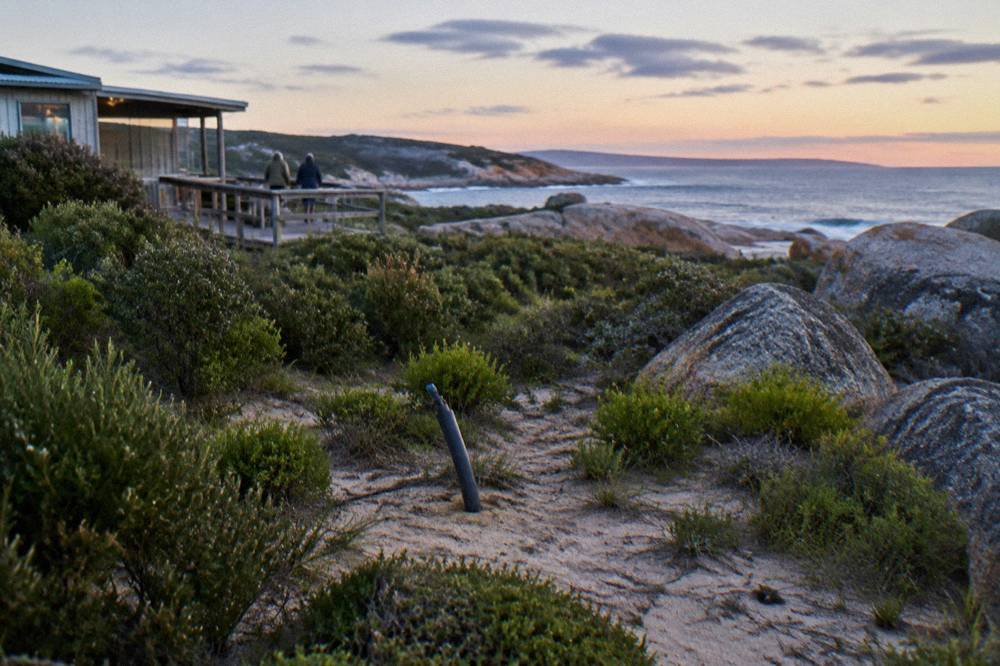
This is the part of the Bicheno story that first time visitors usually do not know. Little penguins nest in burrows dug into sandy soil behind the dune line, and in the early 1990s dog attacks devastated this colony, cutting it to about 40 birds. The recovery came through restoring the land itself: replanting and protecting burrow habitat so the birds could breed safely again. The operator, established in 1992, grew out of that same period of restoration and protection, and the tour has been running nightly ever since.
No current published colony count exists for Bicheno, or for any named rookery in Tasmania, so any number you see quoted on a travel blog is either very old or invented. What can be said honestly is the arc: a collapse to about 40 birds, then decades of recovery on protected land. The operator's FAQ also notes that numbers dipped over one summer period in recent memory and that tours continued without interruption, which matches how wild populations naturally swing with food supply.
The wider context makes the Bicheno story less unusual than it sounds. Dogs and feral cats can kill many penguins in a single night, and roadkill, harassment and habitat loss are ongoing threats statewide; penguins are protected wildlife in Tasmania, and catching or harassing them is illegal. A single roaming dog on a beach at dusk can undo years of recovery, which is why the no dogs rule at every viewing site in the state is absolute, leashed or not. The restored rookery at Bicheno is effectively a fenced answer to that problem, and the tour fee is what pays for the habitat to keep being managed.
What You Will Actually See, Month By Month
September to January is the breeding season with the most activity, February to April is the moulting window when adults stay ashore replacing feathers, and February to August is the quieter winter period with fewer birds but calmer groups. No official month ranking exists, so treat any best month claim as operator framing rather than settled science.
The honest version of the calendar is biological. Breeding commonly starts in winter with nest preparation, clutches of two eggs can be laid anywhere from May to December, incubation runs about 35 days with parents sharing shifts of up to a week, and chicks fledge at about eight weeks. That long, variable window is why September to January tends to be busiest at most rookeries: there is simply more coming and going to watch, with adults returning from the sea loaded with fish for chicks waiting in burrows.
| Period | What is happening | What it means for your tour |
|---|---|---|
| September to January | Breeding season; adults feeding chicks | Most activity, most birds ashore, busiest tours |
| February to April | Moulting; adults ashore 2 to 3 weeks replacing feathers | Birds visible but stationary; less coming and going |
| May to August | Nest preparation and winter feeding at sea | Quieter viewing, earlier departures, fewer crowds |
Moulting deserves a sentence of explanation because it changes what you see rather than how many you see. Before moulting, adults fatten at sea, then remain ashore for about two to three weeks while replacing all their feathers, unable to fish. In February to April you may therefore find penguins standing near burrows for long stretches rather than parading up the beach in groups, which some visitors find less dramatic and others find better, because the birds hold still.
Winter has its own case. The February to August window is what the operator calls its fall and winter season, with departures from 5:00pm to 7:30pm, and it is the time of year when the town is quietest and the tour feels most like a local secret. Fewer penguins come ashore per night, but the trade off is smaller groups, an early finish and a town that is easy to book dinner in afterwards. For the full seasonal picture across all of Tasmania's sites, including the free platforms, see the best time to see penguins in Tasmania.
For contrast, the Low Head tour near George Town runs every night of the year just after sunset, with about an hour of guided viewing inside a roughly 3 hour door to door session when you take the Launceston transfer. That operator supplies low intensity red and yellow lighting, bans torches, selfie sticks and tripods, and caps the group at a maximum of 10 guests on the listing. Penguin numbers there run higher from November to February, the operator says, which mirrors the spring and summer peak on this coast.
Photography And Beach Rules: Why No Flash, Ever
Flash photography is banned on this tour and on every penguin beach in Tasmania: penguin eyes are adapted for near darkness, and a flash at the moment birds come ashore can startle them back out to sea. Photography without flash is permitted. The state guidelines add dark clothing, quiet voices, existing tracks and no dogs under any circumstances.
The rules are not the operator being precious about its land. The state penguin watching guidelines set the same standard everywhere in Tasmania: settle into position before last light, stay quiet with minimal movement, use only dim red light torches and never point them toward the water or directly at penguins, and never use flash on the beach. Video without spotlights is fine, and binoculars are genuinely useful because they let you watch from further off without leaning into the colony.
The guidelines carry a detail most visitors never hear: approach from land, not along the beach, use existing tracks and never walk through the colony, and pick a spot at least 3 metres from burrows so you are not blocking a penguin's front door. On the Bicheno walk the guide handles all of this for you, which is half of what the ticket buys. Penguins leave the water at last light, and disturbed birds stay at sea longer, which stresses them and delays the feeding of chicks. Every rule on the beach traces back to that single fact.
Practical translation for photography: a modern phone camera in night mode, held steady against something solid, will produce something, but the memory will outlast the photos. If photographing wildlife at dusk matters to you, read up on the photography rules for penguins in Tasmania before you go, because the same constraints apply at every viewing site in the state and a little preparation changes what you come home with.
The clothing guidance matters nearly as much. Dark clothing helps you blend into the dusk, and enclosed, comfortable shoes are required on this tour because the rookery track is natural ground, not a paved path. Warm layers are worth bringing even in summer: Bicheno sits on the open east coast, and the sea breeze after sunset drops the temperature fast, hard enough that winter tourgoers regularly wish they had dressed for a cold night rather than a mild one.
Bicheno Or Low Head: Which Penguin Tour Suits You?
Bicheno is the shorter, cheaper, east coast option at 70 minutes with the guide and from $53 per person, while Low Head, from $83 with a Launceston transfer, runs about 3 hours door to door with roughly 1 hour of guided viewing and a maximum of 10 guests. Your base decides it: east coast travellers do Bicheno, Launceston based travellers do Low Head.
The two tours are genuinely different products, not two versions of the same thing. This site's full Bicheno versus Low Head comparison breaks the choice down in detail, but the short version fits one table.
| Bicheno | Low Head from Launceston | |
|---|---|---|
| Price | From $53 per person | From $83 per person |
| Rating | 4.8 from 26 reviews | 5.0 from 22 reviews |
| Duration with guide | 70 minutes | About 3 hours door to door |
| Viewing time | About 50 minutes on the walk | About 1 hour at the reserve |
| Group size | Small groups | Maximum 10 guests |
| Transfers | None; meet at Burgess Street shop | Central Launceston pickup and return |
| Cancellation | Free cancellation | Free cancellation |
The Low Head tour suits travellers sleeping in Launceston who do not want to drive at night, which in Tasmania is a real consideration: wildlife on country roads at dusk is a known hazard, and the transfer removes it entirely. The trade off is time and money, roughly 3 hours and $30 more per person than the Bicheno walk. The Low Head tour with Launceston transfer runs nightly just after sunset at the Low Head Coastal Reserve near George Town; check availability if a Launceston base fits your trip better.
Bicheno suits the east coast itinerary: Freycinet, Coles Bay, Swansea and the Great Eastern Drive all funnel through this town, and an evening penguin walk slots neatly between a late dinner and bed. Both listings carry free cancellation, so if your route is still flexible you can hold a date on each and release one later. The Bicheno listing is flagged as often selling out, The listing is flagged as often selling out, so advance booking is sensible., and the operator advises booking weeks ahead.
Planning The Evening: Parking, Timing And What To Bring
Park for free outside the shop at 1/70 Burgess Street, opposite the IGA, arrive ahead of your confirmed departure time, and bring enclosed shoes plus warm, dark coloured layers. There are no toilets at the rookery itself, so use the facilities at the shop before the bus leaves, and leave white torches and flash equipment behind.
The practical checklist is short because the operator keeps the evening simple.
| Item | Why it matters |
|---|---|
| Enclosed, comfortable shoes | Required; the rookery track is natural terrain |
| Warm, dark coloured layers | Coastal wind after sunset; dark clothing blends into dusk |
| No white torch, no flash | Only dim red light is acceptable; guides manage lighting on the walk |
| Booked ticket on your phone | Check in is at the shop before the bus ride |
| Toilet stop at the shop | No facilities at the rookery itself |
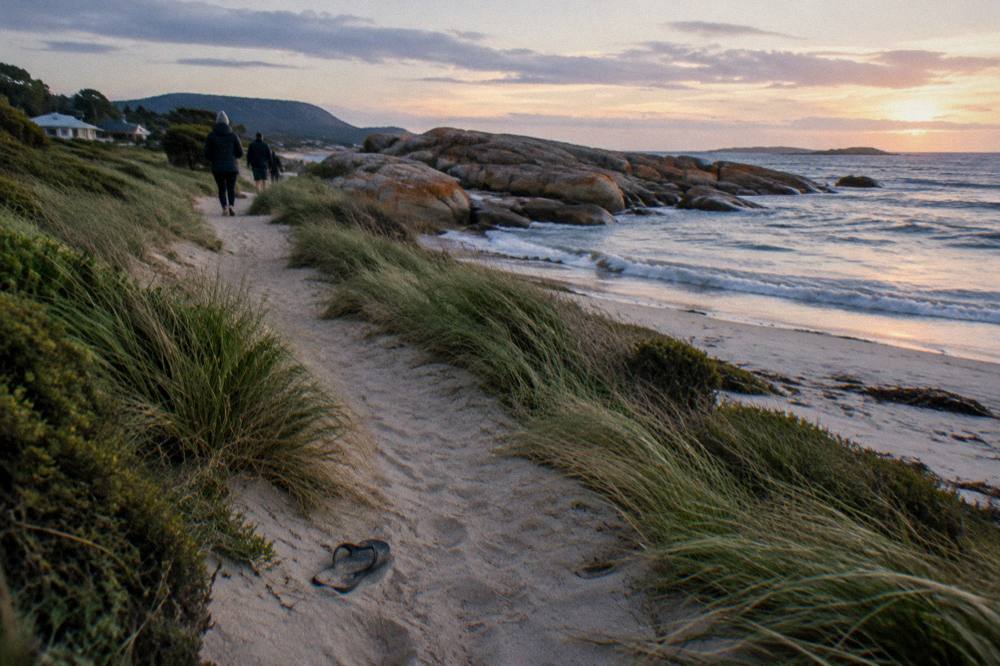
Timing your dinner matters more than most visitors plan for. Because departures are adjusted to dusk, a midsummer tour may not leave the shop until 9:00pm or later, while a June tour can be over by 7:00pm. Restaurants in Bicheno close earlier than city visitors expect, so either eat before check in on an early departure or plan a very late booking on a summer one. The operator's FAQ recommends booking weeks in advance, and the listing's own flag, that the tour often sells out, backs that up in peak season. If you're still picking a month for your visit, our guide to penguin viewing seasons in Bicheno explains how dusk timing shifts across the year.
If Launceston is your base rather than the east coast, the same evening works better as the Low Head tour with transfer: from $83 per person, central hotel pickup, about 3 hours door to door, and no night driving on country roads at all, which matters in a state where wildlife on the road at dusk is a standing hazard. East coast travellers, meanwhile, should fold the Bicheno night into a longer route using the east coast Tasmania itinerary guide.
One road note for anyone driving the coast to get here: the Tasman Highway Apsley upgrade, covering sections between Bicheno and the Coles Bay Road turn off, has been under construction since early 2025 with completion expected in 2027, so allow a little slack in your drive time and check the state transport roadworks page before you set out. None of it blocks access to the town, but delays of some minutes are normal through the works zone, and a penguin tour is one arrival you do not want to rush.
Common Questions About Bicheno Penguin Tours
How long is the Bicheno penguin tour?
About 70 minutes with the guide in total: a short bus ride from the shop to the private rookery, then a guided walk of about 500 metres over about 50 minutes.
How much does the Bicheno penguin tour cost?
From $53 per person on the listing, with free cancellation. The operator's own website shows conflicting season prices, so confirm the exact figure on whichever booking page you use before paying.
Where does the Bicheno penguin tour start?
At the operator's shop at 1/70 Burgess Street in central Bicheno, across from the IGA, where there is free parking. There are no pickups from accommodation.
What time do Bicheno penguin tours run?
Departures run 5:00pm to 7:30pm from February to August and 7:30pm to 9:30pm from September to January, always adjusted to dusk, with the exact start time confirmed at booking.
Can you take photos on the Bicheno penguin tour?
Yes, but only without flash. Flash can startle penguins coming ashore and drive them back to sea, and it is banned on the beach under the state penguin watching guidelines.
When is the best time to see penguins at Bicheno?
September to January, the breeding season, has the most activity. February to April is the moulting window with birds ashore but stationary, and the winter months from May to August are quieter with fewer birds but calmer tours.