Is The Bicheno Penguin Tour Worth It?
An honest worth-it verdict on the Bicheno penguin tour: 70 guided minutes, from $53 per person, rated 4.8 across 26 reviews, plus who should skip it and watch from a free platform instead.
Is The Bicheno Penguin Tour Worth It?
Yes, for most first-time visitors the Bicheno penguin tour is worth it: 70 minutes with a guide, from $53 per person, rated 4.8 across 26 reviews, inside a private rookery you cannot walk into on your own. It is not worth it if you want a long evening, a guaranteed crowd of birds, or a free experience, and Tasmania has free platforms for exactly that reader.
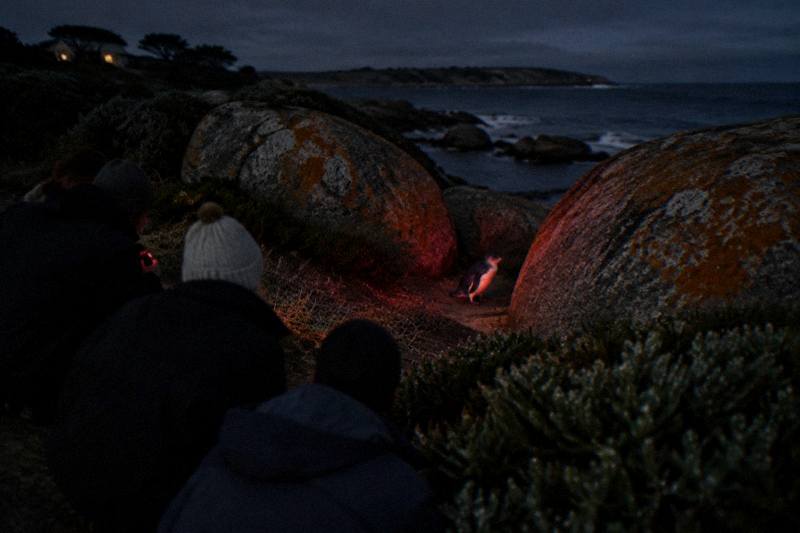
That is the short version. The longer version depends on what you expect from the word "tour", because this one is deliberately small. You meet at the operator's shop at 1/70 Burgess Street in Bicheno, take a short bus ride to a private rookery, then walk about 500 metres over roughly 50 minutes with a guide while penguins come ashore around you. There are no accommodation pickups, no toilets at the rookery, and no flash photography at any point.
What you are buying is access plus interpretation. The rookery is private land, restored by the operator after the colony crashed to about 40 birds in the early 1990s following dog attacks, and the guide's job is to get you close without stressing the birds. That restoration story is the single biggest reason the tour exists in its current form: unmanaged access is what nearly wiped the colony out once already, and the fenced, guided model is what brought it back.
The Bicheno penguin tours guide covers the mechanics in more depth; this article is the worth-it verdict, and it sticks to the question a reader actually asks before paying: will I see penguins, will it feel worth the money, and is there a cheaper way.
What The Bicheno Penguin Tour Actually Includes
The tour includes a short bus ride from Burgess Street, about 500 metres of guided walking over roughly 50 of its 70 minutes, a guide who interprets the birds, and viewing inside a private rookery. It does not include accommodation pickups, toilets at the rookery, or permission to use flash, and enclosed comfortable shoes are required.
The shape of the evening matters more than the headline duration. Seventy minutes sounds short next to a three-hour wildlife cruise, but almost all of it is spent at the birds rather than travelling to them. The bus leg is short. The walk is slow, quiet and stop-start, which is exactly how you want it: penguins come ashore in small groups within an hour or so of darkness, and a group that settles early and stays still sees far more than one that keeps moving.
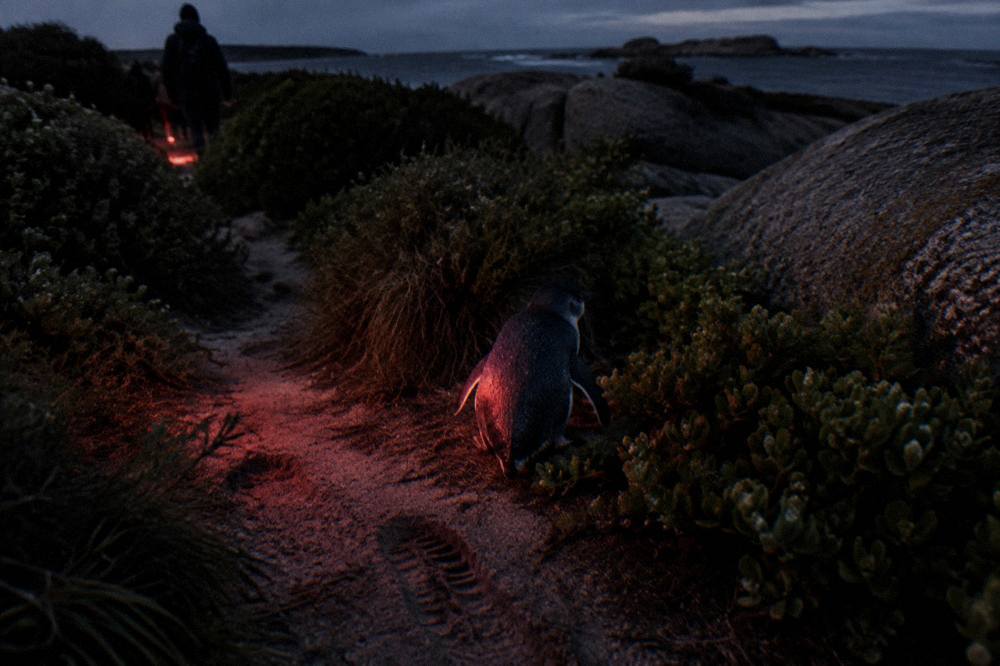
Departure times shift with the season because the birds shift with the light. The operator runs 5:00pm to 7:30pm departures from February to August and 7:30pm to 9:30pm departures from September to January, with the exact start confirmed at booking. The operator's own site states the year-round schedule, the closed days at Christmas and New Year's Eve, and the footwear rule.
The rules are not padding. The state's penguin watching guidelines from NRE Tasmania ask every viewer, guided or not, to approach from land, stay off the colony itself, settle before last light, keep quiet, and never point a torch toward the water. A guide enforces all of this for you, which is a large part of what the ticket buys.
Interpretation is the other half of that purchase. A guide can tell you which birds are waiting for a partner, which burrows hold chicks, why a group pauses at the waterline, and why disturbed birds stay at sea longer, delaying feeding of their chicks. That last point comes straight from the state guidelines and it is the reason a guided group reliably sees more than a self-managed one: the guide knows how to read the beach.
How Much Does The Bicheno Penguin Tour Cost?
The bookable listing is from $53 per person, with free cancellation, and for the current Bicheno price, check the live booking page, since direct-booking prices with the operator can vary. Budget the evening around that from-price plus travel to Burgess Street, since no accommodation pickups exist.
The price conflict is worth explaining honestly, because a reader who checks the operator's site directly may see a different number there and wonder which is wrong. The operator's home page and FAQ page disagree with each other on direct-booking pricing, so we print none of those figures. The from-price is $53 per person, and you can book straight from the tour page, and it is the one this site stands behind.
Against the alternatives, the price sits in the middle of Tasmania's penguin options. The Low Head tour from Launceston is from $83 per person, but that includes central Launceston pickup and about three hours door to door, so it is a different product. The free platforms at Lillico and Burnie cost nothing at all, which is the honest comparison this verdict keeps returning to. For a closer look at the entry price and what it covers, our full breakdown of Bicheno penguin tour costs lines up all the options side by side.
Free cancellation is the detail that lowers the risk of booking early. Plans change on a road trip, weather turns, and a from-price of $53 with the ability to cancel is a very different proposition from a rigid ticket. The same policy applies to the Low Head listing, so neither of this site's tours punishes a change of plan.
What The Reviews Say About The Bicheno Penguin Tour
The listing carries a 4.8 rating from 26 reviews, a small but strongly positive pool, and the recurring themes are knowledgeable guides, close viewing and a well-run short evening. A 26-review pool is modest, so treat it as a good signal rather than a statistical verdict, and read a few reviews yourself before booking.
Review counts matter as much as ratings on a small roster. A 4.8 from 26 reviews is genuinely good, but it is not the same evidence base as a 4.8 from two thousand, and this site prints the count beside every rating for that reason.
The most useful comparison inside this site's own roster is the Low Head tour from Launceston, rated 5.0 from 22 reviews, from $83, capped at 10 guests, with about one hour of guided viewing inside a three-hour door-to-door package. Bicheno is the cheaper and shorter option; Low Head is the more all-inclusive one for visitors based in Launceston without a car.
For readers weighing the two, the Bicheno versus Low Head comparison breaks the choice down by base town, budget and group size. The short version: stay on the east coast and you do Bicheno, stay in Launceston and Low Head with the transfer is the easier night.
It is also fair to ask what a negative review would even look like here, because the honest answer shapes expectations. The realistic disappointment is not seeing nothing at all; it is seeing fewer birds than hoped and finding the walk short. The operator's own FAQ acknowledges that numbers dipped over one summer and recovered, with tours continuing as normal, so variability is part of the deal with wild animals and the ticket buys access, not a guarantee.
Who Should Skip The Tour And See Penguins For Free Instead
Skip the paid tour if you are on a tight budget, happy to stand quietly on a public platform, and travelling between September and April, because Lillico Beach near Devonport and the Burnie Observation Centre both offer free or donation-based guided viewing in season. Do not skip it if you want the private rookery or a guide focused only on your small group.
The free options are real and good, and an honest worth-it article has to say so. Lillico Beach, ten minutes west of Devonport, has a viewing platform generally used September to April with volunteer guides on site in season, red torches supplied, no visitor torches, no flash, and no charge beyond donations. Burnie runs free guided viewing nightly from 1 October to 31 March, with guides at the Observation Centre from 30 minutes before dusk, no booking, and a level wheelchair-accessible boardwalk. The free penguin viewing guide lists these in full.
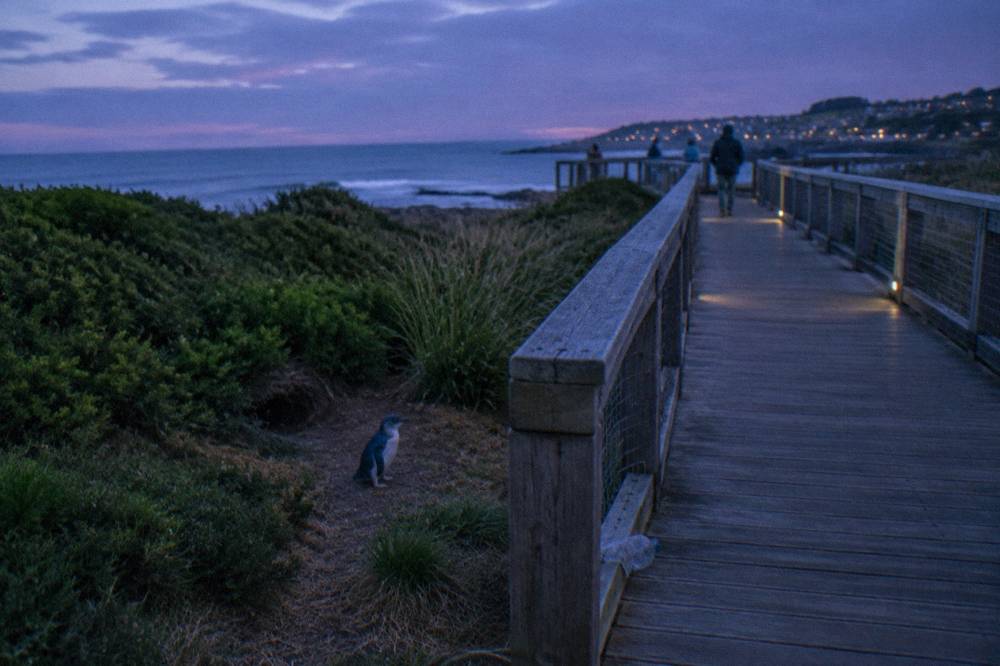
The catch is geography and season. The free platforms are on the north and north-west coasts, hours from Bicheno, and most run a September-to-April season, so a winter traveller in Bicheno has no free equivalent nearby. Bicheno's tour runs year-round, which in the quieter months is its quiet advantage. The full index of guides sits on Tasmania Penguin Tours.
The trade-off table looks like this:
| Option | Cost | Season | What You Give Up |
|---|---|---|---|
| Bicheno guided tour | From $53 per person | Year-round, closed Christmas Day and New Year's Eve | Nothing, if you are already in Bicheno |
| Low Head tour with Launceston transfer | From $83 per person | Year-round, nightly after sunset | Only sensible from Launceston |
| Lillico Beach platform | Free, donations welcome | Generally September to April | No private rookery, no guaranteed guide |
| Burnie Observation Centre | Free, donations welcome | Guided 1 October to 31 March | North-west coast only, no booking |
What Should You Wear And Bring On The Bicheno Tour?
Wear warm layers, dark clothing and enclosed comfortable shoes, because the walk is about 500 metres at night over uneven ground and the state guidelines ask viewers to avoid bright colours and bright light. Bring nothing that flashes, no personal torches, and expect the guide to control all lighting on the night.
The clothing advice is not fussiness, it is penguin biology. The NRE guidelines ask viewers to wear dark clothing because light-coloured fabrics catch the last of the dusk light and read as threat to a bird scanning the beach for danger. Warm layers matter because Bicheno sits on the east coast and evenings drop quickly, even in summer, and the tour is stationary for long stretches while you wait for groups to come ashore.
Footwear is the one hard rule. The operator requires enclosed comfortable shoes, and the terrain is a coastal track rather than a paved path. Visitors who arrive in sandals or heels have effectively paid for a walk they cannot comfortably take, so this is the single most common practical mistake on the night.
Light discipline comes from the guide. No flash at any point on the beach, no personal torches pointed anywhere, and where red light is used it is never aimed toward the water or directly at penguins. The same rules apply at every free platform in the state, so a visitor who learns them on this tour is equipped for every other penguin site in Tasmania. The what to wear on a penguin tour guide has the full packing list.
When Is The Best Time To Do The Bicheno Penguin Tour?
September to January is the operator's breeding season and the period of most activity, February to April is the moulting window when birds stay ashore, and February to August is the quieter winter season with earlier departures. There is no officially ranked best month, so treat any month ranking you see elsewhere as opinion.
The biology backs the operator's framing. NRE Tasmania describes a breeding season that varies by bird, place and year, with clutches of two eggs possible as early as May or as late as December, incubation of about 35 days, and chicks fledging at about eight weeks. Moulting tends to fall between February and April, when adults stay ashore for two to three weeks replacing all their feathers, so birds are visible but not commuting nightly.
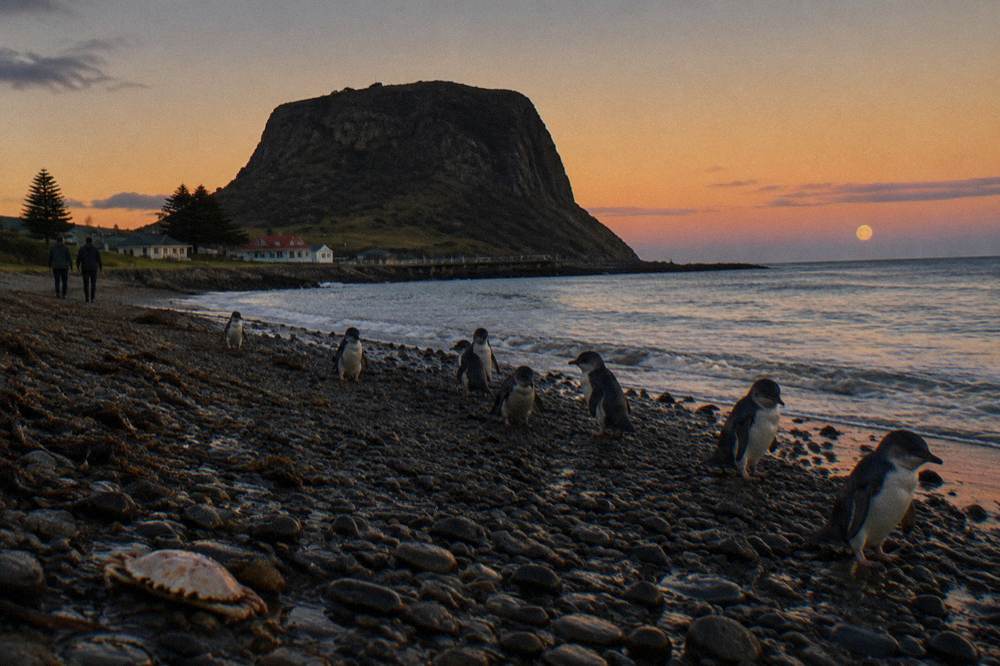
Winter is the underrated option. Departures run from 5:00pm in the colder months, which suits families with early bedtimes, and the operator's own account notes that numbers dipped over one summer and recovered, with tours continuing as normal. Fewer birds is not the same as no birds, and a small winter group often stands closer to the action. The when you can see penguins at Bicheno article covers the month-by-month detail.
One seasonal note that applies to every option: the listing is flagged as often selling out, and that flag is specific to this tour on this site. Booking ahead in the September-to-January window is simply sensible planning, not marketing pressure.
So, Is The Bicheno Penguin Tour Worth It?
For a visitor already on Tasmania's east coast who wants to actually see penguins rather than hope to, yes: from $53, 70 guided minutes in a private rookery, a 4.8 rating from 26 reviews and free cancellation make it a low-risk, high-probability night. For a budget traveller near Devonport or Burnie in season, the free platforms are the better value.
The verdict splits cleanly by reader. If you are driving the east coast, staying in or near Bicheno, and this is your one penguin night in Tasmania, the tour answers the question the free platforms cannot: access to a restored private rookery where the birds are used to quiet, guided groups. The colony's history, a crash to about 40 birds and a recovery through land restoration, is the reason casual access is not on offer, and it is also the reason the experience is as reliable as penguin watching gets. If you'd rather not pay for a guide at all, our guide to seeing Bicheno's penguins without a tour explains what independent viewing realistically looks like and where the free viewing platforms elsewhere in Tasmania fit in.
If your trip is anchored elsewhere, the calculus changes. A Launceston base makes the Low Head tour with its central pickup the practical choice. A Devonport or Burnie base in the guiding season makes the free platforms genuinely better value, provided you follow the same rules: no flash, red light only, quiet, and no dogs under any circumstances.
The honest bottom line is that this is a small, well-run, fairly priced 70 minutes, not a grand wildlife spectacle, and reviewers reward it for being exactly that. Set expectations to a quiet dusk walk with close viewing, and it delivers. Set them to a stadium-scale parade and you have chosen the wrong island, let alone the wrong tour.
Common Questions About The Bicheno Penguin Tour
Is The Bicheno Penguin Tour Worth It?
For most east-coast visitors, yes. It costs from $53 per person, runs 70 minutes with a guide inside a private rookery, is rated 4.8 across 26 reviews, and offers free cancellation. Budget travellers near Devonport or Burnie in season can see penguins for free at public platforms instead.
How Long Is The Bicheno Penguin Tour?
About 70 minutes in total, including a short bus ride from the shop at 1/70 Burgess Street and a guided walk of about 500 metres over roughly 50 minutes. There are no accommodation pickups, so you need to make your own way to the meeting point.
Can You Take Photos On The Bicheno Penguin Tour?
Photography is permitted without flash. Flash is prohibited on the beach under the state's penguin watching guidelines, and the same rules apply at every free viewing platform in Tasmania. Red-light torches are the only artificial light allowed, and guides supply them where needed.
What Should You Wear On The Bicheno Penguin Tour?
Warm layers, dark clothing and enclosed comfortable shoes. The walk is about 500 metres at night over uneven ground, the operator requires enclosed shoes, and the state guidelines ask viewers to avoid bright colours and any bright light on the beach.
When Is The Best Month To See Penguins In Bicheno?
September to January is the operator's breeding season with the most activity, February to April is the moulting window, and February to August is the quieter winter season with departures from 5:00pm. There is no official best-month ranking, so treat any you see as opinion rather than fact.
Is The Bicheno Penguin Tour Suitable For Children?
Yes, with the usual caveats: the walk is about 500 metres at a slow pace after dark, enclosed shoes are required, and children need to stay quiet and still while penguins come ashore. Earlier winter departure times suit younger families better than the 9:30pm summer starts.