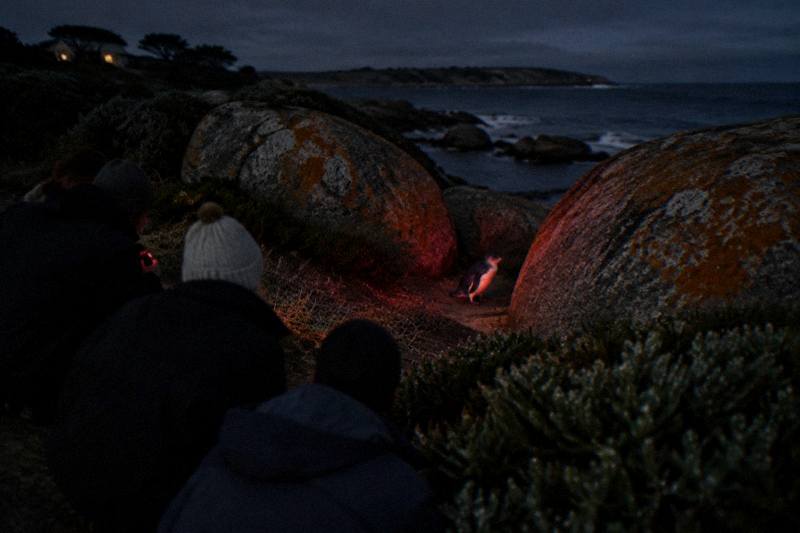
Where Can I See Penguins In Bicheno Without A Tour?
The honest answer for Bicheno: the penguin rookery is private land, so independent viewing means following the official rules and knowing the free platforms elsewhere in Tasmania.
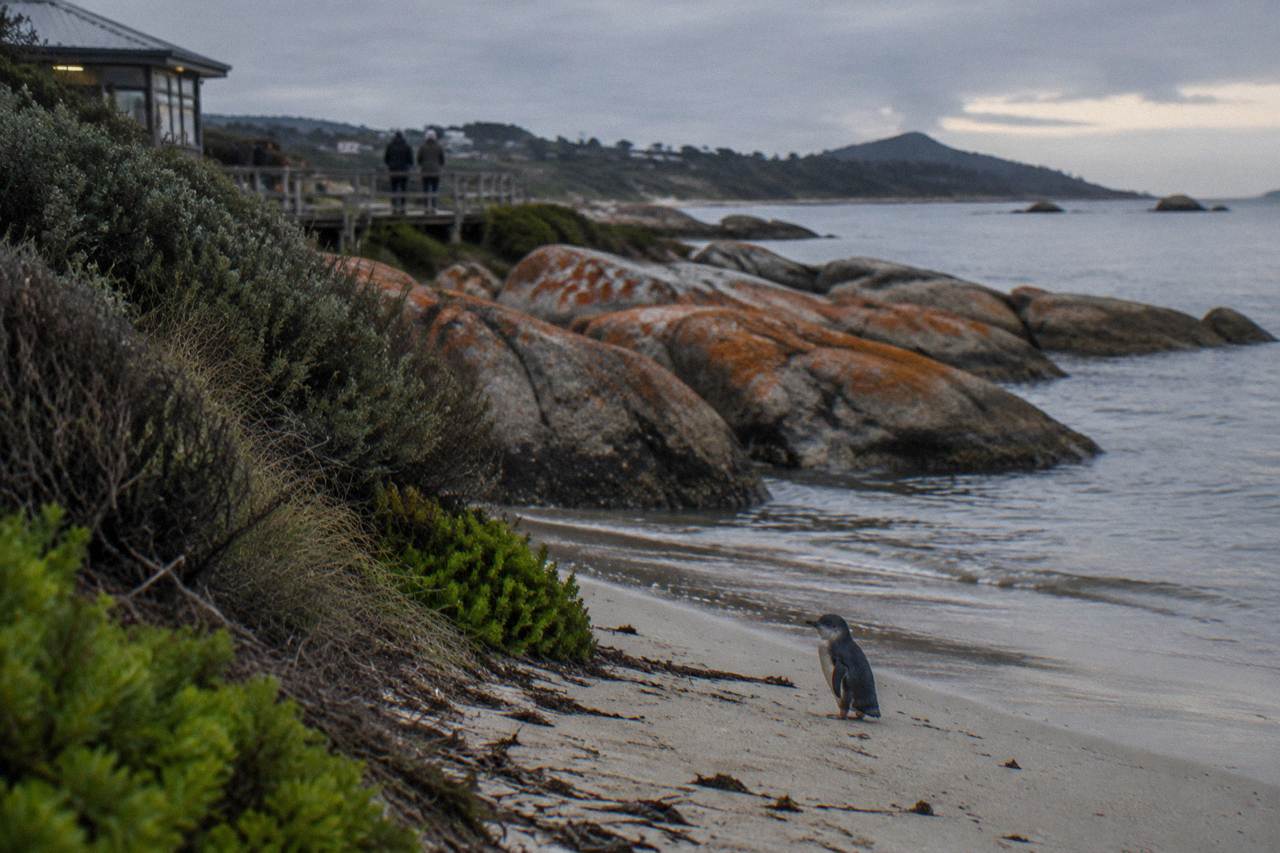
Where Can I See Penguins In Bicheno Without A Tour?
The honest answer is that Bicheno has no verified public penguin viewing spot: the rookery where the town's penguins come ashore sits on private land reached by the operator's bus, and no council or Parks and Wildlife page lists a free Bicheno platform. Independent penguin watching in Tasmania is possible, but the documented free platforms are elsewhere: Lillico Beach near Devonport, Burnie, Stanley, the Bruny Island Neck and Low Head. At Bicheno itself, the supported route is the guided walk. If you're weighing whether the guided walk fits your budget, the full Bicheno penguin tour price breakdown explains what the ticket includes and what extras to plan for.
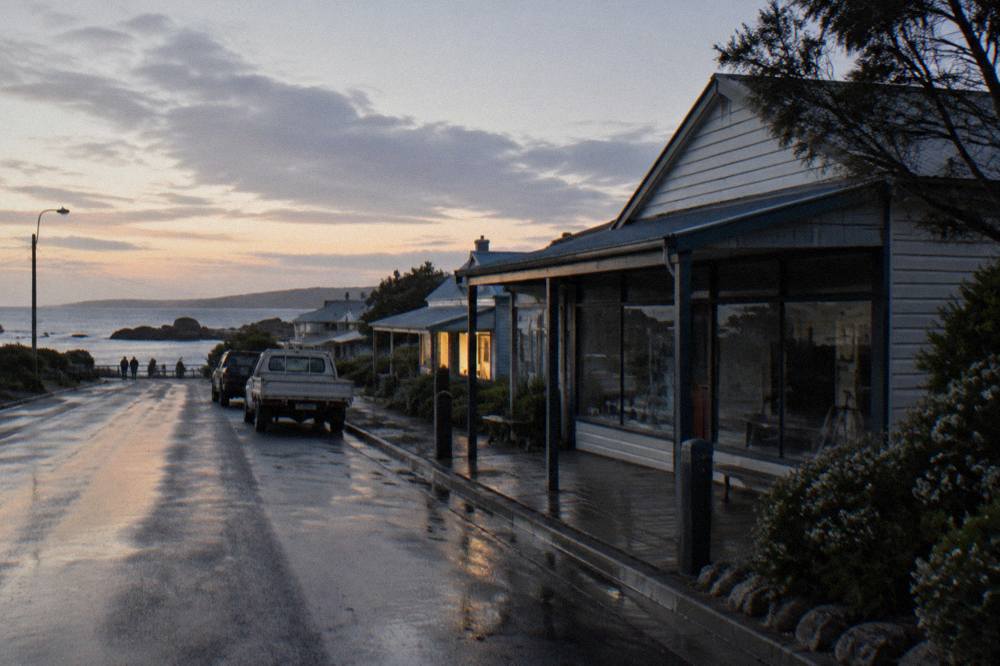
That answer surprises people, because Bicheno's penguins are famous. The town on Tasmania's east coast has been associated with little penguins since the early 1990s, when the local colony collapsed to about 40 birds after dog attacks. A program of land restoration and protection followed, and the population recovered on what is now a private rookery. The land is not a national park, not a council reserve and not a conservation area with a public boardwalk. It is privately held, and the operator that runs the nightly tours holds the access.
This matters for a practical reason. Penguins come ashore at last light, in small groups, and they are extremely sensitive to disturbance. The state's wildlife guidelines note that disturbed birds stay at sea longer, which delays feeding of chicks. A private rookery with controlled, guided access is how Bicheno keeps that pressure off the birds. Visitors who wander the town's beaches at night with a torch are not just breaking the rules, they are actively pushing penguins back out to sea.
If your heart is set on seeing penguins without paying for a tour, the answer is to shift location, not method. The rest of this article covers why the Bicheno rookery is closed to independent walkers, exactly what the official viewing rules require wherever you watch, the free platforms elsewhere in Tasmania, and when a guided tour is genuinely the better call anyway.
Why The Bicheno Rookery Is Private Land
The Bicheno rookery is privately owned land with no public right of access, and the operator's tour is the only sanctioned way onto it: a short bus ride from the shop at 1/70 Burgess St, then a guided walk of about 500 m over roughly 50 minutes. There is no public boardwalk, no council viewing platform and no Parks and Wildlife infrastructure at the site, because none of those bodies manage it.
The story of how it got this way is worth knowing. The operator established the tours in 1992, around the time the colony had fallen to about 40 birds following dog attacks. The recovery came through restoring the land: replanting vegetation, protecting burrows and controlling access. The result is a rookery that survived a near collapse, on ground that stayed private. The trade-off for the public is access through a booked tour only.
That access is deliberately narrow. The tours run nightly year-round, except Christmas Day and New Year's Eve, with departures shifting to track dusk: 5:00pm to 7:30pm in the February to August season and 7:30pm to 9:30pm from September to January, with the exact start confirmed at booking. There are no toilets at the rookery, no pickups from accommodation, and no transfers of any kind. You meet at the Burgess St shop, across from the IGA, where free parking is available.
Could you walk to the rookery yourself? Physically the coast is connected, but this is not a grey area. The land is private, the birds are protected wildlife under Tasmanian law, and the guidelines are explicit that you should never walk through a colony. Attempting to find the rookery at night, off track, with a torch, is precisely the behaviour that nearly wiped the colony out once before. The operator's FAQ page is blunt about booking ahead, and the listing is flagged as often selling out, so even the guided route needs planning.
If the idea of a guided walk appeals, the natural next question is cost and fit. We compared the listings on Tasmania Penguin Tours: the Bicheno walk starts from $53 per person, runs 70 minutes, and carries a 4.8 rating from 26 reviews, with free cancellation. The alternative from the north is the Low Head tour from Launceston, from $83 per person with central pickup, rated 5.0 from 22 reviews. Both are honest options; they just serve different itineraries.
What The Rules Say If You Watch Penguins Yourself
Wherever you watch little penguins in Tasmania without a guide, the NRE Tasmania penguin watching guidelines apply in full: dark clothing, dim red-light torches only, no flash, stay at least 3 m from burrows, approach from land rather than along the beach, and never bring dogs or cats, even leashed. These are not suggestions. Penguins are protected wildlife, and catching or harassing them is illegal. If you're wondering whether close contact is ever allowed, the rules on touching a fairy penguin explain what the law permits and what to do instead.
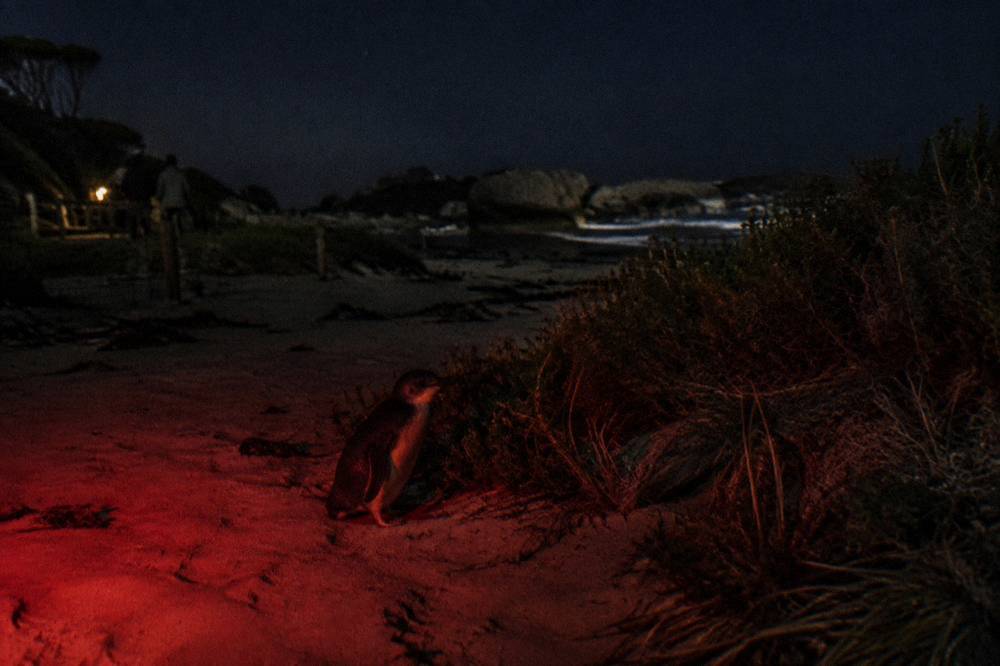
The full rule set is published by NRE Tasmania, and it rewards a careful read. The guidelines ask you to settle into a viewing spot before last light, stay quiet with minimal movement, use existing tracks rather than crossing the colony, and pick a position that does not block burrow entrances. Red cellophane over an ordinary torch is an accepted substitute for a purpose-built red light. Video without spotlights is fine; flash cameras are not. Binoculars help more than any light.
| Rule | What it means in practice | Why it matters |
|---|---|---|
| Dark clothing | Earth tones, no white or reflective gear | Penguins spot silhouettes against the sky |
| Red light only | Dim red torch, never pointed at water or birds | White light blinds birds adapted to night vision |
| No flash, ever | Flash off before you leave the car | A single flash can drive a whole raft back to sea |
| 3 m from burrows | Pick a spot well back from holes in the dunes | Burrow entrances must stay clear for birds to pass |
| Approach from land | Use tracks and viewing platforms, not the beach | Birds land on the beach and follow it to their burrows |
| No dogs or cats | Leave pets at home, leashed or not | Dogs killed dozens of birds at Bicheno in the 1990s |
The logic behind the last row is the Bicheno story itself. Dogs, along with feral cats, are listed among the primary threats to little penguins in Tasmania, capable of killing many birds in a single night. That is what happened at Bicheno, and it is why the recovery required excluding dogs from the rookery entirely. The same rule applies at every free platform in the state, and it is the one most commonly broken by well-meaning visitors who assume a leash is enough. It is not.
Timing matters as much as equipment. Penguins leave the water at last light and most come ashore in small groups within an hour or so of darkness, so arriving too early disturbs the settling-in, and arriving with a white torch at the moment of landing is the worst possible combination. Sunset in Tasmania swings widely across the year, from around 6:20pm in early October to peaks near 8:50pm in late December, so check a sunset table for your date rather than guessing. Our piece on when penguins come ashore in Tasmania covers the timing in more depth.
Free Penguin Viewing Spots Elsewhere In Tasmania
If you want penguins without a tour, the verified free options are Lillico Beach near Devonport, the Burnie Observation Centre, the Godfreys Beach platform at Stanley, the Neck on Bruny Island and the Low Head Lighthouse area, all listed by the Parks and Wildlife Service as seabird viewing sites. None of them is at Bicheno, and the drive between coasts is real, so pick based on your route.
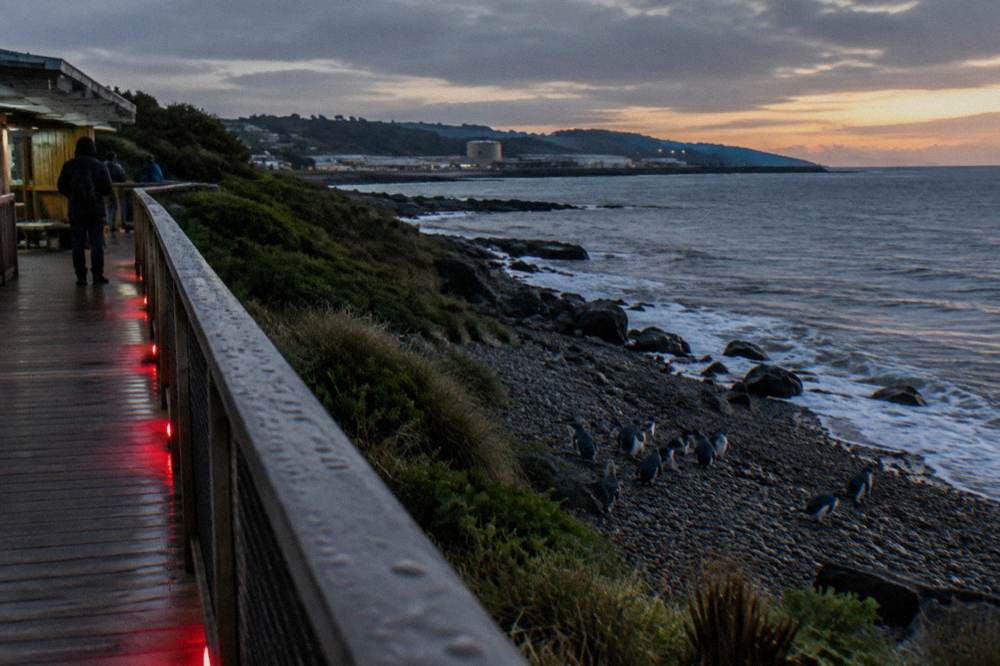
Lillico Beach is the closest thing the north has to a volunteer-run institution. The platform sits in the Lillico Strait Conservation Area about ten minutes west of Devonport, viewing runs generally September to April, and volunteer guides are on site in the evenings during the season with red-light torches. It is free, donations are welcome, and visitor torches and flash photography are banned. Burnie works similarly: the Friends of Burnie Penguins run free guided viewing nightly at dusk from 1 October to 31 March, meeting at the Observation Centre on the boardwalk about 30 minutes before dusk, with no booking needed. Stanley's Godfreys Beach platform is free, wheelchair and pram accessible, and fitted with red lighting.
The Neck on Bruny Island is named by the Parks and Wildlife Service as a viewing platform for little penguins and shearwaters, but the service publishes no hours, fees or facilities detail for it on a live page, so check the service directly before going. Reaching Bruny also means the SeaLink ferry from Kettering, a 20-minute crossing on a queueing system, with a summer timetable and a peak-season surcharge on visitor regular fares from December to April. The full picture is in our guide to every penguin viewing site in Tasmania.
Low Head deserves a special mention because it straddles both worlds. The Low Head Coastal Reserve near George Town is a recognised viewing area, and the operator there runs a nightly guided tour just after sunset, about an hour of viewing with small groups capped at ten guests, torches supplied and no selfie sticks or tripods allowed. The tour itself is ticketed, but the reserve is public land, and the Parks and Wildlife Service lists the Low Head Lighthouse area among its seabird viewing sites. Note one practical change: the Pilot Station cafe, accommodation and toilets at Low Head have been closed since April 2026 pending a new lessee, though the tours and grounds remain open, so plan accordingly.
When A Guided Tour Makes More Sense
A guided tour earns its fee at Bicheno for one simple reason: it is the only lawful, supported access to the rookery, and the same logic applies anywhere with a guide, since NRE Tasmania itself says the ideal way to watch little penguins is on a guided tour. The state's wildlife agency puts it in those terms, because a guide with a red light and a set route protects the birds while still giving you the experience.
Compare what you actually give up by going independent. At a free platform you get the birds, if they come, and the rules. On a guided walk you get a red light supplied, a guide who knows where the rafts land, interpretation of the breeding and moulting cycle, and a group size that is managed rather than accidental. The Bicheno tour runs 70 minutes with the guide, from $53 per person, rated 4.8 from 26 reviews, with free cancellation and a flag on the listing that it often sells out. Book ahead rather than turning up on the night, especially in the September to January breeding season when activity at the rookery is at its peak.
The season shapes what you see either way. September to January is the breeding season with the most activity; February to April is the moulting window, when adults stay ashore for two to three weeks replacing all their feathers; the February to August stretch is quieter. Our article on the best time to see penguins at Bicheno breaks the calendar down month by month, and it matters more for independent viewers, who cannot lean on a guide's knowledge of where the birds are.
For travellers based in Launceston rather than the east coast, the Low Head tour with transfer is the stronger fit: about 3 hours door to door including central Launceston pickup, about an hour of guided viewing at Low Head, from $83 per person, rated 5.0 from 22 reviews, with free cancellation. If you are already committed to Bicheno, though, the guided walk is the product that matches the place, and you can Check availability on the operator's live listing alongside the full Bicheno penguin tour rundown.
What To Wear And Bring For A Bicheno Evening
Dress for a cold, dark, windy beach: warm layers in dark colours, enclosed comfortable shoes, and no torch of your own, because the operator supplies the lighting and white light is the one thing that ruins the experience for the birds. The Bicheno operator requires enclosed shoes and permits photography without flash, which means your phone stays in your pocket after dark.
Tasmanian evenings drop sharply after sunset, even in summer, and the east coast is exposed to sea breezes that make the sand feel ten degrees colder than the car park. A windproof layer over a fleece, a beanie and closed walking shoes cover almost every night of the year. The operator's own experience page keeps the list short for exactly this reason: warm clothes, enclosed shoes, and nothing that glows. Our detailed what to wear on a penguin tour guide extends the same logic to every season.
One thing not to bring is a pet. The dog attacks that cut the Bicheno colony to about 40 birds are the founding story of the rookery's protection, and the no-dogs rule is absolute across every viewing site in the state. Food scraps come out with you too, since scraps attract predators. The complete photography rules, including why flash is banned and what a red light actually does to a penguin's eye, are covered in our penguin photography rules guide.
Is The Guided Walk Worth It Compared To Free Viewing?
Compared with the free platforms, the Bicheno guided walk buys you lawful access to a private rookery, a guide's red light and knowledge, and a 70-minute experience from $53 per person, which is less than the price of a decent dinner in town and roughly the cost of a movie ticket for two. Whether that is worth it depends on how much the Bicheno penguins specifically matter to your trip. If you're still weighing the decision, our honest verdict on whether the Bicheno penguin tour is worth the money lays out who should book it and who should just grab a free viewing spot instead.
If Bicheno is a stop on a longer east coast drive, the tour slots neatly into an evening that would otherwise be spent in the motel. The walk starts from the Burgess St shop, so there is no driving after dark on Tasmanian roads, which is a genuine safety consideration given the wildlife activity at dusk. If your itinerary is Hobart-based, or you are already paying for a Bruny Island day trip, the free platforms and the Neck viewing area may fit your route better at no cost.
The comparison worth making honestly is Bicheno against Low Head. Bicheno is shorter and cheaper, from $53 for 70 minutes, with no transfers. Low Head with the Launceston transfer is about 3 hours door to door and from $83, but it includes pickup, a longer overall experience and a perfect 5.0 rating from 22 reviews against Bicheno's 4.8 from 26. Families with young children often prefer the shorter Bicheno walk; travellers without a car prefer Low Head's included transfer. There is no wrong answer, only the one that matches your base.
Common Questions About Penguins In Bicheno Without A Tour
Where Can I See Penguins In Bicheno Without A Tour?
You cannot see the main Bicheno rookery without a tour, because it sits on private land with access only through the operator's guided walk. No public platform or free viewing spot at Bicheno is listed by the council or the Parks and Wildlife Service. Independent penguin watching in Tasmania is possible at free platforms such as Lillico Beach, Burnie, Stanley, the Bruny Island Neck and Low Head.
Can I Just Walk Onto The Beach At Bicheno At Night?
Walking through or toward a penguin colony at night is against the state's penguin watching guidelines, which require you to use existing tracks, stay clear of burrows and never disturb birds coming ashore. The Bicheno rookery is private land, and the town's beaches are not listed penguin viewing sites. The supported route at Bicheno is the guided tour.
How Much Is The Bicheno Penguin Tour?
The guided Bicheno beach walk starts from $53 per person on the listing, runs 70 minutes with the guide, and offers free cancellation. The operator's own direct pages show different figures for different seasons, so treat the listing price as the one to book against and confirm the current price there.
Where Are The Free Penguin Viewing Platforms In Tasmania?
The Parks and Wildlife Service names viewing platforms at the Bruny Island Neck Conservation Area, Lillico Beach Conservation Area near Devonport, the Burnie penguin viewing platform, the Godfreys Beach platform at Stanley and the Low Head Lighthouse area. Lillico and Burnie are the two with volunteer guides in season, both free with donations welcome.
Can I Take Photos Of Penguins At Bicheno?
Photography is permitted on the Bicheno tour without flash, and flash is banned at every viewing site in Tasmania. The reason is physiological: penguins are adapted to darkness, and a burst of white light can drive a whole group back out to sea, delaying the feeding of chicks. Red-light viewing and no flash are the standing rules everywhere.
What Time Do Bicheno Penguin Tours Start?
Departures track dusk. In the February to August season the window is 5:00pm to 7:30pm, and from September to January it is 7:30pm to 9:30pm, with the exact start time confirmed at booking. Penguins come ashore at last light, so the tour begins before the birds arrive and settles the group in place first.