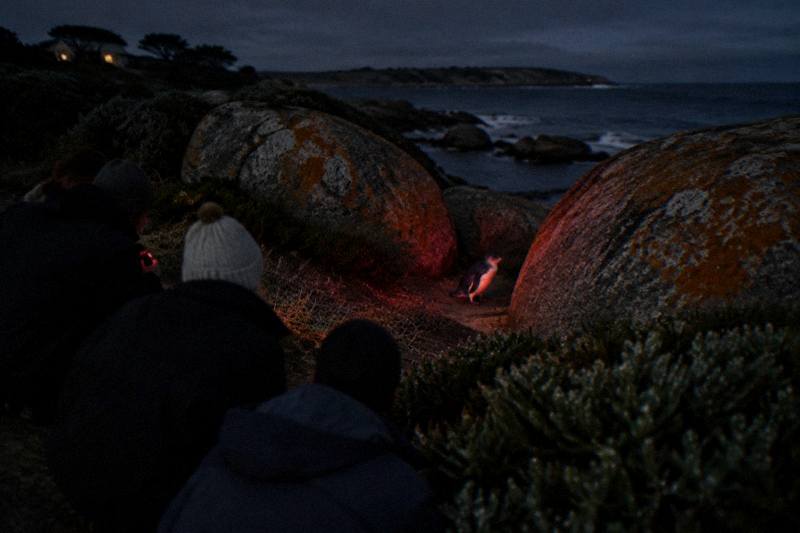
When Can You See Penguins At Bicheno?
Bicheno penguin tours run nightly all year, but departure times and what you see change with the season. Here is how the calendar and dusk timing work.
When Can You See Penguins At Bicheno?
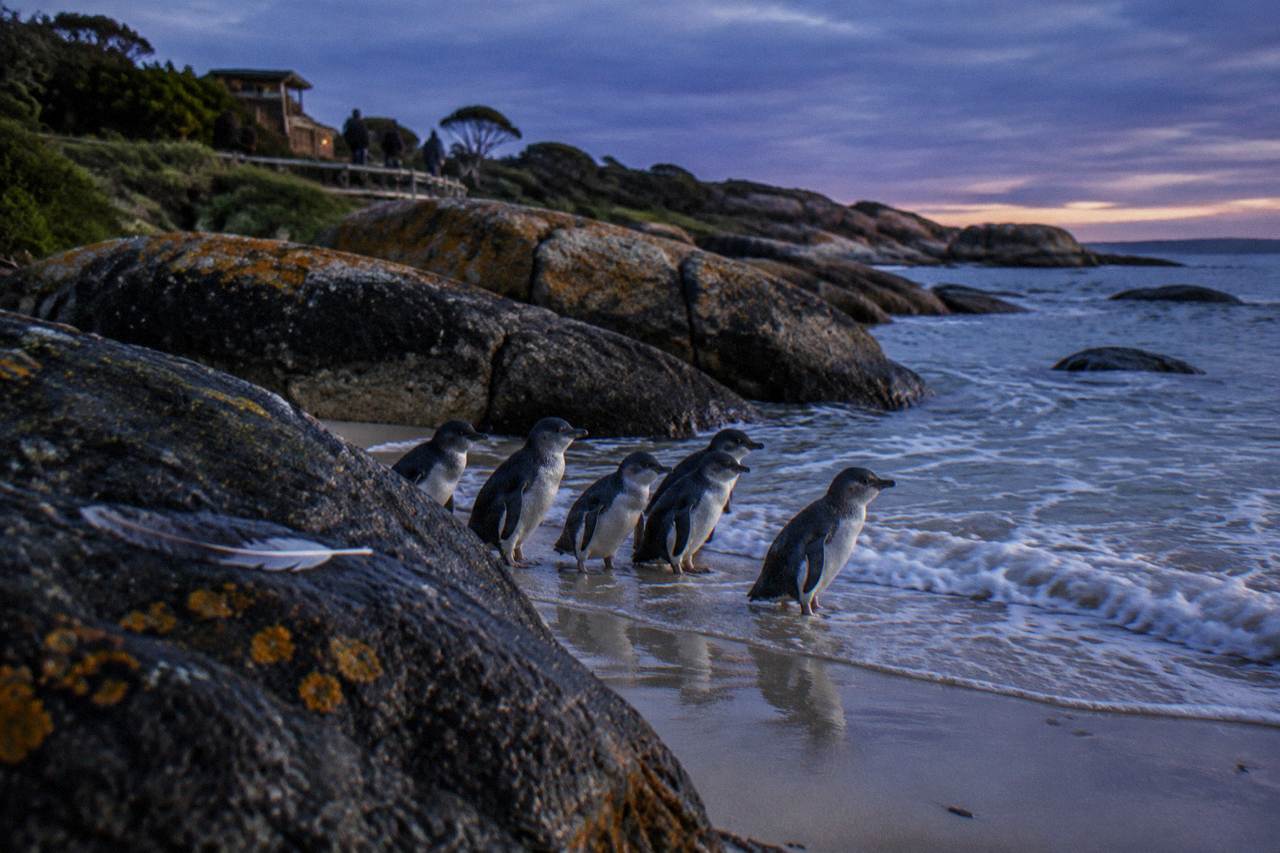
You can see penguins at Bicheno every night of the year, because the tours run nightly to a private rookery with only two exceptions, Christmas Day and New Year's Eve. The start time is the variable: departures run 7:30 to 9:30pm from September to January and 5:00 to 7:30pm from February to August, always adjusted to dusk and confirmed when you book. Once you've locked in a penguin tour night, the other things to do in Bicheno besides the penguins can help you fill the daylight hours.
That seasonal split is the single most useful thing to understand before you plan a night in Bicheno. Little penguins do not keep office hours. They spend daylight at sea feeding and return to their burrows in small groups within an hour or so of darkness, so a tour that started at 7:30pm in July would have its guests standing on a beach watching an empty ocean for two hours. The operator shifts the whole schedule with the seasons instead, and the exact meeting time for your date is confirmed at booking.
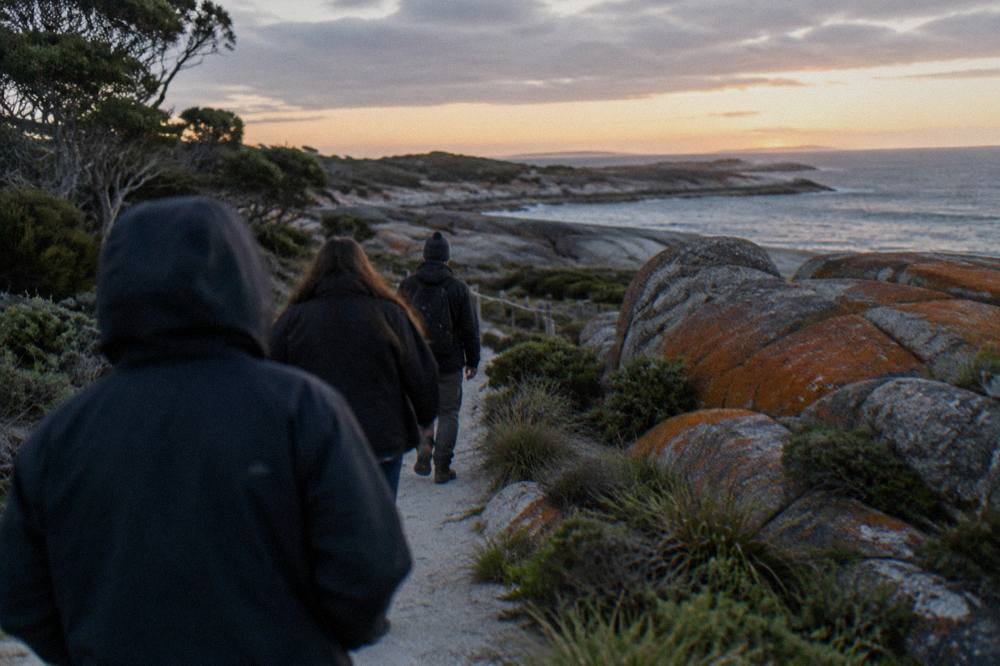
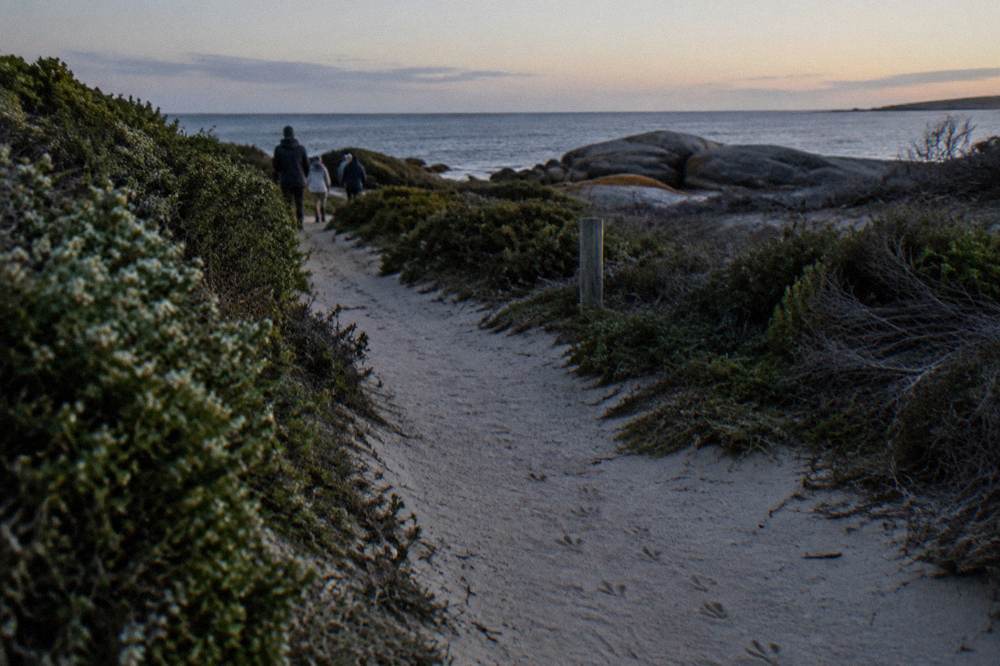
The experience itself is consistent across the year. Guests meet at the operator's shop at 1/70 Burgess St, take a short bus ride to the private rookery, then walk about 500 metres with a guide over roughly 50 minutes, about 70 minutes with the guide in total. The rookery is on restored coastal land with a story worth knowing: the colony fell to about 40 birds in the early 1990s after dog attacks, and years of land restoration brought it back to a level that now supports nightly tours. The operator has been running these walks since 1992.
If you are matching a penguin night to a wider Tasmania trip, the timing question connects to a bigger one. The seasonal pattern at Bicheno, breeding activity peaking in spring and summer, quieter burrow maintenance through winter, repeats at rookeries around the state, which is covered in detail in our guide to the best months for penguins in Tasmania. For Bicheno specifically, the two bookable options on the east coast and north coast are compared below.
What Time Do Bicheno Penguin Tours Start?
Departures fall in two seasonal windows: 7:30 to 9:30pm from September to January, when Tasmanian sunsets are late, and 5:00 to 7:30pm from February to August, when darkness arrives before dinner. The operator adjusts each departure to actual dusk on the night, and your exact start time is confirmed when you book.
The reason for the shift is arithmetic rather than preference. Sunset in the Hobart area sits near 6:20pm in early October, stretches to roughly 8:50pm by late December and early January, then falls back to around 7:30pm by late March. Bicheno, on the east coast, tracks close to those times. Since the birds follow darkness rather than a clock, the tour follows the sun.
| Season | Dates | Departure window | What changes |
|---|---|---|---|
| Spring and summer | September to January | 7:30 to 9:30pm | Late sunsets, breeding season, the busiest months for penguin activity |
| Fall and winter | February to August | 5:00 to 7:30pm | Early darkness, moulting then quieter burrow season, smaller groups |
A practical note follows from that table: do not lock in a dinner reservation for 7pm in January and assume the tour fits around it. In the September to January window the tour can end close to 10pm, while in August you may be back in town before 7pm. Build the evening around the confirmed start time, not the season's label.
The listing for this tour is flagged as often selling out, which matters most in the September to January window when east coast travel peaks. The tour is rated 4.8 from 26 reviews, costs from $53 per person, and carries free cancellation, so booking ahead costs you nothing if plans change. You can read the full rundown in our Bicheno penguin tours guide or check the tour's own page at the Bicheno guided beach walk.
Which Months Show The Most Penguins?
September to January is the breeding season and the period of most activity at the rookery, with the operator describing it as the busiest time on the beach. February to April is the moulting window, when adults stay ashore replacing feathers, and May to August is the quieter winter season with fewer birds but calmer tours.
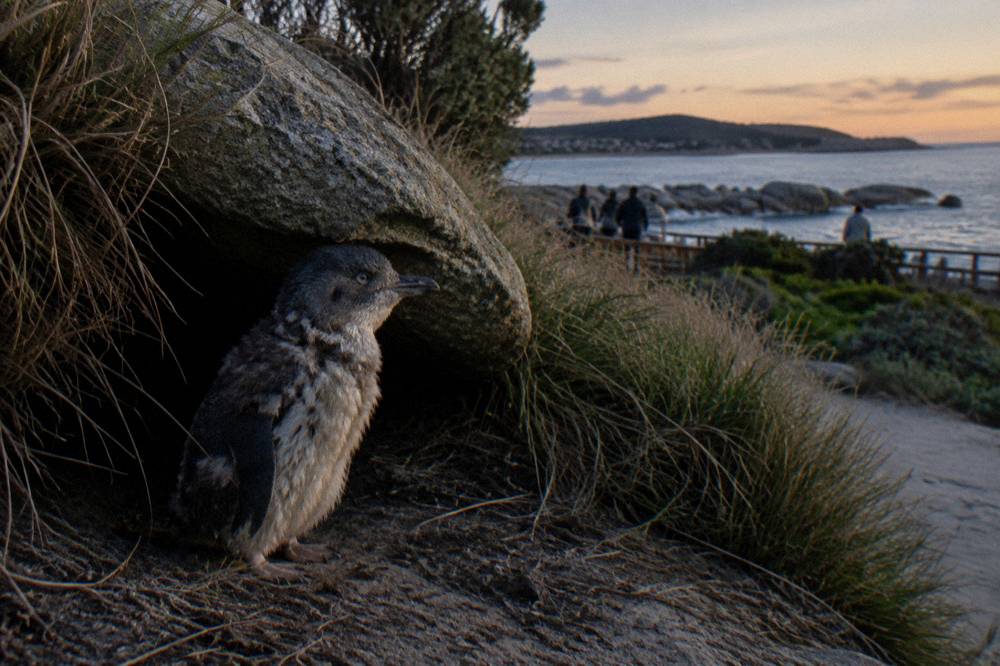
Breeding drives the spring and summer peak. Little penguins dig burrows 60 to 80 centimetres long, and clutches of two eggs can appear as early as May or as late as December, though the concentrated breeding period at most sites runs September to January. Incubation lasts about 35 days with parents sharing shifts of up to a week, and chicks fledge at about eight weeks. All of that means more birds commuting ashore each dusk with food, and more movement on the beach for a walking group to see.
Moulting flips the pattern. Adults fatten at sea first, then remain ashore for roughly two to three weeks while replacing all their feathers, unable to fish. The operator notes February is typically moulting season, so a late-summer tour can show you birds standing near burrows in a state somewhere between scruffy and prehistoric. They are not sick, they are simply waiting out their wardrobe change.
| Months | What is happening | What it means for a tour |
|---|---|---|
| September to January | Breeding season, eggs and chicks | Most birds ashore, most activity, busiest tour nights |
| February to April | Moulting, adults stay near burrows | Birds visible but static, quieter beach |
| May to August | Winter, nest maintenance and sea time | Fewer birds, smaller groups, very early start times |
For context on how Bicheno's numbers compare elsewhere: the Low Head operator on the north coast describes roughly 100 to 200 penguins coming ashore nightly from November to February, against 10 to 100 from March to October. No equivalent nightly counts are published for Bicheno's rookery, so the honest comparison is seasonal shape rather than headcount, and both sites peak over the same spring and summer window.
Why Do Penguins Only Come Ashore At Dusk?
Little penguins return to land in the hour or so after darkness falls because the cover of night protects them from aerial predators, and disturbed birds will stay at sea longer, which stresses them and delays feeding of chicks. That is why every Bicheno departure is pegged to dusk rather than a fixed clock time. The same sensitivity to light explains why cameras are restricted at these viewings, and the rules on photographing penguins in Tasmania covers what gear is permitted and how to shoot safely.
The biology behind the timing is well documented by the state wildlife authority. Adults weigh about 1 kilogram and stand around 40 centimetres tall, which makes them the smallest penguin species and easy prey for gulls and raptors if they cross a beach in daylight. Coming ashore in small groups after last light is their main defence, and the groups, sometimes called rafts, often hesitate in the surf for minutes before the first bird commits.
This is also why the viewing rules are strict and why guided tours exist at all. The state's penguin watching guidelines ask visitors to settle into position before last light, stay quiet, keep movement minimal, and never shine a torch toward the water or the birds. A guided group that arrives, stands still and lets the birds land does measurably less harm than a self-guided visitor with a phone flashlight. The state's little penguin page goes further and recommends joining a guided tour as the ideal way to see them.
One consequence of dusk logic deserves a line of its own: in deep winter the tour can start at 5pm, which feels absurdly early for a wildlife night until you remember the sun is gone by 5:30. Check the confirmed time for your date and treat it as the truth, not the brochure's seasonal label.
Bicheno Or Low Head: Which Fits Your Trip?
Bicheno suits travellers already on the east coast near Freycinet, with a 70-minute walk from $53 and no accommodation pickups. Low Head suits Launceston-based travellers, with a roughly 3-hour door-to-door experience from $83 that includes central Launceston pickup, about an hour of guided viewing and a maximum of 10 guests.
The two tours are not really competitors, they are geographic. Bicheno's meeting point is a shop on Burgess St, and the operator runs no transfers from accommodation, so you need your own wheels or a base in town. The Low Head listing bundles the Launceston transfer in, picks up in the city centre, and is rated 5.0 from 22 reviews against Bicheno's 4.8 from 26, a difference small enough that geography should decide it for you.
Timing differs too. Bicheno's departures swing between the two seasonal windows described above. Low Head tours run every night just after sunset year-round, with the operator noting numbers are higher from November to February. If your Tasmania dates fall in that November to February band and you are choosing between coasts purely for penguins, both rookeries are near their best.
A reasonable rule: if Freycinet, Coles Bay or the east coast driving route is already in your plan, book Bicheno and stay the night in town. If you are flying into Launceston and want a penguin evening without renting a car or a two-night detour, the Low Head transfer tour is the one built for that. Free cancellation applies to both listings, so a tentative hold costs nothing while your itinerary settles.
How Far Ahead Should You Book?
Book as far ahead as your dates are fixed, especially for September to January, because the Bicheno listing is flagged as often selling out and the operator itself advises booking weeks in advance. Free cancellation means an early booking carries no penalty if the trip reshuffles, and the exact start time is only confirmed at booking.
The sell-out risk is real rather than marketing gloss. The tour is a walking group through a private rookery, not a stadium, and the guide-to-guest experience depends on keeping numbers sane. East coast summer is when Tasmania's road-trip traffic peaks, and the Apsley road works on the Tasman Highway between Bicheno and the Coles Bay Road turn-off, under way since early 2025 with completion expected in 2027, have done nothing to thin the crowds, only to slow them.
Winter is the opposite market. February to August departures start at 5pm, groups are smaller, and the operator's own FAQ describes the quieter season as nesting and maintenance time rather than empty beaches. Travellers who want the beach more to themselves, and who do not mind early darkness and cold air, often find the winter walk the better experience. The operator's FAQ page answers most timing questions directly, including what to wear.
The site publisher behind this comparison, Tasmania Penguin Tours, keeps the two bookable listings side by side so you can weigh price, duration and meeting point in one place rather than across a dozen open tabs.
Planning The Night: Meeting Point, Shoes And Cameras
Meet at the shop at 1/70 Burgess St in Bicheno, across from the IGA, where free parking is available and the short bus ride to the rookery begins. Wear enclosed comfortable shoes and dark warm clothing, bring no flash and no bright torch, and expect no toilets at the rookery itself.
The footwear rule is enforced rather than suggested, because the 500-metre walk crosses uneven natural ground in the dark. Dark clothing matters for the same reason the timing does: silhouettes and pale fabrics read as threat to a bird deciding whether to leave the water. Photography is permitted on the tour but only without flash, which aligns with the state-wide rule that flash cameras should never be used on a penguin beach. If you want the full reasoning and the red-light workaround, it is laid out in our guide to penguin photography rules in Tasmania.
Wheelchair access is handled case by case, so contact the operator before booking if that applies to your group. There are no transfers from accommodation, which catches out visitors staying outside the town centre. And because the rookery has no toilets, use the facilities near the meeting point before the bus leaves.
One last seasonal note for the drive home: Tasmania's standard advice is to drive cautiously at dusk and dawn because wildlife moves onto roads, and a tour that ends after dark puts you on that road at exactly the wrong hour. Take it slow back to your accommodation, and if you spot a sick or dead seabird anywhere on the coast, the emergency animal disease hotline is 1800 675 888.
Common Questions About Seeing Penguins At Bicheno
When Can You See Penguins At Bicheno?
Every night of the year except Christmas Day and New Year's Eve. Departures run 7:30 to 9:30pm from September to January and 5:00 to 7:30pm from February to August, adjusted to dusk and confirmed at booking.
What time do penguins come ashore at Bicheno?
Little penguins come ashore in small groups within an hour or so of darkness. The tour start time is pegged to dusk, which is why it shifts by more than two hours between summer and winter.
Are there more penguins at Bicheno in summer?
September to January is the breeding season and the period of most activity at the rookery. February to April is moulting, when adults stay near their burrows, and May to August is the quieter winter season.
How long is the Bicheno penguin tour?
About 70 minutes with the guide: a short bus ride from the Burgess St shop to the private rookery, then a guided walk of roughly 500 metres over about 50 minutes.
Can you see penguins at Bicheno without a tour?
The rookery the tours use is private land, so the guided walk is the reliable option. The wider question of free and self-guided viewing around Bicheno is covered in our guide to free penguin viewing in Tasmania.
Do Bicheno penguin tours sell out?
Yes, the listing is flagged as often selling out, and the operator advises booking weeks in advance, particularly in the September to January window. Free cancellation applies, so an early booking carries no penalty.