Penguin Photography Rules In Tasmania: What You Can And Cannot Shoot
Little penguins come ashore in near darkness, and every photography rule in Tasmania exists for one reason: a bird that feels unsafe stays hungry at sea. This guide sets out the official rules, site by site, and what pictures are actually achievable when the light is gone.
Short answer
Flash photography is banned at every penguin rookery in Tasmania because disturbed birds stay at sea longer, delaying the feeding of chicks. Dim red-light torches are the only artificial light allowed, never pointed at penguins or the water. Video without spotlights is fine, you must stay 3 m from burrows, and touching a penguin is illegal.
Little penguins weigh about 1 kg and stand roughly 40 cm tall, and almost everything about their evening routine happens in the last of the light. They leave the water at last light and come ashore in small groups within an hour or so of darkness, which means the moment you most want to photograph is the moment there is the least light to photograph it in. Tasmania's rules are built around that collision, and they are not suggestions. The state's wildlife guidelines are published by the Department of Natural Resources and Environment, and the rookeries with guides enforce them on the sand.
This guide walks through the rules as they apply to a camera: what is banned and why, how the rules differ between Bicheno, Low Head, Lillico, Burnie and the other viewing sites, what realistic pictures look like at dusk, and what to pack. Where a figure matters, it comes from the official guidance or the operator's own pages.
Why Is Flash Photography Banned At Penguin Rookeries?
Flash is banned because a little penguin's eyes are tuned for a life spent at sea, and a bright burst of light can stop a bird coming ashore at all. The state guidance is blunt about the consequence: disturbed penguins stay at sea longer, which stresses them and delays the feeding of chicks waiting in burrows. No rookery in Tasmania permits flash, at any hour, on any camera.
The mechanics are worth understanding, because they explain every rule that follows. A little penguin returning to its burrow has spent the day fishing, sometimes far offshore, and it is carrying food for chicks. When it surfaces near the beach it is making a series of quick decisions: is the landing safe, is the group ready, is the path to the burrow clear. Bright light resets that decision. The bird turns around, swims back out, and waits. The guidance from the state's wildlife department notes that the longer a penguin stays at sea after disturbance, the more stress it carries and the longer its chicks go unfed.
That is also why the ban is not limited to the obvious case of a full flash unit firing. A bright phone screen held up at the wrong moment, a head torch on white mode, a video light: all of them do the same work as a flash. The Bicheno operator's FAQ permits photography on its tours with a single condition, no flash, and the Low Head operator goes further and bans torches, selfie sticks and tripods outright, supplying its own low-intensity red and yellow lighting instead. The strictest version of the rule sits across Bass Strait, at the Phillip Island Penguin Parade in Victoria, where the official policy bans all photography and filming after sunset. Tasmania's sites stop short of that, but only just. If you're weighing which penguin experience suits you better, our Phillip Island versus Tasmania comparison covers the differences in access, cost, and viewing conditions.
There is a legal layer too. Little penguins are protected wildlife in Tasmania, and catching or harassing them is illegal. Harassment is defined broadly enough that shining light into a bird's eyes on purpose, or persistently following one up the beach, can fall inside it. A ranger is the right person to report problems to, and the state's wildlife line takes reports of sick or injured birds.
What Are Tasmania's Official Penguin Watching Rules?
The official guidance from the state wildlife department covers ten behaviours: wear dark clothing, approach from land rather than along the beach, use existing tracks, stay 3 m from burrows, settle before last light, keep quiet, use only dim red-light torches, never point light at penguins or the water, leave dogs and cats at home, and take food scraps with you. Video without spotlights is explicitly fine, and binoculars beat zoom lenses for watching.
The full guidelines are published by NRE Tasmania, and they are worth reading once in full because they explain the reasoning behind each rule rather than just listing prohibitions. The department also suggests, on its little penguins page, that visitors ideally join a guided tour, because a guide handles the lighting, the distance and the approach for you.
| Rule | What it means in practice | Why it exists |
|---|---|---|
| Dark clothing | No white or bright outer layers at the rookery | Light-coloured clothing is visible to penguins in low light and reads as a hazard |
| Approach from land | Use the track, never walk up the beach | Birds land on the sand; a silhouette on the beach blocks their path |
| 3 m from burrows | Pick a viewing spot well back from tunnel entrances | Burrow entrances collapse easily and a blocked entrance can trap a bird |
| Settle before last light | Arrive early and stay still | Movement after dark is the single biggest source of disturbance |
| Red light only | Dim red torch or red cellophane over a lens, never white | Red light falls outside the penguin's most sensitive range |
| No light toward birds | Never shine at penguins or across the water | Light on the water makes landing birds turn back |
| No dogs or cats | Not even leashed, not even in the car park | Dogs and feral cats can kill many birds in one night |
| No flash | On every camera, phone included | Disturbed birds stay at sea and chicks wait longer to feed |
Two of those rules deserve a note. The dark clothing rule is the one people most often break without thinking, because a white rain jacket is exactly what most people pack for a Tasmanian evening. The department's advice on settling before last light also has a practical photography benefit: a group that arrives early, sits down and stops moving sees far more birds than a group that wanders in at dusk. The same patience that protects the penguins produces the better viewing. If you're still shaping your route, this planner for how many days Tasmania really needs slots a dusk penguin evening into either the east or north coast.
If a self-guided visit sounds like a lot of rules to hold in your head, a guided tour is the alternative the department itself suggests. Both bookable tours on this site run with a guide who carries the lighting and manages the group's positioning, and both allow free cancellation:
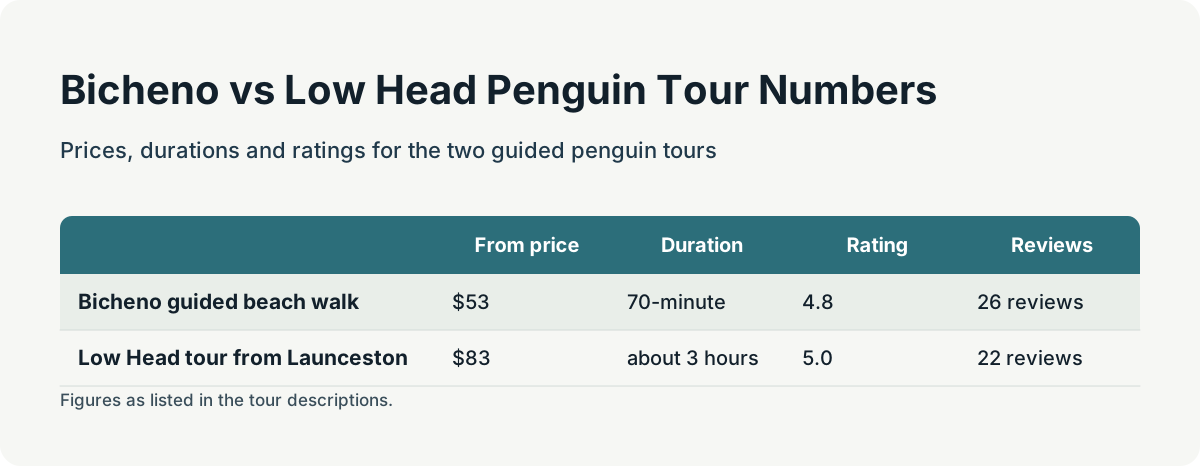
The Bicheno tour is a 70-minute guided beach walk from $53 per person, rated 4.8 from 26 reviews, and the listing is flagged as often selling out. The Low Head tour from Launceston is a small-group evening from $83 per person, rated 5.0 from 22 reviews, with a maximum of 10 guests and a central Launceston pickup.
Which Photography Rules Apply At Each Viewing Site?
Every site in Tasmania follows the state rules, but each adds its own restrictions: Bicheno permits photography without flash on a private rookery, Low Head bans torches, selfie sticks and tripods and supplies its own red and yellow lights, Lillico and Burnie are volunteer-run with no visitor torches at all, and Bruny Island's Neck platform is a self-guided conservation area where you bring your own red light.
The differences matter when you are choosing where to go with a camera. A tripod ban, for instance, rules out the long-exposure approach that is the usual answer to low light, and a volunteer-run platform means someone is watching your torch before you even switch it on.
| Site | Guided or self-guided | Photography permitted | Extra restrictions |
|---|---|---|---|
| Bicheno (private rookery) | Guided tour, nightly | Yes, without flash | Enclosed shoes required, meet at the Burgess St shop, no toilets at the rookery |
| Low Head Coastal Reserve | Guided tour, nightly after sunset | Yes, without flash | No torches, selfie sticks or tripods, red and yellow lights supplied, wheelchair access |
| Lillico Beach platform | Volunteer guides in season | Yes, without flash | No visitor torches, guides hold the red lights, free with donations welcome |
| Burnie Observation Centre | Volunteer guides, 1 October to 31 March | Yes, without flash | Red cellophane recommended for any torch, level wheelchair-accessible boardwalk |
| Bruny Island Neck platform | Self-guided | Yes, without flash | Bring your own dim red light, check the Parks and Wildlife Service before going |
| Stanley, Godfreys Beach platform | Self-guided | Yes, without flash | Platform has red lighting, pram and wheelchair accessible |
The Bicheno tour deserves a specific note for photographers, because it is the one site where the operator has thought about cameras directly. Its FAQ permits photography on the walk, with the no-flash condition, and the tour structure suits it: a short bus ride from the shop at 1/70 Burgess Street, then a guided walk of about 500 m over roughly 50 minutes on a private rookery where the birds are used to people keeping still. The tour runs nightly year-round except Christmas Day and New Year's Eve, departing between 5:00pm and 7:30pm in the February to August season and between 7:30pm and 9:30pm from September to January, with the exact start time confirmed at booking. You can read the fuller site guide in the Bicheno penguin tours page, and check current dates and availability on the operator's live listing: Check availability.
The Low Head rules are stricter on gear but more generous on light. The operator supplies low-intensity red and yellow lighting, which means you are not managing your own torch at all, and the group is small, typically 10 to 15 people, with the bookable Launceston version capped at 10 guests. Tours run every night just after sunset for up to an hour of guided viewing, and the transfer version runs about 3 hours door to door with central Launceston pickup. The site detail is covered in the Low Head penguin tours guide.
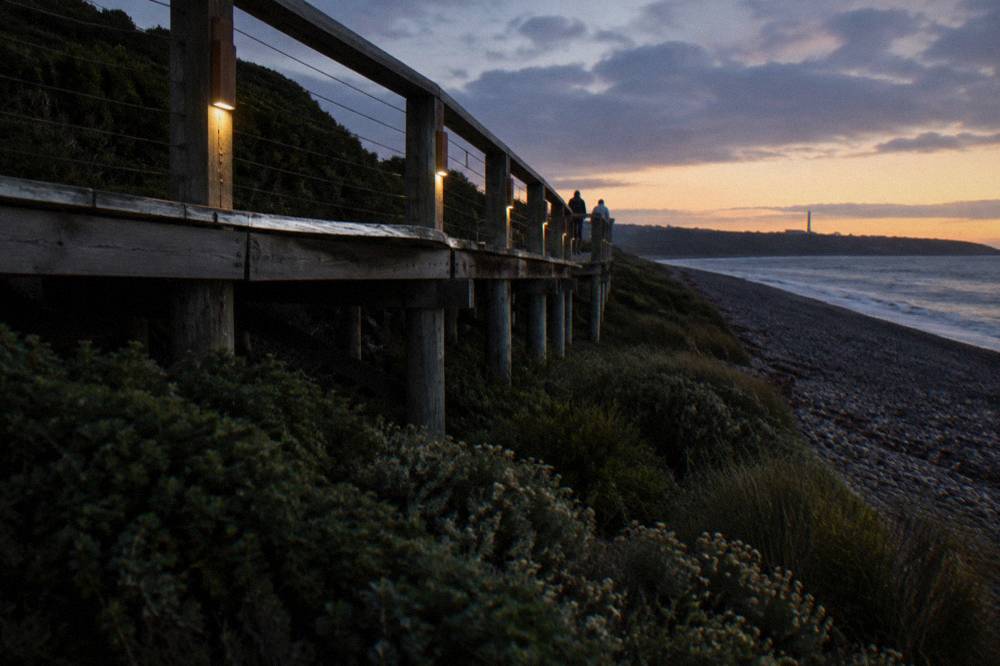
For the free sites, the pattern is consistent: volunteer presence, no visitor torches, and a platform that keeps you off the sand. The Lillico Beach platform near Devonport runs with volunteer guides generally from September to April, and the Burnie Observation Centre runs free guided viewing nightly from 1 October to 31 March, with guides on the boardwalk from 30 minutes before dusk. Neither takes bookings, and both accept donations.
What Photos Are Realistic At Dusk?
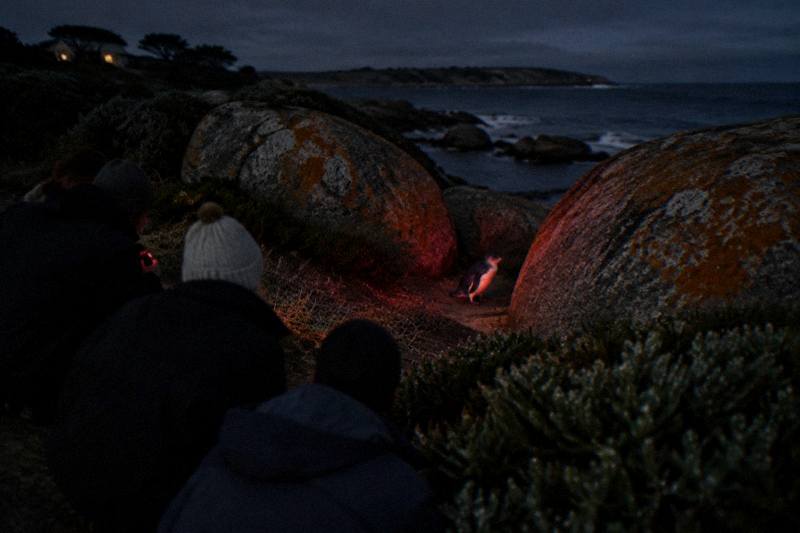
The honest answer is that a crisp, well-lit penguin photograph is not achievable within the rules, so the realistic outcomes are silhouettes against the last sky, red-lit shapes on the sand, and wide dusk landscapes of the rookery itself. Video without spotlights is allowed and often works better than stills, because the eye reads motion where a single frame reads as noise.
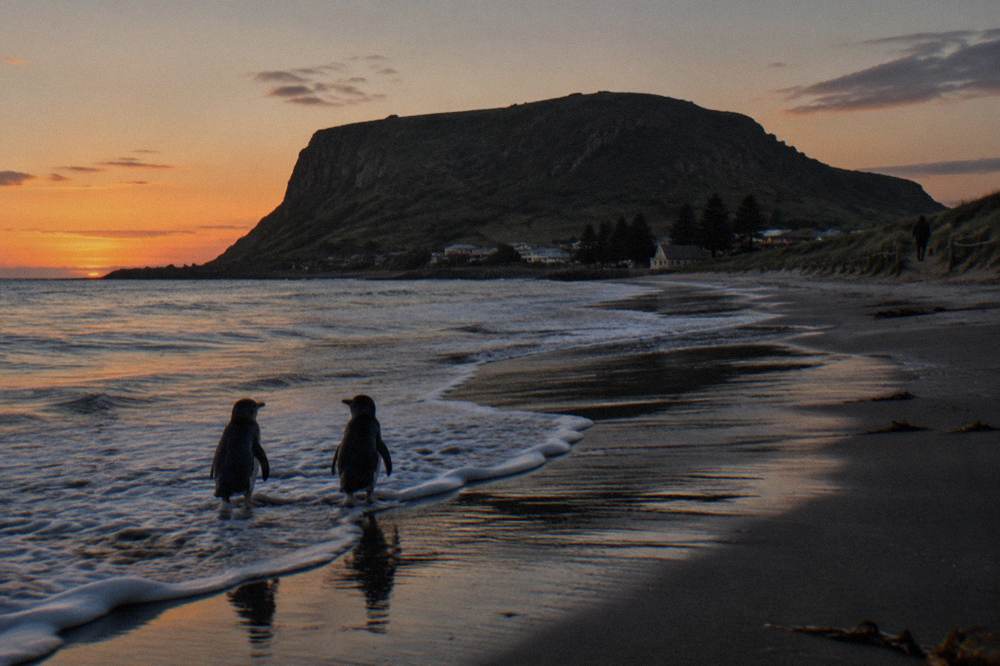
Set expectations before you pack. A little penguin is 40 cm of dark feather on a dark beach, arriving roughly an hour after the sun goes down. The sky in front of you will be the brightest thing in the frame for most of the viewing window. What that produces, on a camera that handles low light well, is a silhouette: a small shape with a recognizable waddle, backlit by the horizon. Those images work. They are the honest record of what a penguin evening actually looks like, and they are the only kind the rules permit.
It is also worth knowing where the pictures you have admired actually come from. Most published penguin photographs with detail in the bird were taken with remote rigs, red-filtered studio-style light or daylight at a colony, not handheld on a public tour. Expecting that result from a dusk walk is setting yourself up for disappointment, and chasing it is what pushes people toward the flash button in the first place.
The gear that helps is the gear that gathers light rather than adds it: a fast lens, a camera that stays usable at high sensitivity, and patience with a static subject. A tripod would be the obvious answer, and at Low Head it is explicitly banned, so a monopod or a beanbag on a platform rail is the workaround where the site allows it. Binoculars, which the state guidance recommends, are genuinely better than a zoom lens for watching, because they gather light without recording anything and they cost nothing to hold steady.
Video deserves a second look if you have not considered it. The guidance draws a clean line: flash cameras should not be used on the beach, but video without spotlights is fine. Modern phone cameras and mirrorless bodies will shoot usable video in light where a still frame is a grey smear, and a ten-second clip of birds crossing the sand in silhouette often captures the evening better than any single photograph. Keep the screen brightness down, and angle the phone away from the water.
If your heart is set on a photograph with actual detail in the bird, the honest route is a guided tour where the guide positions the group and manages the light, and then to accept that the picture is a memory aid rather than a portfolio piece. The Low Head tour with Launceston transfer is a good candidate for that approach, because the operator's supplied red and yellow lighting gives the camera something consistent to work with and the 10-guest cap keeps the group tight.
The tour runs about 3 hours door to door from central Launceston, with about an hour of guided viewing at Low Head near George Town, from $83 per person, rated 5.0 from 22 reviews, with free cancellation.
How Do Red Torches Work On A Penguin Tour?
Red light is allowed because it sits at the edge of a penguin's visual sensitivity, so a dim red torch lets you see the beach without reading as a threat to a bird. The rules are specific: red cellophane over an ordinary torch is acceptable, the light must be dim, and it must never be pointed at penguins or across the water, because light on the water is what turns landing birds back to sea.
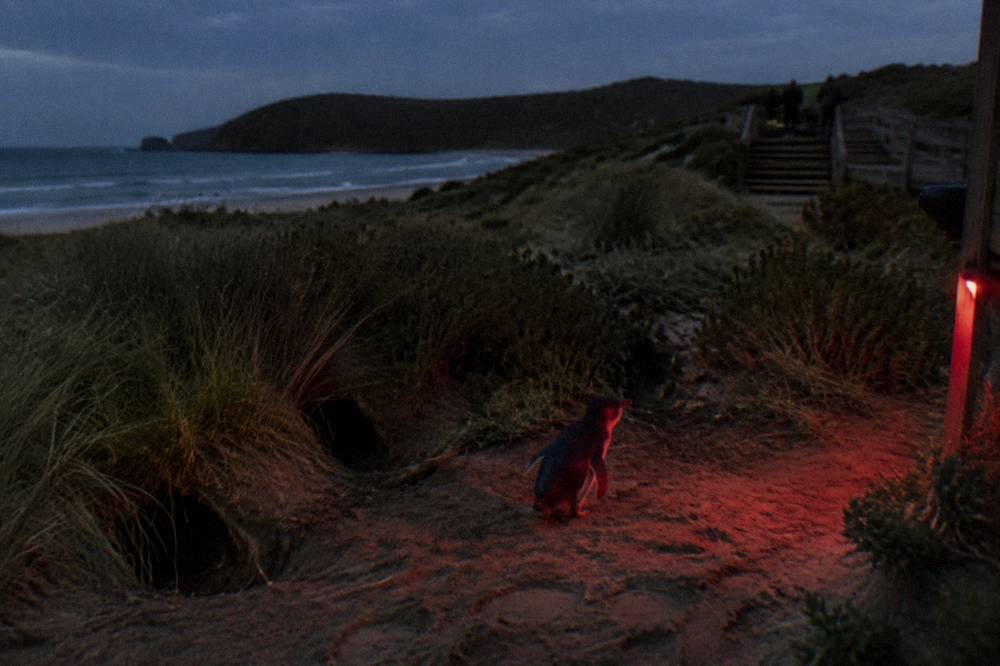
The practical version of the rule is simple to hold in your head. Red light for the ground, never for the birds. You use it to find the track, to see where you are sitting, to avoid stepping on a burrow entrance, and that is all. At the guided sites, the guide carries the light and you carry nothing, which is why the Low Head operator bans visitor torches entirely and supplies red and yellow low-intensity lighting itself. At the volunteer-run platforms at Lillico and Burnie, the guides hold the red torches and the same logic applies. At self-guided sites like the Bruny Island Neck platform and the Godfreys Beach platform at Stanley, the light is your responsibility, and red cellophane over a cheap torch is the standard fix.
A red torch also changes what your camera can do, and not in your favour. A camera sees red light as red light, so a red-lit penguin photographs red-lit. Some photographers like the effect and it is within the rules as long as the light is dim and off the birds; others find it turns every frame the same shade of amber. If you shoot under supplied lighting at a guided site, expect warm-toned images and plan around them rather than fighting them.
The torch rules connect back to the flash rules in one important way. A white torch is not a softer version of a flash, it is the same problem sustained: a beam on the water tells a raft of penguins offshore that the beach is not safe, and the whole evening's landing can stall. That is why the no-torch bans at Low Head and Lillico are enforced on arrival, before the group even reaches the platform. For more on why cameras and penguins clash after dark, the article on why you cannot photograph penguins covers the eye physiology in detail.
Guided tours are the low-effort route to compliant lighting, since the operator handles it. The Low Head evening tour from Launceston supplies all lighting and runs with a cap of 10 guests on the bookable version.
It departs central Launceston, transfers to the Low Head Coastal Reserve near George Town, and returns about 3 hours after pickup, from $83 per person with free cancellation.
How Close Can You Get To Penguins And Can You Touch Them?
You must stay at least 3 m from burrows and never touch a penguin, and the no-touching rule is law, not etiquette: little penguins are protected wildlife in Tasmania and catching or harassing them is illegal. The 3 m rule also means not blocking a burrow entrance with your body or your bag, and the approach rule means coming from land on an existing track rather than walking up the beach the birds land on. If you're wondering whether any exceptions exist, the rules on touching fairy penguins explain what the law actually permits.
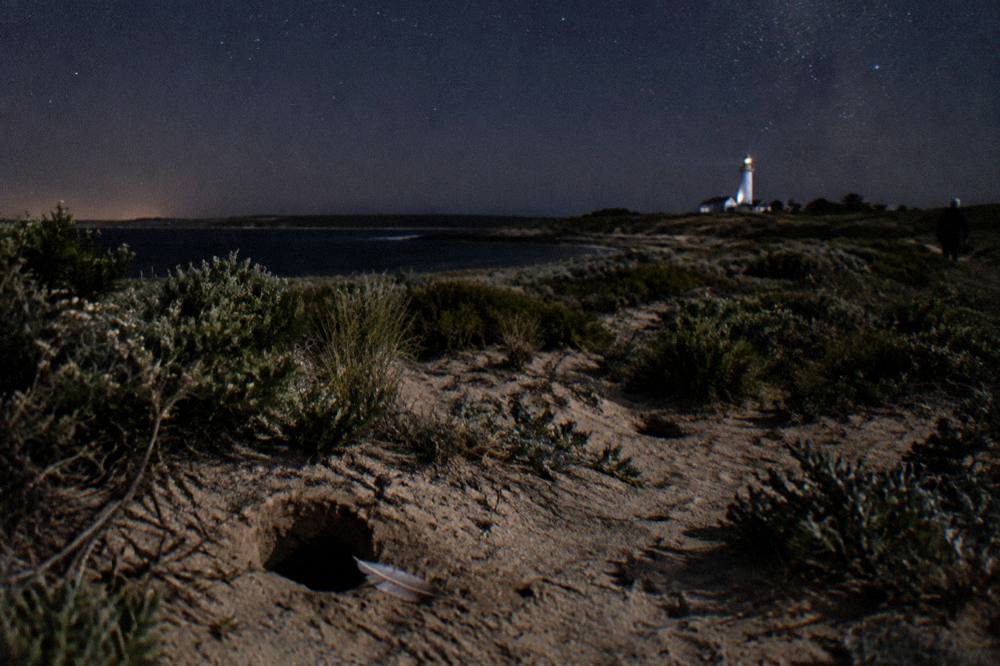
The 3 m distance is measured from the burrow, not from the bird, and that distinction matters on a rookery. A burrow tunnel runs 60 to 80 cm into the ground, and the entrances are easy to miss in low vegetation, which is why the guidance tells you to use existing tracks and never walk through the colony. Sitting 3 m back from an entrance you can see is the minimum; the safer habit is to pick one spot, settle there before last light, and let the birds walk past you, which they will do at a distance of a metre or two if the group is still and dark-clothed.
Touching is where the rules stop being about welfare and start being about law. A little penguin that lets you pick it up is not tame, it is exhausted or ill, and handling it is an offence as well as a harm. The same protection covers chasing, blocking and persistent following. If you find a bird that looks sick or dead, do not handle it: the state runs an Emergency Animal Disease Hotline on 1800 675 888, and H5 bird flu has been confirmed in Tasmanian wild birds, including little penguins on King Island, so keeping distance from sick birds protects you as well as the bird.
Photographically, the distance rules actually help. A penguin that has decided your group is a harmless part of the landscape will walk a predictable line between the water and its burrow, and a still photographer 3 m off that line with a red-lit or silhouetted frame gets the better picture than someone creeping closer. The birds at the established rookeries are used to guided groups, and the guides at Bicheno and Low Head manage the group's position so the birds' route stays clear, which is a large part of what you are paying for on a tour.
The Low Head tour is built around exactly this: a guide, a small group of at most 10 on the bookable Launceston version, and a managed position at the reserve.
It runs nightly just after sunset, from $83 per person including the Launceston transfer, rated 5.0 from 22 reviews.
What Should You Pack For A Penguin Photography Night?
Pack for darkness and cold: dark, warm layers, enclosed shoes, a torch wrapped in red cellophane as a backup, binoculars, a camera that handles low light, a spare battery, and no flash, no white light and no tripod where the site bans one. Food stays in the car, dogs stay at home, and a phone on full brightness in a pocket is the disturbance most people forget they are carrying.
The clothing rules do double duty. Dark layers satisfy the wildlife guidance and they also keep you warm, because a Tasmanian beach at dusk in any month is colder than the day's temperature suggests. Enclosed, comfortable shoes are required at Bicheno, and they are sensible everywhere, since rookery tracks are sand and uneven ground in the dark. The full packing breakdown, including what to wear by season, is in the what to wear on a penguin tour guide.
| Item | Bring it or leave it | Why |
|---|---|---|
| Dark warm layers | Bring | Required by the guidance, and the beach is cold |
| Enclosed shoes | Bring | Required at Bicheno, sensible everywhere |
| Torch with red cellophane | Bring as backup | Only if the site allows visitor torches; dim, red, ground only |
| Binoculars | Bring | Recommended by the state guidance, better than a zoom lens |
| Camera with a fast lens | Bring if you have one | Low light is the whole challenge |
| Spare battery | Bring | Cold and long exposures drain batteries fast |
| Flash unit or white torch | Leave | Banned at every site |
| Tripod or selfie stick | Check the site first | Banned at Low Head, a hazard at crowded platforms |
| Phone at full brightness | Dim it before arrival | A bright screen is a light source like any other |
| Food, dogs, drones | Leave | Scraps attract predators, dogs kill penguins, drones disturb wildlife |
Two small habits are worth adopting before your first tour. The first is dimming your phone screen and switching it to a red-shifted night mode if it has one, because a screen held up to check a photo is the most common accidental light source on a beach. The second is arriving with the camera already configured, so you are not fussing with settings in the dark. Set your focus to the spot where birds will pass, fix your exposure while there is still some sky, and then leave the camera alone.
If you would rather not manage any of this yourself, both bookable tours on this site handle the lighting and the positioning, and you can compare them side by side in the viewing-site comparison on Tasmania Penguin Tours:
The Bicheno walk is the shorter, cheaper evening at from $53 per person; the Low Head tour with Launceston transfer is the small-group option from $83 per person. Both allow free cancellation.
Common Questions About Penguin Photography In Tasmania
Can you photograph penguins in Tasmania?
Yes, at every major viewing site, with one condition: no flash. The Bicheno operator permits photography on its tours without flash, Low Head permits it with torches, selfie sticks and tripods banned, and the volunteer-run platforms at Lillico and Burnie allow photography as long as the guides hold the only lights. Video without spotlights is fine under the state guidance.
Why is flash banned around penguins?
A flash of bright light can stop a penguin coming ashore. The state guidance says disturbed birds stay at sea longer, which stresses the birds and delays the feeding of chicks in the burrow. Little penguin eyes are tuned for low light at sea, so a flash reads as a threat rather than an inconvenience.
Are red-light torches allowed?
Yes, with limits. The guidance allows dim red-light torches only, never pointed at penguins or across the water, and red cellophane over an ordinary torch is an accepted method. Some sites go further: Low Head and Lillico ban visitor torches entirely and have guides supply the red lighting.
Can you touch a fairy penguin?
No, and it is illegal. Little penguins, also called fairy penguins, are protected wildlife in Tasmania and catching or harassing them is an offence. Stay at least 3 m from burrows, never block an entrance, and report any sick or dead bird to the Emergency Animal Disease Hotline on 1800 675 888 rather than handling it.
What photos can you realistically take at dusk?
Silhouettes against the last sky, red-lit shapes on the sand, and wide dusk landscapes of the rookery. A detailed, well-lit penguin portrait is not achievable within the rules on a public tour. Video without spotlights often works better than stills in the available light.
Do any Tasmanian sites ban photography completely?
No Tasmanian site in this guide bans photography outright. The total ban sits in Victoria, at the Phillip Island Penguin Parade, where the official policy prohibits all photography and filming after sunset. Tasmania's sites stop at the flash ban.