Low Head Penguin Tours: A Complete Guide To Nightly Viewing Near George Town
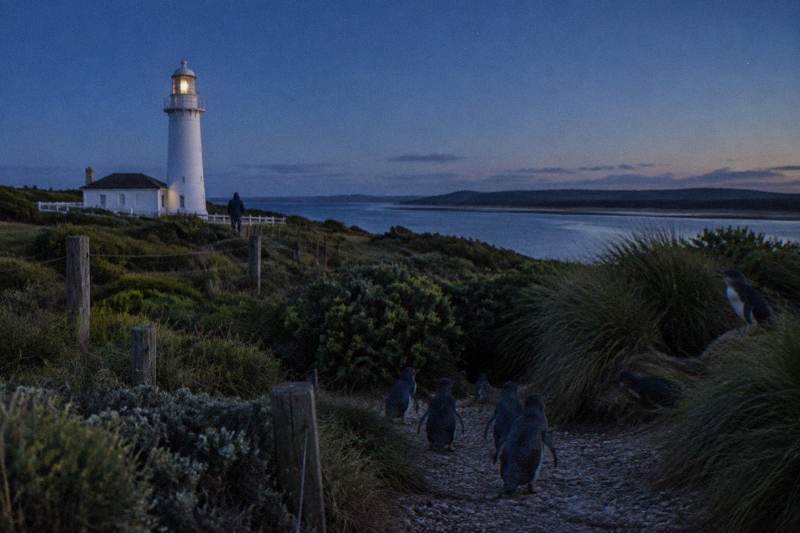
Low Head, on Tasmania's north coast near George Town, hosts one of the state's two bookable guided penguin tours. Every night, just after sunset, small groups walk the Coastal Reserve with a guide and watch little penguins come ashore.
Short answer
Low Head penguin tours run every night just after sunset at the Low Head Coastal Reserve near George Town, with about an hour of guided viewing. The Launceston transfer listing costs from $83 per person for about 3 hours door to door with a maximum of 10 guests, rated 5.0 from 22 reviews. The operator's direct price is $50 per adult without the transfer.
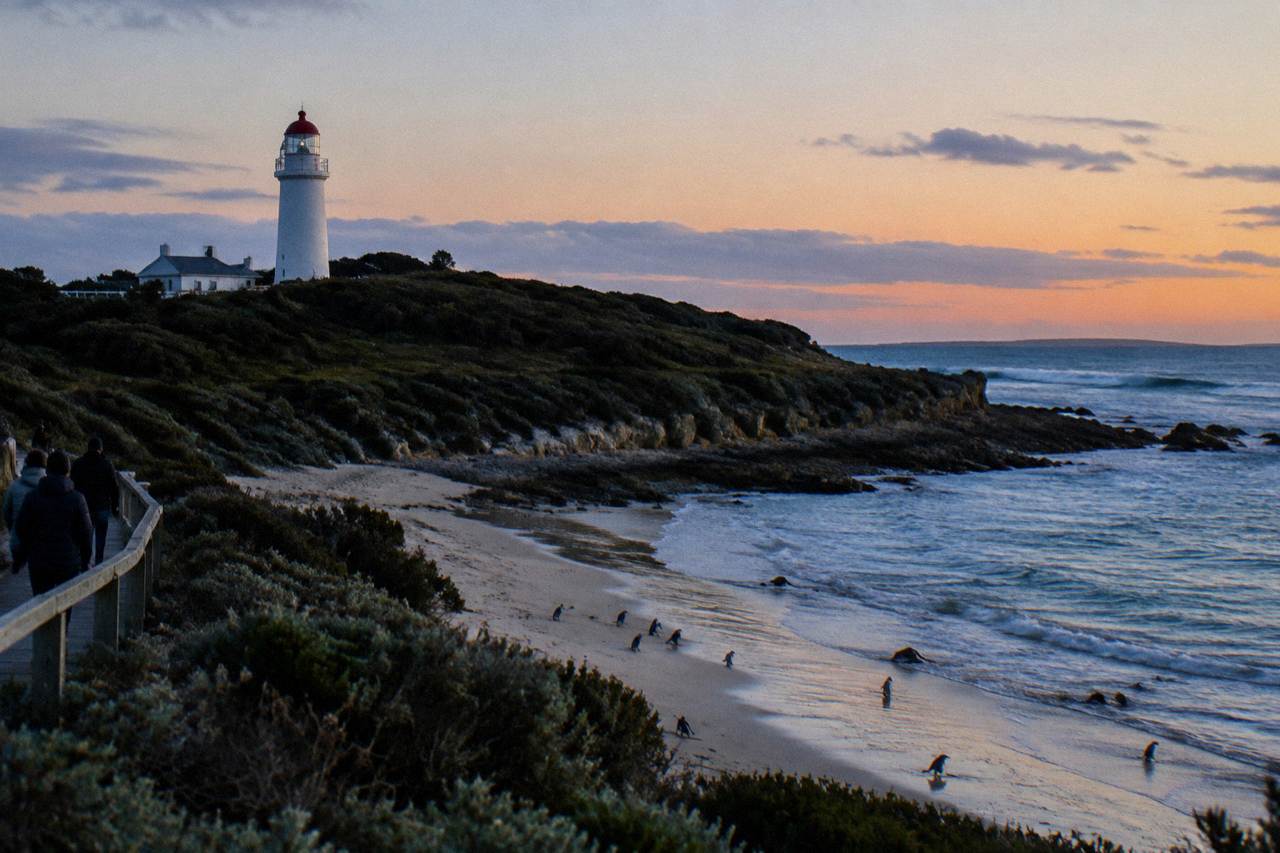
Every night of the year, just after the sun drops into Bass Strait, small groups of visitors gather on the sandy edge of the Low Head Coastal Reserve near George Town and wait for the dark to fill with penguins. Little penguins, the smallest penguin species on earth at about 40 cm and 1 kg, spend their days fishing at sea and return to their burrows in small groups within an hour or so of darkness. Low Head is one of the few places in Tasmania where you can watch that arrival with a guide who knows the rules, supplies the right lighting, and keeps the group small enough that the birds behave naturally.
This guide covers everything you need to know about Low Head penguin tours: what the tour includes, what it costs through the transfer listing and directly from the operator, how the evening actually runs, how it compares with the Bicheno tour on the east coast, what to wear, when to go, and how to get there from Launceston. The two bookable products compared throughout are the Low Head tour with Launceston transfer and the Bicheno beach walk, and the two listings differ in length, location and what's included, so check both before booking. If you'd rather base yourself in the south, our guide to penguin tours from Hobart and Launceston covers the other viewing options around the state.
What Is The Low Head Penguin Tour?
The Low Head penguin tour is a nightly, fully guided viewing experience at the Low Head Coastal Reserve near George Town on Tasmania's north coast, departing just after sunset and running for about an hour on site, in small groups, year round, with red and yellow low intensity lights supplied by the guides and wheelchair access available.
The operator behind it has run tours at Low Head for years, and their own pages describe groups of typically 10 to 15 people, though the Launceston transfer listing caps its groups at 10 guests. The tour is built around one simple biological fact: little penguins come ashore at last light, and disturbed birds stay at sea longer, which stresses them and delays feeding of chicks. A guided group that settles quietly before dark, stays on the track and uses only dim red light gets the birds ashore on schedule and behaving as they would with no humans present.
The Parks and Wildlife Service lists Low Head Lighthouse among the state's recognised places to see little penguins and shearwaters at dusk, alongside the Neck on Bruny Island, Lillico Beach and Burnie. What separates Low Head from those free platforms is the guiding: someone who knows where the penguins land, holds the lights, enforces the no flash rule, and can answer questions about the birds. The NRE Tasmania guidance on penguin watching goes as far as to say that joining a guided tour is the ideal way to see them.
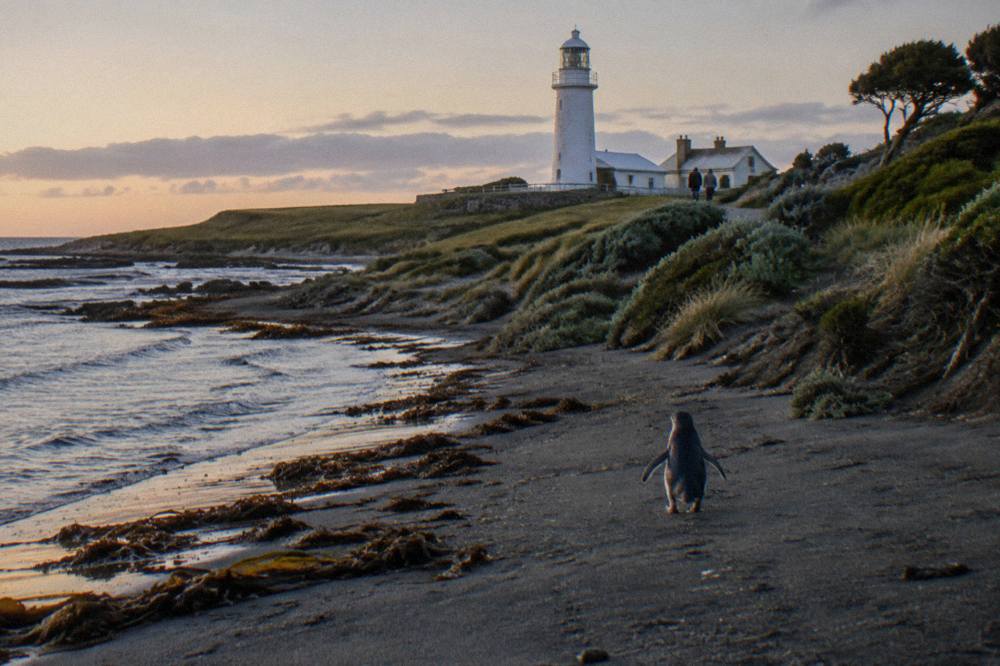
The species itself is worth knowing before you book. The majority of the Australian little penguin population lives in Tasmania; past state estimates ran to 110,000 to 190,000 breeding pairs, with most on offshore islands and under 5 percent on mainland Tasmania. Adults live about six years on average, nest in burrow tunnels 60 to 80 cm long, and raise clutches of two eggs. None of that requires a ticket to appreciate, but it explains why the tour's rules are so strict about light, noise and distance from burrows.
When Do Penguins Come Ashore At Low Head?
Penguins come ashore at Low Head just after sunset, and most birds land in small groups within an hour or so of full darkness, which is why the tour departs nightly at a time set by the sunset clock rather than a fixed schedule, and why the operator confirms the exact start time when you book.
The timing shifts through the year. In early October, sunset in the Hobart area sits around 6:20 pm; by late December and early January it peaks near 8:50 pm, and it falls back to roughly 7:30 pm by late March. Low Head, being farther north and west, differs by some minutes, so the practical rule is simple: the tour leaves just after local sunset, and you confirm the hour when you book. If you are planning dinner around it, book the tour first and eat second.
NRE Tasmania's penguin watching guidelines explain the mechanics behind the timing. The birds leave the water at last light and move to their burrows in rafts and small groups. Bright light, noise and movement push them back out to sea, and a delayed landing means delayed feeding for chicks. That is the reason the operator bans torches, selfie sticks and tripods outright and hands out red and yellow low intensity lights instead: the birds tolerate dim red light far better than any white beam, and a guide holding the only lights keeps every beam pointed away from the waterline.
For readers who want the general picture rather than the Low Head specifics, the site's piece on what time of day penguins come ashore covers the dusk rhythm across all Tasmanian colonies. The short version for Low Head: arrive when the guide says, settle before last light, and the penguins do the rest.
Shearwaters share the dusk slot. Short tailed shearwaters, or muttonbirds, return to Tasmanian colonies in late September and early October for breeding and can be seen coming in alongside the penguins through the warmer months, which is why the Parks and Wildlife Service describes Low Head as a dusk site for both seabirds rather than penguins alone.
If you are choosing between the two bookable tours on this site, this is a reasonable moment to look at both listings side by side.
How Much Do Low Head Penguin Tours Cost?
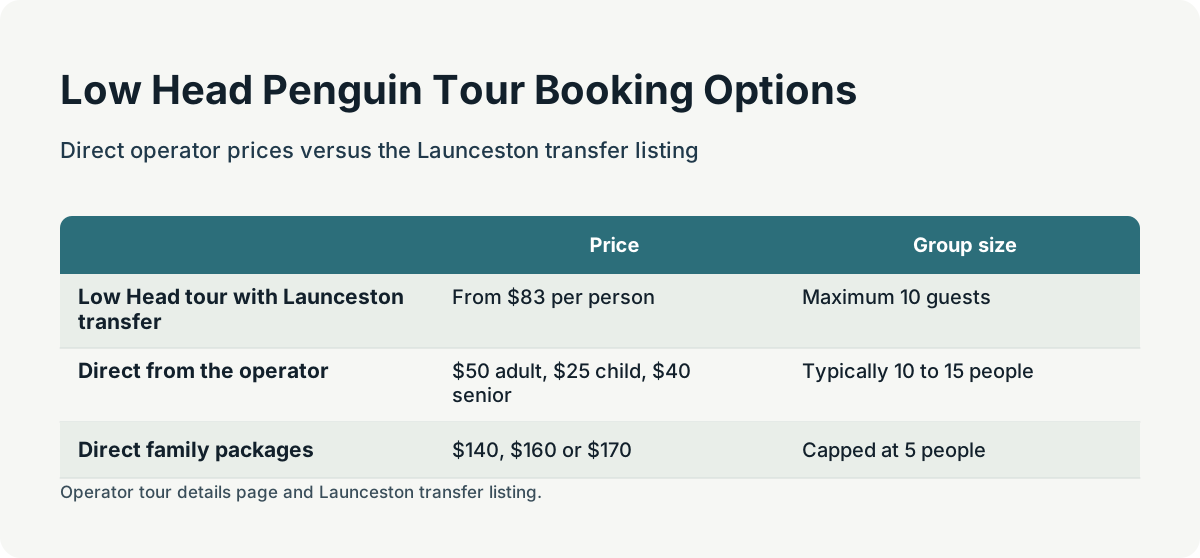
The Launceston transfer listing costs from $83 per person and covers about 3 hours door to door, including central Launceston pickup and about an hour of guided viewing, with a maximum of 10 guests and free cancellation. The operator's own direct price is $50 per adult, but that figure does not include the Launceston transfer, which is booked separately at extra cost.
Those two numbers describe the same evening, so the difference deserves a plain explanation. The $83 listing bundles the tour with a return transfer from central Launceston hotels, run with Coach Tours Tasmania, which is the practical option if you are staying in Launceston without a car and do not want to drive rural roads at night, when Tasmanian wildlife is active on the verges. The $50 figure is what you pay the operator directly if you make your own way to Low Head, at 485 Low Head Road. Neither price is wrong; they are different products.
The operator's direct pricing, from their own tour details page, runs to $50 per adult, $25 per child, $40 per senior concession, and family packages at $140 for two adults and two children, $160 for two adults and three children, and $170 for two adults and four children, capped at five people. Those family rates only apply to the direct booking, not the transfer listing.
| Booking option | Price | What it includes | Group size |
|---|---|---|---|
| Low Head tour with Launceston transfer (the listing) | From $83 per person | Central Launceston pickup and return, about 3 hours door to door, about 1 hour guided viewing | Maximum 10 guests |
| Direct from the operator | $50 adult, $25 child, $40 senior | The guided viewing only, about 1 hour, make your own way to Low Head | Typically 10 to 15 people |
| Direct family packages | $140, $160 or $170 | Two adults plus two, three or four children, the guided viewing only | Capped at 5 people |
The listing itself carries a 5.0 rating from 22 reviews, and both the listing and the direct tour can be cancelled free of charge, which matters on a north coast evening when the weather can turn. For comparison, the Bicheno tour on the east coast starts from $53 per person for a 70 minute guided beach walk, rated 4.8 from 26 reviews, and that listing is flagged as one that often sells out. If your dates are fixed, booking ahead is the sensible default for both.
For a fuller treatment of tour pricing across the state, including the free viewing sites, the site's penguin tour cost guide breaks down every option. And if Bicheno is on your route as well as Launceston, you can check the Bicheno tour listing or Check availability for its dates before you commit to the north coast.
What Happens On The Evening Tour?
An evening at Low Head runs for about an hour of guided viewing: you meet the guide at the Coastal Reserve, the group settles into a viewing spot before last light, the guide hands out red and yellow low intensity lights, and the penguins begin landing in small groups within an hour or so of darkness, with no visitor torches, selfie sticks or tripods permitted.
The structure is deliberately spare. The operator's tour details page describes a fully guided experience of up to an hour, every night of the year, at the Low Head Coastal Reserve. There is no boat, no vehicle stage and no boardwalk ride: it is a walk to a viewing position, a briefing on the rules, and then the wait, which is the whole point. Penguins announce themselves before you see them, with calls from the burrows and the first rafts of birds gathering in the shallows.
The gear rules are the tour's backbone. No torches of your own, no selfie sticks, no tripods, and flash photography is prohibited outright. The guides carry the red and yellow low intensity lights and point them where they help rather than where they harm. Photography without flash is tolerated, but the honest expectation is that you will see far more than you can usefully photograph on a dark beach, and the NRE guidelines are blunt that flash cameras should not be used on the beach at all.
Wheelchair access is available, which is unusual among penguin viewing experiences in Tasmania. The Bicheno tour, by contrast, handles wheelchair users case by case, and the free platforms at Lillico and Stanley vary in what they offer. For visitors with limited mobility, that difference alone can decide the choice of coast.
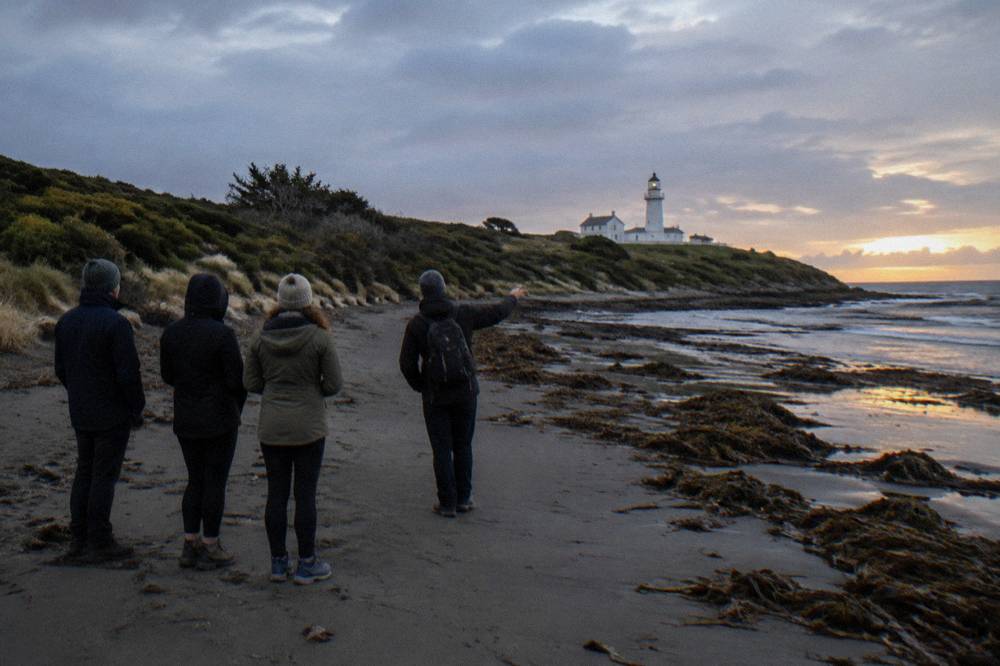
What you actually see depends on the season, and the operator is candid about that. Their own material describes November to February as the high months, with 100 to 200 penguins coming ashore nightly, against 10 to 100 from March to October. Those are the operator's figures for nightly landings, not a census of the colony, and no current published colony count exists for Low Head. Even in the quieter months the tour runs nightly, because penguins return to burrows year round, whether incubating eggs, feeding chicks or moulting.
Readers who want the timing broken down in more detail can see the site's answer on how long the Low Head penguin tour runs, which separates the viewing hour from the transfer time.
Low Head Or Bicheno: Which Penguin Tour Should You Book?
Low Head suits visitors based in or near Launceston who want a small group, a longer door to door experience with a transfer, and wheelchair access, while Bicheno suits visitors on the east coast, especially those combining penguins with Freycinet or the Great Eastern Drive, who want a shorter, cheaper 70 minute walk from $53.
The two tours are the only bookable guided penguin products on this site, and they sit on opposite coasts, so for most travellers the choice is made by the itinerary rather than the tour. If your Tasmania trip centres on Launceston, the Tamar Valley or the north west, Low Head is the practical pick: the transfer listing collects you from central Launceston, handles about 3 hours door to door, and caps the group at 10. If you are driving the east coast, Bicheno is on your route and Low Head is not.
The Bicheno tour is a different shape of evening. It meets at the operator's shop on Burgess Street in Bicheno, takes a short bus ride to a private rookery, then walks about 500 m over roughly 50 minutes within a 70 minute guided format. It runs year round except Christmas Day and New Year's Eve, departs between 5:00 and 7:30 pm from February to August and between 7:30 and 9:30 pm from September to January, and carries a 4.8 rating from 26 reviews from $53 per person. There are no accommodation pickups, so you make your own way to Burgess Street.
| Low Head tour | Bicheno tour | |
|---|---|---|
| Location | Low Head Coastal Reserve, near George Town, north coast | Private rookery, Bicheno, east coast |
| Price | From $83 with Launceston transfer; $50 direct adult | From $53 per person |
| Duration | About 3 hours door to door with transfer, about 1 hour viewing | 70 minutes with the guide, including a short bus ride and a 500 m walk |
| Group size | Maximum 10 on the transfer listing | Small guided groups, meeting at the Burgess St shop |
| Rating | 5.0 from 22 reviews | 4.8 from 26 reviews |
| Access | Wheelchair access available | Wheelchairs handled case by case |
| Base town | Launceston, pickup from central hotels | Bicheno, no accommodation pickups |
The deeper comparison, including how the two handle seasonality and family groups, is in the site's Bicheno versus Low Head comparison. For a full profile of the east coast option, see the Bicheno penguin tours guide.
One difference that does not show in the table: urgency. The Bicheno listing is flagged as one that often sells out, and the operator advises booking weeks ahead in peak periods. The Low Head listing carries no such flag, though with a maximum of 10 guests per departure, a summer Saturday can fill regardless.
What Should You Wear And Bring On A Low Head Tour?
Wear warm, dark clothing and enclosed shoes, bring nothing that emits white light, and leave pets at home: the NRE Tasmania guidelines ask for dark clothing, quiet movement, a viewing spot at least 3 m from burrows, dim red light only, and no dogs or cats under any circumstances, and the operator adds that enclosed comfortable footwear is required on the beach.
The clothing advice is not cosmetic. A dark silhouette against the evening sky reads as a rock or a bush to a penguin coming ashore; a pale jacket reads as a threat. Warm layers matter more than most visitors expect, because a Tasmanian evening on a north coast beach can drop sharply even after a warm day, and you will be standing still for the best part of an hour. Enclosed shoes protect your feet on sand and around burrow areas, and the operator's own pages specify them.
The full rule set is published by NRE Tasmania's penguin watching guidelines, and it is worth reading before any penguin evening in the state, guided or not. Approach from land rather than along the beach, use existing tracks, never walk through the colony, settle before last light, stay quiet, keep movement minimal, and only use dim red light, never pointed toward the water or directly at a penguin. Binoculars are genuinely useful at Low Head because they let you watch birds on the waterline without moving closer.
On a guided tour, most of this is enforced for you: the guide holds the lights, sets the distance and manages the group. That is a large part of what the ticket buys. For those planning self-guided evenings elsewhere, the site's penguin photography rules guide covers what you can and cannot photograph, and the what to wear on a penguin tour guide has the full packing list.
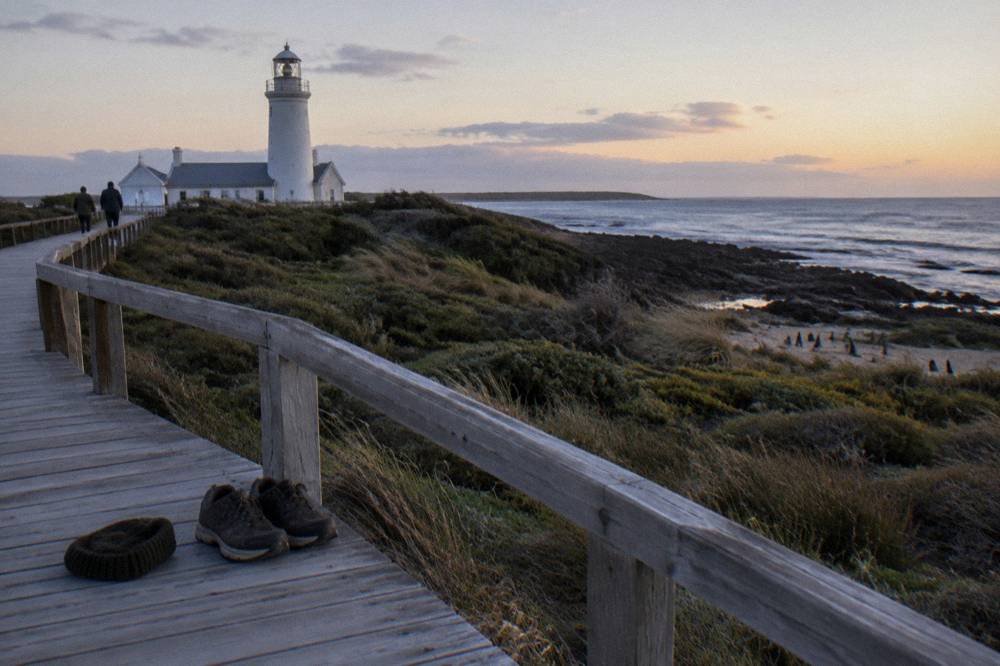
Two things not to bring deserve their own line. First, dogs and cats, even leashed: the guidelines ban them outright at any penguin site, and dog attacks are the exact reason at least one Tasmanian colony, Bicheno's, crashed to about 40 birds in the early 1990s before land restoration brought it back. Second, white torches and camera flashes, which the operator confiscates the moment of the briefing and which the law backs up: penguins are protected wildlife in Tasmania, and catching or harassing them is illegal.
Is The Low Head Tour Accessible And Family Friendly?
Yes: the operator lists wheelchair access for the Low Head tour, the groups are small and family packages exist on direct bookings, and the tour runs nightly year round, but note that the Low Head Pilot Station cafe, accommodation and toilets have been closed since 22 April 2026 pending a new lessee, while the tours and grounds remain open.
The accessibility claim comes from the operator's own tour details page, which lists wheelchair access among the tour's features. That is rare in Tasmanian penguin viewing. The free platform at Godfreys Beach near Stanley is pram and wheelchair accessible with red lighting, and Burnie's boardwalk is level and wheelchair accessible, but Bicheno handles wheelchairs case by case, so Low Head is the strongest option among the guided tours for visitors with mobility constraints.
The closure at the Pilot Station is the practical catch. The Parks and Wildlife Service alerts page records that the Low Head Pilot Station cafe, accommodation and toilets closed from 22 April 2026 while a new lessee is arranged, and that the tours and grounds stay open in the meantime. For tour-goers this means two things: plan food and drink before you arrive, because there is no cafe on site, and plan toilets around the tour, because the on-site facilities are part of the closed complex. George Town, a short drive away, is the nearest town for both.
Families are well served on direct bookings, with the $140 to $170 family packages covering two adults and two to four children. On the transfer listing, children simply pay the per person rate, and the 3 hour door to door span with a hotel pickup is often easier with tired children than a self-drive on rural roads at dusk, when wildlife is on the move and the standard Tasmanian advice is to drive cautiously and slowly.
The species is a good one for children specifically. Little penguins are about 40 cm tall and around 1 kg as adults, they arrive in chattering groups rather than one at a time, and their calls from the burrows start before any bird is visible, which turns the wait itself into part of the show. The hour of viewing is short enough to hold attention and late enough to feel like an event.
When Is The Best Month To See Penguins At Low Head?
November to February is the strongest window at Low Head, with the operator describing 100 to 200 penguins coming ashore nightly against 10 to 100 from March to October, while September to January is the breeding season with the most activity across Tasmania, and February to April is the moulting window when adult birds stay ashore for two to three weeks.
The honest framing is that penguins come ashore every night of the year, so there is no month with nothing to see. What changes is how many, how loudly and how early. Breeding commonly starts in winter with nest preparation, clutches of two eggs can be laid as early as May or as late as December, incubation runs about 35 days with parents sharing shifts of up to a week, and chicks fledge at about eight weeks. The concentrated activity of September to January means more traffic on the beach, more calling from burrows and more feeding runs.
| Period | What is happening | What it means for viewing |
|---|---|---|
| November to February | Operator describes 100 to 200 penguins ashore nightly | Highest numbers, warm evenings, book well ahead |
| September to January | Breeding season, most activity at many sites | Busy burrows, more calling and movement |
| March to October | Operator describes 10 to 100 ashore nightly | Quieter, still nightly tours, easier bookings |
| February to April | Moulting window, adults ashore 2 to 3 weeks | Birds visible but inactive, puffed and preening |
Moulting deserves a plain explanation, because it is the one period when seeing fewer penguins move does not mean the colony is empty. Before moulting, adults fatten at sea; then they stay ashore for roughly two to three weeks while replacing all their feathers, standing near burrow entrances, scruffy and immobile. The NRE habitat guidelines note moult evidence is more likely February to April, and the Bicheno operator calls February its typical moulting month.
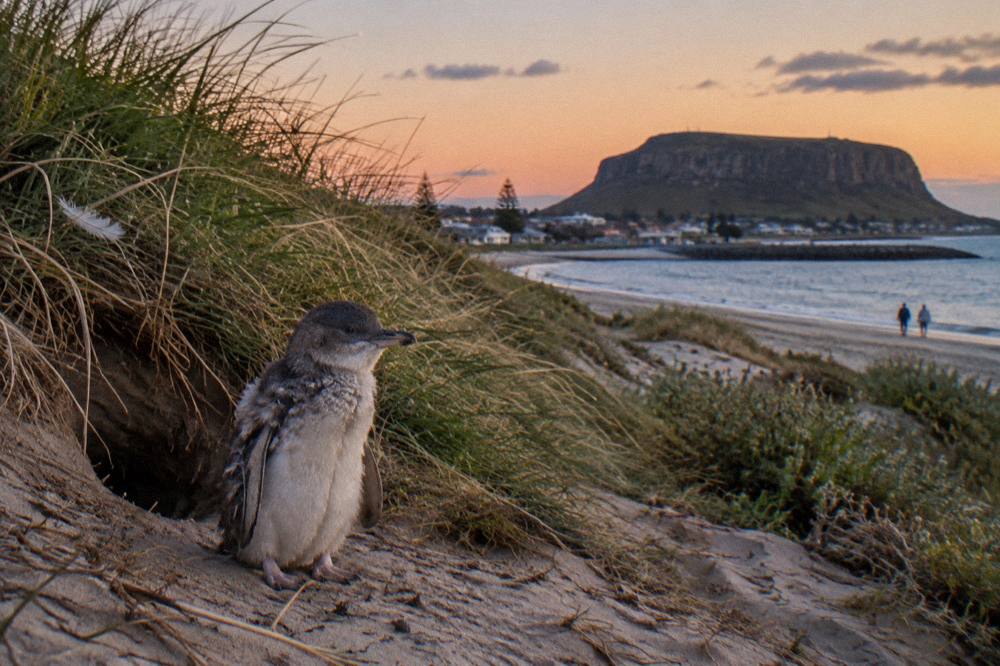
The Bicheno calendar runs on the same biology with the same labels: September to January is the operator's breeding season with the most activity, and February to August is the quieter winter window with departures shifted earlier, between 5:00 and 7:30 pm. The site's best time to see penguins in Tasmania guide carries the full statewide calendar for readers comparing dates across coasts.
One health note for the current season: H5 bird flu has been detected in Tasmanian wild birds, including little penguins on King Island, with 46 positive events reported since 19 June 2026. No viewing-site restrictions have been found at Low Head or anywhere else, and the tours continue as normal, but the standing advice is to avoid contact with sick or dead wildlife and to report any sighting to the Emergency Animal Disease Hotline on 1800 675 888.
How Do You Get To Low Head From Launceston?
Low Head sits at the mouth of the Tamar River near George Town on Tasmania's north coast, and the transfer listing handles the whole journey with central Launceston hotel pickup and return over about 3 hours door to door; if you drive yourself instead, check a mapping service for the current time and distance, as this site publishes no verified drive time for the route.
The transfer is the listing's core convenience. Coach Tours Tasmania runs the Launceston connection in conjunction with the nightly Low Head tours, with hotel pickup and drop-off in central Launceston and a return after roughly 3 hours total including about an hour of viewing. For visitors without a car, or anyone unwilling to drive Tasmanian rural roads at dusk, it removes the hardest part of the evening. Dusk and dawn are the wildlife danger windows in Tasmania, and the standard guidance is to reduce speed and stay alert, which is easier to follow when someone else is driving.
If you are self-driving, the practical notes are these: the tour meets at the operator's base at 485 Low Head Road, the Pilot Station toilets are closed as covered above, and the drive itself should be timed against your booking's confirmed departure, which moves with sunset through the year. George Town is the nearest town for fuel, food and facilities. The Spirit of Tasmania terminal at Devonport is also in the region, and the ferry fleet transition, with new vessels beginning inaugural sailings on 31 October 2026, is worth noting for visitors arriving by sea who are planning a first night in Launceston.
The north coast also rewards a slower itinerary. Low Head can be combined with the free viewing platforms at Lillico Beach near Devonport, Burnie's volunteer-guided season from 1 October to 31 March, and the Godfreys Beach platform near Stanley, all covered in the site's free penguin viewing in Tasmania guide. A visitor with several nights could book the Low Head tour once and spend the other evenings at the free sites, applying the same rules the guide enforces: red light only, quiet, no flash, 3 m from burrows.
For the full picture of the northern option, including the listing's details and cancellation terms, see the Low Head tour with Launceston transfer on this site, alongside the viewing-site comparison on the homepage at Tasmania Penguin Tours.
Planning Your Evening At Low Head
A good Low Head evening comes down to three bookings made in the right order: confirm the tour first, since departure time follows sunset, arrange the transfer or your drive second, and plan dinner around the confirmed time rather than before it, because a 5:00 pm winter departure and an 8:30 pm summer departure leave very different gaps in the day.
Start with the season. A February visit buys the highest nightly numbers, 100 to 200 birds by the operator's description, at the cost of the latest departure and the busiest bookings. A May or June visit buys an early evening, easy availability and quieter landings, which some visitors prefer: fewer birds, but fewer people, and the moulting and nest-building behaviours you do not see in high summer. There is no bad month, only different trade-offs, and the tour runs every night of the year.
Then decide how you will pay. The transfer listing at from $83 per person, 5.0 from 22 reviews, maximum 10 guests, free cancellation, is the choice for Launceston-based visitors and anyone without a car. The direct booking at $50 per adult, with child, senior and family rates, is the choice if you have your own vehicle and want the family package pricing. Both buy the same hour on the same beach with the same guides.
Finally, pack for the rules rather than the weather alone. Dark clothing, warm layers, enclosed shoes, binoculars if you have them, and nothing that emits white light. Arrive ready to stand still and stay quiet, and the evening delivers what the biology promises: small groups of the world's smallest penguins, landing in the dark, calling to their burrows, a few metres away.
If you are still weighing the two coasts, both bookable options are below.
Common Questions About Low Head Penguin Tours
What Is The Low Head Penguin Tour?
A nightly, fully guided viewing experience at the Low Head Coastal Reserve near George Town, departing just after sunset with about an hour of guided viewing, small groups, supplied red and yellow lights, wheelchair access and year round operation.
When Do Penguins Come Ashore At Low Head?
Just after sunset, with most birds landing in small groups within an hour or so of full darkness. The exact departure time moves with the sunset clock through the year and is confirmed when you book.
How Much Do Low Head Penguin Tours Cost?
The Launceston transfer listing costs from $83 per person for about 3 hours door to door with a maximum of 10 guests. The operator's direct price is $50 per adult, $25 per child and $40 per senior, with family packages from $140, but the direct price excludes the transfer.
Low Head Or Bicheno: Which Penguin Tour Should You Book?
Low Head suits Launceston-based visitors who want a transfer, a 10 guest cap and wheelchair access. Bicheno, from $53 for a 70 minute walk, suits east coast itineraries around Freycinet and the Great Eastern Drive.
When Is The Best Month To See Penguins At Low Head?
November to February, when the operator describes 100 to 200 penguins ashore nightly against 10 to 100 from March to October. September to January is the breeding season with the most activity, and February to April is the moulting window.
Is The Low Head Tour Accessible For Wheelchairs?
Yes, the operator lists wheelchair access. Note that the Pilot Station cafe, accommodation and toilets have been closed since 22 April 2026 pending a new lessee, while the tours and grounds remain open.