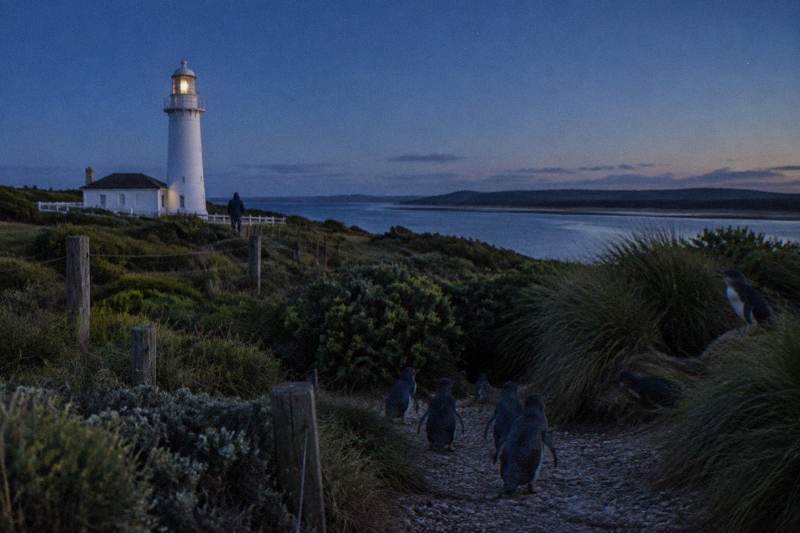
Penguin Tours From Hobart And Launceston: What You Can Actually Book
One of the two bookable penguin tours on this site leaves from Launceston with hotel pickup included. The other, at Bicheno on the East Coast, is a self-drive option for Hobart-based travellers. Here is how the two routes compare.
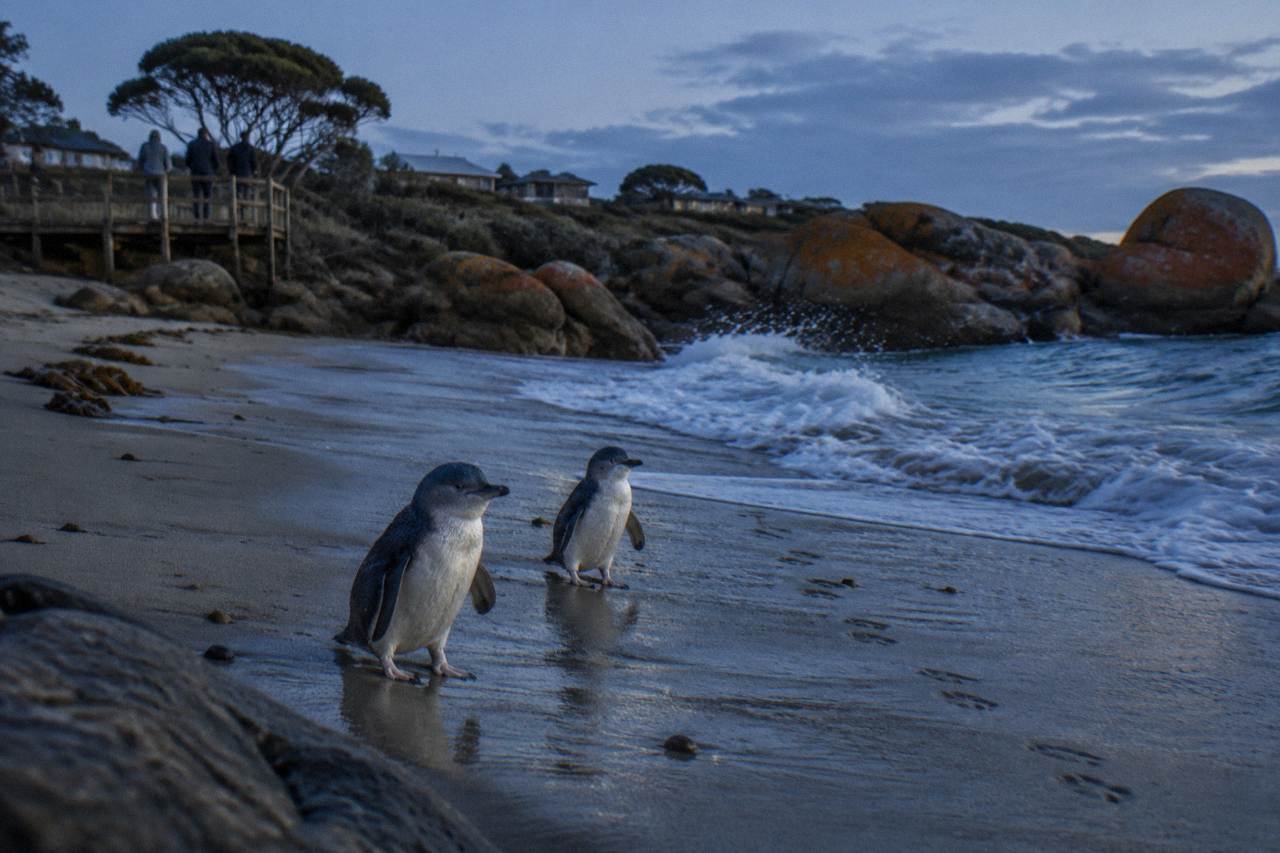
Short answer
Launceston-based travellers can book the Low Head penguin tour from $83 per person with central Launceston pickup, about 3 hours door to door and about 1 hour of guided viewing, maximum 10 guests. Hobart-based travellers have no pickup tour on this site; the Bicheno tour, from $53 per person, is reached by self-drive.
Which Penguin Tours Leave From Hobart And Launceston?
Two guided penguin products serve Tasmania's cities, and only one of them collects you at your door. The Low Head tour departs Launceston with central pickup and transfer included, from $83 per person, about 3 hours door to door. The Bicheno tour on the East Coast, from $53 per person, has no city pickup at all: it meets at the operator's shop on Burgess Street, so Hobart travellers drive themselves there. If you're wondering whether penguins live anywhere near the city itself, our guide to seeing penguins around Launceston explains what the Low Head option actually involves.
That asymmetry surprises a lot of visitors, and it shapes the whole planning question. Tasmania's little penguins come ashore at dusk at spots scattered around the coastline, but the guided, bookable experiences cluster where the colonies are, not where the hotels are. Launceston happens to sit within reach of one of the best: Low Head, near George Town on the north coast, where a small-group tour runs every night just after sunset. Hobart, by contrast, has no pickup penguin tour on this site at all, and the honest answer for a Hobart-based traveller is a self-drive evening to Bicheno or a free, self-guided viewing spot such as the Bruny Island Neck platform, which the Parks and Wildlife Service names as a dusk viewing site for little penguins and shearwaters.
The two Tasmania Penguin Tours listings reflect this split exactly: one listing on the north coast, one on the east coast. Neither is a day tour from a city hotel with a coach and commentary on the way; both are evening wildlife experiences timed to the birds, and the difference between them is mostly about how you get there and how long you stay.
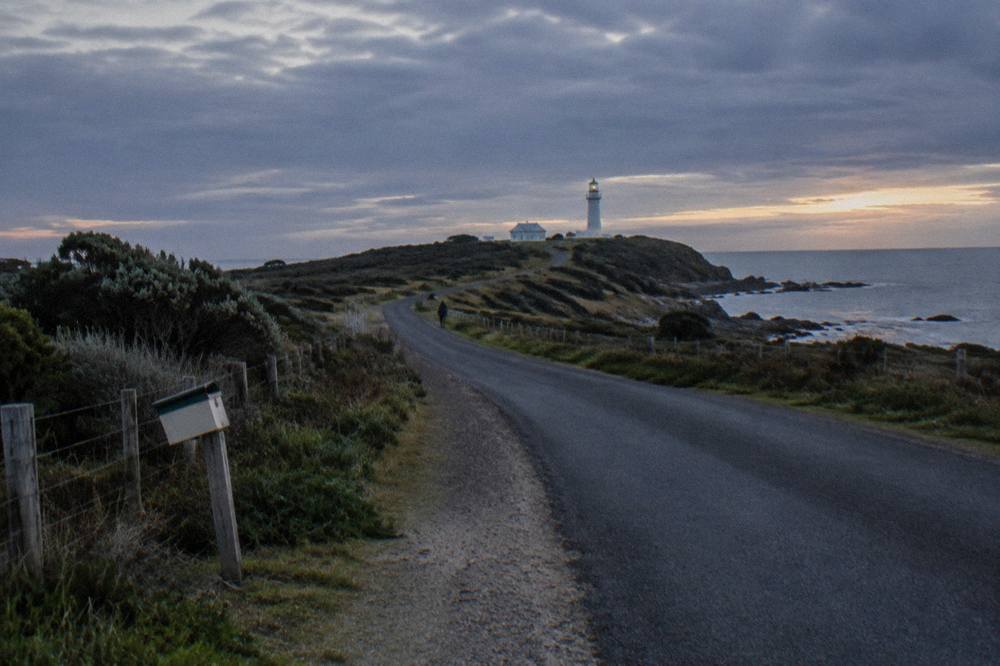
Here is the base-city picture in one table.
| Base city | Guided option on this site | Getting there | From price |
|---|---|---|---|
| Launceston | Low Head penguin tour with transfer | Central Launceston pickup included, about 3 hours door to door | $83 per person |
| Hobart | Bicheno penguin tour, self-drive | Own vehicle along the Tasman Highway, meeting at the Burgess Street shop | $53 per person |
| Hobart (no tour) | Bruny Island Neck viewing platform | Self-drive, ferry from Kettering, free viewing at dusk | Free |
One note on that third row: the Neck is a free, self-guided platform, not a tour, and the Parks and Wildlife Service page for South Bruny National Park lists it among the island's wildlife highlights. Check the service before going, as platform details are not published on a single official page.
What Does The Launceston Low Head Tour Include?
The Low Head tour is a small-group evening experience, from $83 per person, rated 5.0 from 22 reviews, with central Launceston pickup and return transfer included. The whole outing runs about 3 hours door to door, of which about 1 hour is guided penguin viewing at Low Head near George Town. Groups are capped at 10 guests, and the listing offers free cancellation. If you're wondering whether that timing fits your evening plans, our guide to how long the Low Head penguin tour takes from start to finish explains exactly what to expect.
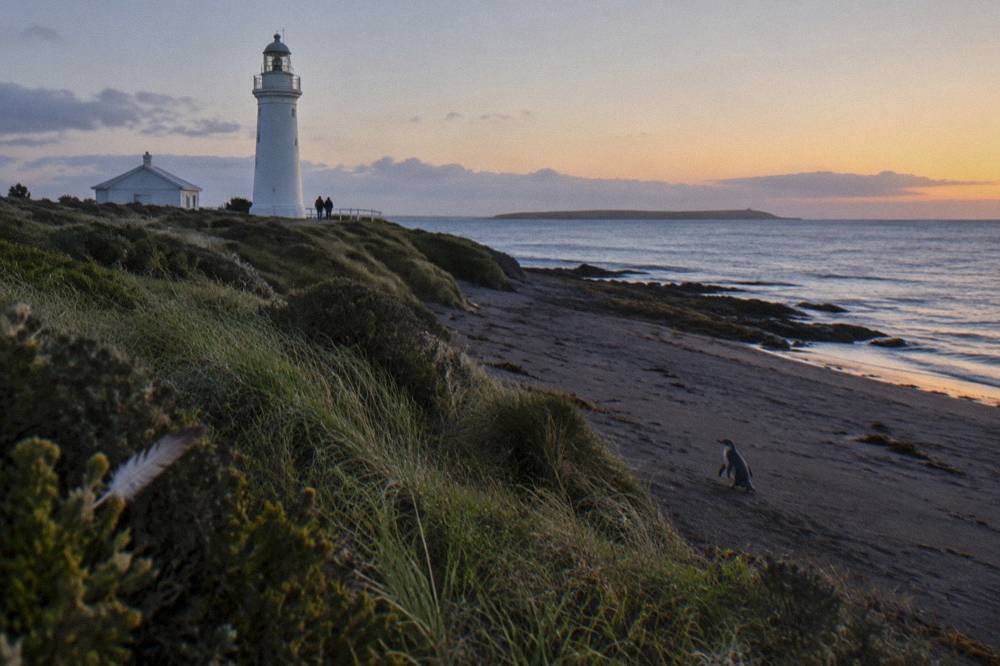
The structure matters more than the headline duration. The operator, Penguin Tours Tasmania, runs its tours every night just after sunset at the Low Head Coastal Reserve, fully guided and up to about an hour on the ground. The transfer is handled through Coach Tours Tasmania, with hotel pickup and drop-off in central Launceston, so the listing price covers a genuinely door-to-door evening rather than a rally point you have to find in the dark. For travellers staying in Launceston without a car, or anyone who would rather not drive country roads after dark, this is the only penguin experience on this site that solves that problem outright.
The tour itself follows the standard little-penguin etiquette. Guides supply low-intensity red lighting; visitors cannot bring torches, selfie sticks or tripods, and flash photography is prohibited. The operator notes wheelchair access is available. Penguins come ashore in small groups within an hour or so of darkness, which is why the start time shifts with the sunset through the year rather than sitting at a fixed clock time. The operator describes penguin numbers as higher from November to February and lower through the rest of the year, which is worth knowing before you pick a date: the birds do not read the brochure.
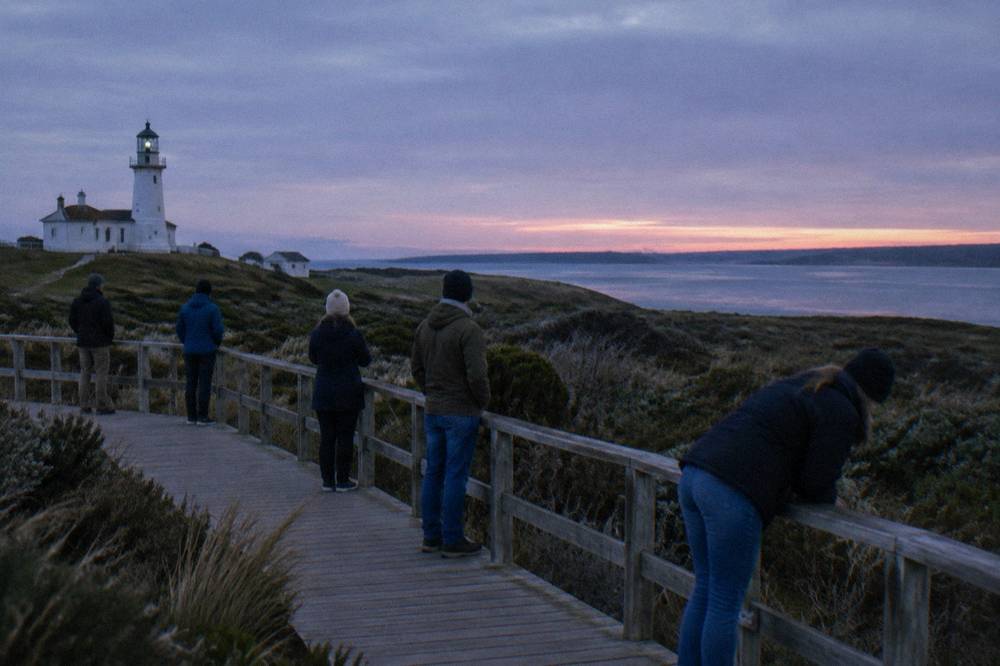
Two practical points close the picture. First, the operator's own direct page lists an adult price of $50 for the tour alone; that is the gate price without the Launceston transfer, not a rival to the $83 listing, which bundles pickup, drop-off and the guide. Second, the Low Head Pilot Station cafe, accommodation and toilets have been closed pending a new lessee while the tours and grounds stay open, so plan food and facilities around that.
If you are weighing both listings, here the two listings sit side by side, so you can compare them at a glance.
Can You See Penguins From Hobart Without Driving To Bicheno?
Hobart has no penguin tour with city pickup on this site, so the realistic options are self-drive to Bicheno, about 70 minutes on the ground from $53 per person, or free dusk viewing at the Bruny Island Neck platform. The Neck involves a ferry crossing from Kettering and no guide, and the Bicheno tour involves the Tasman Highway after dark. Neither is a coach-from-the-hotel product.
Start with the honest framing: a search for penguin tours from Hobart mostly returns day tours of Bruny Island, food and sightseeing itineraries that pass the Neck lookout in daylight. Penguins are a dusk phenomenon, and no operator on this site runs an evening pickup product out of Hobart. That leaves two real routes.
The first is Bicheno, covered in detail in the Bicheno penguin tours guide. The tour meets at the operator's shop at 1/70 Burgess Street, across from the IGA, with free parking, and runs nightly year-round except Christmas Day and New Year's Eve. A short bus ride takes the group to a private rookery, then a guided walk of about 500 metres over roughly 50 to 70 minutes. Photography is permitted without flash, and enclosed shoes are required. There are no accommodation pickups, so the drive is yours: the site does not publish a Hobart to Bicheno drive time, so check a mapping service before committing to an evening run. The Tasman Highway Apsley upgrade, between Bicheno and the Coles Bay Road turn-off, has been under construction since early 2025 with completion expected in 2027, so expect some roadworks on that stretch.
The second is the Neck. Bruny Island is reached by the SeaLink ferry from Kettering to Roberts Point, a 20-minute crossing that runs 365 days a year on a queueing system: tickets are valid for the next available ferry, not a specific sailing. From there the Neck Conservation Area viewing platform is a free, self-guided dusk spot named by the Parks and Wildlife Service. It costs nothing and comes with no guide, no red-light discipline supplied for you, and no guarantee of birds, so it suits confident, quiet travellers with a car.
If your dates are flexible and you are already sleeping in Launceston for part of the trip, the pickup tour is the lower-effort evening by a wide margin.
How Do Bicheno And Low Head Compare For City-Based Travellers?
Low Head is the shorter, smaller, pickup-inclusive option: about 3 hours door to door from Launceston, 10 guests maximum, from $83. Bicheno is the cheaper, more compact tour at about 70 minutes on site, from $53, rated 4.8 from 26 reviews, but you must self-drive to Burgess Street. Low Head rates 5.0 from 22 reviews; Bicheno's listing is flagged as often selling out.
The trade is effort against intimacy. Low Head buys you the transfer, the cap of 10 guests and about an hour with the birds at a reserve the operator works nightly. Bicheno buys you a private rookery you reach by a short bus ride from the shop, a walk of about 500 metres with a guide, and a listing that the operator warns books out weeks ahead in peak periods. The Bicheno operator's own story is a genuine point of difference: the colony there fell to about 40 birds in the early 1990s after dog attacks, then recovered through land restoration, and the rookery you walk through is the result of that work rather than a wild beach anyone can stumble onto.
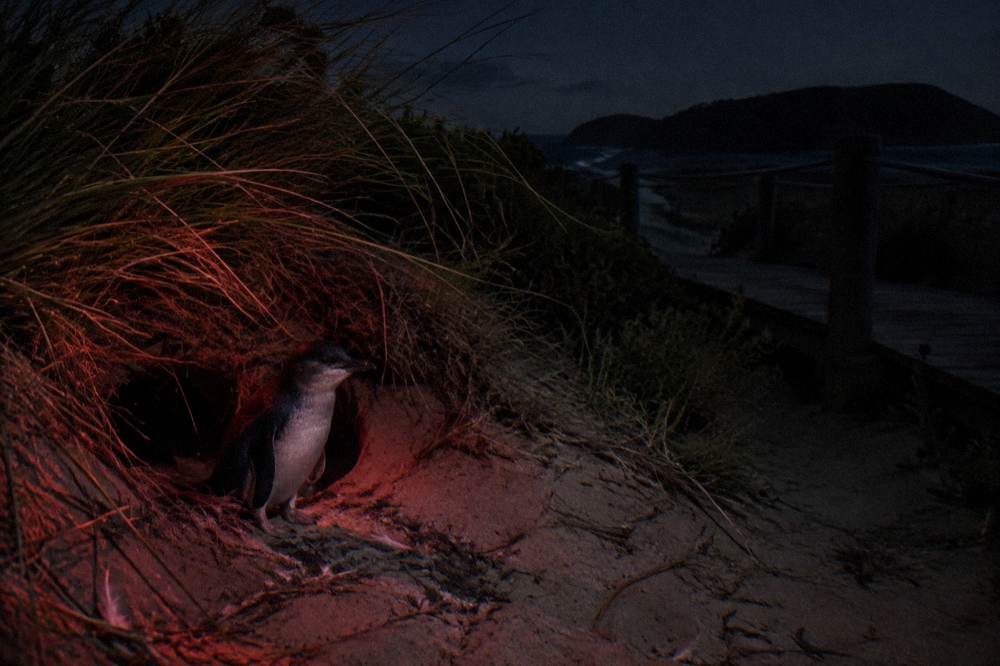
| Feature | Low Head (from Launceston) | Bicheno (self-drive) |
|---|---|---|
| From price | $83 per person | $53 per person |
| Rating | 5.0 from 22 reviews | 4.8 from 26 reviews |
| Total time | About 3 hours door to door | About 70 minutes with the guide |
| Viewing time | About 1 hour guided | Walk of about 500 m over about 50 minutes |
| Group size | Maximum 10 guests | Not stated on the listing |
| Getting there | Central Launceston pickup included | Meets at Burgess St shop, no pickups |
| Cancellation | Free cancellation | Free cancellation |
| Booking pressure | No urgency line | Listing flagged as often selling out |
For a Launceston-based traveller the decision is mostly about whether the transfer is worth $30 a head over the gate price. For a Hobart-based traveller it is about whether an evening drive to Bicheno, in the dark on the way home, fits the trip. Some travellers split the difference: base themselves a night or two on the East Coast as part of a best time to see penguins in Tasmania plan, and take the Bicheno tour from a Bicheno bed rather than from Hobart.
What Does A Penguin Tour Cost From Each City?
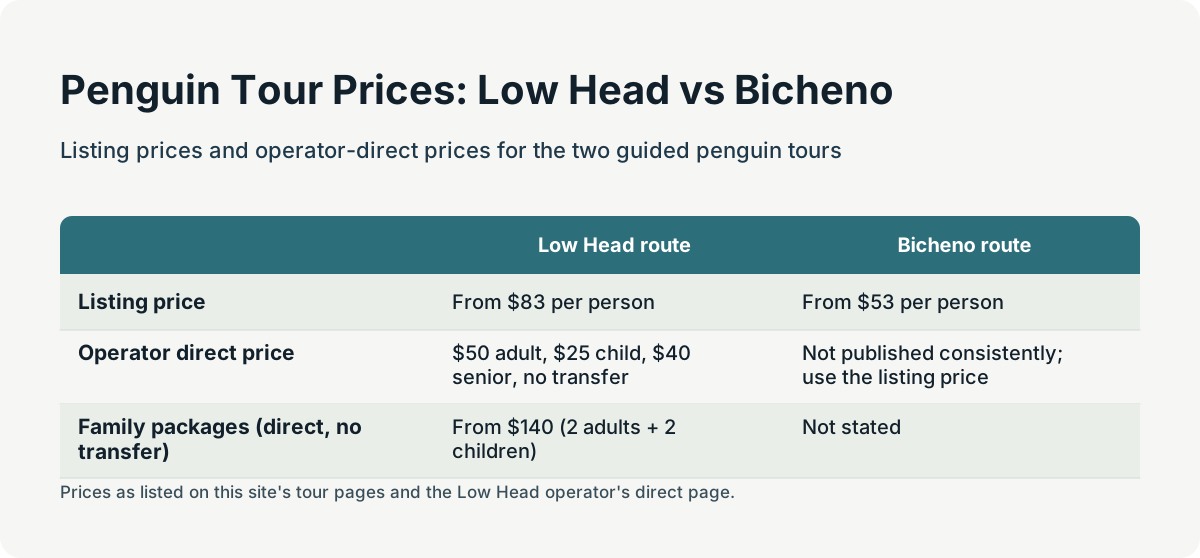
The Low Head tour with Launceston transfer starts at $83 per person, and the Bicheno tour starts at $53 per person, both with free cancellation. Low Head's operator also sells the tour alone at its gate for $50 adult, $25 child, with family packages from $140, but that price excludes the Launceston transfer. No other penguin tour price exists on this site, and free options at Lillico, Burnie and the Neck cost nothing but fuel.
The honest cost picture is short because the market is short. Two paid products, one free tier, and a set of incidental costs that depend on where you sleep.
| Cost item | Low Head route | Bicheno route |
|---|---|---|
| Listing price | From $83 per person | From $53 per person |
| Operator direct price | $50 adult, $25 child, $40 senior, no transfer | Not published consistently; use the listing price |
| Family packages (direct, no transfer) | From $140 (2 adults + 2 children) | Not stated |
| Transport to the tour | Included from central Launceston | Own vehicle, fuel and parking |
| Parks pass | Not required at the viewing site | Not required; rookery is private land |
Two clarifications keep that table honest. The Bicheno operator's own pages show conflicting prices for direct bookings, so the only Bicheno figure this site prints is the listing's from-price of $53; check the operator's live listing for what a direct booking currently costs. And a Tasmania parks pass is required for entry to national parks, but the penguin viewing sites here are a private rookery, a coastal reserve and council land, so a pass is not part of either tour's cost.
When Should You Book, And When Should You Go?
Book the Bicheno tour weeks ahead, because its listing is flagged as often selling out; Low Head carries no such flag but still runs nightly with a 10-guest cap. For timing, September to January is the breeding season with the most activity, November to February brings the highest numbers ashore at Low Head, and February to April is the moulting window when birds stay ashore. Winter viewing is quieter but real.
The seasonal mechanics come from the birds, not the operators. Little penguins come ashore in small groups within an hour or so of darkness, and the breeding season varies by location and year, commonly starting in winter with clutches of two eggs laid as early as May or as late as December. Chicks hatch after about 35 days and fledge at about eight weeks, which is why spring and early summer hum with back-and-forth feeding traffic. Moulting runs roughly February to April, when adults stay ashore for two to three weeks replacing every feather, so birds are visible but the beaches are quiet of comings and goings.
What that means for a city-based traveller is simple. A Launceston evening in November is close to a sure thing relative to a July one, and sunset is late in summer, so the pickup time slides with it: the Low Head operator starts just after sunset every night, and the Bicheno operator runs 7:30pm to 9:30pm departures from September to January, adjusted to dusk, and 5:00pm to 7:30pm from February to August. Both tours run year-round, Bicheno excepting Christmas Day and New Year's Eve.
| Period | What is happening | Bicheno departures | What to expect |
|---|---|---|---|
| September to January | Breeding season, most activity | 7:30pm to 9:30pm | Busiest beaches, busiest bookings |
| February to April | Moulting window | 5:00pm to 7:30pm | Birds ashore, quieter movement |
| May to August | Winter, nest maintenance | 5:00pm to 7:30pm | Fewer penguins, easier bookings |
Booking lead time is the one place urgency is honest. The Bicheno listing's sell-out flag is the only urgency line this site carries, and it exists because the rookery walk takes small groups nightly. Low Head's 10-guest cap does the same work quietly. Both listings offer free cancellation, so the cheap move is to book early and adjust later rather than gamble on a same-day seat in January.
What Should You Wear And Bring On An Evening Penguin Tour?
Wear dark, warm clothing and enclosed shoes, and bring nothing that emits white light. Both operators prohibit flash photography; Low Head also bans torches, selfie sticks and tripods, supplying red low-intensity lighting instead, while Bicheno permits photography without flash. The state's wildlife guidelines ask viewers to stay quiet, keep 3 metres from burrows and never bring dogs, even leashed.
The rules are not tour-operator fussiness; they are how you avoid pushing the birds back out to sea. The NRE Tasmania penguin watching guidelines are blunt about the mechanism: disturbed birds stay at sea longer, which stresses them and delays feeding of chicks. Penguins leave the water at last light, so a group that arrives late, noisy and lit up can effectively cancel the evening for everyone. The guidelines ask viewers to approach from land rather than along the beach, use existing tracks, settle before last light, and keep at least 3 metres from burrows without blocking them.
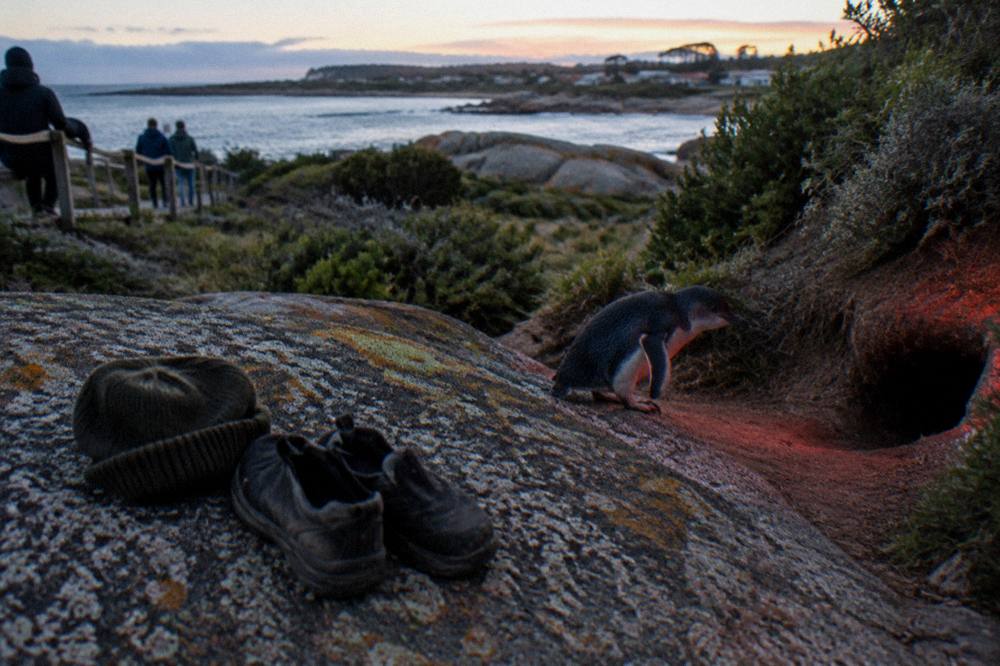
Practically, both city routes share a packing list. Warm layers, because Tasmanian evenings drop fast even in summer, and enclosed comfortable shoes, which Bicheno states as a requirement for the 500-metre rookery walk. No torch of your own at Low Head; red light comes from the guides. Binoculars earn their space if you have them, and the guidelines note video without spotlights is fine. The full clothing logic, including why dark colours matter, is laid out in the what to wear on a penguin tour guide.
One wildlife note worth carrying: H5 bird flu has been detected in Tasmanian wild birds, including little penguins on King Island, with no viewing-site restrictions in place at the penguin spots. Do not touch sick or dead birds; report them to the Emergency Animal Disease Hotline on 1800 675 888.
Are There Free Penguin Viewing Options Near Either City?
Yes, though none is a tour. Near the north, Lillico Beach, ten minutes west of Devonport, offers free platform viewing with volunteer guides generally from September to April, and Burnie runs free nightly guided viewing from 1 October to 31 March. Near Hobart, the Bruny Island Neck platform is free and self-guided. All prohibit flash and ask for red light only.
Free does not mean unregulated, and that is the point. The Lillico platform, in the Lillico Strait Conservation Area, is run with volunteer guides from the Friends of Lillico Penguins, who hold red torches and turn visitors away from their own white lights; the Devonport City Council page for the beach asks for donations and no flash. Burnie's Observation Centre at Parsonage Point runs volunteer-guided viewing nightly through its 1 October to 31 March season, with guides present from 30 minutes before dusk, no booking, and a level wheelchair-accessible boardwalk. The full statewide list, including Stanley's Godfreys Beach platform and the Penguin township's self-guided beaches, is in the free penguin viewing in Tasmania guide.
For a Launceston base, the honest comparison is Low Head versus a longer drive west. Lillico and Burnie sit closer to Devonport than to Launceston, so the $83 pickup tour usually wins on total evening effort unless your trip already points west. For a Hobart base, the Neck is the only free option within an evening's reach, and it demands the most self-discipline: no guides, no supplied red light, and a ferry queue on the way home. The can I see penguins on Bruny Island post covers what that platform does and does not promise.
The one thing free sites never give you is the rookery itself. Bicheno's private colony and Low Head's nightly reserve access are the two places on this site where a guide walks you to the birds; everything else is you, a platform and the birds' own schedule.
If either paid option fits your base city, these are the two listings worth checking against your dates.
Common Questions About Penguin Tours From Hobart And Launceston
Are there penguin tours from Hobart with hotel pickup?
No penguin tour with Hobart pickup is listed on this site. The two bookable products are the Low Head tour, which picks up in central Launceston, and the Bicheno tour, which meets at the operator's Burgess Street shop and requires self-drive. Hobart-based travellers can also use the free Bruny Island Neck viewing platform at dusk.
How much is the Low Head penguin tour from Launceston?
The listing starts at $83 per person and includes central Launceston pickup and return transfer, about 3 hours door to door and about 1 hour of guided viewing, with a maximum of 10 guests. The operator also sells the tour directly at its gate for $50 adult without the transfer.
How far is Bicheno from Hobart for a penguin tour?
This site does not publish a Hobart to Bicheno drive time, so check a mapping service before planning the evening. Note that the Tasman Highway Apsley upgrade between Bicheno and the Coles Bay Road turn-off is under construction with completion expected in 2027, which can add delays.
Which is better for a family, Low Head or Bicheno?
Low Head caps groups at 10 guests and includes the transfer, which suits families without a car in Launceston; its operator's direct family packages start at $140 for 2 adults and 2 children without the transfer. Bicheno is cheaper per person at from $53 and runs about 70 minutes, but requires self-drive and enclosed shoes for the 500-metre walk.
Can you see penguins in Tasmania in winter?
Yes. Both tours run year-round, with Bicheno operating nightly except Christmas Day and New Year's Eve. September to January is the breeding season with the most activity, while winter viewing is quieter; February to April is the moulting window when birds stay ashore for two to three weeks.
Do I need a Tasmania parks pass for a penguin tour?
A parks pass is required for entry to Tasmania's national parks, but the penguin viewing sites on these routes are a private rookery at Bicheno, the Low Head Coastal Reserve and council or reserve land, so a pass is not part of either tour's cost. Check the Parks and Wildlife Service if your itinerary includes national parks.