Best Time To See Penguins In Tasmania: A Month By Month Guide
Little penguins come ashore at dusk somewhere in Tasmania almost every night of the year, but numbers, behaviour and tour schedules shift with the seasons. Here is how the calendar actually works.
Short answer
September to January is the busiest window: breeding season means more birds ashore and more activity after dark. February to August is quieter but tours still run, and February to April is moulting season, when many adults stay ashore for two to three weeks. Penguins return within about an hour of darkness, so the tour time matters as much as the month.
Little penguins come ashore somewhere on the Tasmanian coast almost every night of the year. The birds are small, about 1 kg and 40 cm as adults, and they spend daylight hours fishing at sea, returning to their burrows in small groups within about an hour or so of darkness. That single fact drives every penguin-watching plan in the state: you need the right month, the right site, and the right hour of the evening, in that order. If May happens to be the month you're visiting, our guide to seeing penguins in Tasmania in May covers which viewing sites stay open and how the birds behave in the quieter part of the year.
The season question is where most planning goes wrong. People read a generic "best time to visit Tasmania" list, book a summer trip, and assume penguins follow the weather. They mostly follow their own calendar instead: breeding, moulting and chick-rearing, which only loosely match the tourist high season. This guide sets out what is actually known about that calendar, month by month and site by site, using the state wildlife agency's published biology and the operators' own season framing. No official best-month ranking exists; viewing generally runs September to April for penguin watching. For a broader look at how penguin viewing fits alongside devils and other native species, see our guide to Tasmania wildlife tours.
What Is The Best Time Of Year To See Penguins In Tasmania?
September to January is the busiest and most reliable window, because it is breeding season: more birds are coming and going from burrows each night, and the state's two guided tours both frame these months as their most active period. February to August is quieter, though tours still run every night. February to April is moulting season, when many adults stay ashore for two to three weeks.
That framing comes from the operators and the state wildlife agency rather than from a tourism body. The Bicheno tour operator calls September to January its breeding season and February to August its winter season, with noticeably fewer penguins in the cooler months. The Low Head operator describes November to February as its peak, with higher numbers ashore, and March to October as a period of smaller nightly groups. Neither is promising a headcount, and no current published colony counts exist for any named rookery, so treat these as activity patterns rather than guarantees. Whenever you're ready to plan the rest of your trip around a viewing window, the guide to things to do in Tasmania shows how a penguin night fits with everything else on the island.
Breeding itself is not neatly confined to spring. The Natural Resources and Environment department notes that the season varies by bird, place and year, commonly starting in winter with nest preparation, and that a clutch of two eggs can be laid as early as May or as late as December. Winter breeding has become more frequent in recent years in some northern colonies. In practice, that means a June evening can still produce penguins, just fewer of them and with less predictable timing.
If you are choosing a month for a trip built around penguins, September to January is the defensible pick, and October to December is the sweet spot where breeding activity overlaps with longer evenings and milder weather. If your dates are fixed outside that window, the rest of this guide shows what to expect and how to make the quieter months work.
For the full picture of where these colonies sit around the coast, the where to see penguins in Tasmania guide maps the main viewing sites, and the viewing-site comparison on the homepage breaks down the guided options side by side.
What Time Of Night Do Penguins Come Ashore?
Most little penguins come ashore in small groups within about an hour or so of darkness, according to the state wildlife agency's published guidance. Tour start times are pegged to dusk and shift with the seasons, so an evening that works in June starts hours earlier than one in December. Disturbed birds stay at sea longer, which is why viewing rules matter as much as timing.
The Natural Resources and Environment department's little penguin pages describe the dusk return plainly: the birds leave the water at last light and most are ashore within about an hour of full darkness. The same guidance warns that disturbed birds stay at sea longer, which delays feeding of chicks, and recommends settling into a viewing spot before last light. This is why every reputable tour and volunteer platform asks you to arrive early, stay quiet and avoid torches.
Sunset in Tasmania moves a long way across the year. In the Hobart area, sunset sits near 6:20 pm in early October, climbs to about 8:50 pm by late December and early January, and falls back to about 7:30 pm by late March. Those are approximate local times that shift with daylight saving and with your exact location, so check a sunset table for your date and town before you plan dinner around a tour.
The operators build their schedules around this. The Bicheno tour runs two departure windows: 5:00 pm to 7:30 pm through the February to August season, and 7:30 pm to 9:30 pm from September to January, with the exact start confirmed at booking and adjusted to dusk. The Low Head tour starts every night just after sunset, year-round. If you are booking months in advance, do not assume the time on the listing is the time you will walk; it is a window, and the operator confirms the hour closer to the night.
Both of these tours are built around the dusk return rather than a fixed clock time, which is the main reason a guided evening outperforms a DIY attempt for first-time visitors. The what time of day penguins come ashore post goes deeper on the mechanics of the nightly return if you want the full picture.
Month By Month: What Each Month Offers Penguin Watchers
No month is penguin-free in Tasmania: both guided tours run every night of the year except Christmas Day and New Year's Eve at Bicheno, and the volunteer platforms run long seasons. The differences are about volume and behaviour: September to January brings breeding activity, February to April brings moulting adults ashore by day, and the winter months bring small, quiet groups.
The table below folds the operators' season framing and the state biology into one view. It is a planning guide, not a promise: penguin numbers vary by night, by weather and by colony, and no operator or agency publishes a nightly count you can book against.
| Month | What is happening | What to expect at dusk |
|---|---|---|
| January | Late breeding season, chicks fledging at some sites | Busy beaches, latest sunsets of the year, tours start 7:30 pm or later |
| February | Moulting begins, breeding winds down | Adults ashore by day moulting, smaller evening groups at some sites |
| March | Moulting continues, Low Head numbers taper | Quieter evenings, earlier starts as sunset pulls back |
| April | Moult tail end, volunteer seasons close at Lillico | Small groups, volunteer platforms winding down |
| May | Winter begins, nest preparation can start | Quiet viewing, early dusk, possible early clutches |
| June | Winter breeding recorded in recent years at some colonies | Small groups, tours start near 5:00 pm at Bicheno |
| July | Deep winter, low activity but tours run nightly | Very early starts, cold evenings, few other visitors |
| August | Late winter, pre-season activity builds | Still quiet, first signs of spring behaviour late in the month |
| September | Breeding season begins, volunteer season starts at Lillico | Activity picks up, Bicheno shifts to the 7:30 pm window |
| October | Breeding builds, Burnie guiding season opens 1 October | Good numbers, mild evenings, book ahead |
| November | Peak breeding, Low Head describes its highest numbers | Strong activity, long evenings |
| December | Peak breeding, latest sunsets, school holidays | Busiest tours of the year, book well ahead |
Two things in that table deserve emphasis. First, the moulting window from February to April is not a dead zone: moulting adults must stay ashore for two to three weeks while they replace all their feathers, so daytime sightings near burrows are actually more likely in these months, even if the dusk parade is thinner. Second, the winter months are the cheapest and emptiest time to go, and both tours keep running, so a quiet July evening with a small group and a 5:00 pm start is a genuinely different experience rather than a worse one.
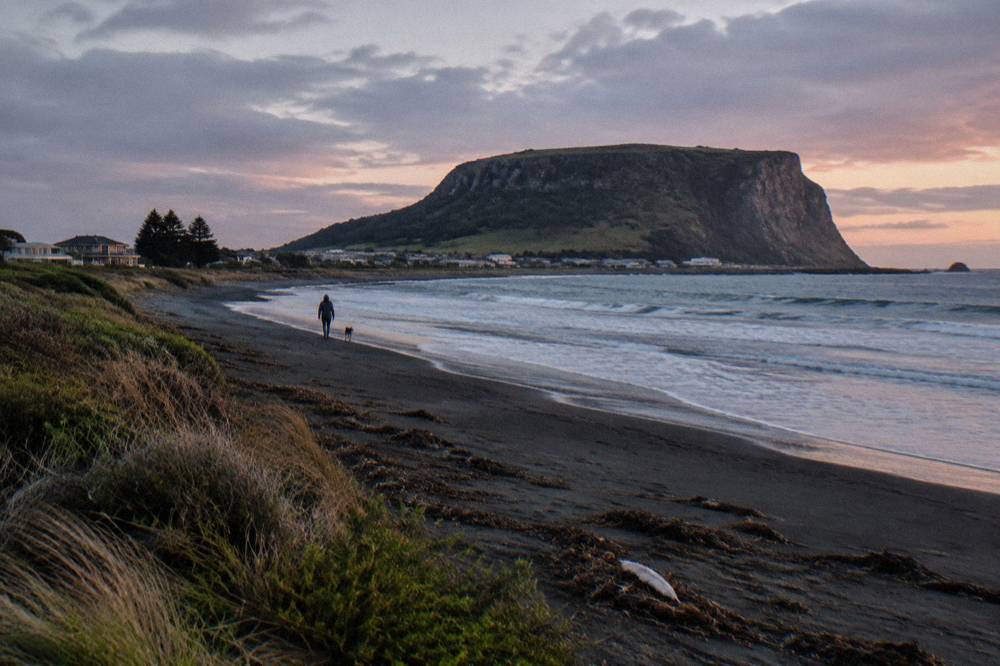
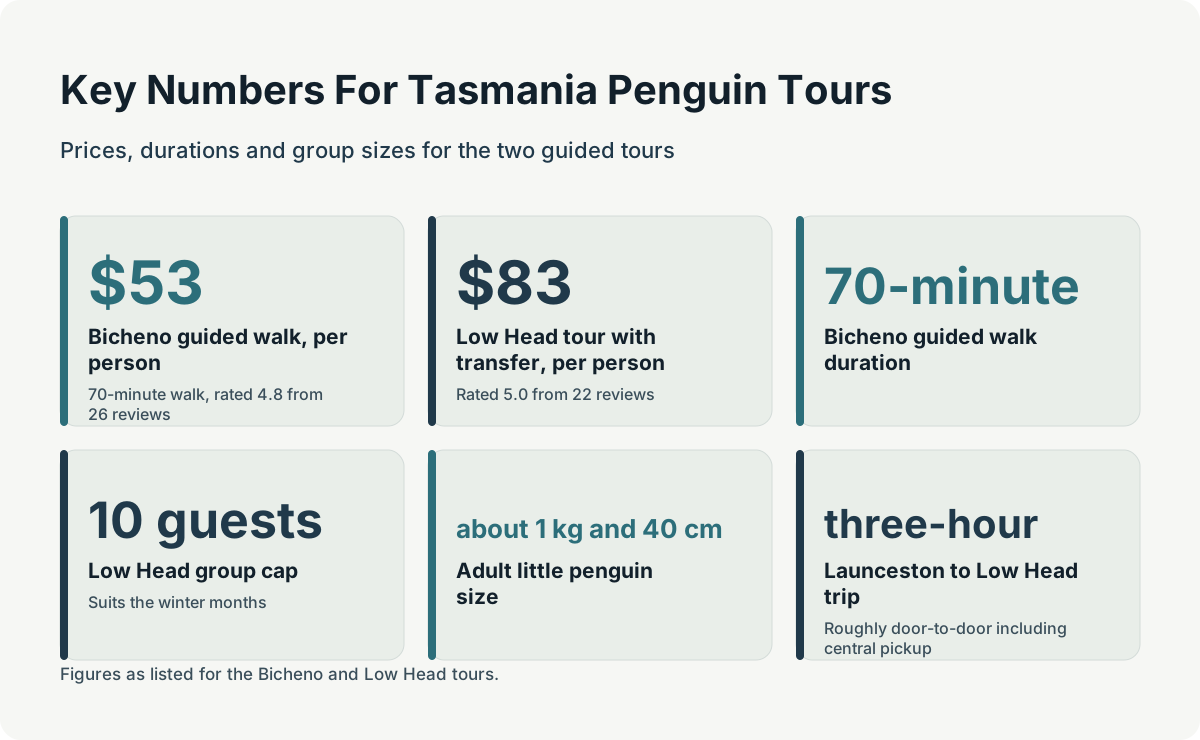
The Bicheno tour is the site's featured option for this calendar: a 70-minute guided walk from $53 per person, rated 4.8 from 26 reviews, meeting at the operator's shop on Burgess St with no accommodation pickups. The listing is flagged as often selling out, which matters most in the October to January window.
Season By Season At Each Of The Main Viewing Sites
Each site runs on its own calendar: Low Head tours run nightly year-round, Bicheno runs nightly except Christmas Day and New Year's Eve with two seasonal departure windows, Burnie's free volunteer guiding runs 1 October to 31 March, and Lillico's platform is generally used September to April with volunteer guides in season.
The guided and volunteer options do not all open at once, and a trip planned around one site can miss another by weeks. The table below sets out what each main site offers across the year, using the operators' and councils' own published information. More of these guides are collected on Tasmania Penguin Tours.
| Site | Season | Format | Notes |
|---|---|---|---|
| Bicheno (East Coast) | Nightly year-round, except Christmas Day and New Year's Eve | Guided tour, private rookery | Departures 5:00 to 7:30 pm February to August, 7:30 to 9:30 pm September to January |
| Low Head (North Coast) | Nightly year-round, just after sunset | Guided tour, small groups | Operator describes higher numbers November to February, smaller groups March to October |
| Lillico Beach (near Devonport) | Generally September to April | Free viewing platform, volunteer guides in season | Donations welcome, guides hold red torches, no visitor torches or flash |
| Burnie | 1 October to 31 March | Free guided viewing at the Observation Centre | Guides present from 30 minutes before dusk, no booking needed |
| Bruny Island Neck | Platform available year-round, no published hours | Self-guided viewing from the platform | Parks and Wildlife names the Neck Conservation Area platform; check the service before going |
| Stanley (Godfreys Beach) | Best September to March per local sources | Self-guided viewing from a platform | Free, red lighting at the platform, no guides mentioned |
The two guided tours are the only bookable products on this site, and they split the state neatly: Bicheno on the East Coast, Low Head near George Town on the North Coast, reached on a roughly three-hour door-to-door trip from Launceston including central pickup. The Low Head listing, from $83 per person with the transfer included and rated 5.0 from 22 reviews, caps groups at 10 guests, which suits the winter months when a small group around a guide matters more.
For the free sites, timing is everything. Burnie's volunteer season opens on 1 October and closes on 31 March, so an April trip misses it by days. Lillico's platform is generally in use from September to April with two or three volunteer guides on site each evening in season, and the Devonport council page is the place to confirm the current arrangement. The Bruny Island Neck platform is named by the Parks and Wildlife Service, but Parks and Wildlife names the platform but publishes no hours or entry fees for it, so check with PWS before you go, so check the service before planning an evening around it. The free penguin viewing in Tasmania guide covers the no-cost options in full.
Breeding, Moulting And The Penguin Year Explained
A clutch of two eggs can be laid as early as May or as late as December, incubation runs about 35 days with parents sharing shifts of up to a week, and chicks fledge at about eight weeks. Moulting falls mainly between February and April, when adults stay ashore for two to three weeks replacing all their feathers and cannot fish.
That sequence, published by the state's Natural Resources and Environment department, explains why the calendar feels lumpy rather than smooth. The breeding season commonly starts in winter with nest preparation, and the department notes breeding has become increasingly asynchronous, with winter breeding more frequent in recent years, including eggs laid as early as late May or June at some north-west coast sites. So the tidy September to January story is the centre of a spread, not a boundary.
Moulting is the mirror image of breeding season for viewers. An adult penguin fattens up at sea, then comes ashore and stays put for roughly two to three weeks while it replaces its entire plumage, because a penguin halfway through a moult is not waterproof and cannot feed. During these weeks the birds are visible around burrows in daylight, sometimes standing motionless and scruffy-looking, which alarms visitors who do not know what they are seeing. It is normal, and the department's habitat guidance places moult evidence mainly in February to April.
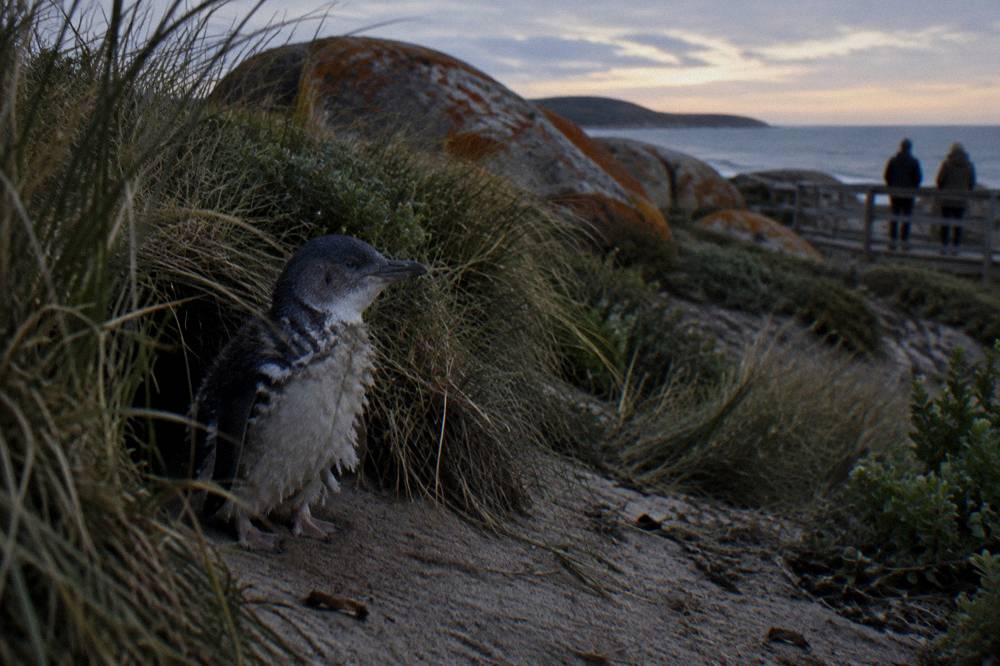
The Bicheno operator's own history is a useful reminder that these colonies are fragile rather than fixed. Its rookery fell to about 40 birds in the early 1990s after dog attacks, then recovered through land restoration work on the site. The department lists dogs and feral cats among the main threats to little penguins, alongside roadkill at dusk, harassment and coastal development, which is why every viewing site in the state bans dogs outright and asks drivers to slow down on coastal roads after dark.
Is Winter Actually A Good Time To See Penguins In Tasmania?
Yes, with adjusted expectations: both guided tours run nightly through winter, the Bicheno operator runs a dedicated February to August season with 5:00 to 7:30 pm departures, and winter breeding has been recorded in recent years. Groups are smaller, evenings start early, and you will share the beach with far fewer people.
Winter penguin watching in Tasmania is a different product, not a discounted one. The Bicheno operator explicitly frames February to August as its quieter season and keeps running through it, adjusting departure times to the early dusk. The Low Head operator runs every night of the year just after sunset and describes March to October as a period of smaller nightly groups, in the range of tens of birds rather than the hundreds it associates with November to February. Those are the operator's own descriptions, and they are the only seasonal volume framing available, since no agency publishes counts.
The compensations are real. A 5:00 pm start means you are back indoors by early evening, which suits families with small children better than a 9:30 pm summer departure. The winter months sit outside school holidays, so tours are quieter and the small-group experience is easier to get. And the department's note that breeding can begin in winter, with eggs laid as early as late May or June at some northern sites, means a winter evening is not a guaranteed shutout.
The trade-off is weather and warmth. A Tasmanian winter evening on an exposed beach is genuinely cold, and the what to wear on a penguin tour guide covers the layering and enclosed footwear both operators require. If you would rather have the odds on your side and do not mind a late night, hold out for the September to January window instead.
How To Plan Around Dusk Times, Tour Windows And The Calendar
Pick your month first, then match the site to it: September to January for activity, October to December for the overlap of good weather and breeding, winter for small groups. Check the sunset time for your exact date and town, book the tour ahead, and plan the drive for daylight, since dusk is peak hour for wildlife on Tasmanian roads.
A few practical points pull the whole calendar together. Tour start times are windows, not fixed hours: Bicheno confirms the exact departure at booking, adjusted to dusk, so a listing that says 7:30 pm in November may say 5:00 pm in July. Book ahead in the peak window, especially at Bicheno, where the listing is flagged as often selling out and the operator itself advises booking weeks ahead. Both tours on this site offer free cancellation, so an early booking costs you nothing if the forecast turns.
Since the two guided tours are the anchor of most plans, here they are side by side with the figures that matter when you are matching a tour to a season. Compare the two penguin viewing tours below.
| Tour | Price | Rating | Time commitment | Group and access |
|---|---|---|---|---|
| Bicheno 70-Minute Guided Beach Walk | From $53 per person | 4.8 from 26 reviews | 70 minutes with the guide | Meets at the shop on Burgess St, no accommodation pickups, free cancellation |
| Low Head Small Group With Launceston Transfer | From $83 per person | 5.0 from 22 reviews | About 3 hours door to door, about 1 hour of viewing | Maximum 10 guests, central Launceston pickup, free cancellation |
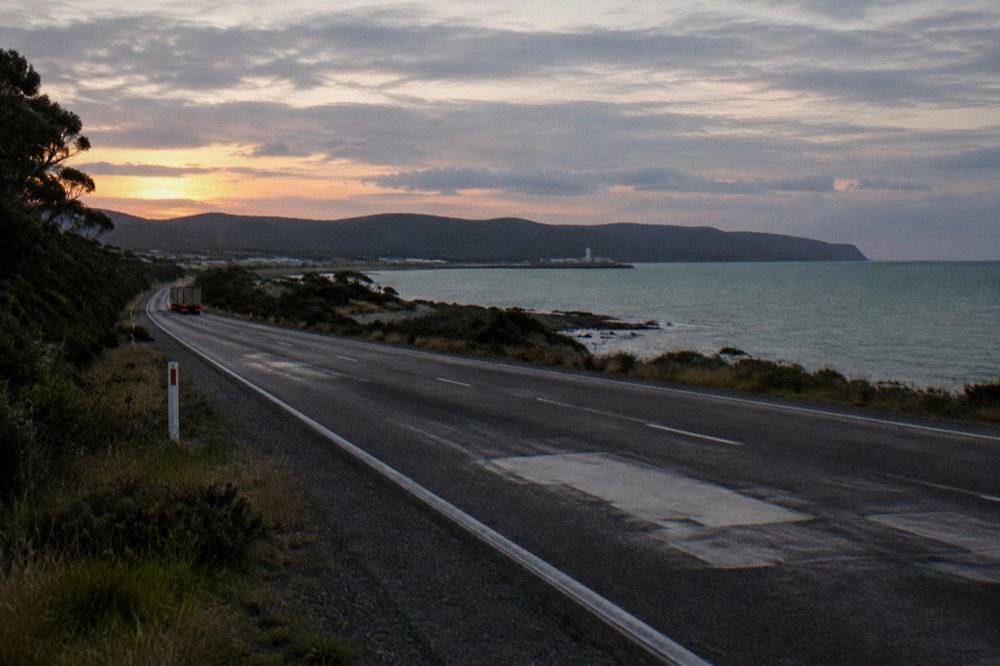
The drive matters as much as the tour. The state road authority has resurfacing works scheduled through the 2026-27 program on multiple Bass Highway sections around Devonport, Ulverstone, Penguin and Heybridge, with delays of up to 15 minutes possible, and the Apsley upgrade on the Tasman Highway between Bicheno and the Coles Bay Road turn-off runs until 2027. None of it closes a penguin site, but all of it argues for leaving margin, and for finishing the drive before dusk, when the standard advice across Tasmanian tourism and parks guidance is to slow down and watch for wildlife on the road.
If you are tying the evening to a wider trip, the east coast Tasmania itinerary guide places Bicheno in a multi-day route, and the best time to visit Tasmania guide covers the weather side of the same decision. For the birds themselves, the department's little penguin pages are the primary source on biology and season, and its penguin watching guidelines cover the viewing rules every site enforces: dark clothing, no flash, dim red-light torches only, keep at least 3 m from burrows, and never bring dogs.
Whichever of the two you lean toward, the season logic in this guide applies to both: book the Bicheno walk early for the September to January peak, and treat the Low Head transfer tour as the comfortable option when you would rather not drive at dusk at all. Both listings carry free cancellation, so a change of plans costs nothing but a few minutes.
Common Questions About The Best Time To See Penguins In Tasmania
What is the best time of year to see penguins in Tasmania?
September to January is the busiest window, framed by both guided tour operators as breeding season with the most nightly activity. February to August is quieter but tours run every night, and February to April is moulting season, when many adults stay ashore for two to three weeks. No official best-month ranking exists.
What time of night do penguins come ashore?
Most little penguins come ashore in small groups within about an hour or so of darkness, per the state wildlife agency. Tour times follow dusk: Bicheno departs 7:30 to 9:30 pm from September to January and 5:00 to 7:30 pm from February to August, while Low Head starts just after sunset year-round.
Can you see penguins in Tasmania in winter?
Yes. Both guided tours run nightly through winter, the Bicheno operator runs a dedicated February to August season, and winter breeding has been recorded in recent years, with eggs laid as early as late May or June at some northern sites. Expect smaller groups, early start times and cold evenings.
Do penguin tours in Tasmania run year-round?
The Bicheno tour runs nightly year-round except Christmas Day and New Year's Eve. The Low Head tour runs every night of the year just after sunset. The free volunteer sites run shorter seasons: Burnie from 1 October to 31 March, and Lillico generally September to April.
When is moulting season for Tasmanian penguins?
Moulting falls mainly between February and April. Adults fatten at sea first, then stay ashore for about two to three weeks while replacing all their feathers, during which they cannot fish and are often visible around burrows in daylight looking scruffy.
Which months have the most penguins ashore at Low Head?
The Low Head operator describes November to February as its highest-number period and March to October as a time of smaller nightly groups. These are the operator's own season descriptions rather than published counts, which do not exist for any named rookery.