Tasmania Wildlife Tours: What To Book And What You Can See For Free
Tasmania's wildlife is the reason many people visit, but most of it cannot be scheduled. Penguins are the exception: they come ashore at dusk every night of the year, and two guided tours let you buy that evening with confidence.
Short answer
The most reliable bookable wildlife evening in Tasmania is a guided penguin tour at dusk. The Bicheno tour runs from $53 per person (4.8 from 26 reviews) and the Low Head tour from Launceston from $83 per person (5.0 from 22 reviews). Both run nightly year-round with free cancellation.
Tasmanian wildlife has a scheduling problem. Devils are nocturnal and shy, wombats graze at unpredictable hours, and seals appear where they please. Little penguins, by contrast, come ashore at dusk every single night of the year, which makes a guided penguin walk the one wildlife evening in this state you can genuinely book ahead. The Tasmania Penguin Tours comparison covers the viewing sites in detail, and this guide widens the lens to wildlife touring generally: what to book, what to leave to chance, and what the current season means for both.
What Wildlife Can You Actually See On A Tour In Tasmania?
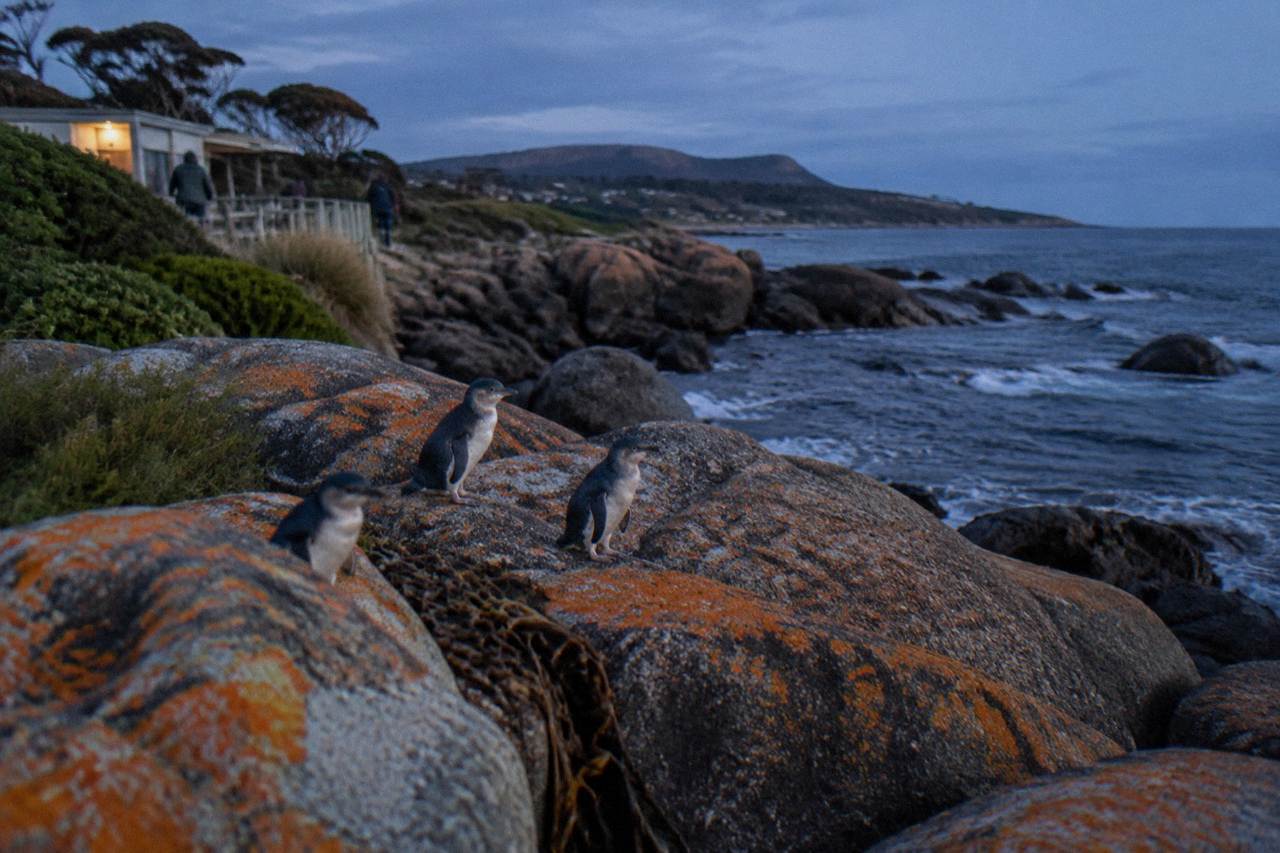
The wildlife you can reliably buy a ticket for is narrow: penguins at dusk, plus a handful of marine and wilderness cruises. Everything else, devils, wombats, platypus and kangaroos, depends on luck, season and habitat. Little penguins are the standout because they return to their burrows at last light every night, so a guided rookery visit delivers the birds with unusual consistency.
Honest planning starts with accepting that distinction. The NRE Tasmania little penguin pages note that the majority of the Australian population of the species lives in this state, with past estimates of 110,000 to 190,000 breeding pairs, most on offshore islands and under 5 percent on mainland Tasmania. Those are state-level figures, not a count of any rookery you will visit, but they explain why penguin viewing is woven through so much of the Tasmanian coast.
For everything else, tours are habitat bets rather than guarantees. A wilderness cruise puts you in the water where seals and seabirds feed. A multi-day park itinerary puts you in country where wombats and wallabies live. Neither promises an animal at a set hour. Penguins do, in effect: the birds leave the water at last light and most come ashore in small groups within an hour or so of darkness, which is exactly the window the tours are built around.
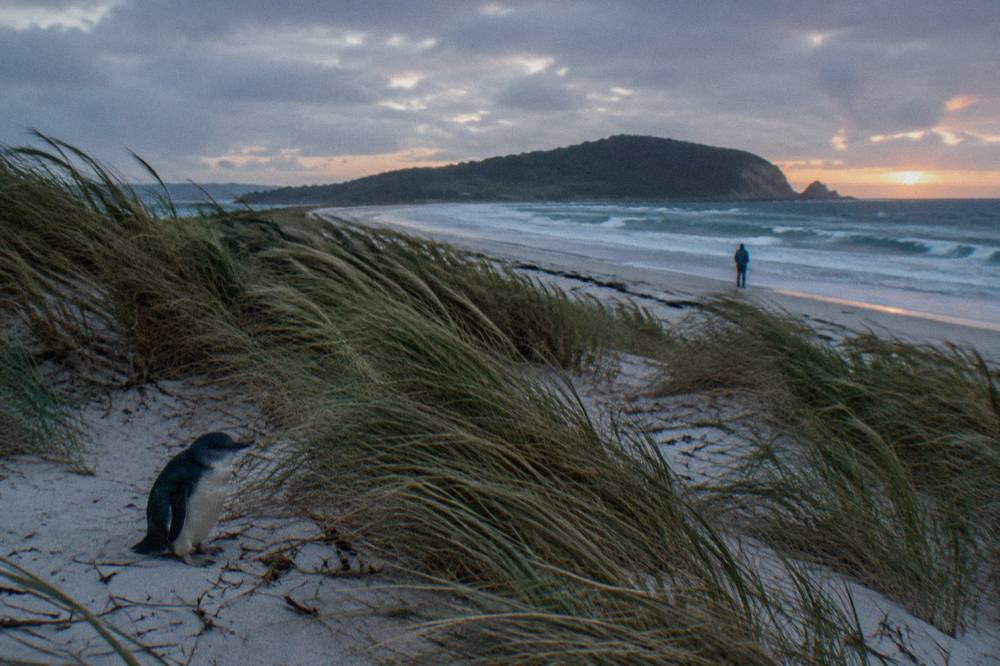
The practical takeaway for a wildlife-focused itinerary is to book the guaranteed evening first and let the rest flex around it. That is the opposite of how most people plan, since the headline animals get the research attention and the penguins get treated as a bonus. Flip it, and the trip has a wildlife anchor every night of your stay can hang from.
Why A Penguin Tour Is The Most Reliable Evening Wildlife Session
Penguins return to their burrows at dusk every night of the year, so a guided rookery tour is the only Tasmanian wildlife experience with a nightly schedule attached. The Bicheno tour runs from $53 per person with a 4.8 rating from 26 reviews, and the Low Head tour from Launceston runs from $83 per person with a 5.0 rating from 22 reviews.
Both tours are small, guided and built around the birds' own timing. At Bicheno, the meeting point is the operator's shop at 1/70 Burgess St, followed by a short bus ride to a private rookery and a guided walk of about 500 metres over roughly 50 minutes, with the whole experience running about 70 minutes with the guide. At Low Head, near George Town, the evening runs about 3 hours door to door including central Launceston pickup and transfer, with about an hour of guided viewing at the coastal reserve, in a group capped at 10 guests.
The reliability comes from the biology rather than from any operator promise. NRE Tasmania's penguin watching guidance notes that the birds come ashore at last light and that disturbed birds stay at sea longer, which is why the tours run at dusk, keep groups small, and use dim red light only. The rookeries themselves are protected habitat: the Bicheno colony famously fell to about 40 birds in the early 1990s after dog attacks, then recovered through land restoration, a story the operator tells on its own pages.
That recovery is worth a moment of reflection when you are choosing a wildlife tour at all. A guided visit to a rookery that was nearly lost, run by people whose business depends on the birds surviving, does more for the animal than a self-guided stumble onto a beach ever could. The NRE guidance says it plainly: ideally, join a guided tour. If you are weighing the two bookable options against each other, the Bicheno versus Low Head comparison breaks down the differences in full.
How The Two Bookable Penguin Tours Compare
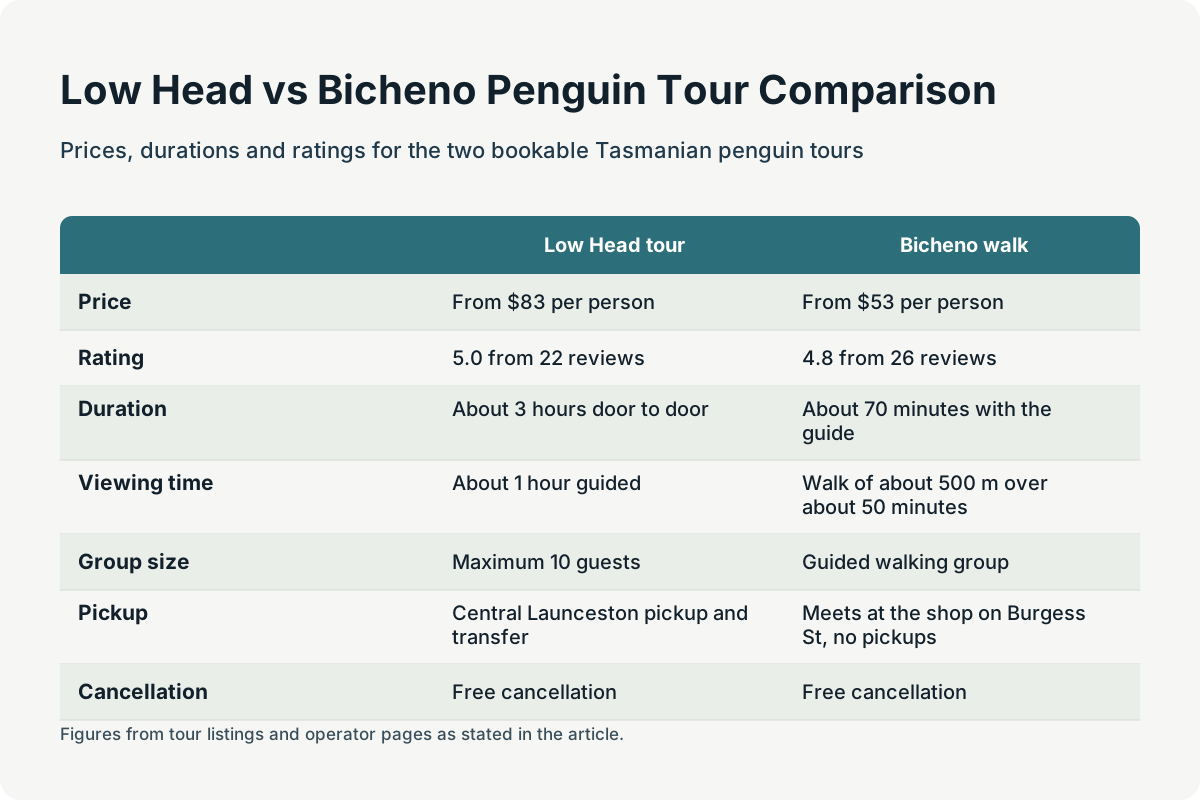
The Low Head tour from Launceston costs from $83 per person, runs about 3 hours door to door with a central pickup, caps groups at 10 guests and rates 5.0 from 22 reviews. The Bicheno tour costs from $53 per person, runs about 70 minutes on site with no accommodation pickups, and rates 4.8 from 26 reviews. Both offer free cancellation.
The choice is mostly a geography and format decision. Low Head suits travellers based in Launceston or the Tamar Valley who want a fully hosted evening with a transfer, and who value the small group cap. Bicheno suits East Coast travellers, particularly anyone on a Freycinet itinerary, who are happy to make their own way to the meeting point in town.
| Low Head From Launceston | Bicheno Beach Walk | |
|---|---|---|
| Price | From $83 per person | From $53 per person |
| Rating | 5.0 from 22 reviews | 4.8 from 26 reviews |
| Duration | About 3 hours door to door | About 70 minutes with the guide |
| Viewing time | About 1 hour guided | Walk of about 500 m over about 50 minutes |
| Group size | Maximum 10 guests | Guided walking group |
| Pickup | Central Launceston pickup and transfer | Meets at the shop on Burgess St, no pickups |
| Cancellation | Free cancellation | Free cancellation |
One nuance on price: the Low Head operator's own page lists a direct adult price of $50 at the reserve itself, but that figure is for the tour without the Launceston transfer, and the $83 listing on this site is the version with pickup and transfer included. They are not competing products, they are the same evening sold with and without the drive.
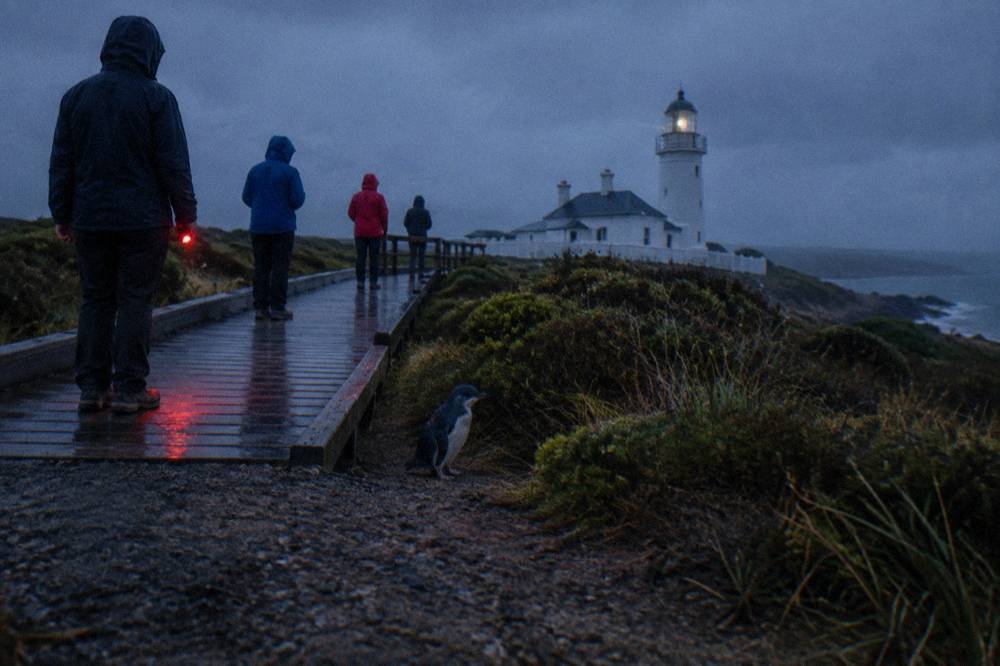
Book whichever one matches where you are sleeping that night. The single most common mistake in penguin tour planning is booking the wrong coast: Bicheno is on the East Coast and Low Head is in the north near George Town, and the drive between them is not something you want to do at dusk, when wildlife on the road is a genuine hazard in Tasmania. Check a mapping service for the drive time from your base before you commit.
If your itinerary has you on the East Coast instead, the Bicheno evening is the one to look at, and the Bicheno penguin tours guide covers its seasons and meeting point in detail. One note for planners: the Bicheno listing is flagged as often selling out, so it is the one penguin evening where booking ahead genuinely matters rather than being a nice habit.
What A Penguin Tour Evening Actually Looks Like
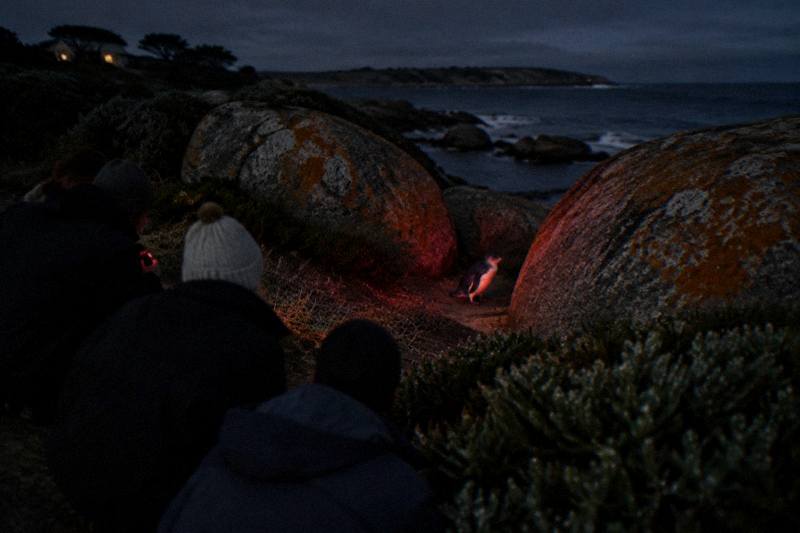
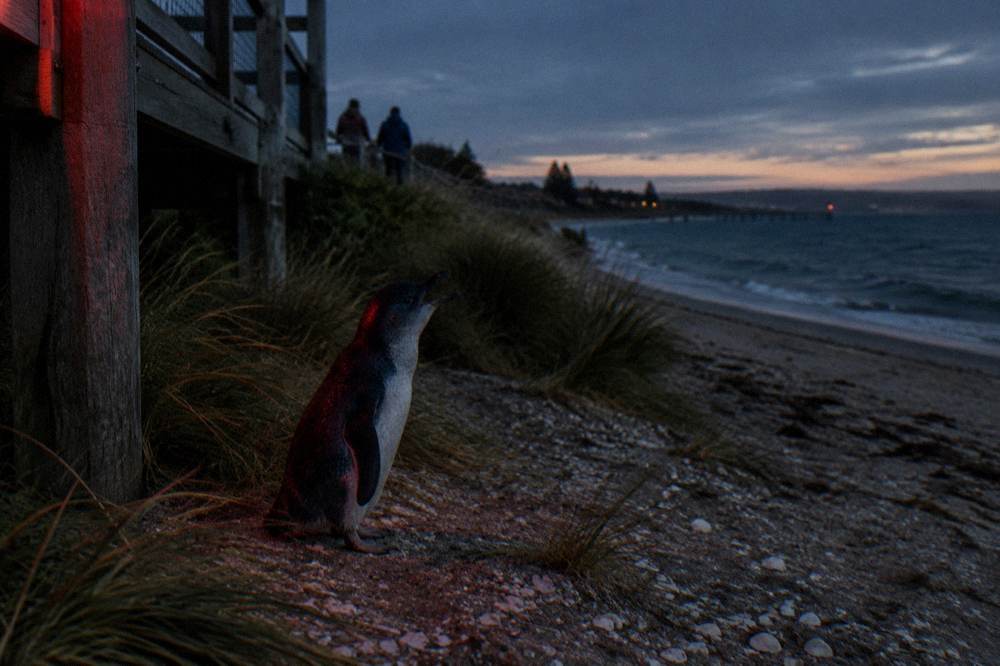
You meet before dusk, get a short briefing on light and noise rules, and walk to a viewing spot near the rookery while there is still enough light to see the track. As darkness settles, the first penguins come ashore in small groups, and you watch them from a distance with only dim red light. The whole thing is quiet, slow and closer than most people expect.
The rules are not tour-operator fussiness, they are the reason the birds keep coming back. NRE Tasmania's penguin watching guidelines ask viewers to wear dark clothing, approach from land rather than along the beach, settle into a spot at least 3 metres from any burrow before last light, stay quiet, and use only dim red-light torches never pointed at the water or directly at the birds. Flash photography is out on the beach, dogs and cats are banned under any circumstances, and penguins are protected wildlife, so touching or harassing them is illegal. For a deeper look at the town where these guidelines matter most, our guide to penguins in the town of Penguin covers where and when to see them.
The tours handle most of this for you. At Low Head the guides supply the red lights and ban selfie sticks, tripods and personal torches outright. At Bicheno photography is permitted without flash, and enclosed comfortable shoes are required for the walk. If you want the full reasoning behind the camera rules, the penguin photography rules guide explains why a flash can send a whole raft of birds back out to sea.
What surprises most first-time viewers is the sound. Little penguins are vocal on land, and a rookery at night is not a silent place: braying calls carry from the burrows, and the birds announce themselves constantly as they make their way up from the water. The experience is less like a zoo feeding and more like sitting quietly inside a busy neighbourhood after dark, one that happens to be full of one-kilogram birds in tuxedos.
What Other Wildlife Should You Plan Around?
Tasmanian devils, wombats, pademelons, echidnas, seals and a huge seabird population round out the wildlife picture, but none of them can be booked to a schedule the way penguins can. Devils and wombats are best treated as chances inside a park itinerary, seals appear on marine cruises, and the shearwater migration is a seasonal spectacle on the coasts.
Keep the other wildlife generic in your planning and you will not be disappointed. Devils are nocturnal and scarce, and seeing one in the wild is genuinely rare rather than a matter of buying the right ticket. Wombats and pademelons are more forgiving: an evening drive through suitable country, taken slowly because of the roadkill risk at dusk, will often produce wallabies and sometimes wombats, and the Tasmania wildlife viewing context on this site covers where the penguin side of that evening fits.
The seabird story is the one underappreciated wildlife angle in the state. Short-tailed shearwaters, the famous muttonbirds, return to Tasmanian colonies in late September and early October each year and stay through to around April, and at dusk they come ashore in enormous numbers at several of the same coastal reserves where penguins are viewed. An evening at a site like the Neck Conservation Area on Bruny Island or the Low Head lighthouse area can deliver both species in one sitting, as the Parks and Wildlife Service seabirds page notes in naming those platforms.
| Wildlife | Where You Might See It | How Reliable Is It? |
|---|---|---|
| Little penguins | Bicheno, Low Head, Lillico, Burnie, Bruny Neck, Stanley | Nightly at dusk at rookeries, guided tours bookable |
| Shearwaters | Coastal colonies, several penguin viewing sites | Seasonal, late September to around April, at dusk |
| Seals | Marine cruises and coastal waters | Common on cruises, never guaranteed to the hour |
| Wombats and pademelons | Park country, especially at dawn and dusk | Chance sightings, drive slowly |
| Tasmanian devils | Remote country, nocturnal | Rare in the wild, treat as a bonus |
The honest framing for a wildlife itinerary is that the penguin evening is the anchor and everything else is upside. Travellers who plan it the other way around, chasing the rare animals first and treating the penguins as an afterthought, tend to end their trip with a lot of empty evenings and one very good night they nearly missed booking.
Bird Flu And Wildlife Viewing: What Changes In 2026
H5 bird flu has been detected in Tasmanian wild birds, with 46 positive events reported since 19 June 2026, including little penguins on King Island, but no viewing-site restrictions have been found. The practical effect on tours is nil so far: both penguin tours continue to run nightly, and the main visitor duty is to avoid contact with sick or dead birds and report them on 1800 675 888.
This is the piece of current context most itineraries miss. The detections span wild birds along the north and northwest coasts and King Island, and surveillance is ongoing, but no closures or access limits tied to the flu have appeared at any of the penguin viewing sites this site covers. The advice is simple and worth repeating on any wildlife plan: do not touch or go near sick or dead wildlife, and report sightings to the Emergency Animal Disease Hotline rather than handling anything yourself.
For a visitor, the bird flu situation changes one habit: keep a real distance from any bird behaving oddly or lying dead on a beach, and put the hotline number in your phone before a coastal trip. It does not change the plan. The tours, the free viewing platforms and the dusk schedule all continue as normal, and there is no basis in the current advisories for avoiding any particular stretch of coast.
When Is The Best Time Of Year For Wildlife Tours In Tasmania?
September to January is the little penguin breeding season and the period of highest activity at the rookeries, which makes it the strongest wildlife touring window. February to April is the moulting season, when adult birds stay ashore for two to three weeks, and winter, from about June to August, is quieter at most sites. The tours themselves run every night of the year.
The season question is really an activity question, not an access question. Both bookable tours operate nightly year-round, with departure times adjusted to dusk, which in practice means early evening departures from May to August and later ones from September through the summer months. What changes across the year is how much is happening in the colony.
Breeding brings the noise and the traffic. Clutches of two eggs can be laid as early as May or as late as December, incubation runs about 35 days with parents sharing shifts, and chicks fledge at about eight weeks, so a spring or summer evening often lands mid-cycle with birds feeding chicks ashore. The Bicheno operator frames September to January as its breeding season with the most activity and February to August as its quieter winter, which matches the state-wide pattern.
Moulting is the season people accidentally book into and wonder why the beach seems slow. From February to April, adults fatten at sea and then remain ashore for roughly two to three weeks while replacing all their feathers, which means visible birds but no rafts arriving from the water at some sites on some nights. It is a legitimate time to go, just a different show. If your dates are fixed in that window, the best time to see penguins guide goes deeper on what each month delivers.
Around the wider wildlife calendar, spring is also when the shearwaters return and when the weather is at its most changeable, with wind common on the coast. Summer delivers the longest evenings, which pushes penguin tour departures late. Autumn pairs moulting penguins with stable weather and thinner crowds. Winter is the quiet season for everything, and the trade is fewer birds for cheaper, emptier roads.
What Should You Wear And Bring On An Evening Wildlife Tour?
Wear dark, warm layers and enclosed shoes, and bring almost nothing else: no torches, no flash photography, no pets. The tours supply dim red lighting where it is allowed, and the NRE guidelines ask for dark clothing, quiet movement and settled positions before last light. Binoculars are the one genuinely useful extra.
The clothing advice is more functional than it sounds. A Tasmanian dusk in any season can drop from mild to genuinely cold within the hour the tour runs, and the walks are on sand, gravel or boardwalk rather than pavement. Enclosed comfortable shoes are required at Bicheno and recommended everywhere. Dark clothing matters because silhouettes and pale fabrics read as threats to a bird coming ashore; the full reasoning and a packing list are in the what to wear on a penguin tour guide.
| Item | Bring Or Leave | Why |
|---|---|---|
| Dark warm layers | Bring | Dusk temperatures drop fast, dark colours disturb birds less |
| Enclosed shoes | Bring | Sand and gravel tracks, required at Bicheno |
| Red-light torch | Leave, unless told otherwise | Guides supply dim red light where allowed |
| Phone or camera flash | Leave the flash off | Flash can send birds back out to sea |
| Binoculars | Bring | NRE guidance notes they are useful at distance |
| Dogs or pets | Never | Banned at all viewing sites under any circumstances |
The pets rule deserves its own line because it is the one people argue about. Dogs and cats, even leashed, are banned at penguin viewing sites under any circumstances, and the Bicheno colony's collapse to about 40 birds in the early 1990s after dog attacks is the local reminder of why. If you are road-tripping with a dog, plan the penguin evening as a human-only outing and leave the animal at your accommodation.
Can You See Tasmania's Penguins For Free Instead?
Yes, at several sites: Lillico Beach near Devonport runs free volunteer-guided viewing roughly September to April, Burnie offers free guided viewing nightly from 1 October to 31 March, and Stanley and the Penguin township have free self-guided platforms. The paid tours buy you a private rookery, a guaranteed guide and a transfer, not access the free sites deny you.
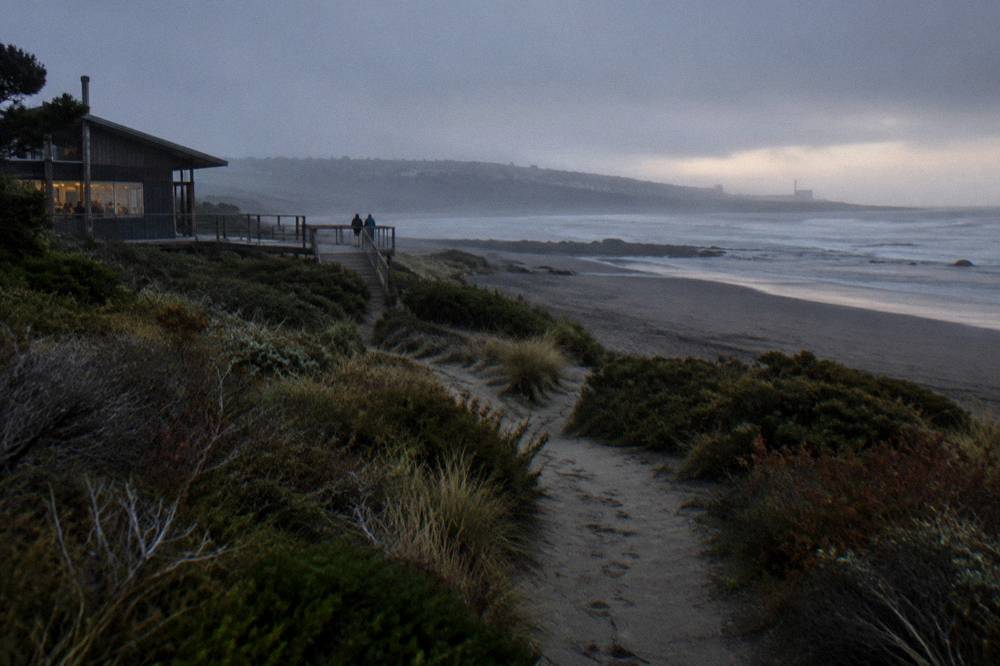
The free options are real and worth knowing, and the free penguin viewing guide covers them in full. At Lillico, the platform in the Lillico Strait Conservation Area sits about ten minutes west of Devonport, with volunteer guides on site in season holding red torches, no visitor torches allowed, and donations welcome. At Burnie, the Friends of Burnie Penguins run free guided viewing at the Observation Centre every night from 1 October to 31 March, with guides present from 30 minutes before dusk, no booking needed.
The trade-offs are practical. The free sites depend on the season, the volunteers and your own ability to get there and behave correctly in the dark without a guide enforcing it. The paid tours give you a private rookery at Bicheno, a ten-guest cap and a Launceston pickup at Low Head, and a professional guide who knows where the birds will land that night. Neither is the wrong choice, but they serve different travellers, and a first-time visitor in the dark does better with the guide.
How Do You Fit A Penguin Tour Into A Wider Tasmania Trip?
Anchor the trip on where you sleep: book the Low Head evening if you are based in Launceston or the Tamar, and the Bicheno evening if your itinerary runs down the East Coast toward Freycinet. Plan other wildlife as daytime and chance encounters around that anchor, and drive slowly at dusk, when wildlife on Tasmanian roads is a real hazard.
The geography does most of the work here. A typical first trip splits between Hobart and Launceston with a coast in between, and the two bookable evenings sit neatly on that map: Low Head for the north, Bicheno for the east. Neither has an accommodation pickup except the Low Head transfer from central Launceston, so the rest of the evening logistics, dinner beforehand, warm layers, the drive back, are yours to plan.
Dusk driving deserves a warning in any Tasmania wildlife itinerary, because it is the one genuinely dangerous part of the plan. Wallabies, pademelons and possums are active at exactly the hours you will be driving to and from a penguin tour, and the standard local advice is to reduce speed and stay alert at dusk and dawn. Build the drive into your evening with a buffer rather than racing the sunset.
One road note for East Coast travellers specifically: the Tasman Highway Apsley upgrade between Bicheno and the Coles Bay Road turn-off has been under construction since early 2025 with completion expected in 2027, and it includes widening and the East Coast's first Hobart-bound overtaking lane, so check the transport department's roadworks pages for current delays before an evening drive through that stretch. The works are a nuisance, not a closure, and the tours run normally through them.
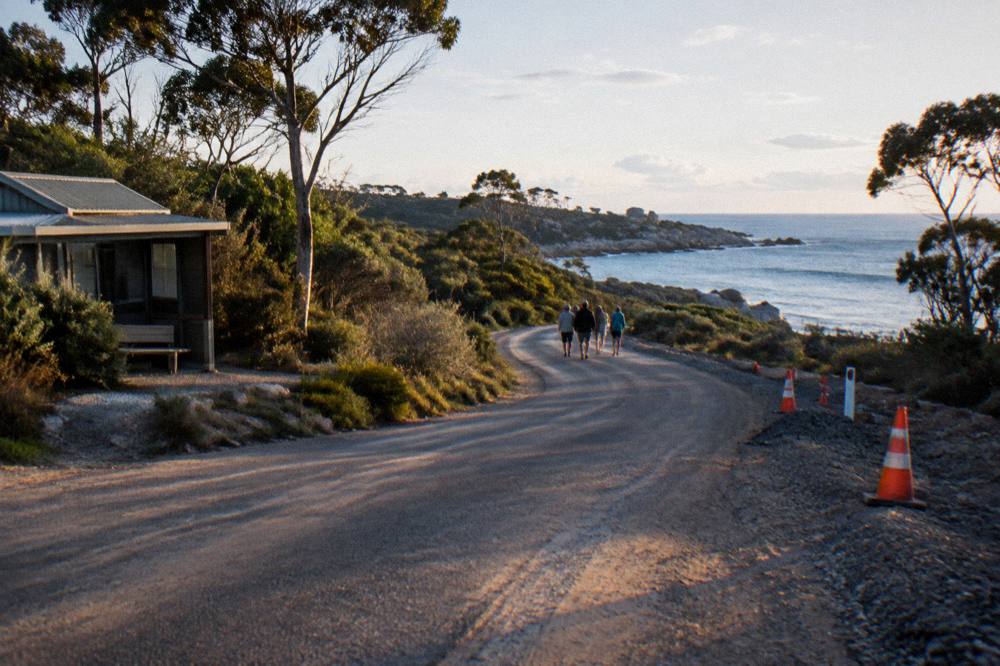
For travellers building the whole trip rather than one evening, the question of how many days is enough comes up constantly, and the honest answer is that a penguin night fits into almost any length of stay because it costs one evening, not one day. Pair it with a daytime Freycinet walk from Bicheno, or a Tamar Valley afternoon from Launceston, and the wildlife box is ticked without restructuring anything.
Common Questions About Tasmania Wildlife Tours
What is the best wildlife tour in Tasmania?
For a bookable, reliable evening, a guided penguin tour is the strongest option: the Low Head tour from Launceston runs from $83 per person with a 5.0 rating from 22 reviews, and the Bicheno beach walk runs from $53 per person with a 4.8 rating from 26 reviews. Penguins come ashore at dusk every night of the year, which no other Tasmanian wildlife experience can match.
Can you see Tasmanian devils on a tour?
Seeing a devil in the wild is rare, and no tour can promise one. Devils are nocturnal and scarce, and wildlife itineraries treat them as a chance encounter inside park country rather than a scheduled viewing. Book the penguin evening for the guaranteed wildlife and treat devils, wombats and pademelons as upside.
Are Tasmania wildlife tours affected by bird flu?
H5 bird flu has been detected in Tasmanian wild birds, with 46 positive events reported since 19 June 2026, including little penguins on King Island, but no viewing-site restrictions have been found and both penguin tours continue to run nightly. Avoid contact with sick or dead birds and report sightings on 1800 675 888.
What time of day do penguin tours start in Tasmania?
Departures are adjusted to dusk, which shifts through the year. At Bicheno, the operator lists departures from 5:00 to 7:30 pm in the February to August season and 7:30 to 9:30 pm from September to January, with the exact start time confirmed at booking. Low Head tours run every night just after sunset.
Can you see penguins in Tasmania without a tour?
Yes. Lillico Beach near Devonport has free volunteer-guided viewing roughly September to April, Burnie runs free guided viewing nightly from 1 October to 31 March, and Stanley and the Penguin township have free self-guided viewing. The paid tours add a private rookery, a small group and a guide who enforces the light and noise rules.
What should you wear on a penguin tour in Tasmania?
Dark, warm layers and enclosed shoes. The tours supply dim red lighting where it is allowed, personal torches and flash photography are banned, and the NRE guidelines ask for dark clothing, quiet movement and a settled position before last light. Binoculars are the one extra worth carrying.