Penguin Town Tasmania: Self-Guided Beaches, Free Platforms And Nearby Tours
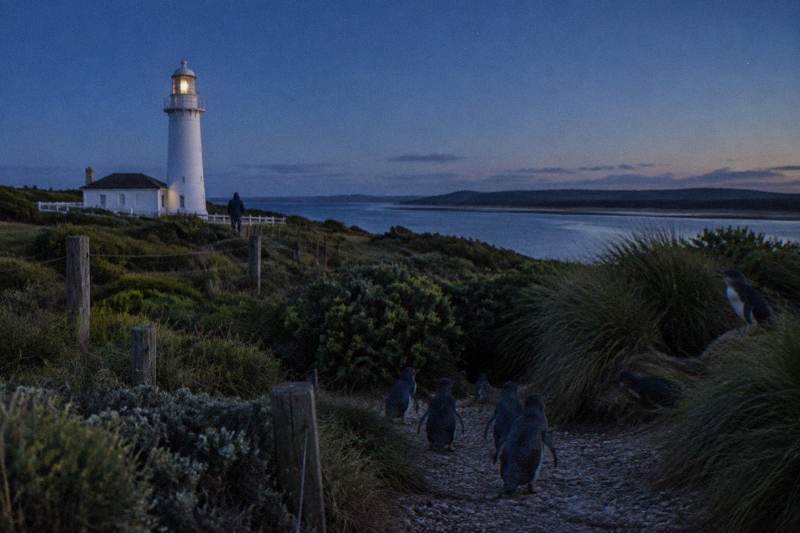
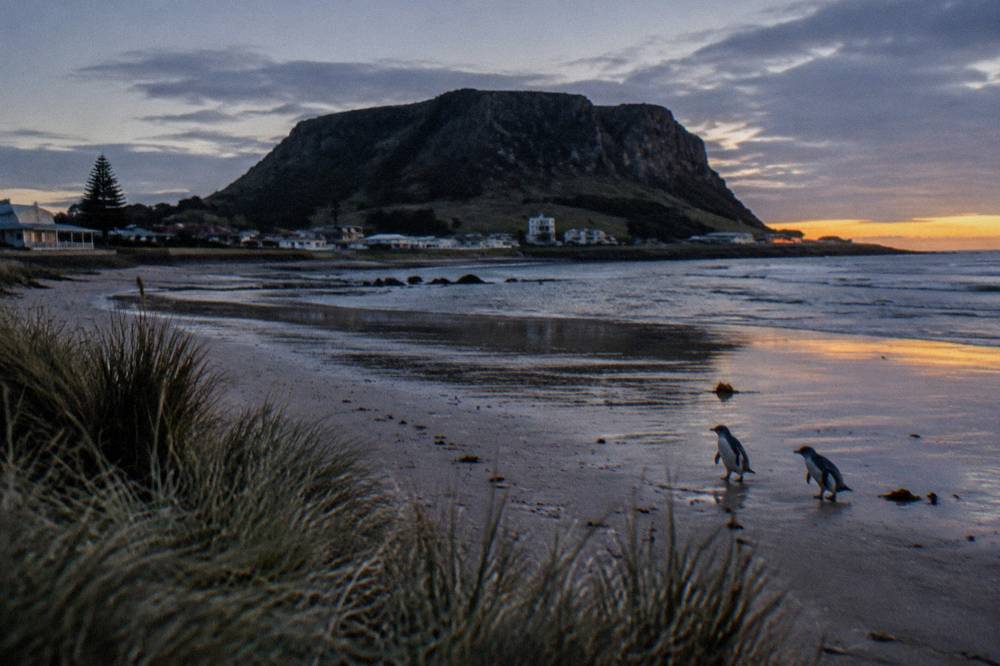
Penguin is a township on Tasmania's north-west coast, named for the bird rather than home to a parade of them. Watching penguins there is free, self-guided and seasonal, and the nearest staffed viewing sites are a short drive up or down the coast.
Short answer
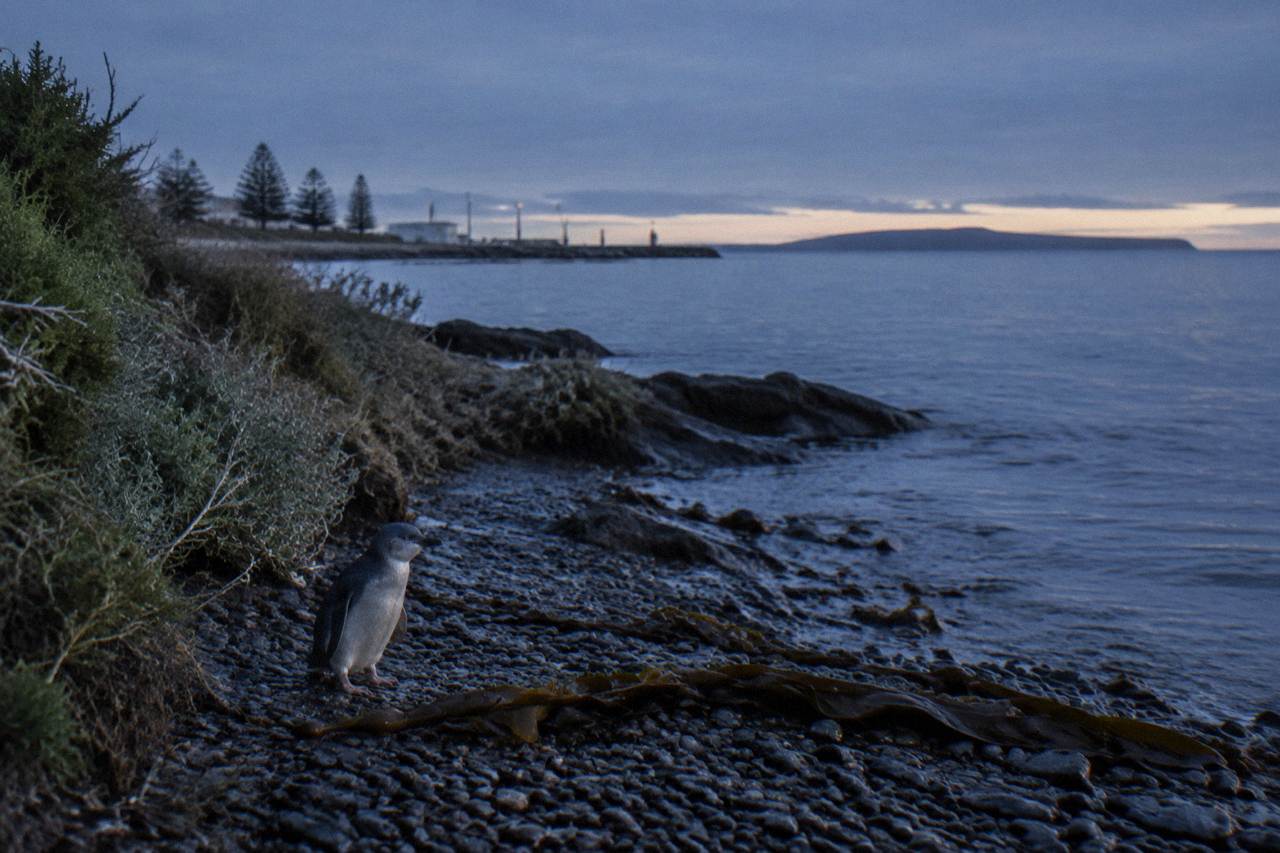
Penguin is a small township on Tasmania's north-west coast, named after the little penguin. No organized penguin tours currently run there; viewing is self-guided at local beaches at dusk, best roughly November to March, free, with red light only. The nearest staffed options are Burnie and Lillico, both free, plus guided tours at Low Head and Bicheno.
What And Where Is The Town Of Penguin?
Penguin is a small coastal township on Tasmania's north-west coast, in the Central Coast municipality, named after the little penguin rather than the other way around. It sits on the Bass Highway between Devonport and Burnie. Despite the name, it has no penguin tours of its own: viewing is self-guided, free and seasonal at the local beaches.
The name causes more confusion than almost any other place name in the state. Search for penguin town Tasmania and you will find a mix of travel questions, some assuming there must be a nightly parade on the doorstep of a town called Penguin. There is not. The township was named for the bird, which was once common along this stretch of coast, and the bird still comes ashore here in numbers that vary with the season and the year. For reliable sightings beyond chance encounters, our guide to Tasmania wildlife tours covering penguins, devils and more is the place to start.
That distinction matters for planning. A visitor who books accommodation in Penguin expecting a ticketed penguin experience will be disappointed, while a visitor who arrives knowing the score can have a genuinely lovely free evening on a quiet beach. The comparison on the homepage of Tasmania Penguin Tours lays out the guided and free options side by side, and this page fills in the local detail for the township itself.
What Penguin township offers is the do-it-yourself end of the spectrum. That has real advantages: no cost, no booking, no crowd management. It also has real demands, because the rules that protect little penguins apply just as strictly to a solo visitor on a public beach as they do to a tour group, and there is no guide on hand to hand you a red torch or point out where the burrows are.
Can You See Penguins In The Town Of Penguin?
Yes, little penguins come ashore on the beaches around the township, but you watch them on your own. No organized penguin tours currently run from Penguin; earlier tours at Penguin Point no longer operate. Viewing is free, best roughly November to March at dusk, and there is no published colony count for the township's beaches.
Little penguins are the smallest penguin species, adults around 40 cm and about 1 kg, and the majority of the Australian population lives in Tasmania. The state's past estimates ran to 110,000 to 190,000 breeding pairs, though most of those birds breed on offshore islands and under 5 percent breed on mainland Tasmania, according to the state environment department's description. No one publishes a count for the beaches at Penguin township, so any specific number you see quoted for the town should be treated with suspicion.
What is documented is the pattern. Birds return to their burrows at last light, most of them in small groups within an hour or so of darkness, and they do so year-round, though winter numbers at any given beach are typically lower. The breeding period from September to January brings the most activity, and the moulting window from February to April finds adults parked ashore for two to three weeks while they replace all their feathers at once.
The practical takeaway is simple. If you are in or near Penguin on a calm evening between November and March and you are willing to sit still in the dark, there is a fair chance of penguins. If you want certainty, a guide, and an interpreter who can tell you what you are looking at, you need one of the staffed sites or bookable tours covered later in this page.
Where Can You Watch Penguins Around Penguin Township?
The two local options are the southern end of Penguin Beach and the Point Penguin area east of town, both free and self-guided at dusk. For structure, the nearest staffed sites are Burnie's Observation Centre and the Lillico Beach platform, both free with volunteer guides in season, both within an easy coastal drive.
Within the township itself, the places locals point to are the southern end of the main beach and the Point Penguin area to the east of town. Both are ordinary public beaches rather than managed wildlife facilities, which is the whole point: you arrive before last light, pick a spot well back from any burrow entrances, and let the evening happen. There are no platforms, no boardwalks and no rosters, so the experience depends entirely on your own preparation.
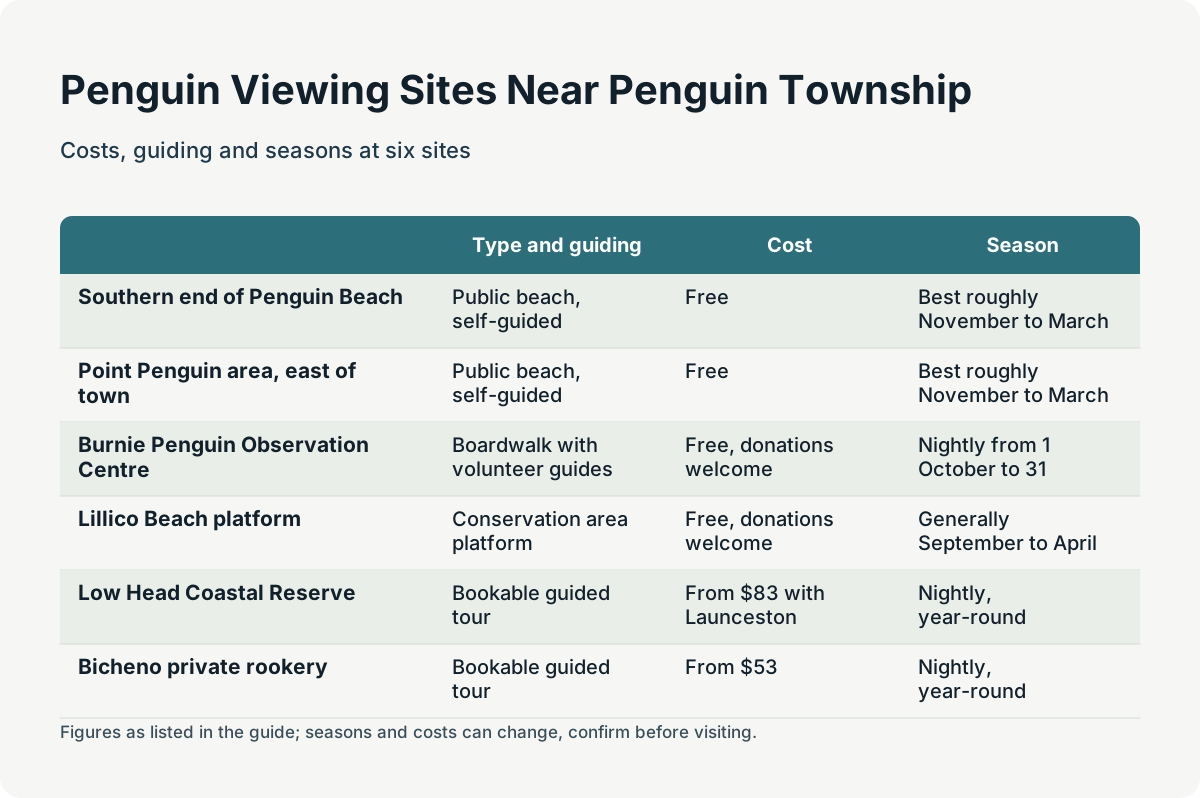
The table below puts the local do-it-yourself spots alongside the staffed free sites and the two bookable tours, so the trade-offs are visible at a glance.
| Site | Type | Guided | Cost | Season |
|---|---|---|---|---|
| Southern end of Penguin Beach | Public beach, self-guided | No | Free | Dusk, best roughly November to March |
| Point Penguin area, east of town | Public beach, self-guided | No | Free | Dusk, best roughly November to March |
| Burnie Penguin Observation Centre | Boardwalk with volunteer guides | Yes, in season | Free, donations welcome | Nightly from 1 October to 31 March |
| Lillico Beach platform | Conservation area platform | Volunteer guides in season | Free, donations welcome | Generally September to April |
| Low Head Coastal Reserve | Bookable guided tour | Yes | From $83 with Launceston transfer | Nightly, year-round |
| Bicheno private rookery | Bookable guided tour | Yes | From $53 | Nightly, year-round |
None of the free sites in that table requires a Tasmania parks pass. A pass is required for entry to the state's national parks, but the Penguin beaches, the Burnie boardwalk and the Lillico platform sit on council or reserve land, not inside a national park. If your itinerary also takes in places like the South Bruny National Park, check the Parks and Wildlife Service pass page before you go.
For travellers basing themselves in the township, the realistic evening plan is one of three shapes: a self-guided sit on the local beach, a short drive to Burnie or Lillico for a staffed session, or a longer trip to Low Head for a fully guided tour. Distances and drive times along the Bass Highway vary with roadworks and traffic, so check a mapping service for the current drive before you commit to an evening plan.
When Is The Best Time Of Year For Penguin Viewing?
Roughly November to March is the strongest window at Penguin's beaches, with the most birds coming ashore at dusk; winter months are quieter but not empty. Statewide, September to January is the breeding season with the most activity, and February to April is the moulting window when adults stay ashore.
The calendar below is not an official ranking, because no state agency publishes one. It is the defensible shape of the year, drawn from the environment department's biology notes and the way the touring operators themselves describe their seasons. Breeders are busy and loud, moulters are home but sedentary, and winter birds are fewer but still faithful to their burrows.
| Months | What is happening | What it means for viewing |
|---|---|---|
| September to January | Breeding season, eggs and chicks | Most activity, most birds ashore at dusk |
| February to April | Moulting, adults ashore 2 to 3 weeks | Birds visible but sedentary, less coming and going |
| May to August | Quieter winter period | Fewer birds, earlier dusk, more patience needed |
| November to March | Local best window at Penguin beaches | The strongest months for self-guided viewing |
Two practical notes sit alongside the calendar. First, dusk moves dramatically across these months, from early evenings in winter to very late starts in midsummer, so your arrival time needs to shift with the season rather than staying fixed. Second, a quiet winter evening at a north-west beach can still produce birds; it simply demands warmer clothing and lower expectations, which is a fair trade for a beach to yourself.
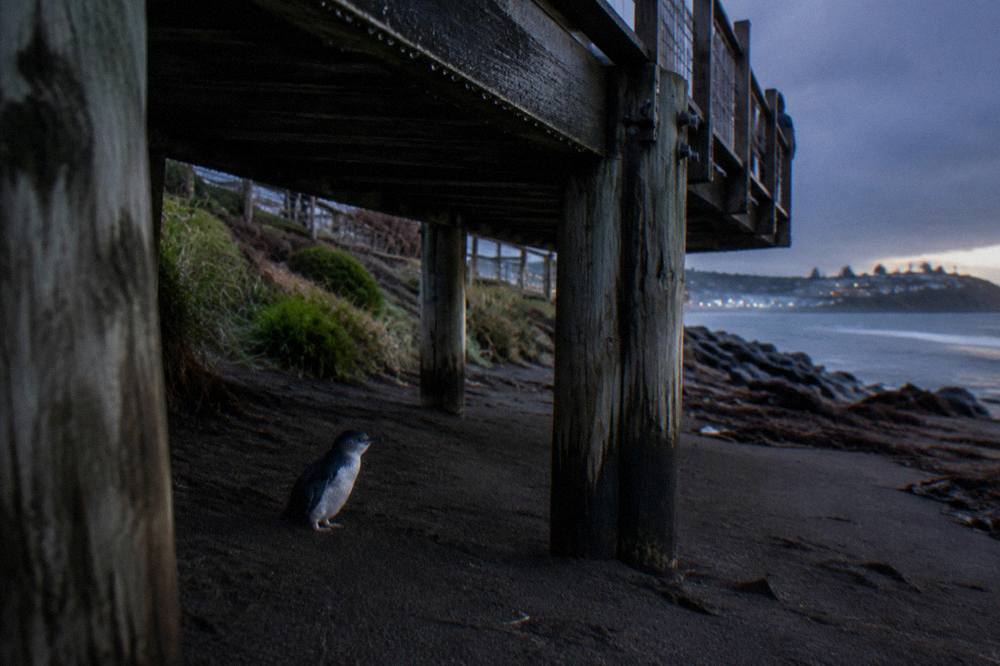
If your dates are locked to a school holiday window or a specific festival, work with what the calendar gives you rather than against it. A February visit lands squarely in the moult, when birds are present but stationary. A October visit catches the very start of the Burnie guiding season and the tail of the Lillico platform season, both covered in the next sections.
What Time Do Penguins Come Ashore Near Penguin?
Little penguins return to shore at last light, and most birds come ashore in small groups within an hour or so of darkness, so plan to be settled on the beach before the sun goes down. In midsummer that can mean a late start; in winter it comes much earlier. Tour operators shift their departure times with the seasons for exactly this reason.
The state's penguin watching guidance is blunt about the mechanics: disturbed birds stay at sea longer, which stresses them and delays the feeding of chicks. That is why every credible piece of advice, from the environment department to the volunteer groups, says to arrive early, settle in place before last light, and stay quiet and still while you wait. Rushing onto the sand at the moment the first bird appears is the single worst thing a visitor can do.
Sunset times across Tasmania swing widely through the year, from roughly 6:20 pm in early October to peaks near 8:50 pm in late December in the Hobart area, with the north-west running to its own clock. Check a sunset table or weather service for your exact date and location rather than guessing. The Bicheno operator on the east coast, for reference, runs its winter departures between 5:00 pm and 7:30 pm and its spring and summer departures between 7:30 pm and 9:30 pm, always adjusted to dusk and confirmed at booking.
That seasonal sliding scale is the clearest illustration of how much the timing moves. A family standing on Penguin Beach at 6 pm in January will be far too early, and one arriving at 8:30 pm in June will have missed the show entirely. Build the evening backwards from the published sunset for your date, aim to be in position half an hour before it, and let the birds set the schedule.
Free Guided Viewing At Burnie And Lillico
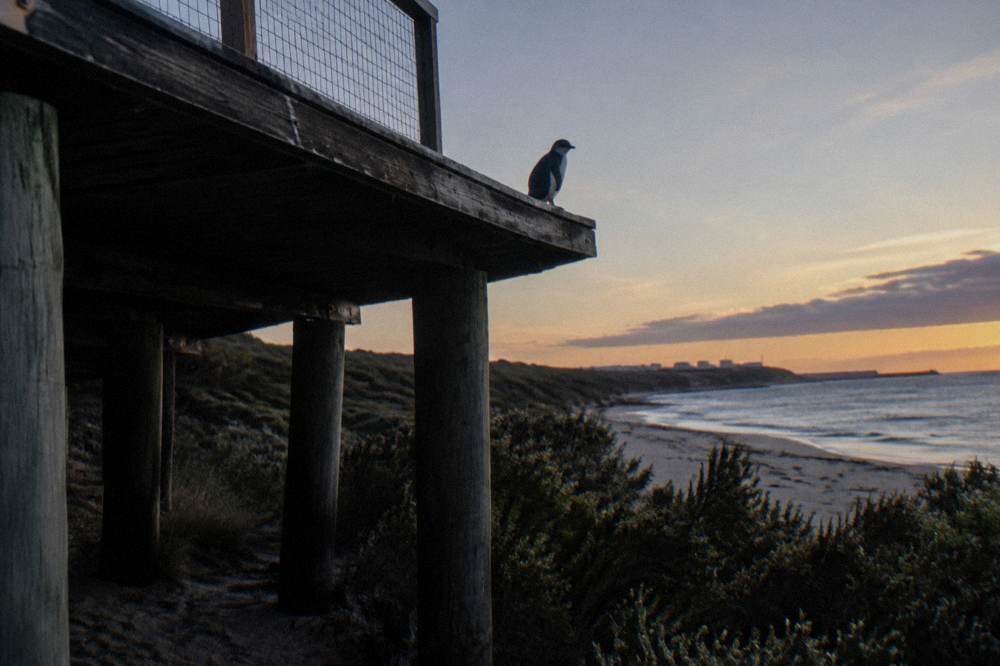
Burnie and Lillico are the two free, staffed viewing sites nearest to Penguin township. Burnie runs volunteer-guided viewing nightly from 1 October to 31 March at the Observation Centre boardwalk, no booking needed. Lillico Beach, ten minutes west of Devonport, has a platform used generally September to April with volunteer guides in season.
These two sites solve the biggest problem with do-it-yourself viewing: they put an experienced person with a red torch on the sand with you, at no cost. The volunteers know where the birds tend to come in, they enforce the rules gently, and they can answer the questions a self-guided visitor would otherwise carry home unanswered.
Burnie's setup is the more structured of the two. The Friends of Burnie Penguins run free guided viewing nightly during the season, whatever the weather, from the Observation Centre on the boardwalk at Parsonage Point, an easy walk from the city centre. No booking is required, donations are welcome, the boardwalk is level and wheelchair accessible, and the rules are the usual ones: no flash, red light only, quiet voices. Our Burnie penguin viewing guide covers the practicalities in more depth, and the volunteer group's own viewing page is the place to confirm the current season status.
Lillico Beach sits ten minutes west of Devonport on the Bass Highway, which puts it on the same coastal stretch as Penguin township. The viewing platform in the Lillico Strait Conservation Area is used generally from September to April, with two or three volunteer guides on site nightly in season holding red torches for the group. Visitor torches and flash photography are not permitted, the experience is free, and donations support the volunteer program. The Lillico Beach platform guide has the detail, and Devonport City Council's Lillico Beach page is the official source for the platform.
| Site | Season | Format | Booking | Cost |
|---|---|---|---|---|
| Burnie Observation Centre | 1 October to 31 March | Nightly guided viewing at dusk | None | Free, donations welcome |
| Lillico Beach platform | Generally September to April | Volunteer guides in season | None | Free, donations welcome |
| Penguin township beaches | Year-round, best November to March | Fully self-guided | None | Free |
Guided Tours With A Guarantee: Low Head And Bicheno
The two bookable guided tours in Tasmania are at Low Head near George Town and Bicheno on the east coast. Low Head runs nightly just after sunset with about an hour of guided viewing; Bicheno runs a 70-minute guided walk to a private rookery. Both offer free cancellation.
If the free options feel like too much variables, the bookable ones remove most of them. The Low Head tour with Launceston transfer is the natural fit for a north-west and north-coast itinerary: central Launceston pickup, about three hours door to door, about an hour of guided penguin viewing at the Low Head Coastal Reserve, a maximum of 10 guests, and a 5.0 rating from 22 reviews on the listing. It is listed from $83 per person with free cancellation. The operator's own direct price at the gate is lower, $50 per adult, but that is without the Launceston transfer, so treat the two figures as different products rather than competing prices. If you'd rather not drive out to the coast yourself, the guide to seeing penguins on a tour from Launceston explains how the nightly Low Head trip works.
Bicheno is the east coast counterpart, a long way from Penguin township but worth knowing about if your Tasmania loop takes in the Freycinet region. The Bicheno guided beach walk meets at the operator's shop on Burgess St, includes a short bus ride to a private rookery and a guided walk of about 500 m, runs about 70 minutes in total, and is listed from $53 per person with a 4.8 rating from 26 reviews. The listing is flagged as often selling out, and the operator itself advises booking ahead, so if Bicheno is on your route, check availability early rather than leaving it to the day.
Neither tour allows flash photography, both supply or enforce red light only, and both describe their groups as deliberately small. The Low Head operator supplies low-intensity red and yellow lighting and bans selfie sticks and tripods; the Bicheno operator requires enclosed shoes and permits photography without flash. In other words, the same rules that govern your free evening at Penguin Beach govern the paid experiences too, just with someone else carrying the torches.
Penguin Watching Rules You Must Follow
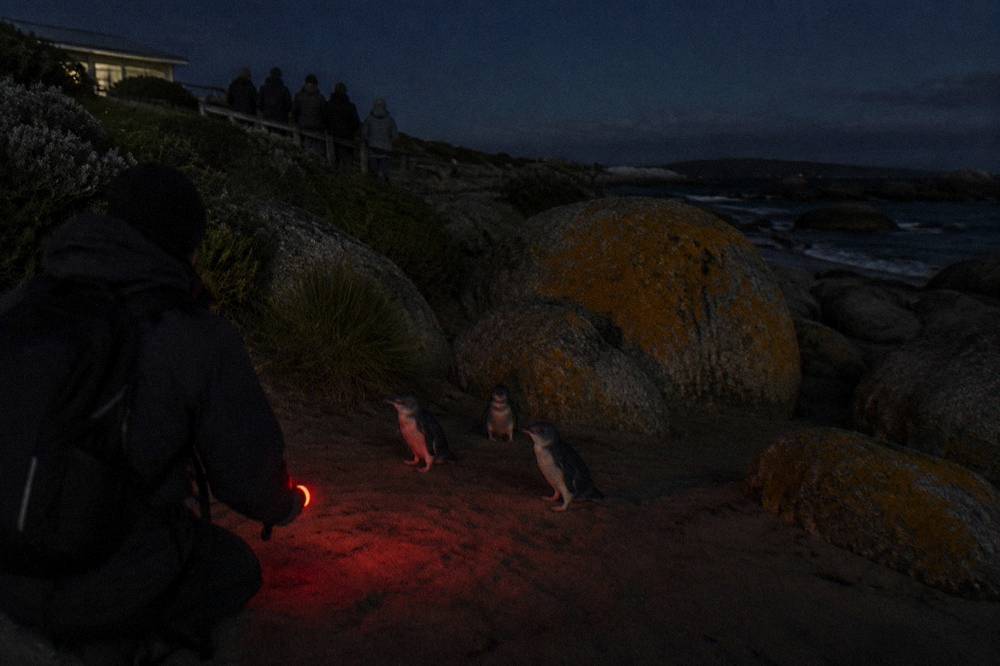
The rules are strict because penguins are protected wildlife: no flash photography, no white torches, only dim red light, keep quiet, stay well back from burrows, and never bring dogs or cats, even leashed. Approach from land along existing tracks, settle before last light, and take food scraps away with you.
These are not suggestions, and at a self-guided beach like Penguin's there is no guide to enforce them, which makes them entirely your responsibility. The state's penguin watching guidelines set the standard for every site in this article, guided or not. Catching or harassing a penguin is illegal, and the animals are easily stressed by light, noise and movement.
The reasoning behind each rule is worth understanding, because it makes the rules easier to follow in the dark. Penguins' eyes are tuned for dim light, so a flash or a white beam is genuinely blinding to them. Birds that are disturbed on the water stay at sea longer, delaying the feeding of hungry chicks waiting in the burrows. Dogs and feral cats can kill many birds in a single night, which is exactly how the Bicheno colony crashed to about 40 birds in the early 1990s before land restoration brought it back.
| Rule | Why it matters |
|---|---|
| No flash, no white torches, red light only | Penguin eyes are adapted for darkness; bright light blinds and panics them |
| Stay at least 3 m from burrows, never block them | Burrow entrances are fragile and the birds need a clear path home |
| Approach from land, use existing tracks | Walking through the colony crushes burrows and eggs |
| Settle before last light, stay quiet and still | Disturbed birds stay at sea longer, delaying chick feeding |
| No dogs or cats, even leashed | Domestic animals can kill many penguins in one night |
| Take food scraps away | Scraps attract predators to the colony |
One more point for the current moment: H5 bird flu has been detected in Tasmanian wild birds, including little penguins on King Island, with 46 positive wild-bird events recorded in the state's reporting to date and no viewing-site restrictions imposed in response. Do not approach or touch any sick or dead bird, on any beach, and report sightings on the Emergency Animal Disease Hotline, 1800 675 888.
How To Plan Your Visit: Choosing Your Option
Choose self-guided viewing at Penguin's beaches if you are already nearby, want a free evening and are happy to follow the rules alone. Choose Burnie or Lillico for free guidance, or book Low Head or Bicheno if you want a guaranteed, interpreted session with a small group and a guide.
The honest comparison comes down to certainty versus cost. A free evening at Penguin township costs nothing and can be magical, but it depends on the birds, the weather and your own discipline. A free session at Burnie or Lillico adds a volunteer who knows the site. A booked tour at Low Head or Bicheno adds interpretation, equipment and a schedule that runs nightly, year-round, at a listed price you can budget before you leave home.
| Option | Cost | Certainty | Best for |
|---|---|---|---|
| Penguin township beaches | Free | Variable, self-guided | Locals and travellers already in town |
| Burnie Observation Centre | Free, donations | Good in season | Families wanting a guide without a ticket |
| Lillico Beach platform | Free, donations | Good in season | Devonport-based evenings |
| Low Head tour with transfer | From $83 | High, nightly | Launceston visitors wanting a full guided session |
| Bicheno guided walk | From $53 | High, nightly | East coast itineraries |
For a north-west itinerary built around the township, the strongest plan is often a combination: a self-guided evening at the local beach on one night, and a volunteer-guided session at Burnie or Lillico on another, with the Low Head tour held in reserve if the weather or the birds let you down. If your trip loops around the whole state, the east coast itinerary guide shows where the Bicheno tour slots into a Freycinet stay, and the Low Head penguin tours guide does the same for the north.
Whichever you choose, book the paid parts early, check sunset for your exact date, and pack for the cold. Tasmanian summer evenings on a north-west beach are colder than the calendar suggests, and the birds do not care whether you are comfortable. The Bicheno listing in particular is flagged as often selling out, so treat any booked penguin evening as something to secure before you lock in accommodation, not after.
With a little planning, the township of Penguin stops being a naming curiosity and becomes what it actually is: a free, quiet, self-guided penguin beach on a coast that also offers two staffed free platforms and two bookable guided tours within reach. Pick the level of structure that suits your evening, follow the red-light rules, and let the smallest penguins in the world do the rest.
Common Questions About Penguin Town Tasmania
Is there a penguin tour in the town of Penguin?
No. No organized penguin tours currently run from the township; earlier tours at Penguin Point no longer operate. Viewing at the local beaches is self-guided, free and at dusk, and the nearest staffed options are the free platforms at Burnie and Lillico, plus the bookable guided tours at Low Head and Bicheno.
When can you see penguins in the town of Penguin?
Self-guided viewing at the township's beaches is best roughly November to March, at dusk. Winter viewing is possible but typically quieter. Statewide, September to January is the breeding season with the most activity, and February to April is the moulting window when adults stay ashore.
Is penguin viewing free in Penguin?
Yes. The local beaches are public and free, and no parks pass is required because none of the viewing sites in this area sits inside a national park. The nearby staffed sites at Burnie and Lillico are also free, with donations welcome.
Can you take photos of penguins at Penguin Beach?
Only without flash. Flash photography is prohibited at every penguin viewing site in Tasmania because it can blind and panic the birds. Use only dim red light, never point a torch toward the water or directly at a penguin, and give the birds a wide, quiet berth.
Where is the nearest guided penguin tour to Penguin?
The nearest bookable guided tours are at Low Head near George Town on the north coast, listed from $83 per person with a Launceston transfer, and at Bicheno on the east coast, listed from $53 per person. Both run nightly, year-round, with free cancellation. The free volunteer-guided platforms at Burnie and Lillico are closer still.