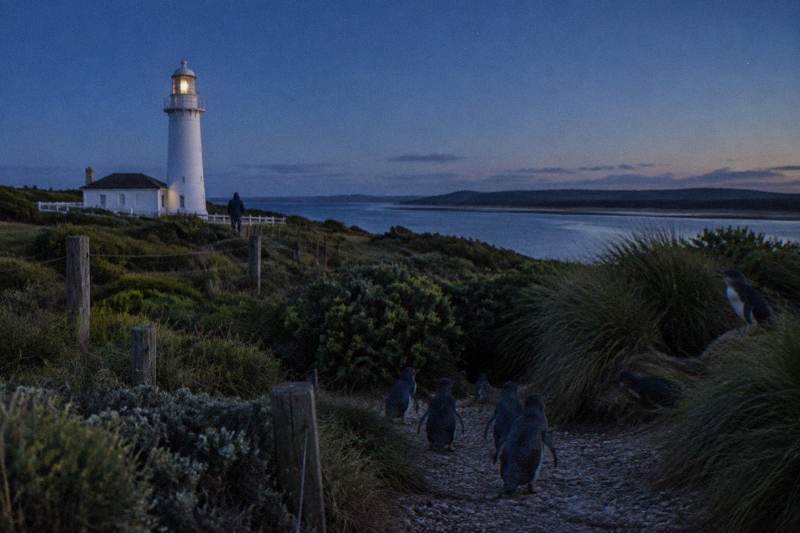
Burnie Penguins: Free Guided Viewing At The Observation Centre
Burnie runs one of the most generous penguin experiences in Tasmania: a free, volunteer-guided viewing season at the Observation Centre on West Beach, with no booking needed and a level boardwalk that suits almost everyone.
Short answer
Burnie penguins are little penguins that come ashore at dusk at West Beach, viewed free from the Observation Centre boardwalk. Volunteer guides run nightly viewing from 1 October to 31 March, starting 30 minutes before dusk, with no booking and donations welcome. A paid small-group alternative runs at Low Head, from $83 with Launceston transfer.
Burnie sits on Tasmania's north west coast, and its penguin experience is unusual in the state: it costs nothing. The Friends of Burnie Penguins, a volunteer group, staff the Observation Centre on West Beach every night of the guiding season, meeting visitors half an hour before dusk and walking them through what is happening on the beach below. No booking, no ticket desk, no minimum spend. The penguins themselves are little penguins, the smallest penguin species in the world, and they arrive in small groups within an hour or so of darkness, which means the whole evening is built around one narrow window of fading light.
This guide lays out where the viewing happens, when the season runs, what the rules are on the sand, and how the free Burnie option compares with the paid guided tours this site features. It also covers what to wear, because a Tasmanian beach at dusk in October is a different climate problem from the same beach in January.
Where To See Penguins In Burnie
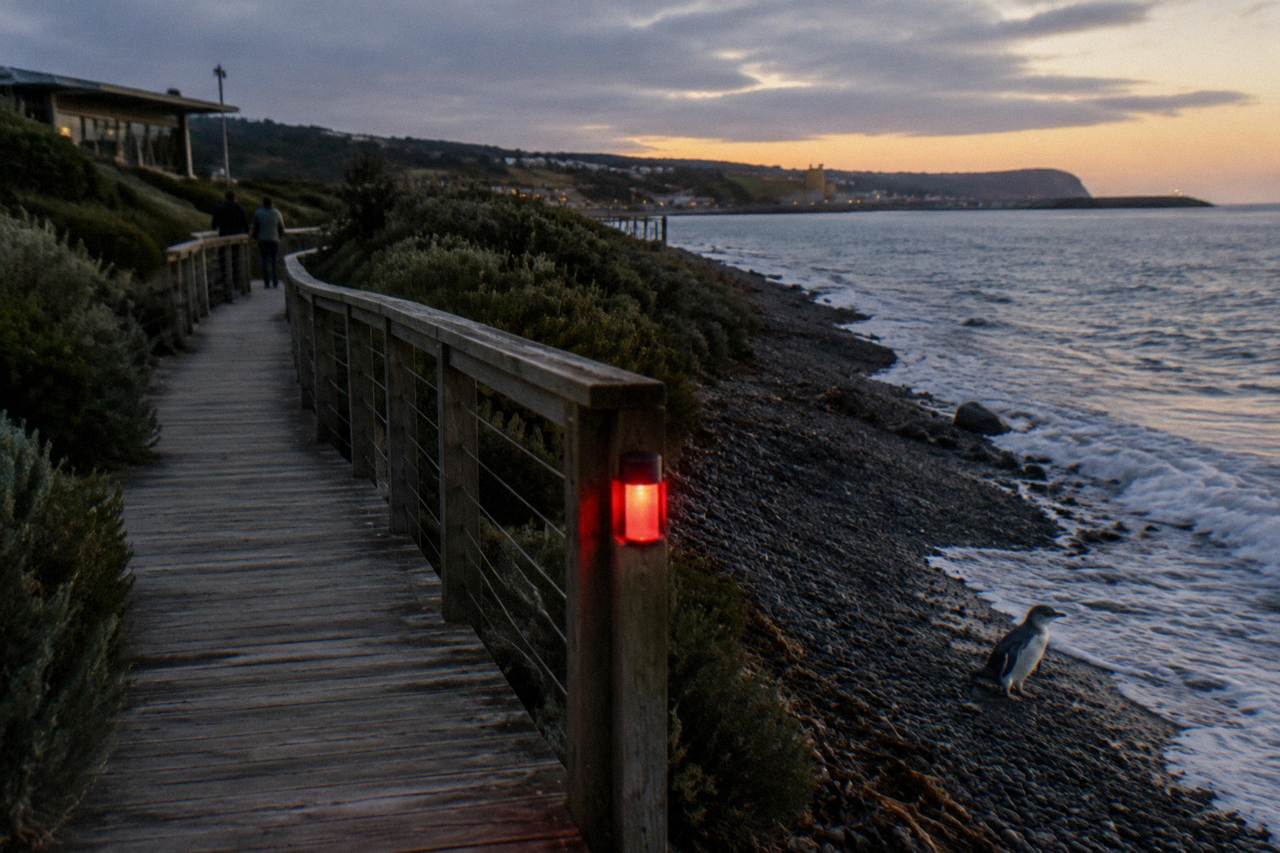
The penguin viewing in Burnie happens at the Observation Centre on The Boardwalk at Parsonage Point, West Beach, where a volunteer-run, level and wheelchair-accessible boardwalk looks over the colony. The centre is within walking distance of the Burnie city centre and the Makers' Workshop, and the experience is free, with no booking required and donations welcome. The Parks and Wildlife Service lists the Burnie penguin viewing platform among the state's dusk penguin watching sites.
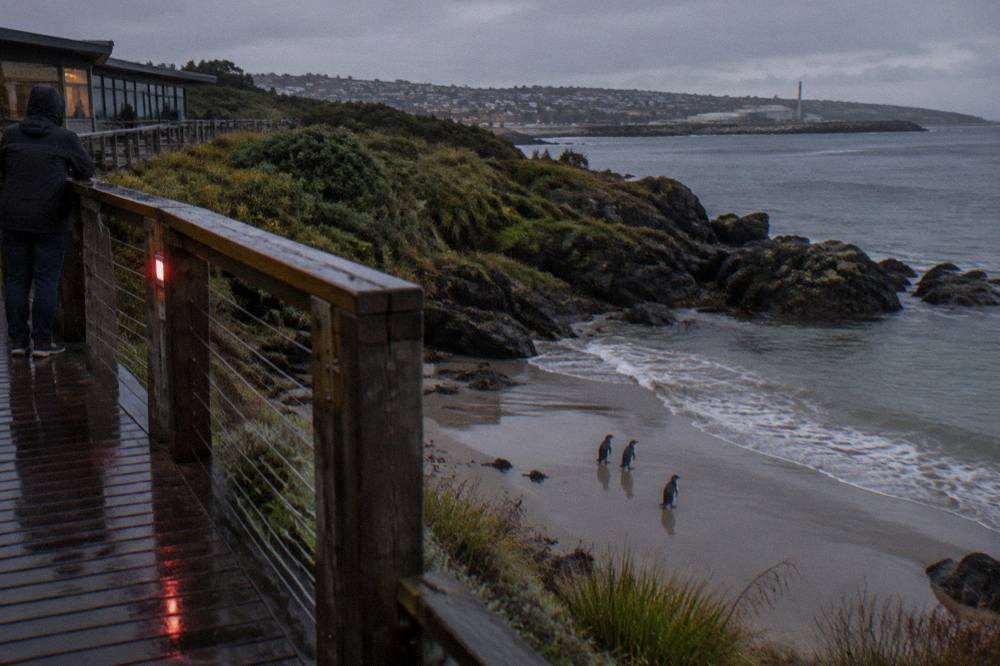
The Observation Centre is the operational heart of the experience. During the guiding season, volunteers are there from 30 minutes before dusk, which sounds early until you remember that penguins time their return to last light. Arriving with the guides means you are settled, quiet and in position before the first birds commit to the beach. The NRE Tasmania guidance on penguin watching is explicit about this: disturbed birds stay at sea longer, which stresses them and delays the feeding of chicks, so a settled group before dark is not just etiquette, it is the whole point of the exercise.
The boardwalk itself is level and wheelchair accessible, which matters. Several of Tasmania's penguin sites involve stairs, sand or rough tracks. Burnie's is the one most reliably described as flat and built. The Friends of Burnie Penguins publish the viewing details on their own site, including the season dates and the arrive-early advice, and the Parks and Wildlife Service seabirds page names the Burnie penguin viewing platform alongside Low Head, Lillico and Stanley as a place to see penguins at dusk.
A practical note on the evening itself: the guides hold red-filtered torches and ask visitors not to use their own lights. Red cellophane over an ordinary torch is the accepted improvisation if you need a light to walk out. White light and flash are out entirely, a rule common to every penguin site in Tasmania and explained in full in our separate guide to penguin photography rules in Tasmania.
When Do Penguins Come Ashore At Burnie?
Guided viewing at Burnie runs nightly from 1 October to 31 March, with volunteers at the Observation Centre 30 minutes before dusk. Outside that window the boardwalk remains usable for self-guided viewing at dusk, but no guides are present. Penguins come ashore in small groups within roughly an hour of darkness, so the exact start time shifts with the sunset through the season. If you want to plan around those shifting sunset times, the month-by-month guide to penguin arrival times at Burnie tells you when to show up.
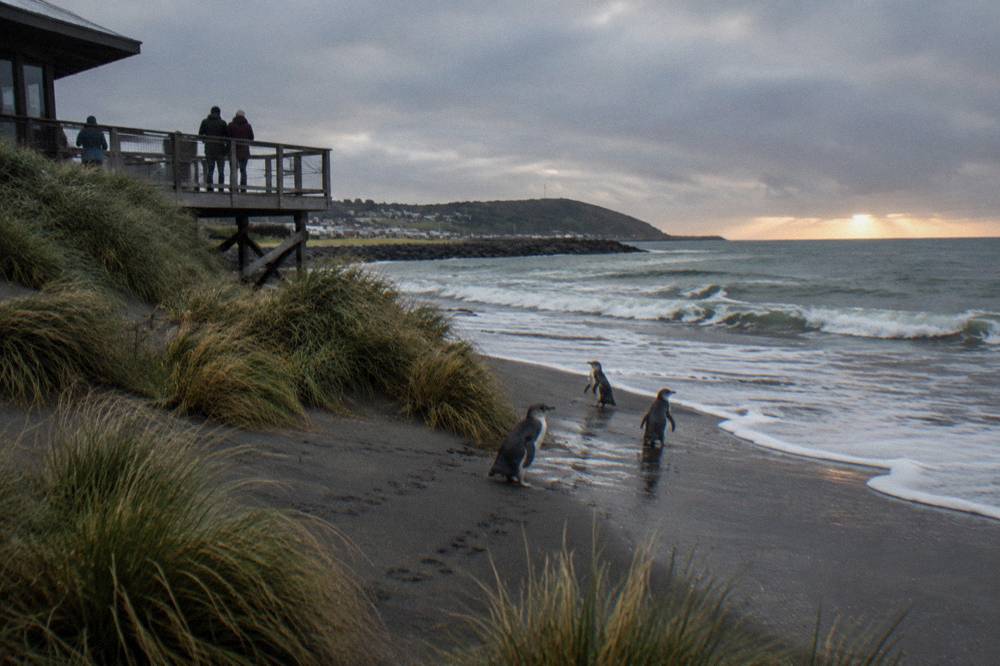
The six-month guiding season is the single most important planning fact for Burnie. Turn up in July expecting a volunteer with a red torch and you will be standing on a dark boardwalk alone. The penguins are still there, they do not migrate away from the north west coast in winter, but the organised, interpretive part of the evening only exists from October through March. That is roughly the opposite of how most people plan a Tasmanian trip, which peaks in summer, so in practice the season catches the shoulder months as well as the height of December and January.
Timing within the night matters as much as the date. Sunset in Tasmania moves a long way across the season, from around 6:20 pm in early October to near 8:50 pm at the December peak, so a 30-minutes-before-dusk arrival means a 5:45 pm start in spring and closer to 8:00 pm in midsummer. The guides are there for the season regardless of weather, which is worth internalising: this is Tasmania, the wind comes off the Bass Strait, and the penguins do not check the forecast.
| Period | Guided viewing at Burnie | What to expect |
|---|---|---|
| 1 October to 31 March | Nightly, volunteers present from 30 minutes before dusk | Full guided experience, free, donations welcome |
| April to September | No guides, self-guided viewing only at dusk | Fewer birds ashore, no red torches provided, no interpretation |
| September to January (statewide) | Breeding season at most rookeries | Generally the most activity, per the state wildlife guidance |
| February to April | Moulting window | Adults stay ashore about two to three weeks replacing feathers |
The seasonal pattern behind those dates comes from the state wildlife service rather than the volunteers. Little penguins breed variably, with clutches as early as May or as late as December, and the more concentrated activity at many sites falls in September to January. Moulting runs roughly February to April, when adults sit ashore for weeks at a time. None of that is a promise about any given night at Burnie, and no current published count exists for the colony, so treat every evening as its own event.
Free Burnie Viewing Or The Low Head Guided Tour
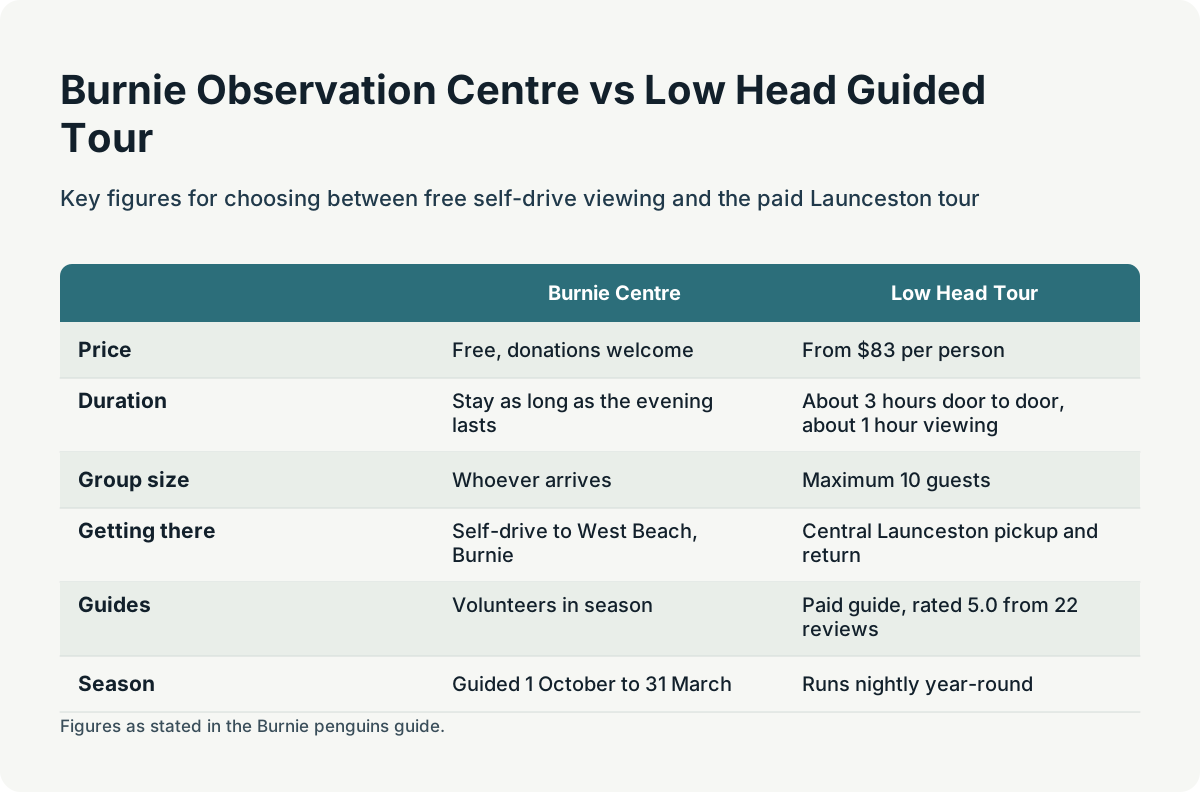
Burnie is free and self-drive; the Low Head tour from Launceston costs from $83 per person, runs about three hours door to door with central pickup, and caps groups at 10 guests. Low Head holds a 5.0 rating from 22 reviews and free cancellation. The honest trade is money and driving against convenience, a guaranteed guide and a set structure.
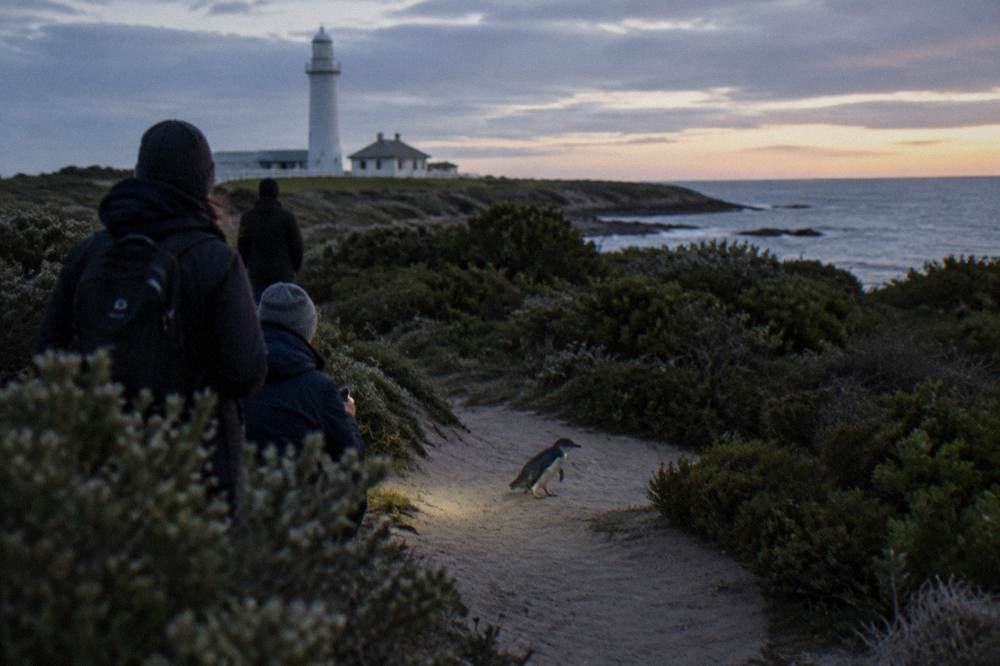
The comparison is not really free versus paid, it is free-with-a-car versus paid-without-one. Burnie's Observation Centre works brilliantly if you are touring the north west coast by vehicle, which most visitors to that region are. If your Tasmania trip is anchored in Launceston and you have no car, a free beach well over an hour's drive away is not free at all once you count the rental, the fuel and the dusk return drive. That is exactly the gap the Low Head tour fills: it collects you from central Launceston, drives you to the coastal reserve near George Town, gives you about an hour of guided viewing, and returns you, all in roughly three hours.
The Low Head operator also sells tickets directly at its own site at $50 per adult, but that is the operator's direct price without the Launceston transfer, not a competitor to the $83 listing that includes pickup and return. The listing this site carries, the Low Head tour with Launceston transfer, is the one that solves the no-car problem, and it carries free cancellation so a dusk booking is not a hostage to the forecast.
| Burnie Observation Centre | Low Head tour from Launceston | |
|---|---|---|
| Price | Free, donations welcome | From $83 per person |
| Booking | None needed | Book ahead, free cancellation |
| Duration | Stay as long as the evening lasts | About 3 hours door to door, about 1 hour viewing |
| Group size | Whoever arrives | Maximum 10 guests |
| Getting there | Self-drive to West Beach, Burnie | Central Launceston pickup and return |
| Guides | Volunteers in season | Paid guide, rated 5.0 from 22 reviews |
| Season | Guided 1 October to 31 March | Runs nightly year-round |
One structural difference deserves spelling out. Burnie's guided season closes for half the year, while the Low Head tours run every night. A traveller in June, when Burnie has no guides on the sand, still has a bookable guided option on the north coast. Our full comparison of the two approaches, including the Bicheno east coast alternative, is in the Bicheno versus Low Head penguin tours guide.
What To Wear And How To Behave On The Boardwalk
Wear dark, warm clothing and enclosed shoes, and bring nothing that emits white light. The state guidelines ask viewers to settle before last light, stay quiet, keep at least 3 m from burrows, approach from land rather than along the beach, and never use flash. Dogs and cats are banned outright, even leashed, and touching or catching a penguin is illegal.
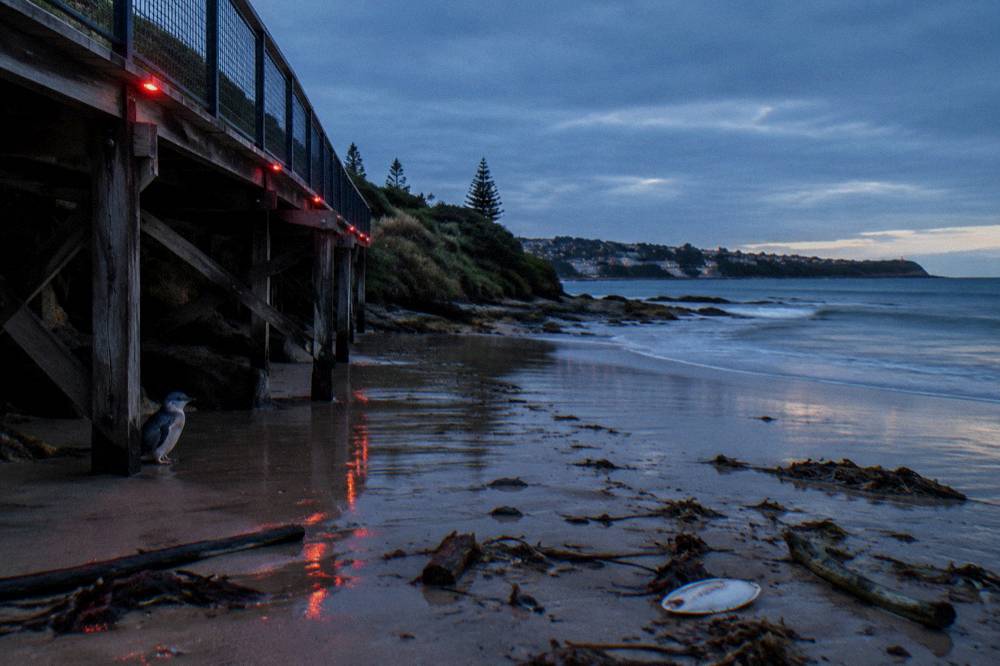
The clothing advice is not fussiness. You will be standing still on a coastal boardwalk for an hour or more after sunset, often with wind off the water, and stillness is precisely what makes the evening work. Dark colours matter because a pale jacket catches and reflects the last light and any stray beam; the NRE Tasmania penguin watching guidelines list dark clothing first among their practical rules. Enclosed shoes are about the walk in and out as much as the standing. Our detailed packing advice, including what to bring for children, is in the guide on what to wear on a penguin tour.
Behaviour rules are uniform across Tasmania and Burnie enforces them through the volunteers rather than fences. Stay on the formed surfaces, keep voices low, move minimally once settled, and keep any red torch pointed down and never toward the water or a bird. The 3 m rule around burrows exists because a penguin standing at a burrow mouth that feels blocked will simply not go home, and a delayed bird is a hungry chick. Video without spotlights is permitted, flash photography is not, and the practical reality is that most phone footage of penguins at dusk is unusable anyway, which is a good reason to leave the phone in the pocket. Other pages covering the same trip are gathered on Tasmania Penguin Tours.
| Rule | Why it exists |
|---|---|
| No flash, no white torches | Penguin eyes are adapted for night; sudden light blinds and disorients them |
| Red light only, pointed down | Red is the least disruptive spectrum for night viewing |
| Stay 3 m from burrows, never block them | Blocked birds abandon the evening's return and delay feeding |
| Approach from land, not along the beach | Walking the beach pushes birds back into the surf |
| No dogs or cats, even leashed | Dogs have devastated Tasmanian colonies historically, including at Bicheno |
| Settle before last light | Disturbed birds wait at sea longer, stressing them and chicks |
| Never touch or catch a penguin | Penguins are protected wildlife in Tasmania; harassment is illegal |
That last line has teeth. Little penguins are protected under Tasmanian law, and the guidelines direct anyone who sees harassment, or a sick or dead bird, to report it, with the wildlife hotline at 1800 675 888 for suspected disease. The current bird flu surveillance in wild birds makes that reporting line genuinely useful rather than theoretical.
Other Penguin Spots Near Burnie On The North West Coast
Burnie is one of several penguin options on the north west coast. Lillico Beach, ten minutes west of Devonport, offers free platform viewing with volunteer guides generally September to April. Stanley has a free, accessible viewing platform at Godfreys Beach with red lighting. The Penguin township, despite the name, has self-guided beach viewing only, with no organised tours running.
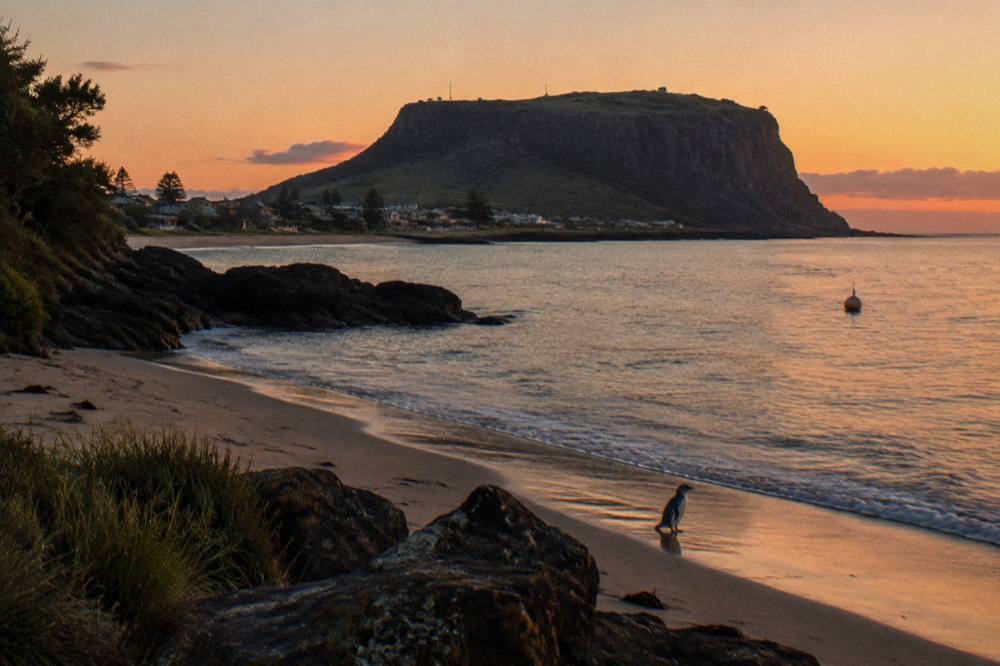
If you are building an evening, or a whole coastal drive, around penguins, the north west gives you choices that most visitors never hear about. Lillico Beach is the closest thing to a second Burnie: a free viewing platform in a coastal reserve, with volunteer guides from the Friends of Lillico Penguins on site during the season, holding red torches and turning away visitor lights. The platform is generally in use September to April. Our full write-up is at Lillico Beach penguin viewing near Devonport.
Stanley, further west, is a self-guided proposition: a free viewing platform at Godfreys Beach, built to be pram and wheelchair accessible, with red lighting installed. Little penguins come ashore at dark, with September to March the better window and winter quieter. There are no guides, so everything you learned about behaviour on the Burnie boardwalk applies there with nobody watching to enforce it. The Penguin township between Devonport and Burnie is the region's oddity, a town named for the bird, where viewing is self-guided at local beaches at dusk and no organised tours currently run.
| Site | Cost | Guided? | Access notes |
|---|---|---|---|
| Burnie Observation Centre | Free, donations welcome | Volunteers, 1 Oct to 31 Mar | Level, wheelchair-accessible boardwalk |
| Lillico Beach platform | Free, donations welcome | Volunteer guides in season, generally Sep to Apr | Platform in a coastal reserve near Devonport |
| Stanley, Godfreys Beach | Free | No guides | Accessible platform with red lighting |
| Penguin township beaches | Free | No tours operating | Self-guided at dusk, red light only |
| Low Head Coastal Reserve | From $83 with transfer, or direct from the operator | Paid guide, nightly | Launceston pickup option, wheelchair access |
The pattern across all of them is the same: free viewing is abundant on this coast, and the paid products earn their price by adding structure, transport or a guaranteed guide. For a fuller map of every option in the state, including the east coast, see our overview of free penguin viewing in Tasmania.
Planning Your Burnie Penguin Evening
Plan to arrive 30 minutes before dusk, check the sunset time for your exact date, wear dark warm layers and enclosed shoes, and carry no white light. Book nothing. If you want the paid alternative, the Low Head tour from Launceston runs from $83 with free cancellation, and the Bicheno tour on the east coast runs from $53 for 70 minutes, with a 4.8 rating from 26 reviews and a note that it often sells out.
The single biggest mistake people make with Burnie is treating "dusk" as a fixed time. It moves by more than two hours across the season, and it moves again with cloud cover. Look up the sunset for your date, subtract 30 minutes, and that is your arrival. The volunteers will still be there if you are late, but the first penguins will not wait for you, and the first groups ashore are often the closest viewing of the night.
The second mistake is under-dressing. The boardwalk is close to the water and the evening is still, which sounds pleasant until the temperature drops. Layers, a windproof outer, and a beanie for the shoulder months are standard. If you are driving in from Devonport or further, remember that Tasmanian dusk is also peak wildlife-on-the-road time, so the drive back deserves the same caution as the drive out.
For travellers who want a guided experience without organising one themselves, the paid options are the Low Head tour already covered, and the Bicheno tour on the east coast: a 70-minute guided walk from $53 per person, rated 4.8 from 26 reviews, meeting at the operator's shop on Burgess Street with no accommodation pickups. Its listing is flagged as often selling out, which is the one urgency note this site carries. Check availability
Burnie rewards the traveller who does a little homework and asks nothing else. The experience is free, the guides are volunteers who do it for love of the colony, and the penguins arrive on their own schedule every night of the season. Bring dark clothes, arrive early, keep your light red and your voice down, and the north west coast will hand you one of the quietest wildlife evenings in Tasmania.
Common Questions About Burnie Penguins
Are The Burnie Penguins Free To See?
Yes. Viewing at the Burnie Observation Centre is free, with no booking required and donations welcome. The volunteer guides are there nightly from 1 October to 31 March, 30 minutes before dusk, and the boardwalk is level and wheelchair accessible.
What Time Do The Penguins Come In At Burnie?
Little penguins come ashore in small groups within about an hour of darkness, so the arrival tracks the sunset. In early October that can mean birds from around 6:30 pm; at the December peak it can be closer to 9 pm. Arrive 30 minutes before dusk to be settled before the first birds land.
When Is The Burnie Guiding Season?
The volunteer guiding season runs nightly from 1 October to 31 March. Outside those months the boardwalk can still be used for self-guided viewing at dusk, but no guides are present and no red torches are provided.
Can You Take Photos Of The Burnie Penguins?
Flash photography is not permitted, and the guidelines ask for no white torches on the beach at all. Dim red light is the only lighting allowed, and the volunteers carry red-filtered torches in season. Video without spotlights is acceptable, though most footage in near-darkness is poor.
Is Burnie Or Low Head Better For Penguins?
They suit different trips. Burnie is free and ideal if you have a car on the north west coast. The Low Head tour, from $83 per person with central Launceston pickup and return over about three hours, suits travellers based in Launceston without a vehicle, and it runs nightly year-round rather than only October to March.
Can You Touch A Penguin In Burnie?
No. Little penguins are protected wildlife in Tasmania, and catching or harassing them is illegal. The rules ask you to stay at least 3 m from burrows, stay quiet, and never use flash or white light. Report any sick or dead bird to the hotline on 1800 675 888.