What Time Do Penguins Come In At Burnie?
Penguins come ashore at Burnie around last light, within about an hour of darkness. Here is how to time your visit to the Observation Centre, month by month.
What Time Do Penguins Come In At Burnie?
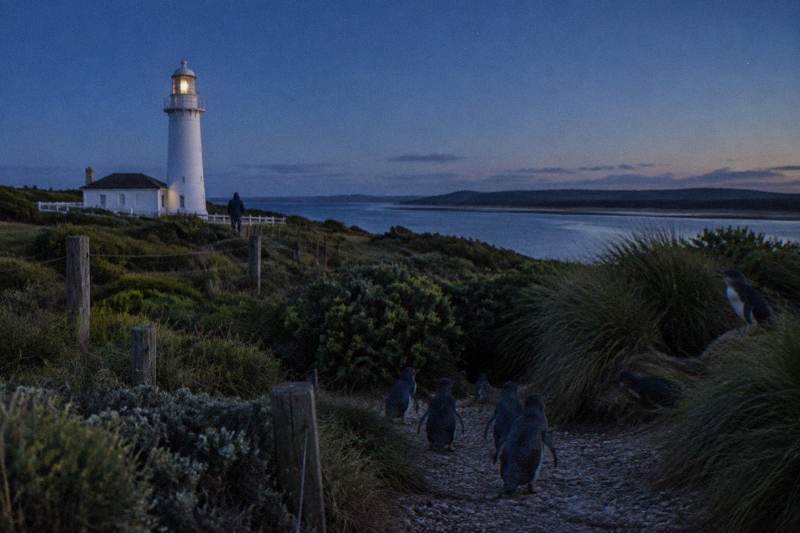
Penguins come ashore at Burnie around last light, and most birds land on the beach within about an hour of full darkness, so there is no fixed clock time for any night. Volunteer guides are at the Observation Centre from 30 minutes before dusk, every night from 1 October to 31 March, and viewing is free.
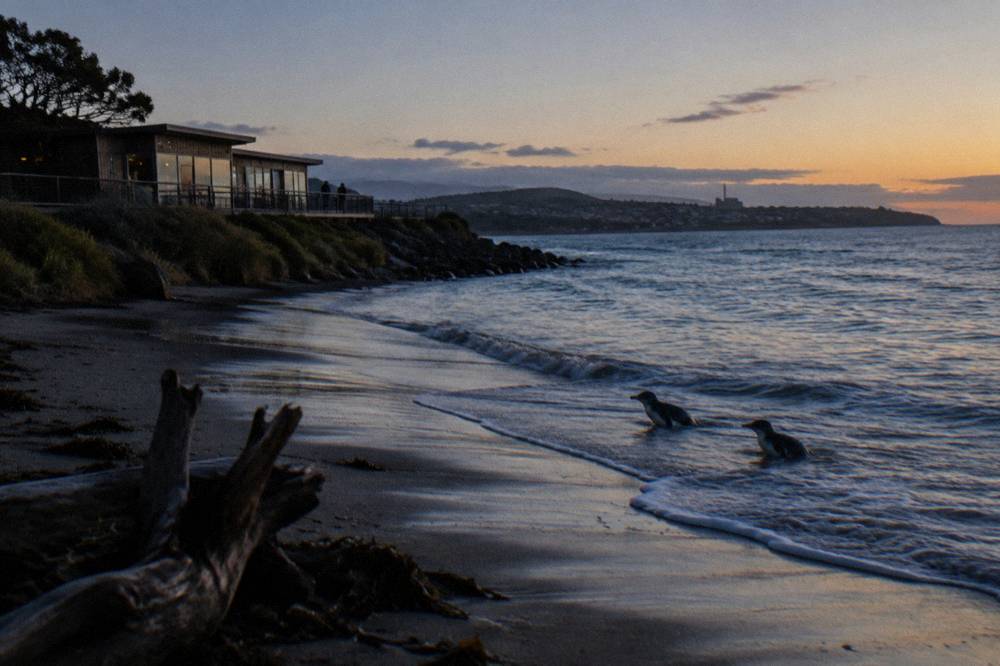
That is the honest answer, and it is worth sitting with for a moment, because almost every visitor who gets it wrong makes the same mistake: they show up at 7 pm in January expecting a show, and the beach is still empty and grey. Little penguins time their return to darkness itself, not to a schedule. The Department of Natural Resources and Environment Tasmania explains that penguins leave the water at last light and that most birds come ashore in small groups within an hour or so of darkness settling in. On a long summer evening that can mean a very late return indeed.
The practical consequence is that your planning number is not a time, it is the sunset. Look up the sunset for your date in Burnie, then work backwards and forwards from it: the Friends of Burnie Penguins, the volunteer group that runs the viewing, have guides on the boardwalk about 30 minutes before dusk, and most birds come ashore within an hour of darkness. Everything else in this article follows from that single calculation.
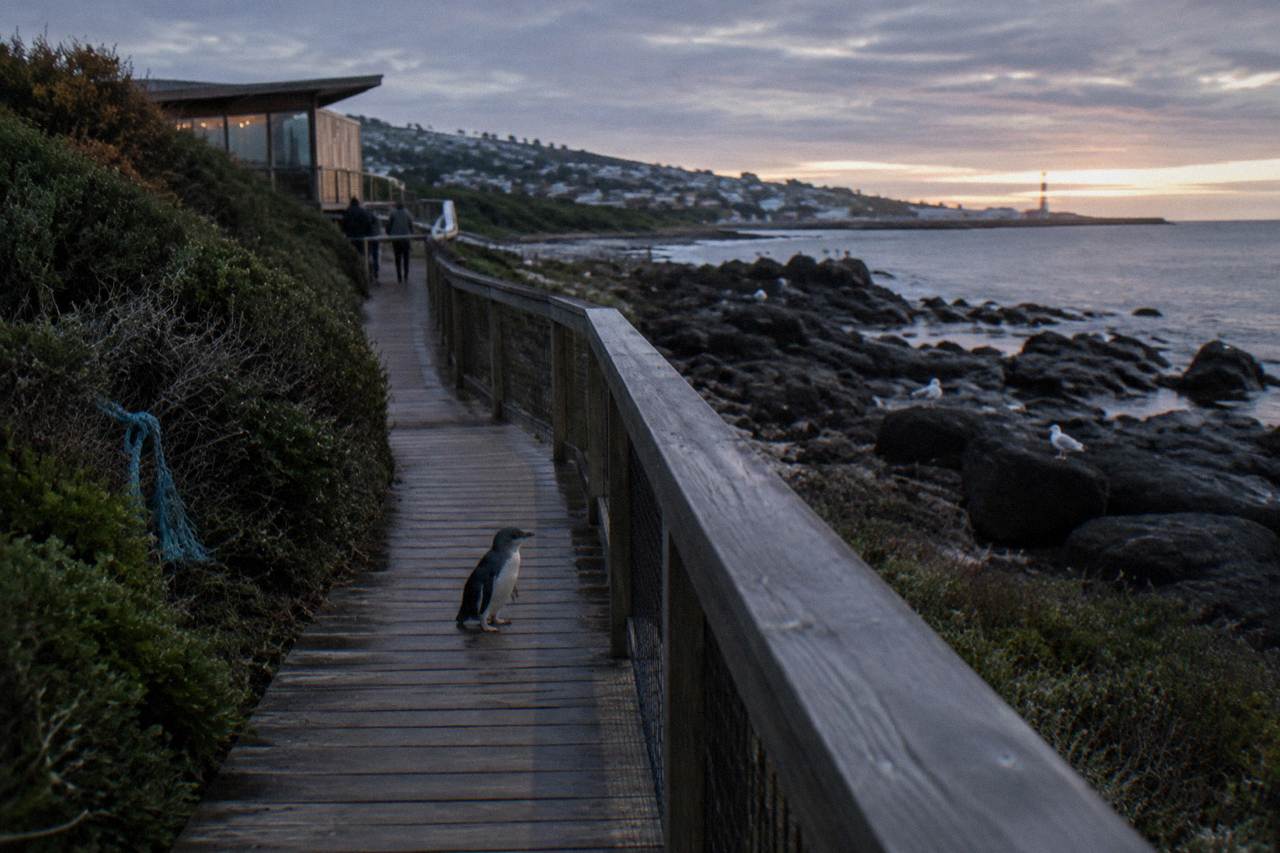
The viewing happens at the Burnie Penguin Observation Centre on The Boardwalk at Parsonage Point, West Beach, an easy walk from the city centre and the Makers' Workshop. No booking is needed and no ticket is charged; the experience is volunteer-run and donations are welcome. If you want a fuller profile of the site, the boardwalk, and how the free model works, our Burnie penguin viewing guide covers it in detail.
One more thing worth knowing before you plan: the birds come in whether or not the weather cooperates. The volunteer guides are on duty nightly from 1 October to 31 March regardless of conditions, and the penguins are equally unbothered by drizzle. Guided viewing at Burnie runs nightly during the season, whatever the weather happens to be doing.
If a free, self-timed evening on a boardwalk is not what you are after, the two guided options elsewhere in the state both build the dusk calculation into their start times for you:
What Time Should You Arrive At The Burnie Observation Centre?
Arrive at the Observation Centre about 30 minutes before dusk to meet the volunteer guides, and expect the first penguins roughly 30 minutes after the sun goes down. The guides run every night from 1 October to 31 March whatever the weather, and no booking is needed at any point in the season.
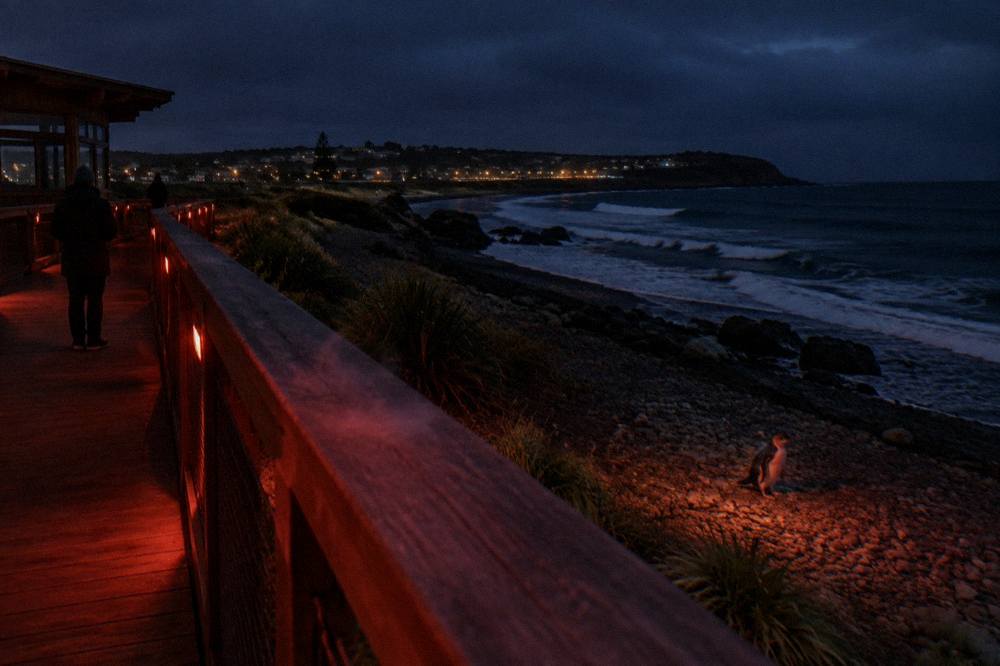
The 30 minutes before dusk are not dead time. That is when the guides set up, brief arrivals on the viewing rules, and hand out the red cellophane that turns an ordinary torch into a penguin-safe one. It is also when you want to be settled in place, because the NRE Tasmania guidelines are explicit that disturbed birds stay at sea longer, which stresses them and delays the feeding of chicks. A penguin that spots a group of late arrivals shuffling down the boardwalk may simply turn around and swim another lap.
Because the whole evening keys off the sunset, the arrival time you need changes dramatically through the season. Sunset in the Hobart area sits around 6:20 pm in early October, climbs to a peak near 8:50 pm in late December and early January, and slides back to around 7:30 pm by late March. Burnie, on the north-west coast, tracks within a few minutes of those figures. Treat them as planning ranges and check a service such as the Bureau of Meteorology or a sunset table for your exact date.
| Period | Approximate Sunset (Hobart Area) | Suggested Arrival At The Centre | Likely Penguin Return |
|---|---|---|---|
| Early October | Around 6:20 pm | Around 5:50 pm | Around 6:50 pm onward |
| Late December | Near 8:50 pm | Around 8:20 pm | Around 9:20 pm onward |
| Late March | Around 7:30 pm | Around 7:00 pm | Around 8:00 pm onward |
A note on the far end of the evening: the return can stretch late. Small groups land over an extended window rather than in one wave, and on busy nights the boardwalk activity can run well past the first hour of darkness. If you are driving on to Devonport or Stanley afterwards, remember that Tasmanian roads carry wildlife at dusk and after dark, so build in a cautious drive rather than a fast one.
Is There A Best Month For Penguin Watching At Burnie?
The guided season at Burnie runs from 1 October to 31 March, and the months inside it with the longest, warmest evenings, November to February, are when penguin activity is typically strongest across Tasmania. Winter viewing is quieter, and moulting adults stay ashore on land between February and April.
The season boundaries are set by the volunteers, not by the birds. The Friends of Burnie Penguins staff the Observation Centre nightly from 1 October to 31 March, and outside that window the boardwalk itself remains accessible for independent viewing, you just watch without guides. That matters if you are visiting in the shoulder months: late September or April evenings can still produce penguins, but you will be timing the dusk yourself and following the rules on your own initiative. More of these guides are collected on Tasmania Penguin Tours.
Inside the season, the biology gives you a rough hierarchy. September to January is the breeding window, when adults are returning to burrows with food, and it is the period operators at Bicheno and Low Head both describe as their busiest for activity. November to February is when Low Head reports its highest nightly numbers. February to April is the moult, when adults sit ashore for two to three weeks replacing every feather, so you may see birds standing near burrows rather than marching in from the surf. Winter, June to August, is the quietest time at most rookeries, though the birds never vanish entirely.
For the full calendar picture across every site, including what a winter visit realistically offers, our guide to the best time to see penguins in Tasmania breaks the year down month by month, and our overview of free penguin viewing in Tasmania lists every no-cost platform in the state.
If you would rather have someone else own the dusk calculation, the guided Low Head evening is built exactly for that. The listing runs about 3 hours door to door with a central Launceston pickup and about 1 hour of guided viewing just after sunset, capped at 10 guests, from $83 per person with free cancellation. You can read more on the Low Head penguin tour with transfer page.
How Do Burnie Times Compare With Other Tasmanian Penguin Sites?
Burnie, Low Head, Bicheno and Lillico all follow the same rule: penguins arrive at last light, within about an hour of darkness. The differences are the season each site runs, the departure windows operators publish, and whether you watch free from a platform or pay for a guide.
The comparison is worth making because travellers often assume Tasmania has one penguin timetable. It does not, but the variation is in the packaging, not the birds. The table below pulls together the current, verified details for the four most-visited sites. One caution: no site publishes a colony count, and none of the figures below should be read as a promise of how many birds you will see on a given night.
| Site | Season | Timing Rule | Format And Cost |
|---|---|---|---|
| Burnie | 1 October to 31 March (guided) | Guides from 30 min before dusk; birds about 30 min after sunset | Free, volunteer guides, donations welcome |
| Low Head | Year-round, nightly | Just after sunset, up to about 1 hour guided | Paid guided tour; operator's direct adult price $50 without transfer |
| Bicheno | Year-round except Christmas Day and New Year's Eve | Departures 7:30 to 9:30 pm Sept to Jan; 5:00 to 7:30 pm Feb to Aug | Paid guided walk, from $53 per person on the listing |
| Lillico Beach | Generally September to April | Volunteers on site in season, evenings | Free platform viewing, donations welcome |
Low Head, near George Town on the north coast, is the closest thing Burnie has to a sibling site: a coastal reserve, a nightly just-after-sunset tour, small groups, and guides who supply the low-intensity lights. The Launceston transfer version is the one this site features, and it suits visitors who want the evening handled end to end. It holds a 5.0 rating from 22 reviews, which is a small pool but a spotless one.
Bicheno, on the east coast, works differently again. The operator runs a short bus ride from its shop on Burgess Street out to a private rookery, then a guided walk of about 500 m over roughly 50 minutes, 70 minutes with the guide in total. Departures are later in summer, 7:30 to 9:30 pm from September to January, and earlier in winter, 5:00 to 7:30 pm from February to August, always adjusted to dusk. The listing is from $53 per person, rated 4.8 from 26 reviews, and it is the one product we cover that is flagged as often selling out, so it rewards booking ahead.
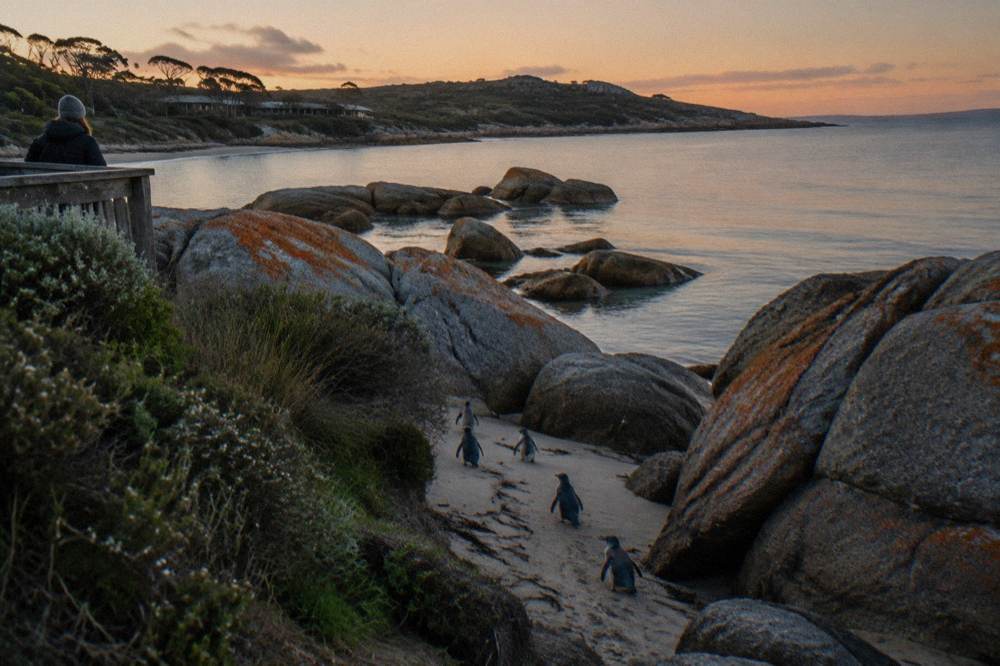
Lillico Beach, ten minutes west of Devonport, is the free option closest to Burnie in spirit: a viewing platform in a coastal reserve, volunteer guides in season, generally September to April, red torches held by the guides, and no charge beyond donations. For a wider look at how the dusk rule plays out at every site in the state, our article on what time of day penguins come ashore covers the physiology behind it.
What Rules Apply When Watching Penguins Come Ashore At Burnie?
At Burnie the rules are the standard Tasmanian penguin-watching guidelines: no flash photography, dim red light only, keep quiet and still, stay on the boardwalk, keep well back from burrows, and never bring a dog. Penguins are protected wildlife in Tasmania, and catching or harassing one is illegal.
The Friends of Burnie Penguins reinforce these on site, and the boardwalk's level, wheelchair-accessible layout exists partly to make them easy to follow. Red cellophane over an ordinary torch is the accepted fix for lighting; the volunteers at the Observation Centre can supply guidance on this in season. Flash cameras should never be used on the beach, and personal bright torches are out entirely.
The reasoning is not bureaucracy, it is physiology. Little penguins come ashore in the dark precisely because darkness protects them from predators, and their eyes are tuned to very low light. The NRE Tasmania guidelines note that disturbed birds stay at sea longer, which delays the feeding of chicks waiting in the burrows, so a single careless light can ripple through a whole colony's night. Settle into position before last light, stay quiet, minimise movement, and let the birds decide the schedule.
The full rule set from the state guidelines is worth reading directly: dark clothing, approach from the land rather than along the beach, use existing tracks and never walk through the colony, pick a spot at least 3 m from burrows and never blocking them, and no dogs or cats under any circumstances, even leashed. Binoculars are genuinely useful for dusk viewing. If you want the complete breakdown, including what the rules mean for cameras, our photography rules guide goes through it clause by clause.
One current note for anyone spending time on Tasmanian coasts: H5 bird flu has been detected in wild birds in Tasmania, including little penguins on King Island, with 46 positive events reported since 19 June 2026. No penguin viewing site has restrictions in place because of it. The standing advice is simply to avoid contact with sick or dead birds and report them to the Emergency Animal Disease Hotline on 1800 675 888.
Whether you time the dusk yourself at Burnie or let an operator do it, the choice below covers both coasts:
Common Questions About Penguin Times At Burnie
What Time Do Penguins Come In At Burnie?
Around last light, with most birds landing within about an hour of full darkness. There is no fixed clock time; work from the sunset for your date. Guides are at the Observation Centre from 30 minutes before dusk, and the first penguins typically appear about 30 minutes after sunset.
When does the Burnie penguin season start and end?
Guided viewing runs nightly from 1 October to 31 March. Outside that window the boardwalk can still be used for independent viewing, but there are no volunteer guides, so you follow the penguin-watching rules on your own.
Do you need to book the Burnie penguin viewing?
No. The Friends of Burnie Penguins run the viewing free of charge, with donations welcome, and there is no booking system. You simply arrive at the Observation Centre on The Boardwalk at Parsonage Point about 30 minutes before dusk.
Can you see penguins at Burnie in winter?
It is possible but quieter. The guided season ends on 31 March, and winter months see fewer birds coming ashore at most Tasmanian rookeries. Independent viewing from the boardwalk remains an option, timed to dusk as always.
What should you bring for an evening at the Burnie boardwalk?
Warm, dark clothing, enclosed shoes, and binoculars if you have them. Leave the torch at home or fit it with red cellophane; the guides can advise on lighting in season. No flash photography, and never bring a dog.
How long should you stay after sunset?
Plan for at least an hour past sunset. Small groups of penguins land over an extended window rather than in a single wave, so the patient watchers on the boardwalk see the most.