Free Penguin Viewing In Tasmania: Where To Watch Without Paying
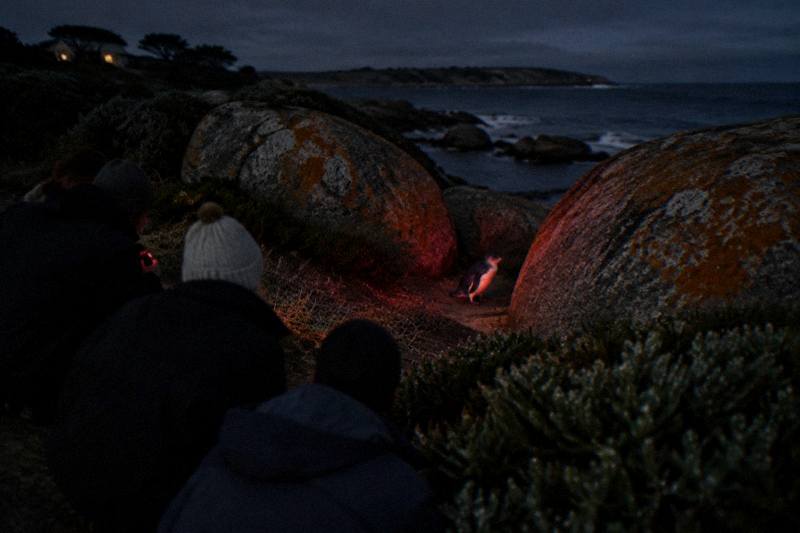
Little penguins come ashore on Tasmanian beaches every night of the year, and at most of the best viewing sites it costs nothing to stand and watch. The catch is not money, it is timing and light discipline: these birds return within an hour or so of darkness, and how you behave on the beach decides whether they land at all.
Short answer
Free penguin viewing in Tasmania is real: Burnie offers free guided viewing nightly from 1 October to 31 March, Lillico Beach runs a free volunteer platform from September to April, and Stanley's Godfreys Beach and the Bruny Island Neck cost nothing to visit. Paid guided tours run from $53 per person at Bicheno and $83 from Launceston.
Where Can You Watch Penguins In Tasmania Without Paying?
Yes, free penguin viewing is genuinely available in Tasmania: Burnie runs free guided viewing nightly from 1 October to 31 March, Lillico Beach near Devonport has a free volunteer-run platform from September to April, and Stanley's Godfreys Beach platform and the Bruny Island Neck are free to visit. The trade-off is timing and light discipline, not money.
Tasmania holds the majority of Australia's little penguins. Past state estimates put the Tasmanian population at 110,000 to 190,000 breeding pairs, but most of those birds breed on offshore islands, and under 5 percent breed on mainland Tasmania. That single figure explains what free viewing in Tasmania actually looks like: the accessible colonies are small, scattered along the coast, and fragile enough that the state's wildlife guidelines ask visitors to behave like guests in a nursery rather than spectators at a show.
The state's own advice, published by the environment department, is that joining a guided tour is the ideal way to see penguins. It is not the only way. At Burnie and Lillico, volunteers do the guiding for free. At Stanley and the Bruny Neck, you guide yourself. Only at Bicheno, where the main rookery sits on private land, is a paid tour the practical route in, and even there the public foreshore follows the same rules. This Tasmania Penguin Tours guide walks through each free option honestly, including what you give up by not paying, and the homepage comparison covers the paid tours for nights when a guide makes more sense.
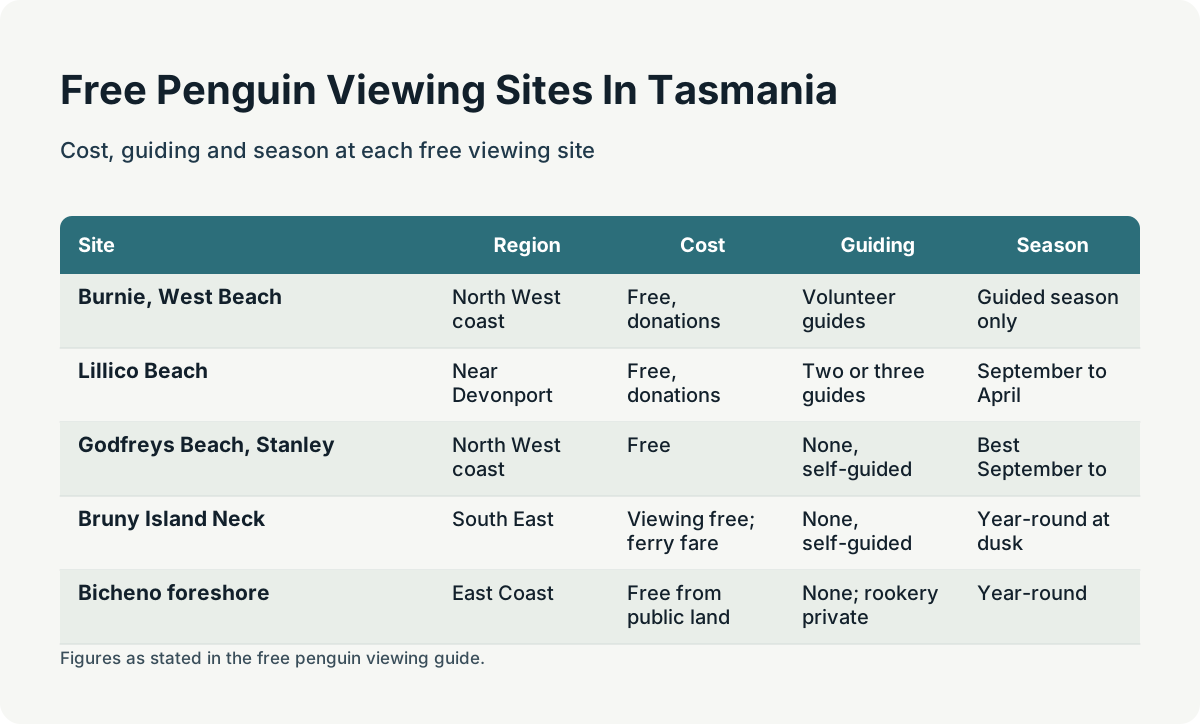
Here is the whole free landscape in one table, so you can see the shape of it before the detail.
| Site | Region | Cost | Guiding | Season |
|---|---|---|---|---|
| Burnie, West Beach | North West coast | Free, donations welcome | Volunteer guides nightly, 1 October to 31 March | Guided season only; self-guided viewing possible outside it |
| Lillico Beach | Ten minutes west of Devonport | Free, donations welcome | Two or three volunteer guides nightly in season | Generally September to April |
| Godfreys Beach, Stanley | North West coast | Free | None, fully self-guided | Reported best September to March |
| Bruny Island Neck | South East | Viewing free; ferry fare applies | None, self-guided from the Parks platform | Year-round at dusk; check Parks and Wildlife Service |
| Bicheno foreshore | East Coast | Free from public land | None; the main rookery is private | Year-round; quietest February to August |
Burnie: Free Guided Viewing On The West Beach Boardwalk
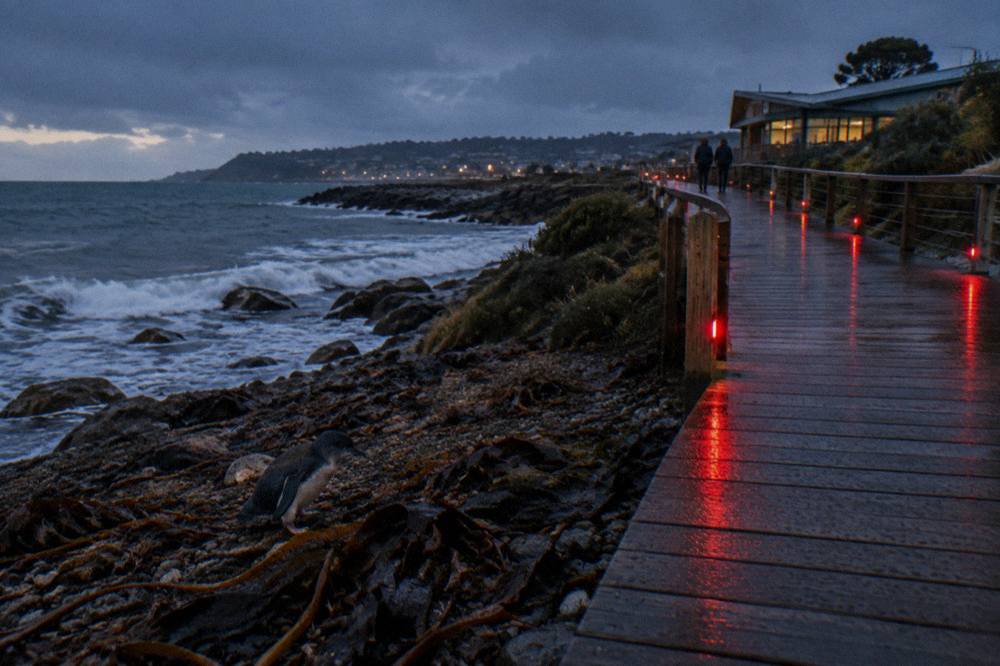
Burnie is the easiest free penguin night in Tasmania: the Friends of Burnie Penguins run free guided viewing every night from 1 October to 31 March, with guides at the Observation Centre on West Beach from 30 minutes before dusk. No booking is needed and donations are welcome, and the boardwalk is level and wheelchair accessible. While Burnie is the most reliable spot, the town of Penguin on the north west coast also plays with the theme, and our guide to whether Penguin actually has penguins answers that question.
The Observation Centre sits at The Boardwalk, Parsonage Point, West Beach, within walking distance of the city centre and the Makers' Workshop, which makes this the only penguin site in the state you can reach on foot from a town's hotels. The Friends of Burnie Penguins, a volunteer group, staff the viewing nightly through the warmer half of the year, whatever the weather is doing. You turn up, you watch, you leave a donation if you want to. The group's viewing page is the place to confirm season details before you go.
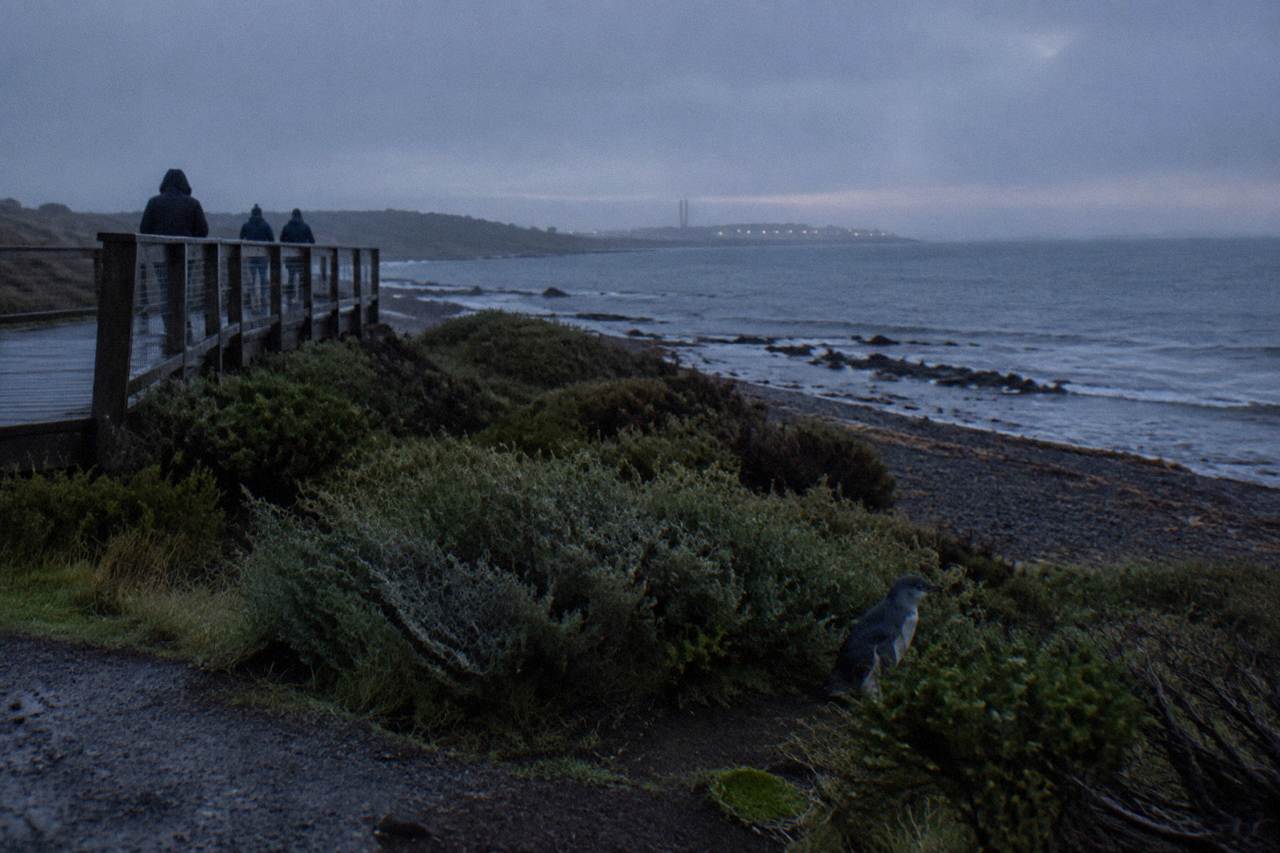
The rules here are the same ones the whole state uses, and the volunteers help enforce them kindly. No flash photography at any time on the beach. Torches need red cellophane over the lens, and the guides can show you how dim is dim enough. The boardwalk is level and wheelchair accessible, which matters if you are travelling with someone who cannot manage a 500 metre beach walk; this is the most accessible penguin viewing in Tasmania, free or paid.
Outside the 1 October to 31 March window, the penguins have not left. Self-guided viewing is possible at the same boardwalk, but you are on your own with the rules, the light and the timing, and numbers ashore are lower through the colder months. The deeper guide to this coast is our Burnie penguins guide, which covers arrival times, parking and what a winter night on that beach is actually like.
If your trip falls outside Burnie's guiding season, or the north west is not on your route at all, the two paid listings on this site fill the gap: a 70-minute guided beach walk at Bicheno from $53 per person, and a Low Head small-group tour with Launceston transfer from $83 per person. The real difference between these tours is not the penguins, it is the guide, the torch and the transfer, it is who holds the red torch and drives you home.
Lillico Beach: The Volunteer Platform Ten Minutes From Devonport
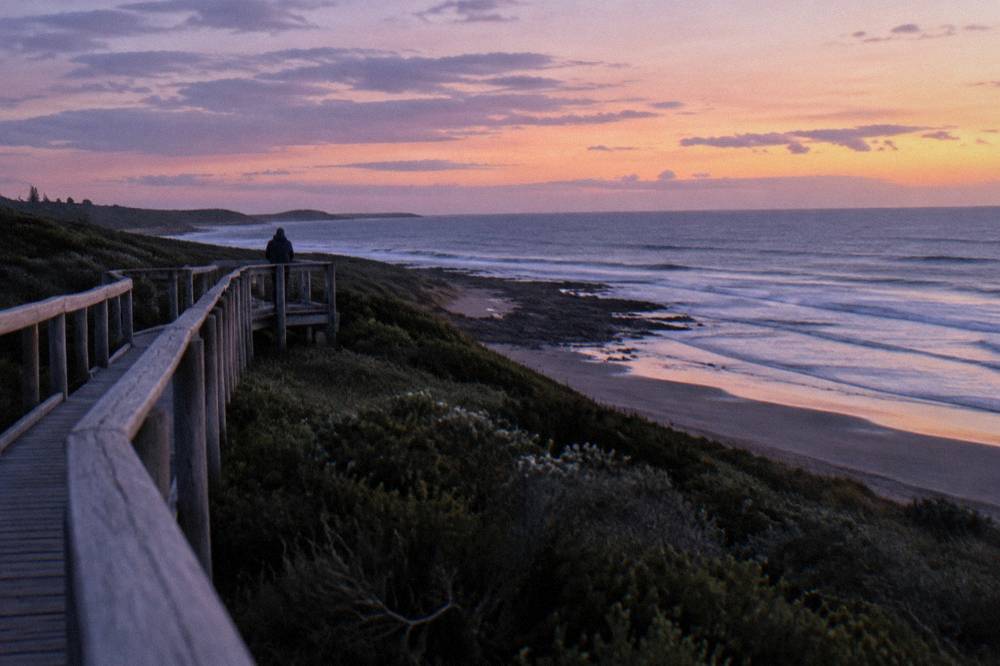
Lillico Beach, ten minutes west of Devonport, has a free viewing platform in the Lillico Strait Conservation Area, generally staffed by two or three volunteer guides nightly from September to April. The guides hold the red torches, visitor torches and flash are not allowed, and donations are welcome. Outside the guiding season the platform is still there, but you watch alone.
Lillico is the quiet achiever of Tasmanian penguin viewing. The Devonport City Council's Lillico Beach page describes a volunteer-run program under the Friends of Lillico Penguins, with guides on the platform on season evenings to explain the birds and hold the lighting. The platform sits in a coastal reserve a short drive west of Devonport on the Bass Highway, close enough that a ferry arrival into Devonport and a penguin evening can share one day, though the drive is yours to check on a mapping service.
What makes Lillico worth the stop is the ratio of help to cost. A free platform, volunteer guides who know the colony, and red torches in experienced hands: that combination exists nowhere else in Tasmania. The trade-off is the season. Guiding generally runs September to April, and the exact nightly schedule sits with the volunteers, so treat September and April as soft edges rather than fixed dates and check before making a special trip.
If you are arriving by ferry into Devonport and heading east, Lillico is the natural free night. If your base is Launceston instead, the geography flips: the free platform is an hour-plus of dusk driving away, and the Low Head tour runs nightly just after sunset with a central Launceston pickup, about three hours door to door. That is the decision the rest of this guide keeps returning to, and it is why the paid option earns its place even on a page about free viewing.
Stanley And The North West Coast: Godfreys Beach Platform
Stanley's free penguin viewing is self-guided: the Godfreys Beach platform west of town is reported to have red lighting and pram and wheelchair access, and little penguins come ashore at dark, with the best months September to March. There are no volunteer guides and no booking, so the rules around light and noise are entirely yours to follow.
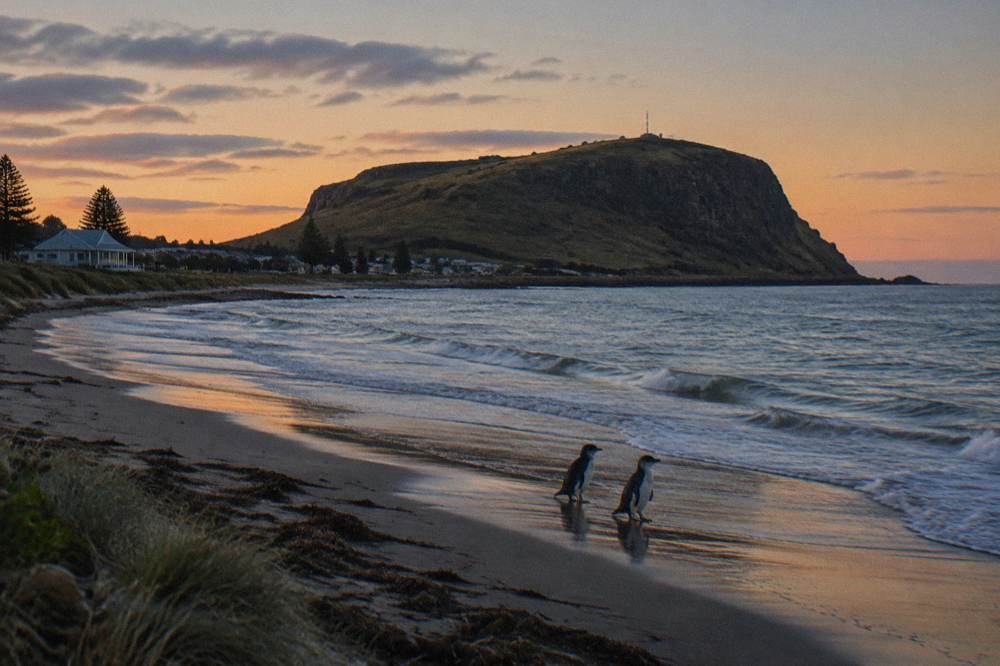
Stanley sits under The Nut, the flat-topped volcanic plug that dominates this stretch of coast, and its penguin watching happens at the Godfreys Beach viewing platform west of the township. Reports from the region describe a free, purpose-built platform with red lighting and pram and wheelchair access, with Tatlows Beach nearby as a secondary spot. Little penguins come ashore at dark, and the reported best window is September to March, with fewer birds through winter. There are no guides, no bookings and no fees, which also means no one standing beside you making sure the torch stays red.
That independence cuts both ways. Stanley rewards travellers who already understand the etiquette: settle before last light, keep the group small, stay off the sand where birds land. If that describes you, Godfreys Beach is one of the loveliest free nights on the Tasmanian coast, with the silhouette of The Nut behind you and penguins rafting in the swell ahead. Our page on The Nut at Stanley covers the town itself for the daytime hours.
One neighbouring curiosity worth naming: the township of Penguin, further east along the coast, is named for the bird. There is no organized tour there, and none is needed. Locals watch from the town's beaches at dusk, roughly November to March, for free and by red light only, which makes Penguin the purest form of what this whole guide describes: a beach, a sunset, and your own discipline. If you want a fuller picture of the town itself before detouring there, our honest verdict on whether Penguin is worth the stop covers what to expect beyond the beach.
Bruny Island Neck: The Free Platform That Needs A Ferry
The Neck Conservation Area on Bruny Island has a Parks and Wildlife Service viewing platform where little penguins and shearwaters come ashore at dusk, and the viewing itself is free. Parks does not publish platform hours or fees, so check the service before going. The catch is the ferry: a 20-minute crossing from Kettering that runs 365 days a year on a queueing system.
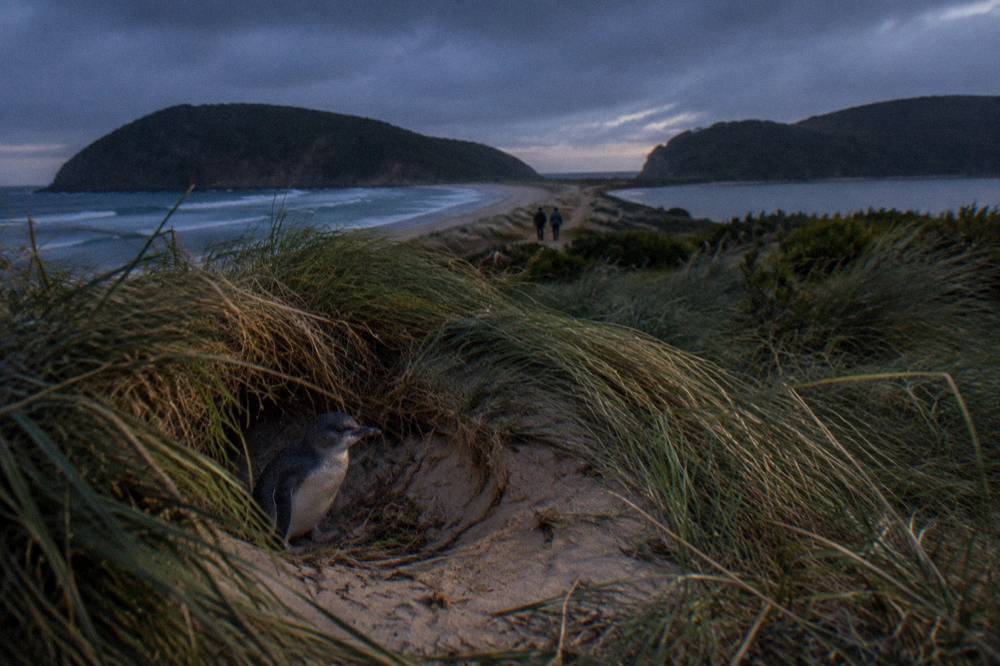
The Parks and Wildlife Service names the Neck Conservation Area viewing platform as a place to see little penguins and short-tailed shearwaters at dusk, and the setting is spectacular: a narrow sandy isthmus joining north and south Bruny, with colonies on both sides. The platform itself is the state's, the birds are wild, and the experience is free. What Parks does not publish, and what we will not guess at, is platform opening hours or any entry fee. Check the service directly before you plan a night there.
The real cost of the Neck is the crossing. The SeaLink ferry runs from Kettering to Roberts Point, a 20-minute crossing, 365 days a year, on a queueing system: your ticket is valid for the next available sailing, not a specific time, so in peak periods you queue. From 28 September 2026 the summer timetable applies, and from 1 December to April a 15 percent peak surcharge applies to the Visitor Regular fare, with a vehicle under 6 metres at $67.30 return in that window against $58.60 in late spring. A parks pass is a separate question: passes are required for Tasmania's national parks, but the Neck is a conservation area and a pass requirement there is not established on any official page, so check the Parks pass page rather than assuming.
The Neck is also the site where the free-versus-guided gap is widest. It is a long evening drive from Hobart, the ferry adds a queue, and there is nobody on the platform but you. Our Bruny Island penguins guide covers the island's options in full, including what to do with the daylight hours before dusk.
Bicheno: Why The East Coast Rookery Is Not Free
Bicheno's little penguin rookery sits on private land, and the operator that restored it runs the only organized tour there, from $53 per person on the listing. There is no free guided option in Bicheno, and the foreshore around town is not a substitute rookery. Free watching anywhere along that coast means following the standard guidelines on your own. If you're weighing whether the paid experience justifies the price, our full review of the Bicheno penguin tour covers what you get and who should skip it.
The Bicheno story is the most instructive one on this page. The colony here fell to about 40 birds in the early 1990s after dog attacks, then recovered through years of land restoration by the operator whose tour runs there today. That history is the operator's own account, and it explains the arrangement: the rookery is private land, the restoration is private work, and the 70-minute guided walk, from $53 per person on the listing, is how the public sees it. The tour meets at the operator's shop on Burgess Street, involves a short bus ride and a walk of about 500 metres, and carries a 4.8 rating from 26 reviews. The listing is flagged as often selling out, so advance booking is the practical advice.
None of that stops you watching penguins for free around Bicheno. Little penguins come ashore on East Coast beaches wherever there is cover and quiet, and the state guidelines apply to every metre of public foreshore. What does not exist is a free version of the Bicheno experience: no volunteer platform, no guided alternative, and no access to the private rookery outside the tour. Our Bicheno penguin tours guide covers the tour in detail, and Check availability on the operator's live listing if the guided night is the one you want.
The Viewing Rules Every Free Site Shares
The rules are the same everywhere and they come from the Tasmanian government's penguin watching guidelines: approach from land on existing tracks, settle at least 3 metres from burrows before last light, stay quiet, and use only dim red light, never pointed at the water or the birds. No flash, no dogs or cats, no touching.
Free viewing works only because the rules hold, so they deserve their own section. The state guidelines are short and specific, and the reason behind them is biological: penguins leave the water at last light, and disturbed birds stay at sea longer, which stresses them and delays the feeding of chicks. A single careless torch beam can keep a hungry chick waiting.
| Rule | Why it matters |
|---|---|
| Wear dark clothing | Light-coloured clothing catches the last light and reads as a threat on the beach |
| Approach from land, on existing tracks | Walking up the beach blocks the penguins' landing route; never cut through the colony |
| Stay at least 3 m from burrows | Burrows collapse under feet, and a blocked entrance can trap a bird inside |
| Settle before last light | Birds decide whether to land based on what is already on the shore when they arrive |
| Keep quiet and still | Movement and noise read as predators; small groups land more readily |
| Dim red-light torch only, never at the water or birds | White light blinds penguins; their eyes take long minutes to readjust |
| No flash photography, ever | A single flash can scatter a whole raft of incoming birds |
| Video without spotlights is fine, binoculars help | Distance viewing works; the birds do not need to know you are there |
| No dogs or cats, even leashed | Dogs killed most of the Bicheno colony in the 1990s; it is the single greatest known threat |
| Take food scraps away | Scraps attract gulls, cats and dogs to the colony |
| Never touch, catch or chase | Penguins are protected wildlife in Tasmania; harassment is illegal, report it to a ranger |
Two of these deserve emphasis for free viewers specifically. At a guided site, someone else holds the red torch and manages the group. On your own, you are the entire management plan, and the birds pay for any lapse. And the dog rule is absolute: the collapse of the Bicheno colony to about 40 birds began with dog attacks, and even a leashed, friendly dog reads as a predator to a penguin in the dark.
Free Viewing Versus A Guided Tour: What Actually Changes
A guided tour buys three things a free site cannot: a guide who handles the red lighting and reads the night, a small group that has booked ahead so numbers are capped, and transport that removes the dusk drive. The paid listings run from $53 per person at Bicheno to $83 per person at Low Head with a Launceston transfer, both with free cancellation.
The fairest way to frame this is a straight comparison, because the free sites are not a lesser product, they are a different one. The Parks and Wildlife Service even names Low Head Lighthouse as a free dusk viewing site, in the same reserve where a paid tour runs nightly: standing outside the tour group is legal and common, but you get the same birds with none of the support.
| What you get | Free site | Guided tour |
|---|---|---|
| Cost | $0, donations welcome at Burnie and Lillico | From $53 per person at Bicheno, $83 at Low Head with transfer |
| Red lighting | Your torch, your red cellophane | Guides hold the torches at Low Head; handled by the guide at Bicheno |
| Group size | Whoever turns up | Maximum 10 guests at Low Head; the Bicheno walk is guided throughout |
| Timing | You read the sunset tables | Confirmed at booking, adjusted to dusk |
| Transport | Your car, dusk driving on you | Central Launceston pickup and transfer at Low Head |
| Wildlife knowledge | Your research | A guide who reads the colony and answers questions |
| Cancellation | Nothing to cancel | Free cancellation on both listings |
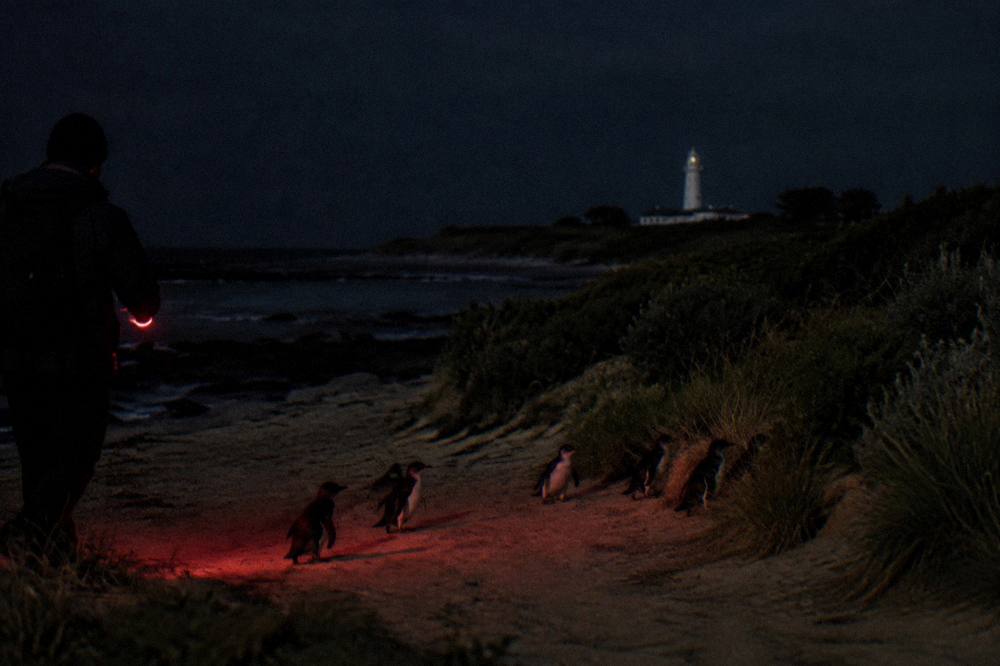
The Low Head tour deserves the clearest description, because it is the one this site features for good reason. It runs every night just after sunset at the Low Head Coastal Reserve near George Town, about an hour of guided viewing inside a door-to-door experience of about three hours, with hotel pickup in central Launceston, a maximum of 10 guests, a 5.0 rating from 22 reviews, and free cancellation. The operator's own page also lists a direct adult price of $50 at the site itself, without the Launceston transfer; the $83 listing is the transfer-inclusive version, not a competitor to it. Full detail is in the Low Head penguin tours guide, and the tour's live listing shows current availability once you know your dates.
The Bicheno tour, meanwhile, is the purest guided experience on the East Coast: 70 minutes with the guide, a private rookery the operator restored, and a 4.8 rating from 26 reviews. It is the one listing flagged as often selling out, and Bicheno's summer departures run 7:30 to 9:30 pm adjusted to dusk, so the booking time does the sunset maths for you.
Planning Your Free Penguin Night: Timing, Light And What To Bring
Plan around two clocks: the season and the sunset. Burnie's free guiding runs 1 October to 31 March and Lillico's September to April, while sunset in the Hobart area moves from about 6:20 pm in early October to about 8:50 pm in late December, back to about 7:30 pm by late March. Penguins come ashore within an hour or so of darkness.
The season clock and the sunset clock interact in ways that surprise first-time visitors. In early October, Burnie's guides are on the boardwalk from roughly half an hour before a 6:20 pm sunset, which means a penguin night can start before dinner. By late December the same event starts near 8:50 pm, which is a very late night for children. Both are fine; neither is what most people picture when they book nothing and assume nothing.
| Period | Approximate sunset, Hobart area | What is running at the free sites |
|---|---|---|
| Early October | About 6:20 pm | Burnie's guiding season opens 1 October; Lillico's season is under way |
| Late December to early January | About 8:50 pm | All sites in full season; breeding activity at its peak, September to January |
| Late March | About 7:30 pm | Burnie's season closes 31 March; Lillico's runs to April; moulting birds stay ashore |
Beyond the clocks, the packing list is short and non-negotiable. Warm clothing, because Tasmanian summer evenings on a beach are colder than the day promised, and enclosed footwear, which the Bicheno tour requires outright and every other site recommends. A torch with red cellophane if you are self-guiding, and nothing with a flash. Binoculars genuinely help, because distance viewing is the whole game. Our what to wear on a penguin tour guide covers the clothing logic in depth.
Two final cautions that apply to every free site. Drive slowly at dusk on Tasmanian roads, because wildlife is on the move at exactly the hour you are driving to see it. And if you are pairing a free night with an East Coast stay, remember the Bicheno guided option from $53 per person is the only organized way into that private rookery, and its summer departures, 7:30 to 9:30 pm adjusted to dusk, are the one listing on this site flagged as often selling out.
Free penguin viewing in Tasmania is not a compromise version of the paid experience. It is the original one: a beach, a sunset, and a set of rules that exist because the birds were here first. Pick the site that matches your season and your route, follow the light rules without exception, and the penguins will do the rest, every night of the year, for nothing.
Common Questions About Free Penguin Viewing In Tasmania
Where Can You Watch Penguins In Tasmania Without Paying?
Burnie offers free guided viewing nightly from 1 October to 31 March at the Observation Centre on West Beach. Lillico Beach, ten minutes west of Devonport, has a free volunteer-run platform generally from September to April. Godfreys Beach at Stanley and the Bruny Island Neck are free and self-guided. Bicheno's main rookery is private land with a paid tour only, though public foreshore watching is free under the standard guidelines.
Is Penguin Viewing Free In Burnie?
Yes. The Friends of Burnie Penguins run free guided viewing every night from 1 October to 31 March, with guides at the Observation Centre from 30 minutes before dusk. No booking is needed, donations are welcome, and the boardwalk is level and wheelchair accessible. Outside the guiding season the site can still be used for self-guided viewing, with the same rules on light and noise.
Can You See Penguins In Tasmania Without A Tour?
Yes, at most sites. Stanley's Godfreys Beach platform, the Bruny Island Neck platform and the township of Penguin's beaches are all free and self-guided, and Burnie and Lillico add free volunteer guiding in season. Bicheno is the exception: its main rookery is private land, and the operator's 70-minute guided walk from $53 per person is the only organized access. The state guidelines ask self-guided viewers to follow the same rules a guide would enforce.
What Time Do Penguins Come Ashore At Free Sites?
Little penguins leave the water at last light, and most come ashore in small groups within an hour or so of darkness. Exact timing follows the sunset, which in the Hobart area runs from about 6:20 pm in early October to about 8:50 pm in late December and back to about 7:30 pm by late March. Settle into position before last light, because birds decide whether to land based on what is already on the shore.
Are Dogs Allowed At Penguin Viewing Sites?
No, and the ban is absolute: no dogs or cats under any circumstances, even leashed. Dog attacks are what cut the Bicheno colony to about 40 birds in the early 1990s, and even a friendly dog reads as a predator to a penguin in the dark. If you are travelling with a dog, leave it at the accommodation for the evening rather than bringing it anywhere near a colony.
Is The Bruny Island Neck Penguin Platform Free?
The viewing itself is free: the Parks and Wildlife Service names the Neck Conservation Area viewing platform as a little penguin and shearwater site, and no entry fee is published for it. What costs money is getting there, since Bruny Island requires the SeaLink ferry from Kettering, a 20-minute crossing on a queueing system, with a 15 percent peak surcharge on the Visitor Regular fare from 1 December to April. Check the Parks and Wildlife Service for platform details before you go.