The Nut At Stanley: A Visitor Guide To Tasmania's North-West Coast Icon
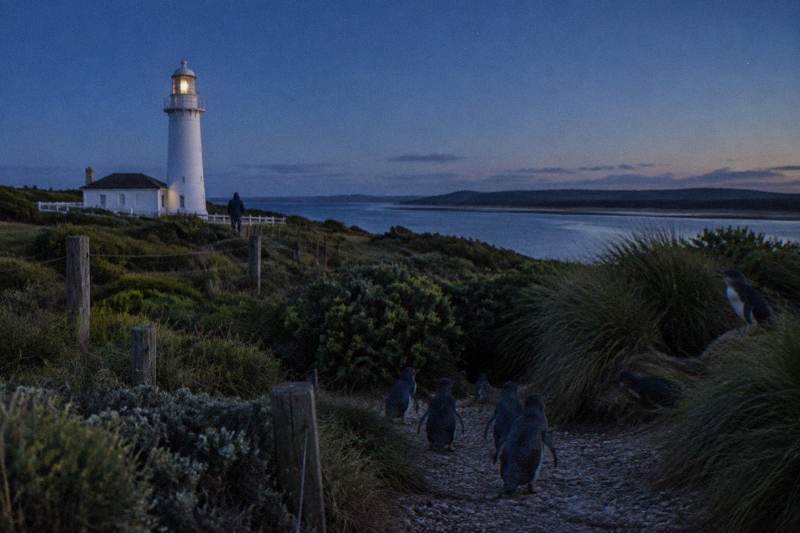
The Nut at Stanley gives the north-west coast its most recognisable silhouette, and the same shoreline is one of the places the Parks and Wildlife Service lists for little penguins at dusk. Here is how the two fit into one day.
Short answer
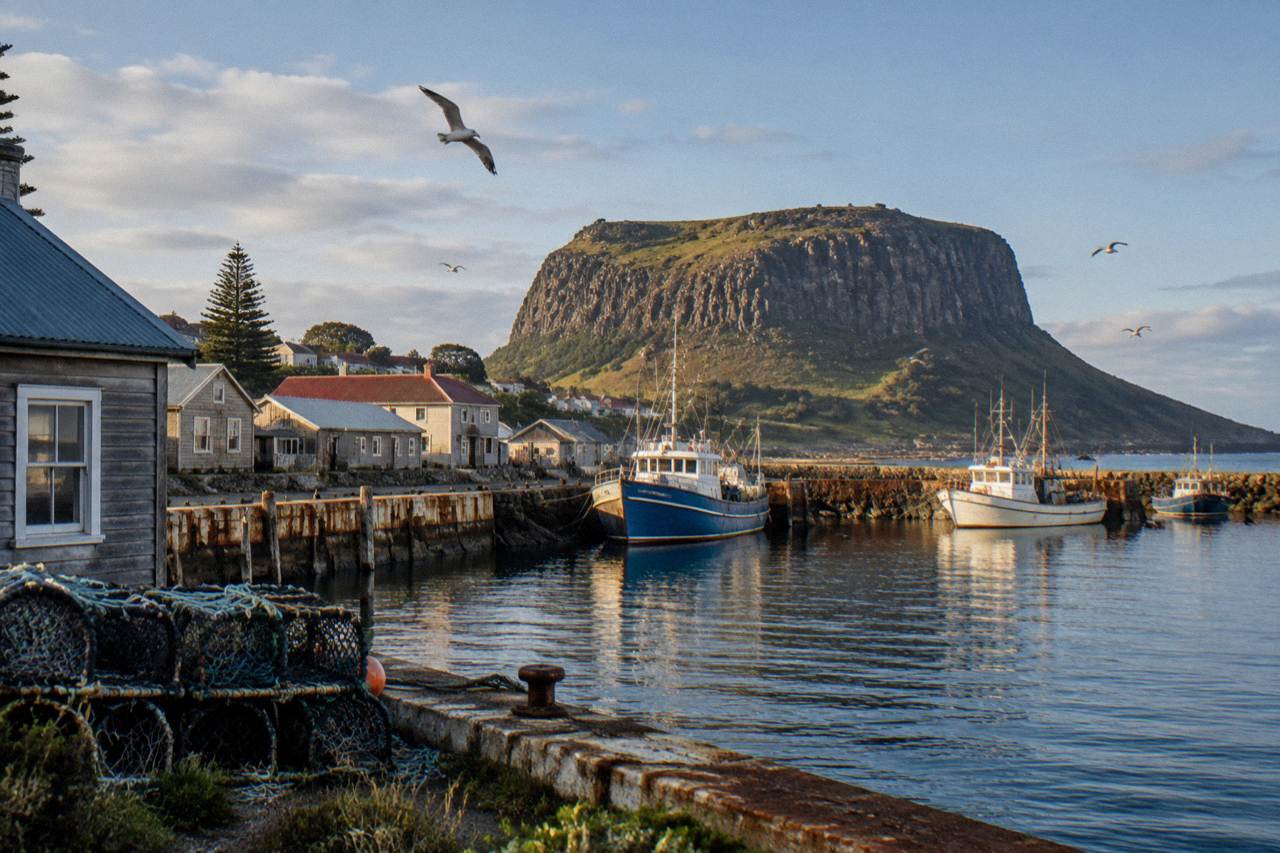
The Nut is a flat-topped volcanic plug above the town of Stanley, reachable on foot or by the chairlift. Penguins come ashore at dusk at the free Godfreys Beach viewing platform, with the most activity September to March. There is no penguin tour at Stanley; the guided option on this site is the Low Head tour from $83 with a Launceston transfer.
The Nut at Stanley is the single most photographed landform on Tasmania's north-west coast: a flat-topped headland that rises straight out of the sea behind a small fishing town of century-old cottages. What fewer visitors realise is that the same stretch of coast is an established little penguin shoreline. The Parks and Wildlife Service names The Nut State Reserve and Stanley among its dusk penguin sites, and the free viewing platform at Godfreys Beach sits a short walk from the town centre. This guide covers the daytime side of The Nut, the penguin side of the evening, and the honest limits of what exists at Stanley, including the fact that no guided penguin tour operates there and what the nearest guided alternative actually costs. It is the kind of two-for-one day the north-west does well, and it needs almost no planning beyond a sunset time. For everything on the evening side of the day, the full guide to penguin viewing around Stanley covers where to stand, what to bring, and how the nearest guided option compares.
What Is The Nut At Stanley?
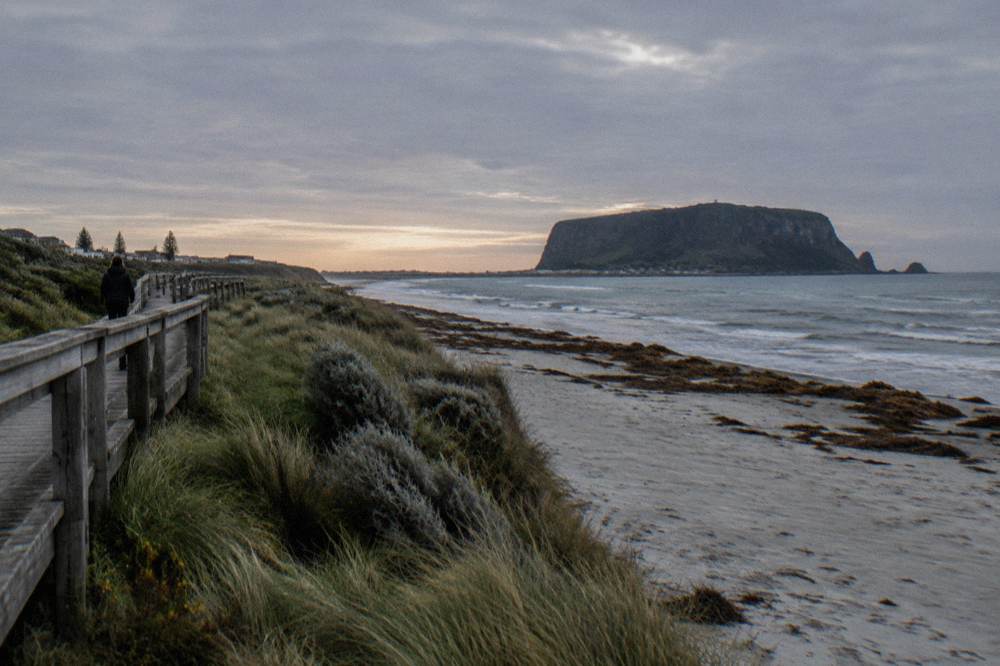
The Nut is a flat-topped volcanic plug, the hardened core of an old volcano, connected to Stanley by a low isthmus. You can reach the plateau on a walking track or by the chairlift up its seaward face. Managed by the Parks and Wildlife Service as The Nut State Reserve, it doubles as one of Tasmania's dusk penguin sites, so a single visit covers the daytime headland and the evening wildlife shoreline.
The geology is the story. The Nut is what remains after millions of years of erosion stripped away the softer rock around a volcanic vent, leaving the resistant core standing alone above Bass Strait. The shape gives the town its sheltered harbour on one side and sheer cliffs on the other, and the reserve's walking track loops the plateau top with views across the coast toward Rocky Cape and, on clear days, far out to sea.
The practical daytime visit is simple. The chairlift runs from near the wharf up the seaward slope, and the walking track climbs from the isthmus end; both put you on the plateau, where a circuit path takes in the cliff edges. Prices and operating hours for the chairlift change with the season, so check the operator's own page before you go rather than trusting a figure quoted anywhere else. Allow an hour or two on the top, more if you want to sit and watch for the wildlife that uses the reserve: the plateau is a seabird site as well as a viewpoint.
Wildlife is the thread that ties the day to the evening. The Parks and Wildlife Service's seabirds page lists little penguins and short-tailed shearwaters at dusk at The Nut State Reserve and Stanley, alongside better-known sites like Bruny Island Neck, Lillico Beach, Low Head and Burnie. The shearwaters return to their burrows around the same twilight window as the penguins, so an evening at Stanley can deliver two species for the price of one, which is free. For the full state map of where the birds come ashore, the where to see penguins in Tasmania guide lists every established site.
Where Do Penguins Come Ashore At Stanley?
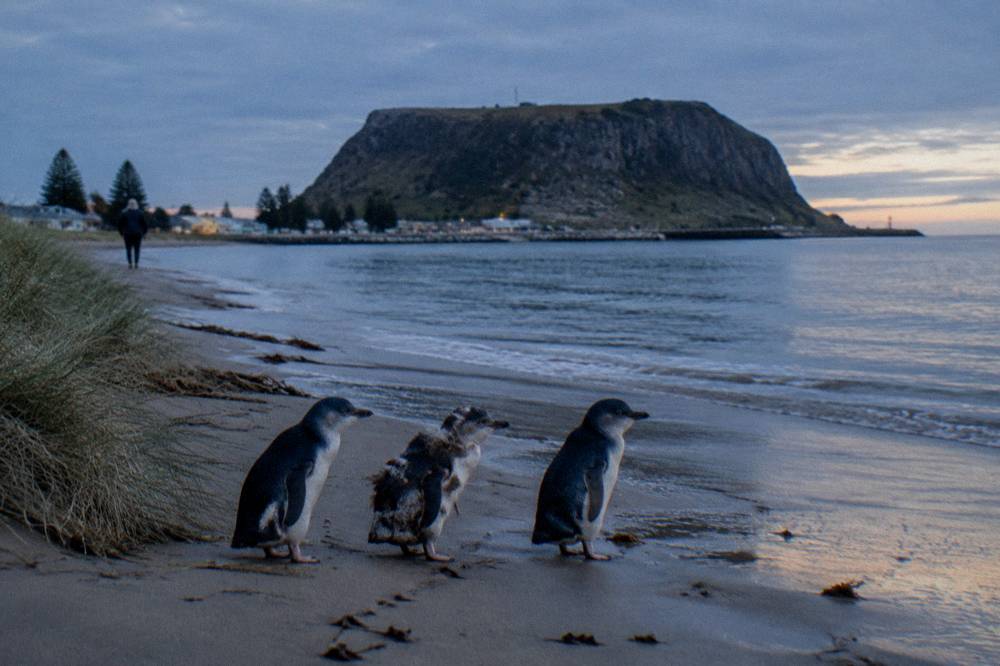
Penguins come ashore at two Stanley beaches: Godfreys Beach, which has a purpose-built free viewing platform with red lighting and wheelchair-accessible design, and Tatlows Beach near the town. The platform at Godfreys Beach is the recommended spot because it keeps viewers off the sand and away from burrows. Both beaches are self-guided, with no tour, no guide and no booking at Stanley, and the platform costs nothing to use at any time of year.
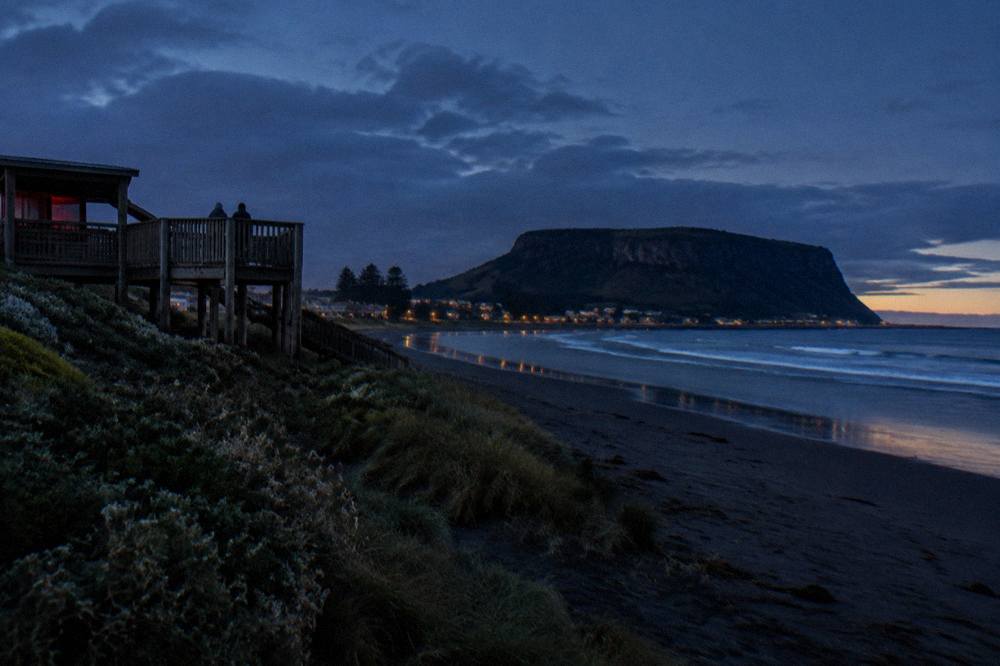
Godfreys Beach lies a short distance west of the town centre, and its platform is the piece of infrastructure that makes DIY penguin watching workable for a first-timer. Reports on the platform describe pram and wheelchair access and red lighting, which is the colour penguins tolerate best. The red lighting matters: white light can drive birds back out to sea, and a purpose-lit platform removes the need for visitors to bring torches at all.
Tatlows Beach is the closer option, within walking distance of the Stanley cottages, and it is a genuine alternative when the platform is busy or you want a shorter walk back to bed. It has no built platform, so the standard viewing rules apply in full: settle before last light, stay quiet, stay off the sand where you can, and use no torch brighter than a dim red one. On any beach, the NRE Tasmania penguin watching guidelines say to approach from land rather than along the waterline, to stay at least 3 metres from burrows, and never to walk through the colony itself.
The honest expectation-setting matters here. Little penguins come ashore in small groups within an hour or so of darkness, but numbers at any given site swing with the season, the weather and the stage of the breeding cycle. September to March is the stronger window at Stanley, with fewer birds in winter. No published colony count exists for Stanley, and any number you see quoted for the town should be treated with suspicion. What you can count on is the platform, the free access and the dusk timing.
| Spot | Distance from Stanley centre | Facilities | Cost |
|---|---|---|---|
| Godfreys Beach platform | Short drive or longer walk west | Viewing platform, red lighting, wheelchair and pram access | Free |
| Tatlows Beach | Walkable from the cottages | None built; open beach | Free |
| The Nut State Reserve shoreline | At the headland | Reserve walking tracks; no penguin platform | Free |
For a wider picture of free sites along the whole coast, the free penguin viewing spots around Tasmania guide maps the council and reserve-run options, including Lillico near Devonport and Burnie's volunteer-run evenings.
Can You Take A Guided Penguin Tour At Stanley?
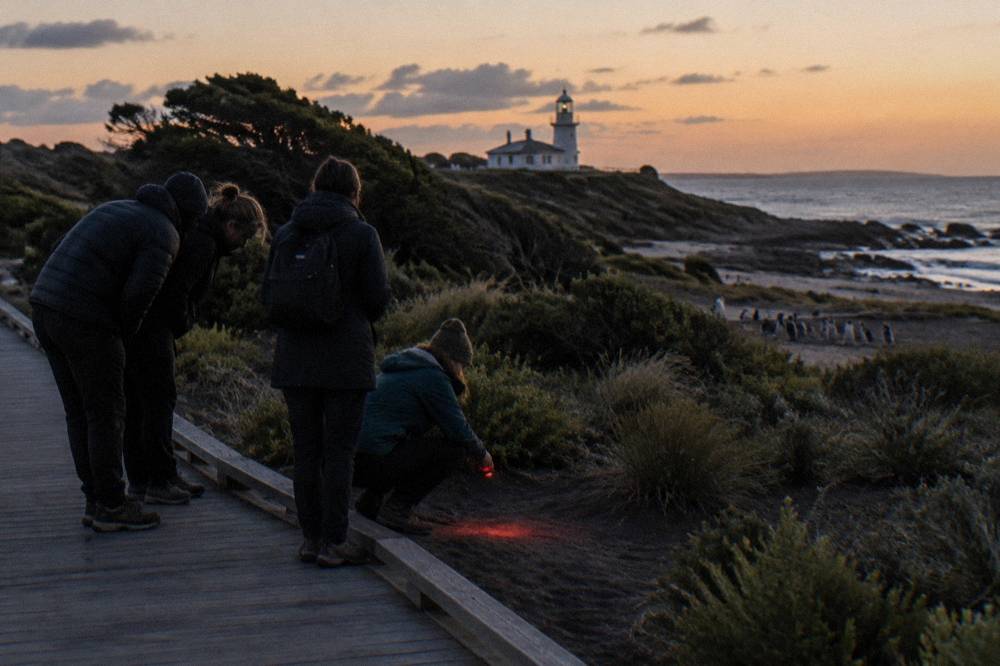
No. There is no guided penguin tour operating at Stanley, and no operator sells one from the town. Penguin watching at Stanley is self-guided at the free beaches. The nearest guided experience on this site is the Low Head penguin tour near George Town on the north coast, which runs nightly just after sunset with a guide, red lights supplied and a maximum of 10 guests, from $83 per person including a central Launceston transfer.
That gap in the market is not an accident. Guided penguin tourism in Tasmania clusters where a rookery sits next to a population base or a well-worn tourist route: Bicheno on the east coast with its private rookery, and Low Head near George Town on the north coast. Stanley's penguins live on public beaches with no operator infrastructure, so the town's wildlife economy runs on self-guided viewing and the donations culture that supports volunteer sites elsewhere on the coast.
If a guided night is what you want, the realistic plan is to separate the two halves of the trip. Base yourself at Stanley for The Nut, the heritage precinct and the free dusk viewing, then either drive to Low Head on another evening or make Low Head the penguin night of a Launceston-based leg of the trip. The Low Head tour listing runs about three hours door to door, with roughly one hour of guided viewing at the Low Head Coastal Reserve, and it carries a 5.0 rating from 22 reviews. The Low Head penguin tour from Launceston page has the full details, and you can Check availability if a date is firming up.
One point of comparison worth knowing before you book anything: the Low Head operator's own page lists a direct adult price of $50, but that is the tour without the Launceston transfer. The $83 listing on this site includes the central Launceston pickup and drop-off, so the two prices are not competitors; they price different products. Free cancellation applies to the listing, which takes some of the risk out of committing before you know the weather.
What Does A Stanley Penguin Evening Cost?
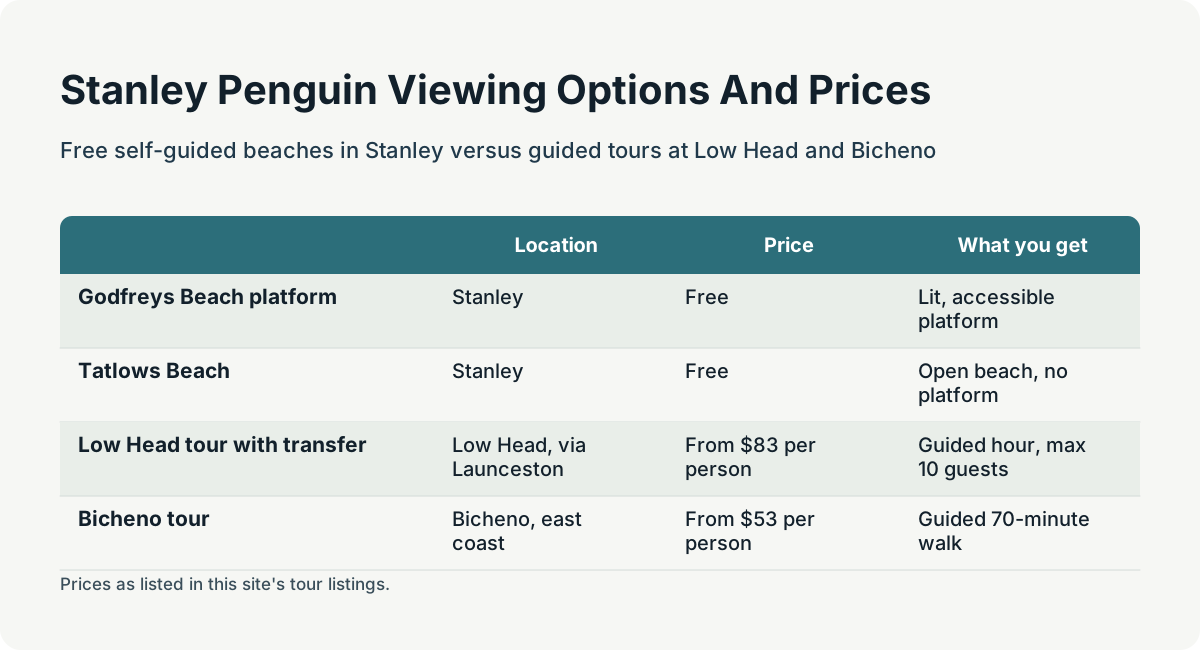
A Stanley penguin evening costs nothing to watch. Both Stanley beaches are free, the Godfreys Beach viewing platform is free, and no Tasmanian national parks pass is needed because the viewing sites sit on council and reserve land rather than inside a national park. The only paid options are the guided tours elsewhere: Low Head from $83 or Bicheno from $53.
The free-versus-guided decision is genuinely worth thinking through rather than defaulting to either side. Free viewing at Stanley costs nothing and depends entirely on you: your timing against dusk, your discipline about light and noise, and your luck with the nightly numbers. A guided tour costs money and buys a guide who knows where the birds land, red lighting handled for you, and, at Low Head, a group capped at 10 guests. Neither is the wrong answer; they suit different travellers.
The Bicheno tour on this site is the other guided comparison point, at from $53 per person with a 4.8 rating from 26 reviews. It is a 70-minute guided beach walk on a private rookery reached by a short bus ride from the operator's shop on Burgess Street, and the listing is flagged as often selling out. Bicheno is on the opposite side of the island, so it is an alternative for an east-coast leg rather than a Stanley add-on, but it is the cheapest guided penguin night on this site. The full breakdown of what tours and free sites cost across the state is in the penguin tour costs in Tasmania guide.
| Option | Location | Price | What you get |
|---|---|---|---|
| Godfreys Beach platform | Stanley | Free | Self-guided viewing from a lit, accessible platform |
| Tatlows Beach | Stanley | Free | Self-guided viewing on an open beach |
| Low Head tour with transfer | Low Head, via Launceston | From $83 per person | Guided hour, max 10 guests, Launceston pickup, free cancellation |
| Bicheno tour | Bicheno, east coast | From $53 per person | Guided 70-minute walk on a private rookery, free cancellation |
When Is The Best Time To See Penguins At Stanley?
September to March is the best window to see penguins at Stanley, matching the breeding season when the most birds come ashore. Timing is driven by sunset: penguins leave the water at last light, so midsummer evenings start close to 8:30pm or later, while spring and autumn arrivals can begin before 7pm. Winter viewing is possible but noticeably quieter, so check a sunset table for your exact date before planning the walk.
The seasonal pattern comes from the birds' calendar rather than from tourism marketing. NRE Tasmania describes a breeding season that commonly starts with winter nest preparation, with clutches of two eggs laid anywhere from May to December, chicks hatching after about 35 days of shared incubation and fledging at about eight weeks. September to January is the concentrated breeding period at many sites, which is why operators and wildlife agencies alike point to it as the most active time. February to April is the moulting window, when adults stay ashore for two to three weeks replacing every feather, so birds remain visible but behave differently, standing still and fasting rather than rafting in from the sea at speed.
The month-by-month detail, including what a May or June visit realistically offers, is covered in the best time to see penguins in Tasmania guide. The short version for Stanley: pick September to March if penguins are the main reason for the trip, and treat a winter visit as a bonus rather than a plan.
| Period | Activity at Stanley | What to expect at the platform |
|---|---|---|
| September to January | Breeding season, most activity | Regular dusk arrivals in small groups |
| February to April | Moulting window | Birds visible but ashore for long stretches, fewer rafting arrivals |
| May to August | Quieter season | Possible viewing, lower numbers, earlier dusk |
What Are The Rules For Watching Penguins At Stanley?
At Stanley, the rules come from the NRE Tasmania penguin watching guidelines and apply at every site in the state: no flash photography, no white torches, quiet voices, dark clothing, stay at least 3 metres from burrows, approach from land rather than the beach, and never bring dogs or cats, even leashed. Because Stanley's beaches have no guide to enforce these rules, responsibility for the birds' safety rests entirely with the viewer on the night.
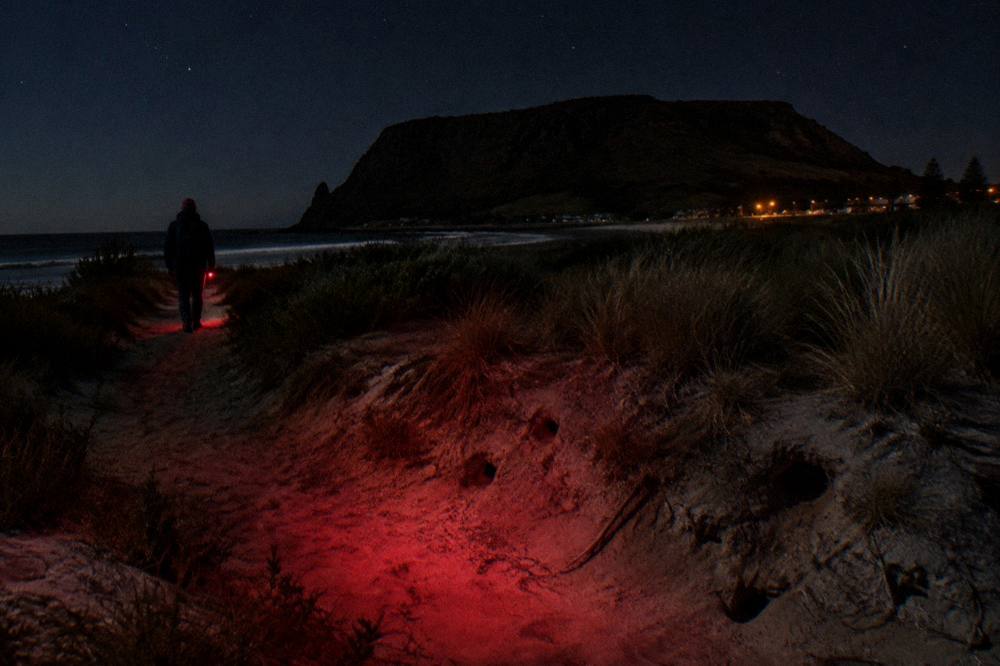
The reasons behind the rules are worth understanding, because they make the rules easier to follow. Penguins come ashore at last light because darkness is their protection from predators; a white light or a flash reads as danger, and disturbed birds will turn back and stay at sea longer, which delays feeding for chicks waiting in the burrows. The guidelines are explicit that disturbed birds remain at sea longer, stressing them and delaying feeding of chicks. A dim red-light torch, or red cellophane over an ordinary one, is the accepted compromise because red is outside the band the birds react to most.
Photography deserves its own sentence. Flash cameras should not be used on the beach, full stop. Video without spotlights is fine, and binoculars are genuinely useful for watching rafts of birds gather offshore before they land. The deeper background on why penguin photography is restricted, and what you can legitimately shoot, is in the penguin photography rules in Tasmania guide.
| Rule | Reason |
|---|---|
| No flash photography | Flash reads as a threat and can drive birds back to sea |
| Dim red-light torch only | Red light is the least disturbing colour to penguin eyes |
| Stay 3 metres from burrows | Burrows collapse easily and blockaded birds abandon nests |
| Approach from land, use tracks | Walking the beach blocks the penguins' landing path |
| No dogs or cats, even leashed | Dogs and cats kill penguins; a leash does not change that |
| Take food scraps away | Scraps attract predators to the colony |
There is one more responsibility that applies in 2026. H5 bird flu has been detected in Tasmanian wild birds, including little penguins on King Island, with no viewing-site restrictions found at any penguin location. If you see a sick or dead bird near a colony, do not touch it; report it to the Emergency Animal Disease Hotline on 1800 675 888.
How Do You Combine The Nut And Penguins In One Day?
Spend your afternoon on The Nut, either walking the steep track or riding the chairlift to the top, then give yourself time to wander the township and wharf below before heading out to the Godfreys Beach viewing platform in the last hour of daylight. Arrive before dark, settle in quietly, and stay for the little penguins coming ashore after sunset; bring warm layers, because coastal evenings get cold.
Start with the headland while the weather is most likely to be on your side. The Nut's plateau circuit is exposed, so the afternoon is usually the better window for it, and the town's heritage precinct, the wharf and the fishing boats fill the hours either side of lunch. Highfield House, the historic property on the ridge west of town, is a separate daytime site with its own opening hours, so check its page if a visit is on the list.
The evening is the part that rewards preparation. Eat early, dress warmer than the afternoon suggests, and walk or drive to Godfreys Beach with enough time to find the platform and settle while there is still light to see the path. Once you are in place, the sequence is the same at every Tasmanian rookery: the sea goes quiet, rafts of birds gather offshore if the night is a good one, and the first groups land and scurry to their burrows within an hour or so of darkness. Stay quiet, stay still and let the evening run. For what to bring and wear, the what to wear on a penguin tour guide covers the packing list that suits a free beach evening as much as a guided one.
If your trip has room for a guided night as well, slot it into a Launceston or east-coast leg rather than trying to stretch Stanley to fit one. The Low Head tour's Launceston transfer makes it the practical guided option for anyone basing themselves in the north, and the Bicheno tour plays the same role on the east coast. Both carry free cancellation, which matters when penguin nights depend on weather and dusk timing you cannot control. The Stanley penguins guide goes deeper on the town's two beaches if you want more detail on the Stanley end specifically.
For the wider north-west picture, Burnie's volunteer-run free viewing runs nightly at dusk from 1 October to 31 March, and the Lillico Beach platform near Devonport runs its volunteer guiding season from September to April. Both are stoppable on the drive to or from Stanley, and both cost nothing, with donations welcome. The team behind Tasmania Penguin Tours keeps the viewing-site comparison on the homepage current so you can weigh all of these against the two guided listings in one place.
If you are weighing the two guided listings against each other rather than against a free beach, the honest framing is distance. The Bicheno tour suits an east-coast itinerary built around Freycinet and the Great Eastern Drive; the Low Head tour suits a northern itinerary built around Launceston, and it is the one that pairs most naturally with a Stanley trip since both sit on the northern half of the island. Neither listing runs from Stanley itself, so the decision is really about which leg of your trip gets the penguin night.
Common Questions About The Nut And Penguins At Stanley
Can you see penguins at Stanley without a tour?
Yes. Stanley's penguins are watched self-guided from the free Godfreys Beach viewing platform or Tatlows Beach, at dusk, with the most activity September to March. No tour operates at Stanley, and no booking is needed for the platform.
Is the Godfreys Beach penguin platform free?
Yes, the platform is free to use, with no booking and no pass required. Reports describe it as pram and wheelchair accessible with red lighting installed, which removes the need for visitors to bring their own torches.
How do you get to the top of The Nut at Stanley?
On foot via the walking track from the isthmus, or by the chairlift that runs up the seaward face from near the wharf. Chairlift prices and operating hours change with the season, so check the operator's own page for current details before you go.
What time do penguins come ashore at Stanley?
Little penguins leave the water at last light and most come ashore in small groups within an hour or so of darkness. In midsummer that can mean arrivals close to 8:30pm or later; in spring and autumn it can be before 7pm. Check a sunset table for your exact date.
Is there a guided penguin tour near Stanley?
No tour runs at Stanley itself. The nearest guided option on this site is the Low Head penguin tour near George Town, from $83 per person with a central Launceston transfer, about three hours door to door with roughly one guided hour at the colony.
Can you take photos of the penguins at Stanley?
Photography without flash is the rule. Flash cameras should not be used on the beach because the flash can drive birds back out to sea. Video without spotlights is fine, and a dim red-light torch is the only lighting to carry.