Is Penguin Tasmania Worth Visiting?
An honest verdict on the township of Penguin on Tasmania's north-west coast: free self-guided beach viewing at dusk, no organized tours, and where the real guided penguin nights happen instead.
Is Penguin Tasmania Worth Visiting?
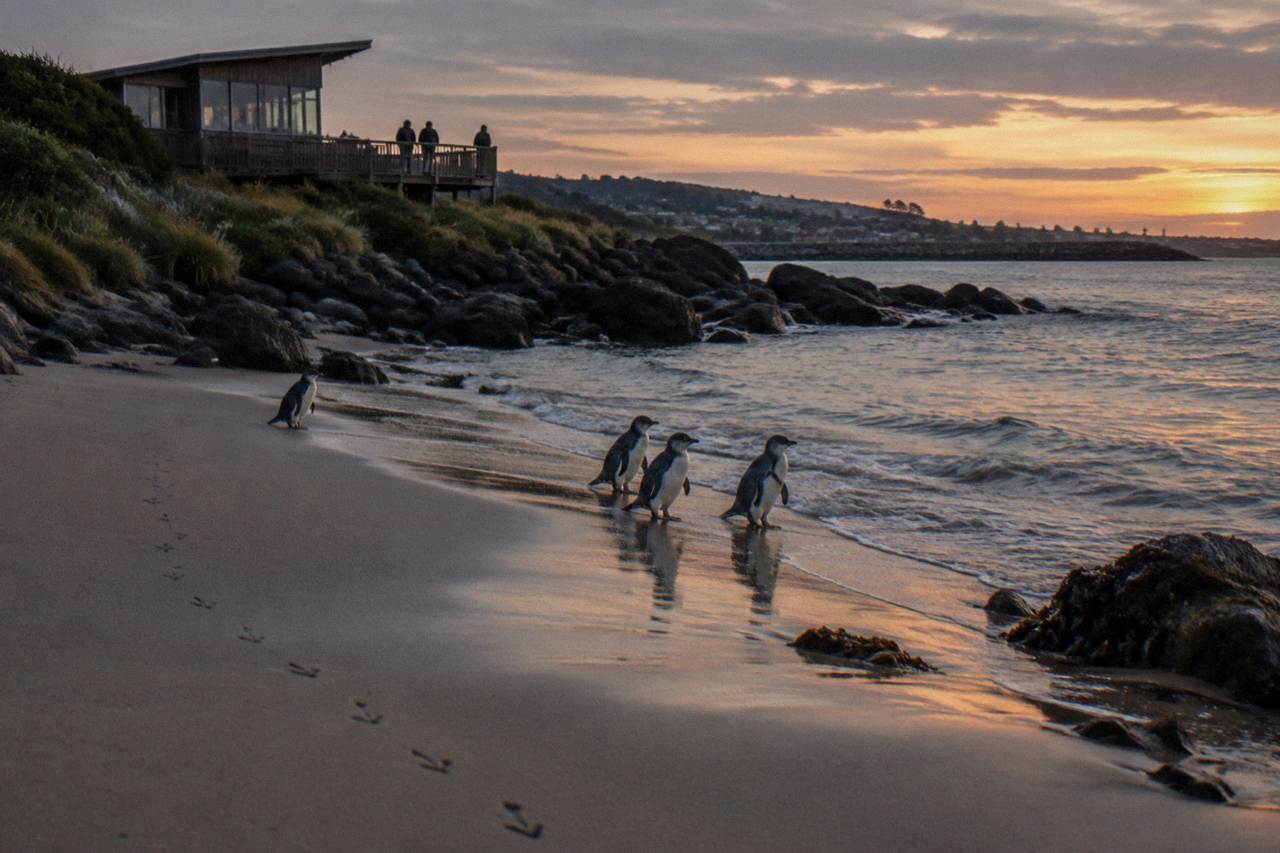
Yes, as a cheerful coastal stop with a genuinely unusual name, but not as a penguin destination in the way most visitors hope. Penguin is a township on Tasmania's north-west coast, named for the bird, and the penguin watching there is self-guided at local beaches at dusk, roughly November to March, free, and done with red light only. No organized tours currently run there, and no colony count exists for its beaches.
The town sits on the Bass Highway stretch of the north-west coast, and its penguin identity is worn openly: the name itself, the big bird statue on the foreshore, and a community that has leaned into the association for decades. That charm is real and worth an hour of anyone's time on a coastal drive. But visitors arrive with a specific expectation, a ticketed evening wildlife experience like the ones advertised elsewhere in the state, and Penguin does not offer one. The honest framing is this: come for the beach town, stay for dusk if the season is right, and book a guided rookery night somewhere else if a guaranteed close-up matters to you. Fitting a rookery night into a wider route is easier than it sounds, and our guide to how many days you actually need for Tasmania shows where a dusk penguin stop works best.
Guided penguin nights run at Bicheno on the east coast and Low Head on the north coast. The guided, bookable penguin experiences in Tasmania sit at Bicheno on the east coast and Low Head near George Town in the north. Everything between Devonport and Stanley, including Penguin, is either free volunteer-guided viewing or fully self-guided beach watching. That is not a knock on the town. It is just the shape of the product, and knowing it before you plan saves an evening. If you're heading west instead, our guide to viewing penguins around Stanley covers what that stretch of coast offers after dark.
For travellers whose whole reason for the stop is the birds, the two bookable options bracket the state. The Low Head tour from Launceston, the small-group night with central pickup and transfer, runs about 3 hours door to door with about an hour of guided viewing at the coastal reserve, from $83 per person, rated 5.0 from 22 reviews. The Bicheno tour on the east coast is a 70-minute guided beach walk from $53 per person, rated 4.8 from 26 reviews, and its listing is flagged as often selling out. Neither is in Penguin, but either delivers what a self-guided beach in Penguin cannot: a guide, a known rookery, and a managed viewing setup.
What Can You Actually See In Penguin?
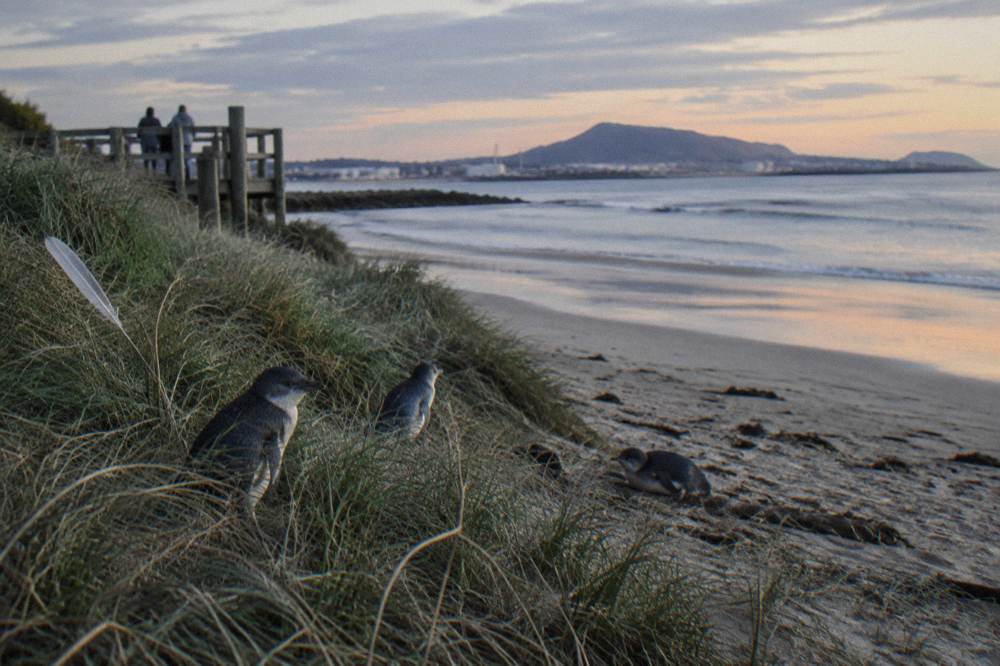
Self-guided little penguins at local beaches, coming ashore at dusk, with the best odds roughly November to March and no organized tour, no platform staff and no published colony count. Penguin Beach and the southern end of the town's beaches, plus the Point Penguin area east of town, are the spots named in local sources, and all of it is free.
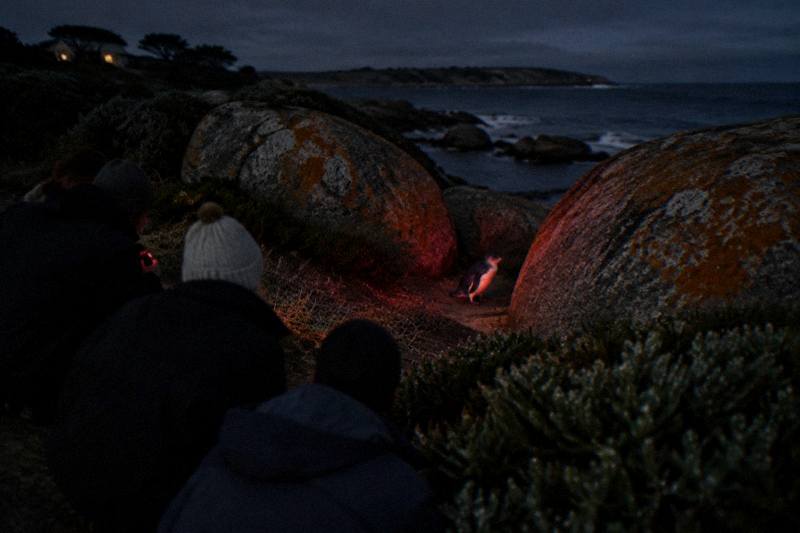
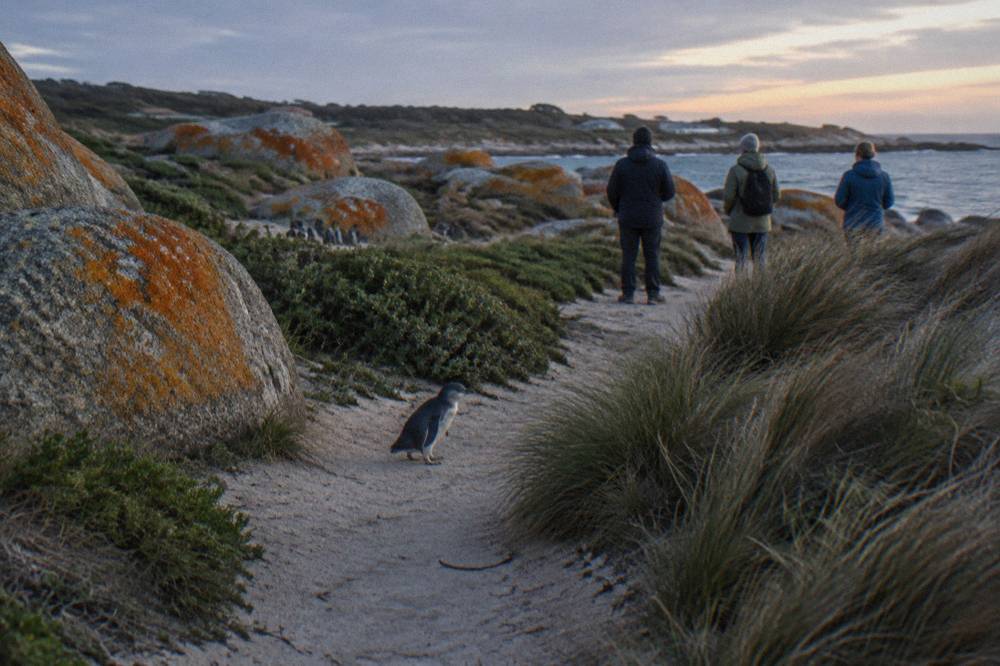
The mechanics are simple and unforgiving. Little penguins spend daylight at sea feeding and return to their burrows in small groups within an hour or so of darkness, a pattern the state's wildlife agency describes plainly on its little penguins page. That means a self-guided evening in Penguin is a matter of arriving before last light, settling somewhere dark and quiet above the beach, and waiting. Some nights birds come ashore in numbers. Some nights, especially in winter, very few do. There is no guide to tell you where the burrows are concentrated, no red torch handed to you, and no guarantee of anything.
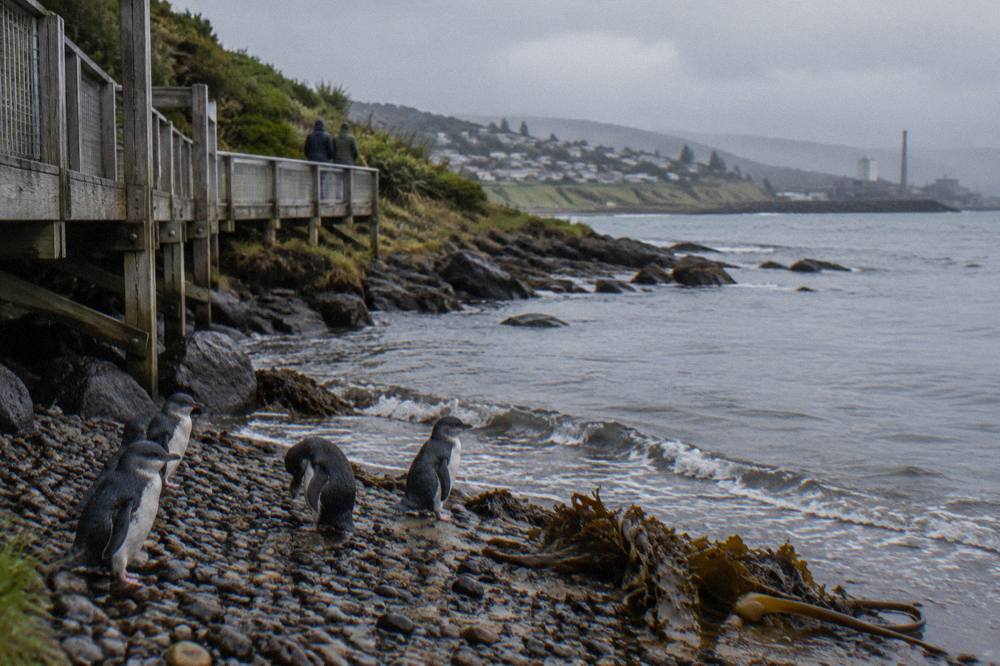
What the town does have is convenience and atmosphere. The foreshore is flat and walkable, the beaches are close to the town centre, and an evening waiting for penguins costs nothing but patience and warm clothing. Local guidance is that viewing is best at dusk from November to March, with fewer birds around in winter, and that the standard rules apply: red light only, quiet, no flash photography. The NRE Tasmania penguin watching guidelines are the state's own reference for all of this, and they are worth reading before any independent evening on a Tasmanian beach.
The distinction that trips people up is the name. Penguin the township is not Penguin the guaranteed experience. The town was named for the bird, the bird does live along that coast, but the relationship is loose and seasonal rather than curated. Anyone who wants the bird on a schedule should read the free options laid out in our guide to free penguin viewing across Tasmania, which covers the volunteer-run sites as well as the do-it-yourself beaches.
Where Are The Real Guided Penguin Nights Near Penguin?
The nearest organized penguin experiences to the township of Penguin are the volunteer-run viewing at Burnie and Lillico, both free, and the fully guided nightly tour at Low Head near George Town, which is the closest bookable product with a Launceston transfer option. No guided tour operates in the township of Penguin itself.
Burnie is the closest thing to a guided evening on this coast. The Friends of Burnie Penguins run free guided viewing nightly at dusk from 1 October to 31 March, with guides at the Observation Centre on the boardwalk, no booking required and donations welcome. Lillico Beach, ten minutes west of Devonport, has a volunteer-run viewing platform generally used September to April, with two or three guides on site in season holding red torches; visitor torches and flash are not permitted. Both are community operations, and both deliver the thing a lone beach in Penguin cannot: someone who knows where the birds come in.
The fully commercial option in the north is Low Head. The operator there runs a fully guided tour every night just after sunset at the Low Head Coastal Reserve, in small groups of typically 10 to 15 people, for up to about an hour of viewing. Torches are supplied by the guides, selfie sticks and tripods are not allowed, and there is wheelchair access. The listing with the Launceston transfer, the one we feature on this site, adds central Launceston pickup and drop-off and runs about 3 hours door to door, from $83 per person, with a maximum of 10 guests and free cancellation. It is rated 5.0 from 22 reviews. The operator's own direct price without the transfer is $50 per adult, which is worth knowing if you will have a car at George Town anyway.
On the other side of the state, Bicheno is the east coast's answer. Its 70-minute guided beach walk runs to a private rookery, from $53 per person, rated 4.8 from 26 reviews, with free cancellation and a listing flagged as often selling out. It is a long way from the north-west, but it belongs in this comparison because it is the other half of the state's small set of bookable penguin nights, and it is the one to choose if your itinerary leans east rather than north. Before you commit, read our honest verdict on whether the Bicheno penguin tour is worth it, including who should skip the paid walk entirely.
A note on the Pilot Station at Low Head: the cafe, accommodation and toilets there have been closed since 22 April 2026 pending a new lessee, while the tours and grounds remain open. Plan accordingly, especially with children, because the nearest facilities are back in George Town.
What Is The Best Time To See Penguins At Penguin?
Roughly November to March, at dusk, with the strongest activity in the September to January breeding window and noticeably fewer birds ashore through winter. Moulting adults stay ashore on the beaches from about February to April, which changes what you see but not when you should go.
The season is driven by biology, not by a calendar anyone in town publishes. The state's little penguin material describes a breeding season that varies by bird, place and year, commonly starting in winter with nest preparation, with clutches of two eggs possible as early as May or as late as December. Chicks hatch after about 35 days of shared incubation and fledge at about eight weeks. The practical takeaway for a beach in Penguin is that spring and early summer, September to January, is when the most birds are coming and going, and the operator framing at both Bicheno and Low Head matches that: breeding season is busier, the February to August window is quieter.
Timing within the evening matters as much as timing within the year. Sunset in Tasmania runs from roughly 6:20 pm in early October to peaks near 8:50 pm in late December and early January, then back to about 7:30 pm by late March, varying by exact location and date. Penguins come ashore in small groups within an hour or so of darkness, so a November evening means arriving by about 7:30 pm at the latest, while a late December evening means the wait starts closer to 9 pm. Settle before last light; the guidelines are explicit that disturbed birds stay at sea longer, which stresses them and delays feeding of chicks.
One more seasonal note for the drive itself: wildlife on Tasmanian roads is a genuine dusk hazard, and an evening built around penguins means driving in exactly the window when animals are moving. Reduce speed, allow extra time, and treat the trip back from the beach as part of the plan rather than an afterthought.
What Rules Apply If You Watch Penguins On Your Own?
The state guidelines are strict and simple: dark clothing, approach from land rather than along the beach, settle at least 3 m from any burrows before last light, stay quiet, and use only a dim red-light torch, never pointed at the water or the birds. No flash photography on the beach, no dogs or cats under any circumstances, and never touch or chase a penguin.
These rules exist because little penguins are small, about 1 kg and 40 cm, and easily stressed by light and movement. The Parks and Wildlife Service seabirds page lists the recognised viewing locations around the state, and the NRE guidelines fill in the behaviour code that applies at every one of them, guided or not. Penguins are protected wildlife in Tasmania: catching or harassing them is illegal, and anything concerning should be reported to a ranger. The full detail, including why flash is a problem for a bird whose eyes are tuned for a dark ocean, is in our guide to penguin photography rules in Tasmania.
| Viewing option near the north-west coast | Format | Cost | Season |
|---|---|---|---|
| Penguin township beaches | Self-guided, dusk | Free | Roughly November to March, fewer in winter |
| Burnie Observation Centre | Volunteer-guided, nightly | Free, donations welcome | 1 October to 31 March |
| Lillico Beach platform | Volunteer-guided evenings | Free, donations welcome | Generally September to April |
| Low Head Coastal Reserve | Fully guided tour, nightly after sunset | From $83 per person with Launceston transfer | Year-round, numbers higher November to February |
The table shows the honest hierarchy. Free and self-guided is the bottom rung in terms of reliability, volunteer-run is a solid middle, and the fully guided commercial tour is the only option where a guide is accountable for what you see and how you see it. The township of Penguin sits in the first row, and nothing on the horizon changes that.
So Is The Township Of Penguin Worth The Stop?
As a town, yes: it is a pleasant, walkable coastal stop with a name and a foreshore worth twenty minutes. As a penguin destination, only if you accept the terms, which are free, self-guided, seasonal and unstaffed. Travellers who want a managed wildlife evening should book Low Head or Bicheno and treat Penguin as a daytime stop on the drive.
The verdict depends entirely on what you are buying. A family driving the Bass Highway in January with a free evening can do far worse than settling quietly on a Penguin beach at dusk with warm layers and a red cellophane torch; the price is right and the odds in summer are reasonable. A visitor in June, or anyone whose trip hinges on seeing penguins, should redirect. The nearest reliable evening is Burnie's guided viewing in season, and the nearest bookable tour with a transfer is Low Head out of Launceston, roughly a coast away but delivering a guide, a known rookery and a capped group of 10.
There is also a practical reason the town earns its stop regardless of the birds. The north-west coast between Devonport and Stanley is one of the state's quieter drives, and Penguin is a natural place to break it, with the beach, the foreshore and the novelty of the name. The Bass Highway works through 2026 and into early 2027 add up to 15 minutes of delay in places, which makes a relaxed stop more attractive, not less. More on the wider region, including the volunteer sites and the free options across the state, is in our guide to penguins at Burnie and the free-viewing guide linked above.
For the east coast travellers reading this for the contrast: Bicheno's 70-minute walk from $53 per person is the same idea as Low Head's night, a guided group on a known rookery, and it is the pick if your route runs through Freycinet rather than Launceston. Its listing is flagged as often selling out, so it rewards booking ahead more than most.
The last word on the town itself: Tasmania Penguin Tours exists because people plan entire evenings around this bird, and the township of Penguin is the one place in the state where the bird gives its name to the whole experience without promising anything. Go, enjoy the beach, follow the red-light rules, and keep your expectations where the facts put them. That is the honest verdict.
Common Questions About Penguin Tasmania
Is Penguin Tasmania Worth Visiting?
Yes, as a coastal stop with a memorable name, but not as a guaranteed penguin experience. The viewing there is free, self-guided and seasonal, roughly November to March at dusk, with no organized tours and no published colony count. Book a guided night at Low Head or Burnie's volunteer viewing if seeing penguins is the priority.
Can You Take A Penguin Tour In The Township Of Penguin?
No. No organized penguin tours currently operate in the township; earlier tours at Penguin Point no longer run. The watching is self-guided at local beaches such as Penguin Beach and the Point Penguin area, at dusk, free, with red light only.
When Is The Best Time To See Penguins At Penguin?
Roughly November to March, at dusk. September to January is the breeding window with the most activity, February to April is the moulting period when adults stay ashore, and winter evenings are noticeably quieter.
What Is The Closest Guided Penguin Tour To Penguin?
The volunteer-run free viewing at Burnie, nightly from 1 October to 31 March, is the closest guided option. The nearest bookable commercial tour is the Low Head penguin tour near George Town, about an hour of guided viewing nightly after sunset, from $83 per person with a Launceston transfer.
Can You Photograph Penguins On The Beaches At Penguin?
Only without flash. The state guidelines prohibit flash photography on the beach and allow only dim red-light torches, never pointed at the water or directly at the birds. Video without spotlights is permitted, and binoculars are the better tool in the dark.
Are There Other Free Penguin Viewing Sites On The North-West Coast?
Yes. Burnie's Observation Centre offers free guided viewing in season, Lillico Beach near Devonport has a volunteer-run platform generally from September to April, and Stanley's Godfreys Beach has a self-guided viewing platform. All are free, and all follow the same red-light, no-flash rules.