Bicheno Or Low Head: Which Penguin Tour Should You Book?
Tasmania has exactly two bookable guided penguin tours, one on the East Coast at Bicheno and one on the North Coast at Low Head near George Town. Two tours, different setups: compare price, duration, group size, pickup and season to pick yours the one that fits your trip.
Short answer
Bicheno runs a 70-minute guided beach walk from $53 per person, rated 4.8 from 26 reviews, meeting at the operator's shop on Burgess St. Low Head is a 3-hour door-to-door small-group tour from Launceston from $83 per person, rated 5.0 from 22 reviews, with a maximum of 10 guests and about 1 hour of penguin viewing.
Two guided penguin tours cover Tasmania's bookable market, and they could hardly be more different products. The Bicheno tour on the East Coast is a short, sharp beach walk: 70 minutes with a guide, from $53 per person, rated 4.8 from 26 reviews, starting at the operator's shop on Burgess Street. The Low Head tour out of Launceston is a 3-hour door-to-door evening built around a central pickup, from $83 per person, rated 5.0 from 22 reviews, capped at 10 guests. Choosing between them is mostly a question of where your trip is based, how much evening you want to give up, and whether a transfer matters to you.
Tasmania also has free volunteer-run viewing sites at Burnie and Lillico Beach that cost nothing at all. The paid tours earn their money in different ways: one buys you access to a private rookery, the other buys you a driver and a small group. If you want the deeper story on either location, the Bicheno Penguin Tours guide and the Low Head Penguin Tours guide cover each in full.
What Each Tour Actually Includes
The Bicheno tour is a 70-minute guided experience from $53 per person: a short bus ride from the meeting point on Burgess Street to a private rookery, then a guided walk of about 500 metres over roughly 50 minutes. The Low Head tour is about 3 hours door to door from $83 per person: central Launceston pickup, a transfer to the coast, about 1 hour of guided penguin viewing, and the drive back.
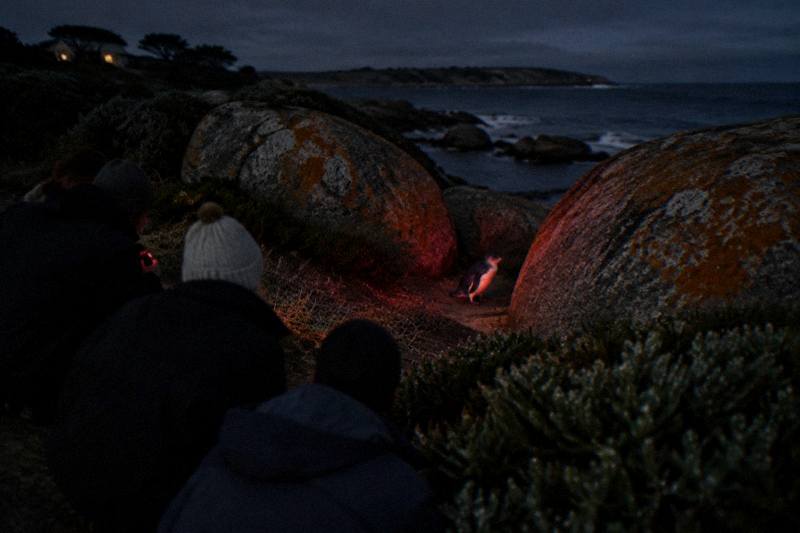
The Bicheno product is built around a private rookery the operator has run since 1992. The rookery sits on land that was restored after the colony crashed to about 40 birds in the early 1990s following dog attacks, and it has recovered since. That history is the operator's own account, but it explains the format: a controlled site, a guide who knows the burrows, and a walk short enough that children and slower walkers can manage it. There are no toilets at the rookery and no pickups from accommodation, so you make your own way to the shop at 1/70 Burgess Street, across from the IGA, where free parking is available. Photography is permitted without flash, and enclosed shoes are required.
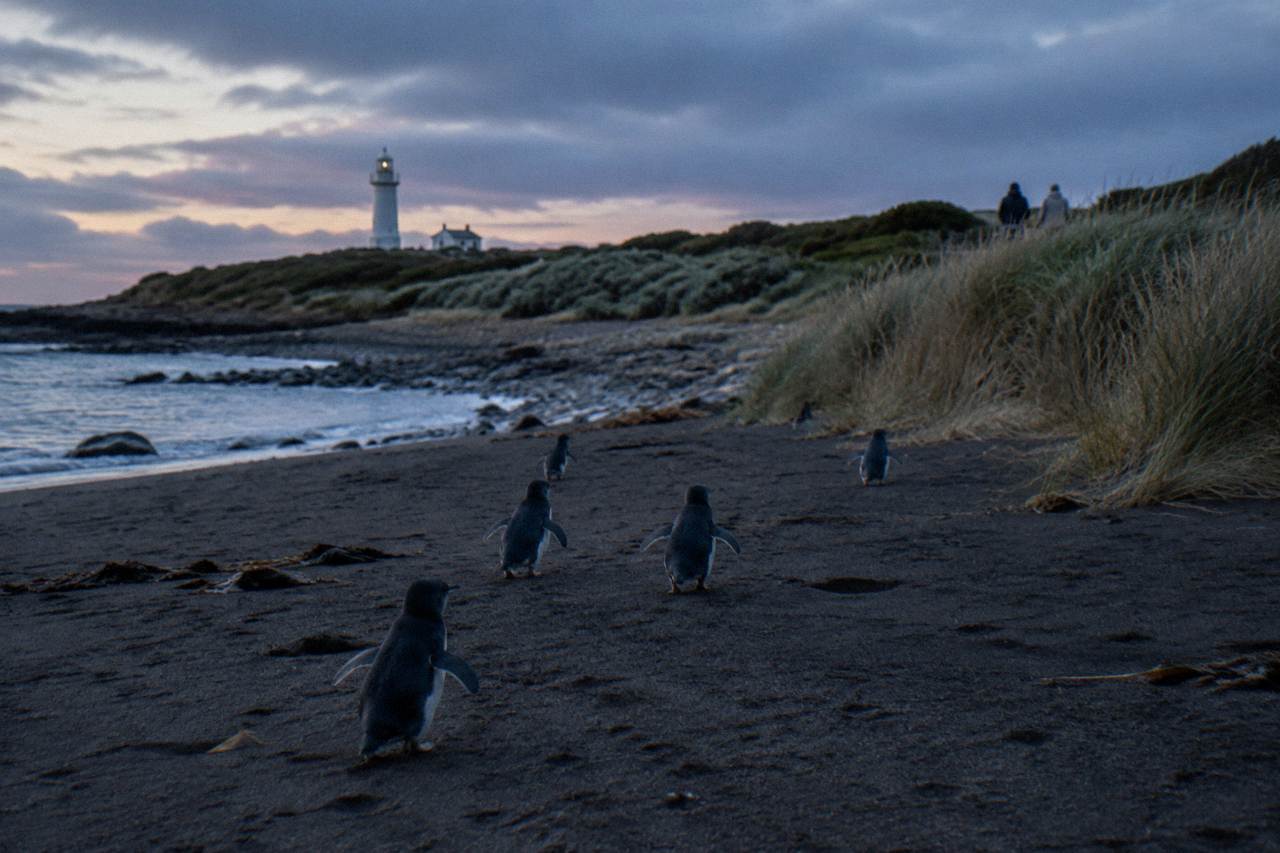
The Low Head product is built around convenience and intimacy. The listing includes pickup from central Launceston hotels, a transfer to the Low Head Coastal Reserve near George Town, roughly an hour of guided viewing with a maximum of 10 guests, and the return trip. The operator's own site describes nightly tours just after sunset, small groups, red and yellow low-intensity lights supplied by guides, no torches, selfie sticks or tripods, and wheelchair access. The operator's direct price for the tour itself is $50 per adult without the Launceston transfer; the $83 listing price reflects the transfer being folded in, which is worth knowing if you have your own car and would rather drive yourself to Low Head.
Neither tour runs a hard sell on the night. Both listings carry free cancellation, so a booking made weeks ahead can still be moved if your itinerary shifts, which happens often on Tasmania's East Coast where road and weather plans change day to day.
Both listings are live on the operators' booking pages, and the Bicheno tour in particular is flagged as often selling out, the only tour in this comparison with any urgency attached. If your dates are locked, booking ahead costs nothing extra given free cancellation.
The Decision Table: Bicheno Vs Low Head At A Glance
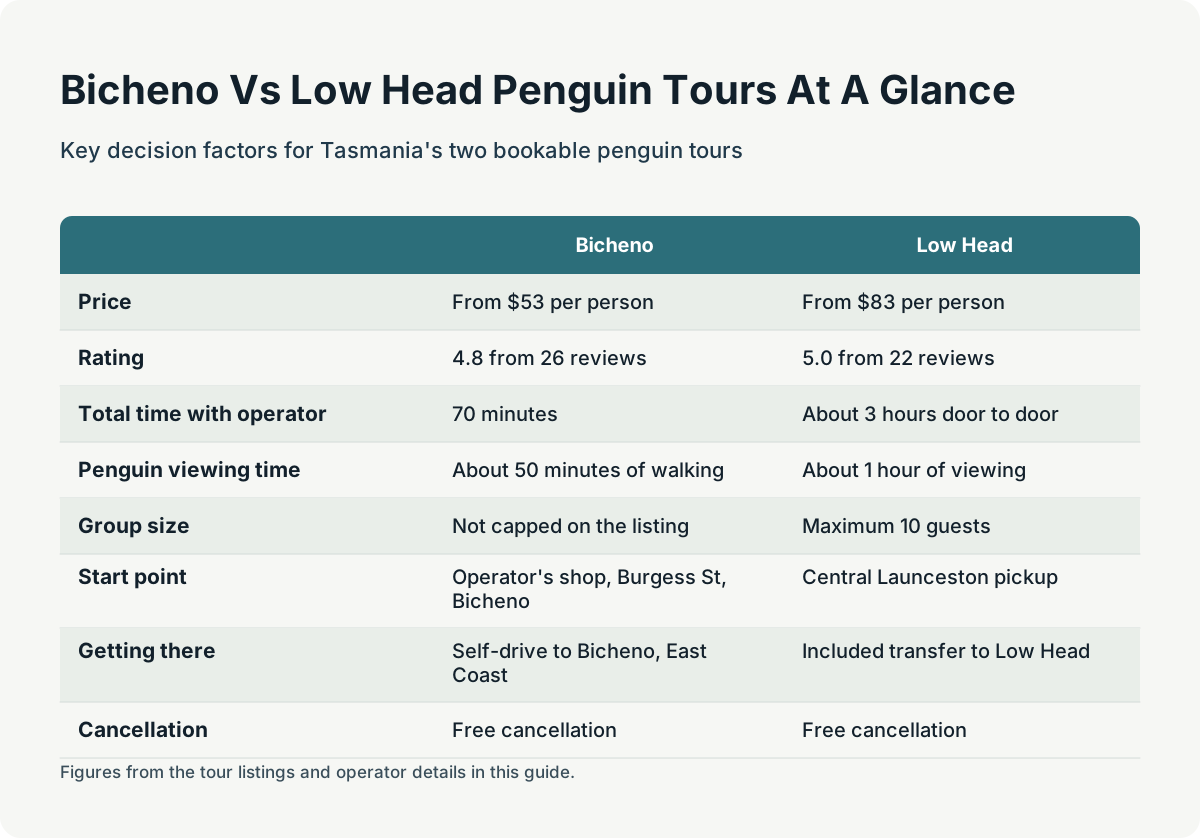
On price the Bicheno tour wins at from $53 against from $83; on rating Low Head wins at 5.0 from 22 reviews against 4.8 from 26; on convenience Low Head wins with door-to-door pickup while Bicheno requires a meeting point; on time commitment Bicheno asks 70 minutes and Low Head asks about 3 hours. Neither tour dominates the other, which is why the base city decides most bookings.
The cleanest way to compare the two tours is a single table. Here is how they stack up.
| Factor | Bicheno Penguin Tour | Low Head Penguin Tour |
|---|---|---|
| Card name | 70-Minute Guided Beach Walk | Small Group With Launceston Transfer |
| Price | From $53 per person | From $83 per person |
| Rating | 4.8 from 26 reviews | 5.0 from 22 reviews |
| Total time with operator | 70 minutes | About 3 hours door to door |
| Penguin viewing time | About 50 minutes of walking | About 1 hour of viewing |
| Group size | Not capped on the listing | Maximum 10 guests |
| Start point | Operator's shop, Burgess St, Bicheno | Central Launceston pickup |
| Getting there | Self-drive to Bicheno, East Coast | Included transfer to Low Head |
| Cancellation | Free cancellation | Free cancellation |
| Urgency note | Listing flagged as often sells out | None |
Two things in that table deserve a second look. The rating gap is real but thin: a 5.0 from 22 reviews and a 4.8 from 26 reviews are both strong scores from small pools, and neither number alone should decide the booking. The time gap is the bigger practical difference. If you are staying in Bicheno, the tour is a 70-minute evening that leaves the rest of your night free. If you are staying in Launceston without a car, the Low Head tour is the only one of the two you can actually take, and the 3-hour commitment is simply the cost of reaching the coast.
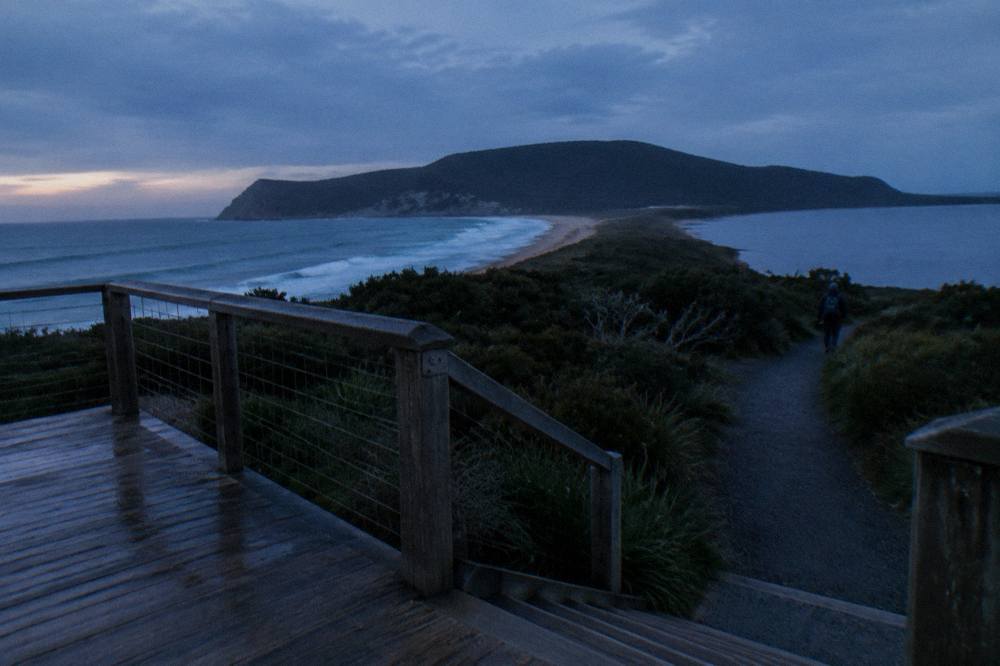
The Bicheno tour also has a seasonal wrinkle worth flagging. The operator runs two departure windows: 5:00pm to 7:30pm in the February to August season and 7:30pm to 9:30pm from September to January, always adjusted to dusk and confirmed at booking. In midsummer that means a genuinely late night, which matters if you are travelling with small children or planning an early start the next day.
Which Tour Suits Which Traveller
Families with children under about ten generally suit Bicheno's short walk; solo travellers and couples based in Launceston suit Low Head's small group; photographers suit Bicheno where non-flash photography is permitted; travellers without a car suit Low Head only, since Bicheno has no pickups of any kind. Seniors often prefer Low Head for the door-to-door transfer rather than a self-drive at dusk. If you're keen to bring a camera, the rules on photographing little penguins without flash explain exactly what gear works at both tours.
The by-traveller breakdown is where the comparison becomes practical, because the two products serve genuinely different trips.
| Traveller type | Better fit | Why |
|---|---|---|
| Family with young kids | Bicheno | 70 minutes total, short walk, earlier winter departures |
| Couple on an East Coast road trip | Bicheno | Fits around dinner in Bicheno, from $53 each |
| Traveller without a car in Launceston | Low Head | Central pickup, transfer included, 10-guest cap |
| Photographer | Bicheno | Non-flash photography permitted on the walk |
| Senior traveller | Low Head | Door-to-door transfer, no dusk driving, wheelchair access |
| Group of 5 or more | Low Head | Maximum 10 guests keeps the group intimate |
The senior case deserves a word, because dusk driving in Tasmania is a real consideration. Wildlife on regional roads is a genuine hazard at dawn and dusk, and the standard advice is to reduce speed and stay alert. A tour that puts you on a coach from central Launceston removes that drive entirely, which is why the Low Head product earns its higher price for some travellers rather than merely charging for a transfer. The site's broader roundup of senior-friendly guided tours of Tasmania covers the same logic across other wildlife experiences.
For families, the Bicheno arithmetic is simple. A 70-minute tour that ends within an hour of starting is a very different proposition from a 3-hour round trip, and Bicheno's winter departure window of 5:00pm to 7:30pm means younger children can see penguins and still be in bed at a reasonable hour. The September to January window pushes departures to 7:30pm to 9:30pm, which suits teenagers better than toddlers.
One honest caveat for photographers: neither tour permits flash, and the Low Head operator bans torches, selfie sticks and tripods outright, supplying its own low-intensity red and yellow lights. Bicheno permits photography without flash. The state's watching guidelines, published by the Natural Resources and Environment department, are blunt about why: penguins come ashore at last light, and disturbed birds stay at sea longer, which delays feeding of chicks. A camera you cannot hold steady without flash is a camera you will not use on either tour.
Season And Timing: When Each Tour Is Better
September to January is the breeding season with the most activity at both rookeries; February to April is the moulting window when adult birds stay ashore for two to three weeks; winter is quieter but tours run year-round at both sites. The Bicheno operator runs every night except Christmas Day and New Year's Eve, and Low Head runs every night just after sunset.
Neither site publishes an official best-month ranking, and this site will not invent one. What can be said from the operators' own framing and the state's biology pages is a calendar of activity, not a league table. Other pages covering the same trip are gathered on Tasmania Penguin Tours.
| Period | Bicheno | Low Head |
|---|---|---|
| September to January | Operator's breeding season, most activity, 7:30-9:30pm departures | Higher numbers, tours nightly after sunset |
| February to April | Moulting window, birds ashore 2-3 weeks, quieter | Numbers easing from the summer peak |
| May to August | Winter season, 5:00-7:30pm departures, fewer birds | Fewer birds, tours continue nightly |
| Christmas Day, New Year's Eve | No tours | Tours run nightly |
The state-level context is worth knowing when a guide promises huge numbers. Past estimates put Tasmania's little penguin population at 110,000 to 190,000 breeding pairs, but most of those birds breed on offshore islands, and under 5 percent breed on mainland Tasmania. The two rookeries you can visit on a tour are small, protected pockets, and no current published colony count exists for either Bicheno or Low Head. Any tour that promises a specific nightly headcount is promising something nobody measures.
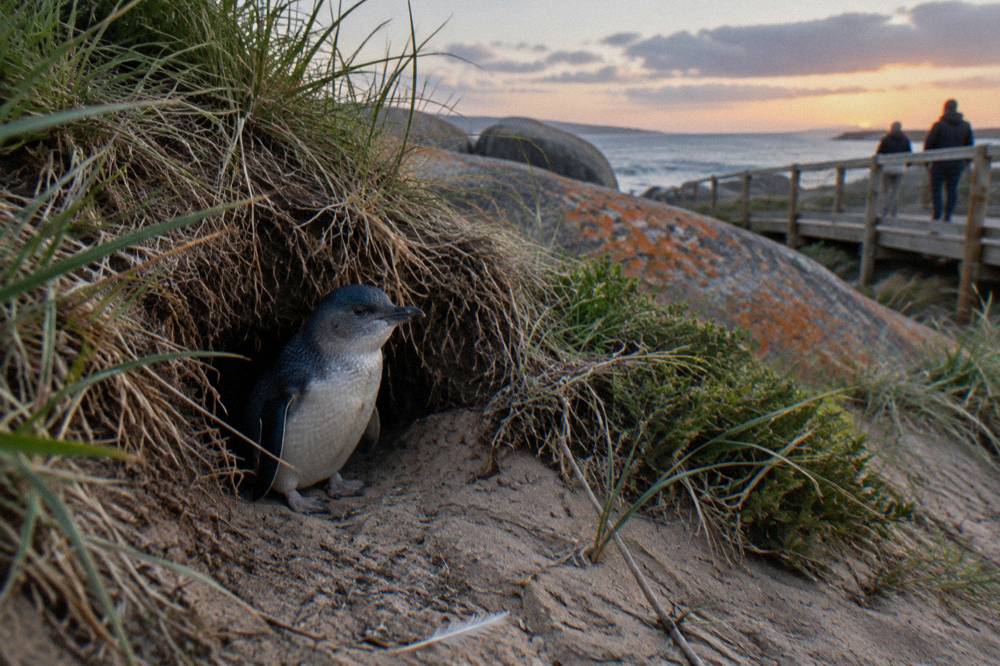
Timing within the evening matters more than the month. Most birds come ashore in small groups within an hour or so of darkness, which is why both tours anchor their start times to sunset rather than a fixed clock time. Sunset in Tasmania swings from roughly 6:20pm in early October to peaks near 8:50pm in late December, so the same tour in the same place can start more than two hours apart across the year. Check the exact start time on the listing when you book, because it is confirmed at booking, not printed in advance.
Getting There: The Logistics Comparison
Bicheno requires self-drive to the East Coast and a meeting point on Burgess Street with no accommodation pickups; Low Head includes central Launceston pickup and drop-off, about 3 hours door to door. Neither site requires a national parks pass, since Bicheno's rookery is private land and Low Head is a coastal reserve, not a national park.
The logistics gap is the least glamorous part of this comparison and often the deciding one. Bicheno sits on the East Coast, reached via the Tasman Highway, and the Apsley upgrade works between Bicheno and the Coles Bay Road turn-off have been running since early 2025 with completion expected in 2027. If your itinerary pairs Bicheno with Freycinet, allow buffer time on that stretch. The meeting point is the operator's shop at 1/70 Burgess Street, across from the IGA, with free parking, and there are no toilets at the rookery itself, so plan accordingly before the bus ride.
Low Head sits on the North Coast near George Town. The listing handles the drive for you: pickup from central Launceston, roughly an hour of viewing, and the return leg, about 3 hours door to door. If you are driving yourself instead, the operator's direct product at $50 per adult runs at the same site nightly, and the operator can be contacted directly about it. What the $83 listing adds is the coach, the hotel pickup and the simplicity of not driving coastal roads at dusk.
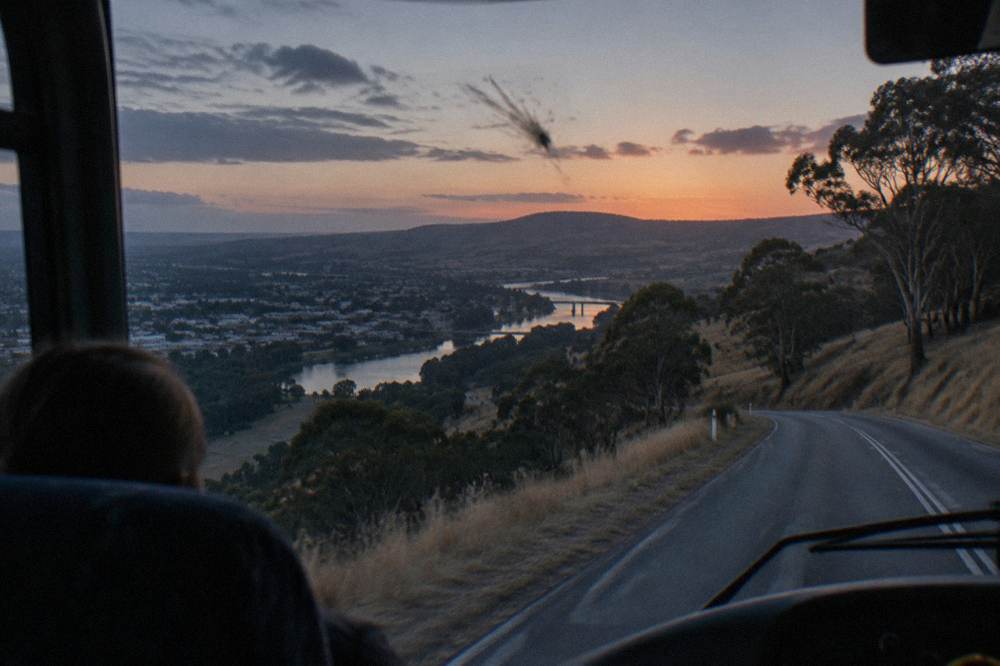
On parks passes: a valid pass is required for entry to all of Tasmania's national parks, and the Parks and Wildlife Service lists the current fees on its own pages. Neither penguin tour enters a national park. Bicheno's rookery is private land and Low Head is a coastal reserve, so a parks pass is not part of either booking. If your wider trip includes Freycinet or other national parks, that is a separate purchase.
What to wear is identical for both: warm layers, dark clothing and enclosed shoes. The state guidelines recommend dark clothing and settling into position before last light, and both operators require enclosed footwear. The site's what to wear on a penguin tour guide covers the full kit list, including why red-light torches only.
The Third Option: Free Viewing Sites
Burnie and Lillico Beach both offer free penguin viewing with volunteer guides and no booking at all: Burnie nightly from 1 October to 31 March with guides at the Observation Centre 30 minutes before dusk, and Lillico generally September to April with volunteer guides holding red torches in season. They cost nothing, but they offer no transfer, no guarantee and no private rookery.
The paid tours are not the only way to see penguins in Tasmania. The free sites are a genuine third option, and for a traveller already driving the North-West Coast they may be the better one.
| Site | Cost | Season | Guiding | Format |
|---|---|---|---|---|
| Bicheno tour | From $53 | Year-round except Christmas Day, New Year's Eve | Paid guide, private rookery | 70-minute walk |
| Low Head tour | From $83 | Nightly after sunset | Paid guide, max 10 guests | 3 hours with transfer |
| Burnie Observation Centre | Free, donations welcome | 1 October to 31 March | Volunteer guides nightly | Boardwalk, arrive 30 min before dusk |
| Lillico Beach platform | Free, donations welcome | Generally September to April | 2-3 volunteer guides nightly in season | Platform viewing |
The free sites trade certainty for price. Volunteer guides at Burnie and Lillico hold red torches and know the beaches, but nobody can promise birds on a given night, and there is no private rookery with restored habitat behind a fence. The paid tours sell predictability: a known site, a scheduled start, a guide employed to be there. For a one-shot evening on a short trip, that predictability is what the $53 or $83 actually buys. The site's free penguin viewing in Tasmania guide covers the free sites in full, and the where to see penguins in Tasmania overview maps every option on one page.
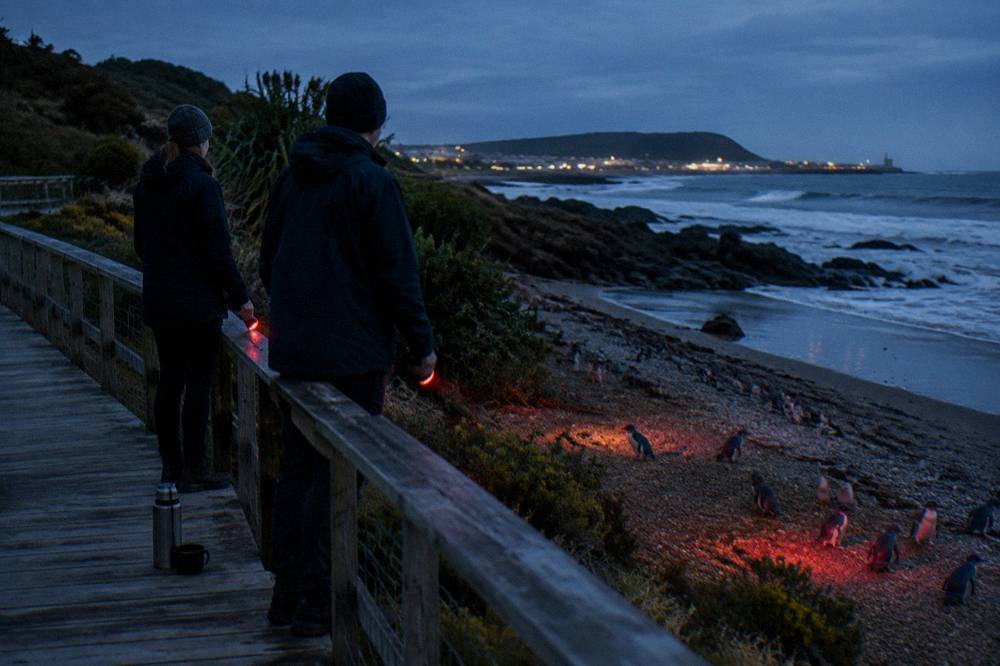
The rules at the free sites mirror the paid ones, because they come from the same state guidelines rather than from any operator: no flash, no white torches, quiet voices, no dogs or cats under any circumstances, and never walk through the colony. The NRE guidelines also ask viewers to approach from land rather than along the beach, use existing tracks, and pick a spot at least 3 metres from burrows. Catching or harassing a penguin is illegal, and the birds are protected wildlife in Tasmania.
For travellers weighing the free option against the paid ones, the deciding question is usually how many evenings the trip allows. If Tasmania is a single stop on a longer Australian itinerary and you get one shot at seeing penguins, the guarantee of a scheduled tour at a known rookery is worth paying for. If you are touring the island for a week or more and will pass the North-West Coast anyway, the free sites give you a second and third chance at no cost, and a missed night costs nothing but time.
Which One Should You Actually Book
Book Bicheno if your trip includes the East Coast and you want a short, inexpensive, high-rated evening from $53; book Low Head if you are based in Launceston, value the 5.0 rating and the 10-guest cap, and want the transfer handled from $83. If your route takes you past Devonport or Burnie in season, the free sites are a legitimate substitute for either.
In practice, geography decides most of these bookings. An East Coast itinerary that includes Freycinet, Coles Bay or Swansea puts you in Bicheno's catchment, and the 70-minute format slots neatly into a road-trip evening. A Launceston-based trip, or an arrival through the Spirit of Tasmania terminal at Devonport heading east, puts Low Head within reach, and the transfer-inclusive listing is the only one of the two that works without a car. Travellers who will do both coasts sometimes do both tours, and the two experiences are different enough that this is not redundant.
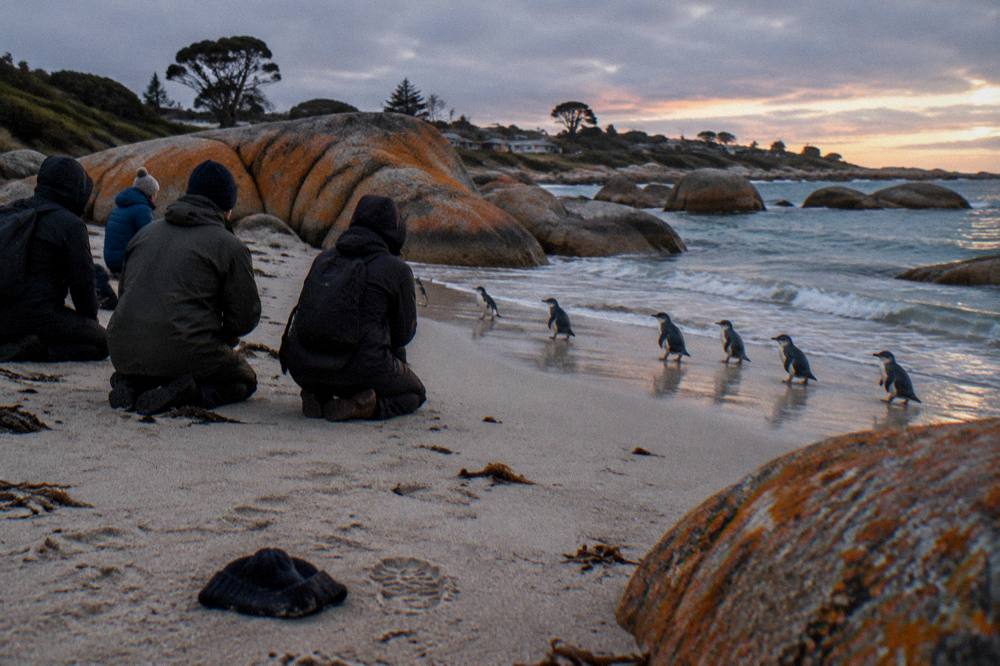
If you are still weighing the timing question, the site's best time to see penguins in Tasmania guide works through the season calendar in more depth, and the can you see penguins in Tasmania in May post covers the quietest month specifically. For the money question, the penguin tour cost in Tasmania guide breaks down what the two from-prices do and do not include.
Both listings carry free cancellation, so the practical advice is to book the tour that matches your base city as soon as your dates are firm, especially for Bicheno where the listing is flagged as often selling out, and to check availability on the operator's live listing for the dates you want before building the rest of your evening around it.
Common Questions About Bicheno Vs Low Head Penguin Tours
Which is cheaper, the Bicheno or the Low Head penguin tour?
The Bicheno tour starts from $53 per person for the 70-minute guided beach walk. The Low Head tour starts from $83 per person, and that price includes the central Launceston pickup and transfer, about 3 hours door to door. The Low Head operator also sells the tour directly at $50 per adult without the transfer, so self-drivers can reach the same viewing for less.
Which tour has the better rating?
The Low Head tour is rated 5.0 from 22 reviews, and the Bicheno tour is rated 4.8 from 26 reviews. Both are strong scores from small review pools, so the rating alone should not decide the booking; the format, location and transfer differences matter more.
Can you do the Low Head tour without the Launceston transfer?
Yes. The operator's direct product at Low Head is $50 per adult, with children at $25, seniors at $40 and family packages available, and it runs at the same coastal reserve nightly just after sunset. The $83 listing is the transfer-inclusive version for travellers who want pickup from central Launceston.
Which tour is better for children?
Bicheno generally suits families better. The whole experience runs 70 minutes with a walk of about 500 metres, and the winter departure window of 5:00pm to 7:30pm means younger children can finish at a reasonable hour. Low Head is about 3 hours door to door, which suits older children and teenagers.
Are there free penguin viewing sites instead of the paid tours?
Yes. Burnie offers free guided viewing nightly from 1 October to 31 March with volunteer guides at the Observation Centre 30 minutes before dusk, and Lillico Beach near Devonport has a free viewing platform generally September to April with volunteer guides in season. Both accept donations and neither takes bookings.
Do either of the tours allow photography?
Bicheno permits photography without flash. Low Head prohibits flash photography, torches, selfie sticks and tripods, and the guides supply low-intensity red and yellow lights. The state watching guidelines ban flash cameras on beaches where penguins come ashore, because disturbed birds stay at sea longer and chick feeding is delayed.