What Are The Best Guided Tours Of Tasmania For Seniors?
A senior-friendly guide to Tasmania's guided penguin evenings: the Low Head tour with Launceston transfer and wheelchair access, the Bicheno beach walk, and free guided viewing at Burnie and Lillico.
What Are The Best Guided Tours Of Tasmania For Seniors?
For older travellers who want a guided wildlife experience without a long day on a bus, the two bookable penguin evenings stand out: the Low Head tour from Launceston, from $83 per person, rated 5.0 from 22 reviews, with a maximum of 10 guests, central pickup and wheelchair access; and the Bicheno beach walk, from $53, rated 4.8 from 26 reviews, a 70-minute outing that covers about 500 metres on foot. Both run at dusk, both offer free cancellation, and neither demands the stamina of a full-day wilderness excursion. Senior travellers tend to prefer short walks, evening comfort, and easy pickup: short duration, level or managed walking, seating or resting options nearby, and a guide who handles the logistics. If you're weighing whether the Bicheno option fits your budget, our guide to Bicheno penguin tour pricing and what's included compares it against the Low Head evening and Tasmania's free viewing spots.
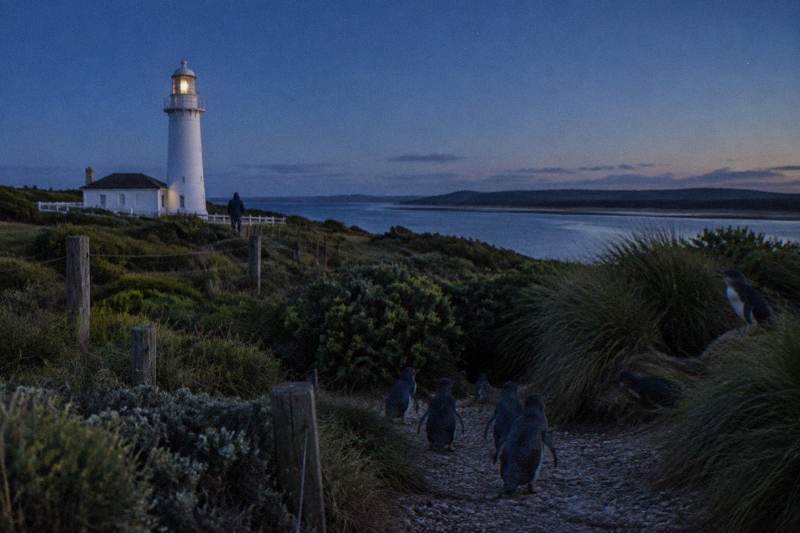
The case for a penguin evening as a senior tour is simple. The whole event is built around an hour of standing or slow walking at dusk, close to a vehicle, with a guide who knows where the birds will come ashore. There is no pre-dawn start, no mountain track, no boat ladder to climb. The Low Head listing runs about three hours door to door, with about one hour of that spent on guided penguin viewing at the reserve at the Low Head Coastal Reserve near George Town. If you want a fuller picture of the evening before committing, our guide to the Low Head penguin tour's timing and structure spells out exactly what happens at each stage.
That shape suits a lot of older itineraries. Tasmania's wildlife heavyweight experiences, such as multi-day walks or long coach circuits, reward stamina and full days. A penguin evening slots into the end of a day that might otherwise be spent at a slower pace: a late lunch, a drive along the coast, then a pickup from central Launceston or a short walk from a shop in Bicheno. The Tasmania Penguin Tours site exists because these evenings are the most accessible wildlife encounter in the state, and that accessibility matters most to older travellers.
There is also a free, guided tier worth knowing about. Burnie runs volunteer-guided penguin viewing nightly from 1 October to 31 March on a level, wheelchair-accessible boardwalk, at no cost, and Lillico Beach near Devonport has volunteer guides on its viewing platform from September to April. Neither is a bookable tour with a transfer, but both put a guide beside you at dusk for nothing, which is a genuinely senior-friendly proposition. The rest of this article works through each option, what the walking and access actually involve, and what to pack for a Tasmanian evening outdoors. If you'd rather skip guided viewing altogether, our verdict on the township of Penguin and its free dusk viewing explains where a self-guided night works and where it doesn't.
Why Penguin Evenings Suit Senior Travellers
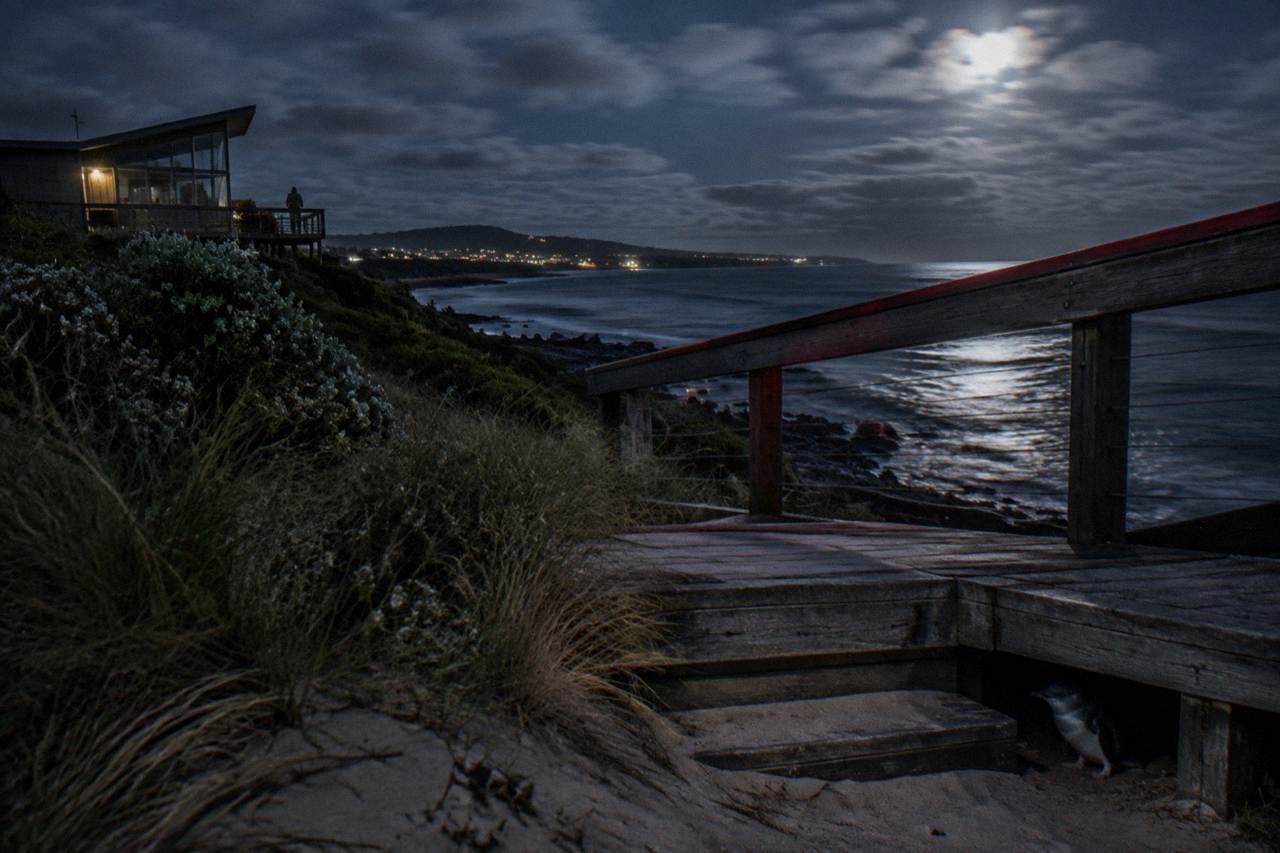
Penguin tours are evening events timed to dusk, so they start late rather than early, last about one to three hours, and keep you within a short walk of transport. The Low Head listing includes a hotel pickup in central Launceston and a maximum of 10 guests, while Bicheno's tour is a 70-minute outing from a shop in the town centre, with no accommodation pickups. Neither requires a full-day commitment, and both let you rest through the afternoon and head out when the light softens. For travellers who find early departures the hardest part of a tour, a dusk start is the single biggest advantage.
Timing is the second advantage. Sunset in the Hobart area sits around 6:20pm in early October, climbs towards 8:50pm in late December and early January, and eases back to about 7:30pm by late March, so summer tours begin at a civilised hour rather than in the dark of a winter afternoon. Bicheno's operator runs departures between 7:30pm and 9:30pm from September to January, adjusted to dusk, and between 5:00pm and 7:30pm from February to August. Low Head's tours run every night just after sunset. You can plan dinner around either.
The third advantage is group size and guide attention. Low Head caps its groups at 10 guests on the bookable listing, and the operator's own page describes small groups typically in the 10 to 15 range, with guides who supply low-intensity red or yellow lighting and brief everyone on where to stand. On a small-group evening the guide can pace the walk to the slowest person, answer questions individually, and point out birds as they land rather than narrating to a crowd. Reviews for the Low Head listing, 5.0 from 22 guests, repeatedly describe the small-group format as the reason the evening works.
| Option | Cost | Duration | Walking and access | Guide format |
|---|---|---|---|---|
| Low Head tour with Launceston transfer | From $83 per person | About 3 hours door to door, about 1 hour viewing | Wheelchair access stated by operator; central Launceston pickup | Guided, maximum 10 guests |
| Bicheno penguin tour | From $53 per person | 70 minutes total, walk of about 500 m over about 50 minutes | Wheelchairs considered case by case; no accommodation pickups | Guided beach walk |
| Burnie Observation Centre | Free, donations welcome | Self-paced, arrive about 30 minutes before dusk | Level, wheelchair-accessible boardwalk | Volunteer guides nightly, 1 October to 31 March |
| Lillico Beach platform | Free, donations welcome | Self-paced from the platform | Platform viewing, no visitor torches | Volunteer guides, September to April |
The trade-off to understand before booking is the season, not the terrain. September to January is the breeding season, when Bicheno's operator reports the most activity at the rookery, and Low Head's numbers are higher from November to February. From February to August the evenings are quieter, and February to April is the moulting window, when adult birds stay ashore replacing their feathers. A winter tour is still a real tour, but an older traveller making a one-off trip should aim for the warmer months if the calendar allows.
For seniors weighing the two bookable listings against each other in more detail, the dedicated comparison of Bicheno versus Low Head penguin evenings works through price, timing and access side by side.
Low Head: Small Groups, Wheelchair Access And A Launceston Transfer
The Low Head listing is the strongest senior option on this site: from $83 per person, rated 5.0 from 22 reviews, about three hours door to door with pickup from central Launceston hotels, a maximum of 10 guests, about one hour of guided penguin viewing, wheelchair access and free cancellation. The transfer is the deciding feature. Coach Tours Tasmania collects from central Launceston accommodation and returns you after the tour, so there is no night driving on unfamiliar coastal roads, which is the part of a dusk wildlife trip that many older travellers would happily hand to someone else.
The viewing itself happens at the Low Head Coastal Reserve near George Town, on the state's north coast. The operator's tour-details page states that tours run every night just after sunset, last up to about an hour, and that guides provide the red and yellow low-intensity lighting, since visitor torches, selfie sticks and tripods are not allowed. Flash photography is prohibited, as it is at every penguin site in Tasmania. The operator's page also states wheelchair access is available, which is rarer than it should be among wildlife experiences, and worth confirming at booking for a specific chair or mobility aid.
One practical note for planning the evening: the Low Head Pilot Station's cafe, accommodation and toilets have been closed since 22 April 2026 pending a new lessee, while the tours and the grounds remain open, per the Parks and Wildlife Service alerts page. That means the tour runs as normal but the on-site facilities do not, so it is worth using facilities in Launceston or George Town before pickup. The operator can be reached on 0418 361 860 for access questions.
The operator also sells tickets directly at its own price point, $50 per adult with child, senior concession and family tickets listed on its tour-details page, which is the operator's direct price for the viewing itself without the Launceston transfer. The bookable listing at from $83 bundles the transfer, pickup and return into one price, which is the version most senior travellers without a car will want. Neither figure is a senior-specific price, and no senior discount is offered on the listing, so budget on the full per-person rate.
Bicheno: A Short Walk To A Private Rookery
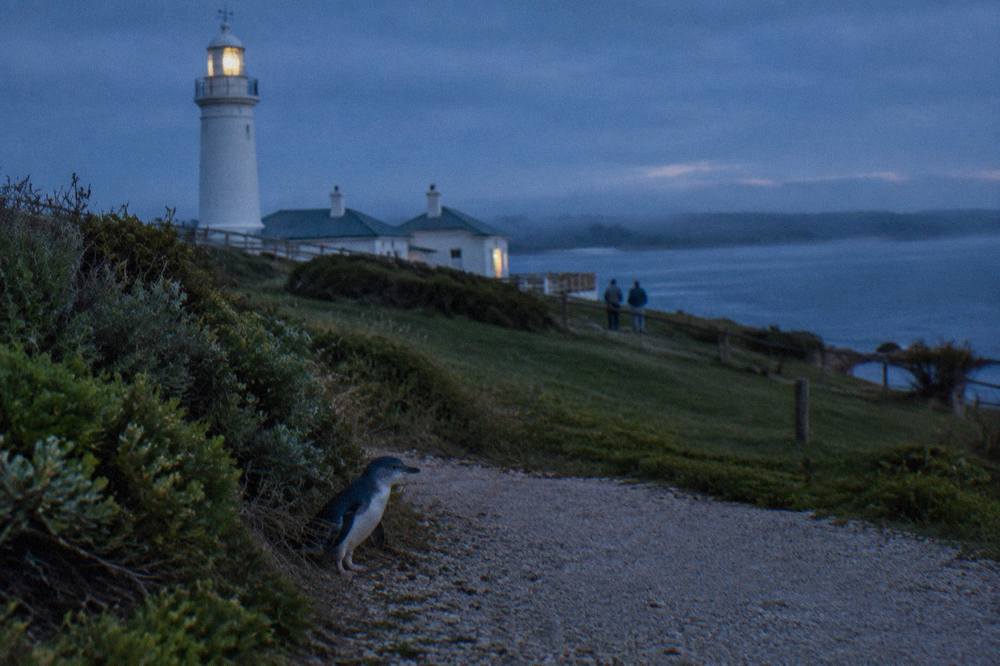
Bicheno's tour is the shorter, cheaper bookable option: from $53 per person, rated 4.8 from 26 reviews, 70 minutes with the guide, made up of a short bus ride from the shop at 1/70 Burgess Street to a private rookery, then a guided walk of about 500 metres over about 50 minutes. It suits seniors who are comfortable on their feet for an hour on sand and uneven ground. The operator handles wheelchairs case by case, so anyone with a chair or limited mobility should contact the operator before booking rather than assuming.
The meeting point is the operator's shop on Burgess Street in Bicheno, across from the IGA, with free parking and no pickups from accommodation, so you make your own way there. There are no toilets at the rookery itself, another detail worth knowing before a dusk departure. Enclosed, comfortable shoes are required, and the walk is over beach and reserve terrain rather than a formed path, which is the honest description to give any travelling companion with balance concerns.
What Bicheno offers in return is a private rookery with a restoration story. The operator, established in 1992, tells how the colony fell to about 40 birds in the early 1990s after dog attacks, then recovered through land restoration work on the site. A private rookery means the tour group is the only group on the beach, rather than sharing a public platform with everyone else who turned up that night. Photography is permitted without flash, one of the more permissive policies among penguin sites, though the photography rules for Tasmanian penguins still forbid any flash or bright light on the beach.
The listing is flagged as often selling out, and the operator itself advises booking ahead, which matters for older travellers who like certainty in an itinerary. Departures run between 7:30pm and 9:30pm from September to January and between 5:00pm and 7:30pm from February to August, always adjusted to dusk, with the exact start time confirmed at booking. Free cancellation applies, so the evening can be rebooked if the weather turns, which is worth having in a coastal town where spring evenings can be blustery.
Free Guided Viewing At Burnie And Lillico
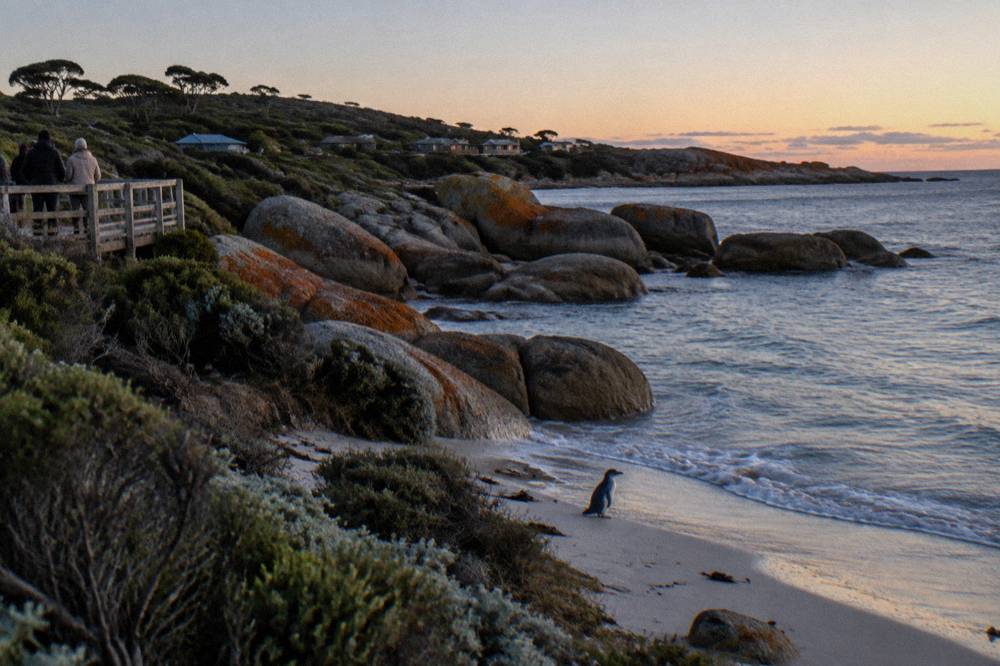
Seniors on a budget have two genuinely guided free options: Burnie's Observation Centre, where volunteer guides run free nightly viewing from 1 October to 31 March on a level, wheelchair-accessible boardwalk, and Lillico Beach west of Devonport, where volunteer guides staff a viewing platform from September to April. Neither takes bookings and neither charges, with donations welcome, so they suit travellers who want a guide's knowledge without a booked commitment, or who are passing through the north-west coast on a longer trip.
Burnie is the more structured of the two. The Friends of Burnie Penguins run guided viewing every night of the season regardless of weather, with guides at the Observation Centre from 30 minutes before dusk, per the group's own viewing page. The centre sits on The Boardwalk at Parsonage Point, West Beach, within walking distance of the city centre and the Makers' Workshop, and the boardwalk is level and wheelchair accessible. Viewing outside guiding hours is possible on your own. The rules are the same as everywhere: no flash photography, red cellophane over any torch, quiet voices.
Lillico Beach is a ten-minute drive west of Devonport, in the Lillico Strait Conservation Area. The Devonport City Council's page for the reserve describes a free viewing platform with volunteer guides from the Friends of Lillico Penguins on site during the September to April season, holding red torches and explaining the colony, with no visitor torches or flash permitted. Two or three guides are typically present each night in season. The platform format means no walking on the beach at all, which makes Lillico the lowest-impact penguin evening in the state for anyone with real mobility limits. If you'd like more detail on the colony and how an evening there works, our guide to penguins at Lillico Beach near Devonport covers the practicalities.
What To Wear And Bring On An Evening Tour
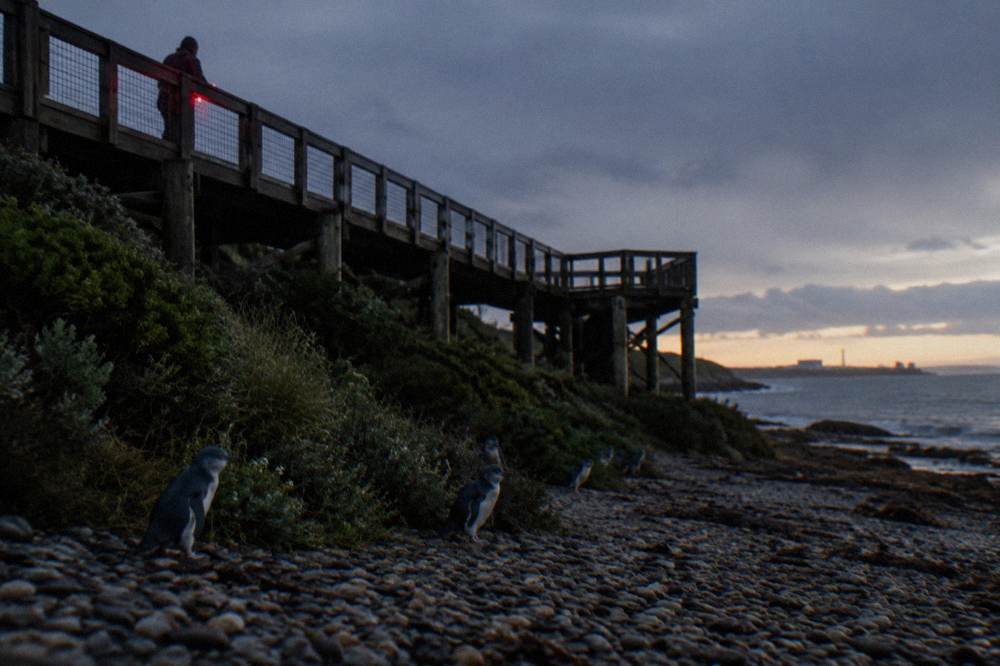
Dress for a Tasmanian dusk even in summer: warm layers, a windproof jacket, dark clothing, and enclosed, comfortable shoes, which the Bicheno operator lists as required rather than recommended. Guides supply red or yellow low-intensity lighting at Low Head, and visitor torches are not permitted at Low Head, Lillico or Burnie, so leave the white torch at the hotel. The NRE Tasmania penguin watching guidelines add the rest: settle into position before last light, stay quiet, keep movement minimal, and never shine any light toward the water or directly at a penguin.
The reasoning behind the red-light rule is worth understanding rather than just obeying. Penguins come ashore at last light in small groups, and the NRE guidelines note that disturbed birds stay at sea longer, which stresses them and delays feeding of chicks waiting in burrows. A white beam or a camera flash reads to a penguin as a threat, so a bird that has spent the day fishing may sit in the water until the light goes away. Red light falls outside the part of the spectrum the birds respond to most, which is why every site in the state, guided or free, converges on the same rule.
Practical packing for a senior traveller comes down to standing warm for an hour. The ground at Bicheno is sand and reserve terrain; at Low Head you stand at a coastal reserve; at Burnie and Lillico you are on a boardwalk or platform. A folding seat is worth considering at the free sites, where there is no formal seating, though check with the guide before setting up near the colony. Binoculars are explicitly recommended in the state guidelines and earn their weight at a platform site like Lillico, where the birds land at the waterline below you.
| Item | Why it matters on a penguin evening |
|---|---|
| Enclosed, comfortable shoes | Required at Bicheno; the walk covers about 500 m of beach and reserve ground |
| Warm layers and a windproof jacket | Dusk on the coast drops quickly, even in summer |
| Dark clothing | Bright colours and pale fabrics catch penguins' attention in low light |
| Small red-light torch or red cellophane | Only if the site allows visitor torches; guides supply light at Low Head |
| Binoculars | Recommended in the NRE guidelines; best value at platform sites |
| Any needed medication and a water bottle | Tours run about 1 to 3 hours with no shops at the viewing sites |
The full packing guide for penguin tour evenings covers footwear and layering in more depth, and the seasonal detail is in the guide to the best months to see penguins in Tasmania, which sets out the breeding and moulting calendar. The short version for seniors planning a trip: September to January gives the most activity, November to February gives the biggest numbers at Low Head, and a winter evening is quieter but perfectly workable if the legs and the calendar prefer it.
One last note on the drive, for anyone adding Bicheno to an east coast itinerary rather than joining a tour from Launceston: the Tasman Highway upgrade between Bicheno and the Coles Bay Road turn-off has been under construction since early 2025, with completion expected in 2027, so allow extra time and check the current status on the transport department's roadworks pages. Dusk driving in Tasmania carries the standard wildlife caution too, which is another argument for the transfer-included Low Head listing if night driving is not something you want in the plan.
For a senior traveller deciding between the two, the honest summary is this: Low Head buys convenience, access and a chauffeured evening for from $83, while Bicheno buys a shorter, cheaper, more intimate beach encounter for from $53, at the cost of a 500-metre walk and self-drive logistics. Both listings carry free cancellation, both are small-group evenings with a guide, and both are rated above 4.8 by guests who have taken them. The right pick depends less on age than on how much walking and how much driving you want in your dusk.
Common Questions About Penguin Tours For Seniors
What Are The Best Guided Tours Of Tasmania For Seniors?
The two bookable guided penguin evenings are the strongest senior picks: Low Head with a Launceston transfer, from $83 per person, rated 5.0 from 22 reviews, maximum 10 guests, wheelchair access and free cancellation; and the Bicheno beach walk, from $53, rated 4.8 from 26 reviews, 70 minutes with a 500 m walk. Burnie and Lillico add free volunteer-guided viewing on the north-west coast.
Is The Low Head Penguin Tour Wheelchair Accessible?
Yes. The operator's tour-details page states wheelchair access is available, and the bookable listing includes central Launceston pickup and return, a maximum of 10 guests and about one hour of guided viewing. Confirm any specific chair or mobility aid with the operator when booking, and note the Pilot Station toilets have been closed since 22 April 2026 while tours continue.
How Much Walking Is Involved At Bicheno?
The tour runs 70 minutes with the guide: a short bus ride from the Burgess Street shop to a private rookery, then a guided walk of about 500 metres over about 50 minutes on beach and reserve ground. Enclosed shoes are required, and the operator considers wheelchairs case by case, so ask before booking if that applies to your group.
Are There Free Guided Penguin Options For Seniors?
Yes. Burnie's Observation Centre offers free volunteer-guided viewing nightly from 1 October to 31 March, with guides present from 30 minutes before dusk on a level, wheelchair-accessible boardwalk. Lillico Beach, ten minutes west of Devonport, has a free viewing platform with volunteer guides from September to April. Donations are welcome at both.
What Time Do These Tours Start?
Both bookable tours run at dusk. Low Head tours depart just after sunset every night. Bicheno departs between 7:30pm and 9:30pm from September to January and between 5:00pm and 7:30pm from February to August, adjusted to dusk, with the exact time confirmed at booking. Sunset in the Hobart area runs from about 6:20pm in early October to near 8:50pm in late December.
Can Seniors Take Photos On A Penguin Tour?
Photography without flash is permitted on the Bicheno tour. Flash is prohibited at every penguin site in Tasmania, visitor torches are not allowed at Low Head, Lillico or Burnie, and guides supply red or yellow low-intensity lighting. The state guidelines ask that no light be shone toward the water or directly at penguins, since disturbed birds delay coming ashore.