How Long Is The Low Head Penguin Tour?
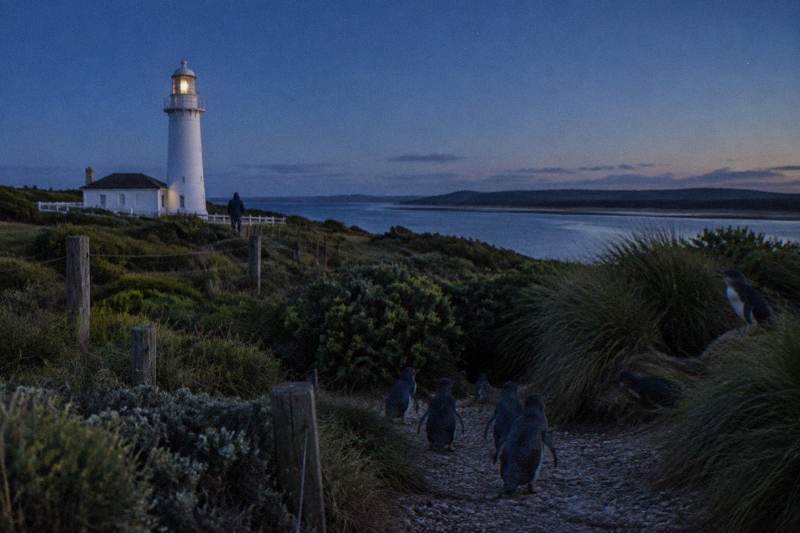
The Low Head penguin tour with Launceston transfer runs about 3 hours door to door, including about 1 hour of guided penguin viewing at the coastal reserve near George Town.
How Long Is The Low Head Penguin Tour?
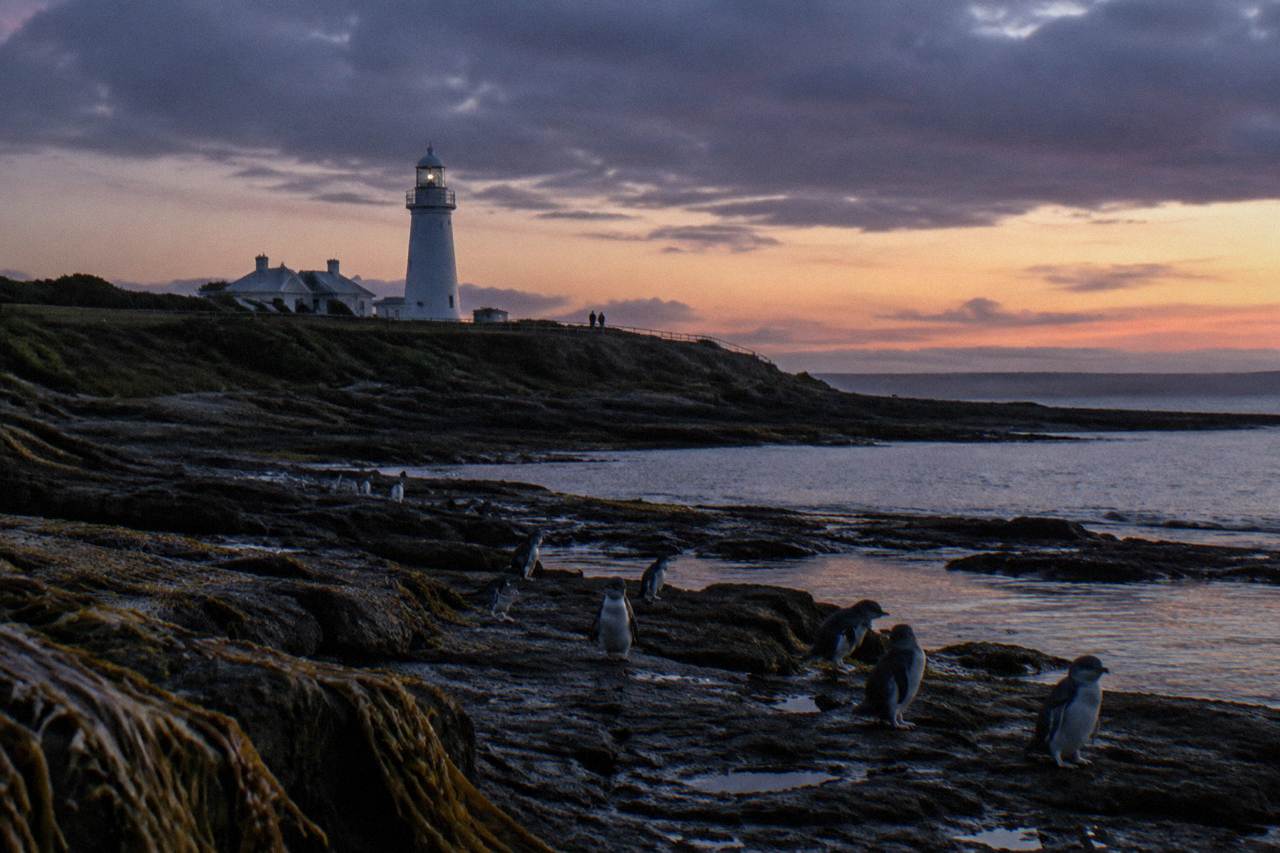
The Low Head penguin tour sold on this site runs about 3 hours door to door, from central Launceston pickup to drop-off, and includes about 1 hour of guided penguin viewing at the Low Head Coastal Reserve near George Town. Groups are capped at 10 guests, the price is from $83 per person, and the listing carries a free cancellation policy. If you're wondering whether the birds live closer to the city, our guide to seeing penguins around Launceston explains why this tour is the way to find them.
That three hour figure is the honest one to plan around. It covers the pickup at your central Launceston accommodation, the transfer north to the coast, the guided viewing at the reserve, and the drive back. The penguin watching itself, the part most people are actually buying, is about a third of the total evening. The rest is logistics, and on this tour the logistics are handled for you rather than left to a rental car and a dark country road. If you'd like to compare how this evening stacks up against other options across the state, our guide to penguin tours departing from both Hobart and Launceston covers the alternatives side by side.
The tour is the Low Head tour with Launceston transfer, one of only two bookable guided penguin tours on this site. The other, at Bicheno on the east coast, works quite differently: you meet the operator at their shop and the whole outing is 70 minutes with the guide. Low Head is the option built around not driving yourself at night, which in Tasmania is a genuine consideration given the wildlife on rural roads after dark.
Why does the length matter so much when people plan this? Because a penguin tour sits awkwardly in an evening. It starts at dusk, which in Tasmanian summer can mean 9pm or later, and it ends close to bedtime. Knowing the door-to-door span tells you whether you can fit dinner before, whether you will be back at your hotel by a reasonable hour, and whether the tour works for children or older travellers on a tight schedule. Three hours is short enough for both.
If you are weighing the two coasts rather than just the north, the full guide to Low Head penguin tours covers the viewing site, the operator and the practicalities in more depth, and the site's publisher, Tasmania Penguin Tours, keeps a homepage comparison of every viewing location in the state.
How Does The Timing Break Down On The Night?
Plan for roughly three hours from the moment the coach collects you at your central Launceston hotel to the moment it returns. The viewing block itself is about one hour of guided time at the reserve. The remainder is the round trip north and the short walk to the viewing area, so the evening is compact but not rushed.
The pickup is the fixed anchor of the night. The transfer component is run with Coach Tours Tasmania, which handles hotel pick-up and drop-off in central Launceston, and the listing describes the whole experience as about 3 hours door to door. If you are staying outside the central pickup zone, factor in the extra time to reach a collection point, and confirm the exact arrangement when you book.
Here is how the evening is shaped, using the figures the listing and the operator's own pages state:
| Segment | What happens | Rough duration |
|---|---|---|
| Pickup | Coach collects guests from central Launceston accommodation | Start of the 3 hour window |
| Transfer north | Drive from Launceston to the Low Head Coastal Reserve near George Town | Included in the door-to-door span |
| Guided viewing | Small-group penguin watching with a guide, maximum 10 guests on this listing | About 1 hour |
| Return transfer | Drive back to central Launceston and drop-off | Completes the 3 hour window |
One point worth separating: the operator also sells the viewing tour directly at Low Head, without any transfer, and their own tour-details page describes small groups of typically 10 to 15 people with tours running every night just after sunset. The listing on this site is the version with the Launceston transfer built in, capped at 10 guests, from $83 per person. The operator's direct price is $50 per adult, but that is the tour without the transfer, so the two figures are not competing prices for the same product.
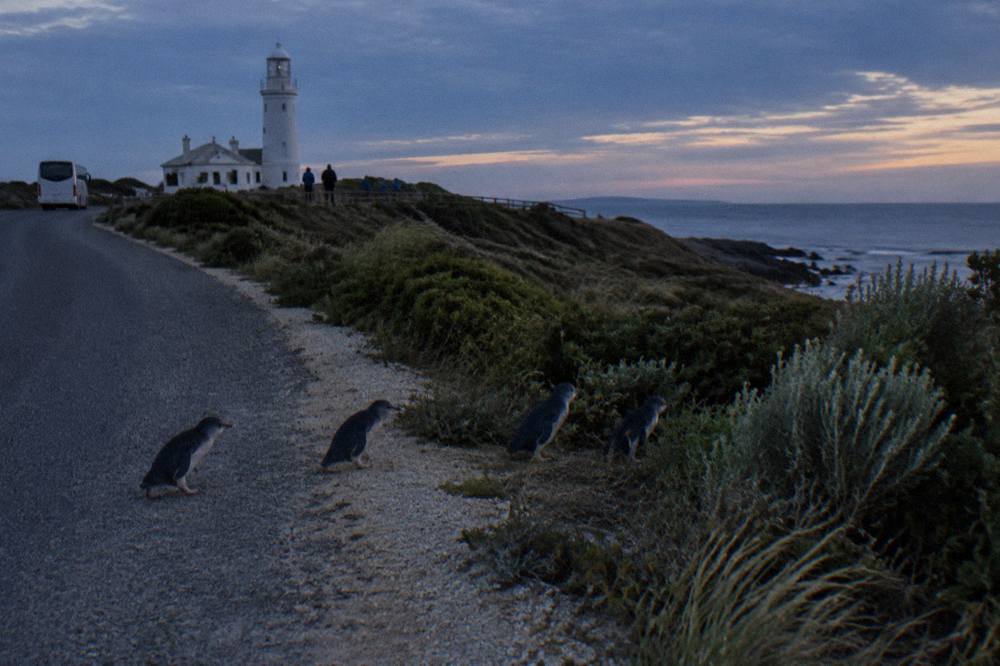
The three hour span also explains who this tour suits. A family with young children can manage an evening that finishes within three hours of pickup far more easily than an open-ended one. The same goes for seniors: the guide to senior-friendly tours of Tasmania looks at short, transfer-inclusive outings like this one, and Low Head's boardwalk route is described by the operator as wheelchair accessible.
What Time Does The Tour Actually Start?
Tours at Low Head run every night of the year, starting just after sunset. That means the departure time shifts with the season: earlier in winter, later in midsummer. The operator's tour-details page confirms the nightly schedule, and the exact start time for your date is confirmed when you book.
Penguins do not run to a timetable, they run to light. The state wildlife guidelines note that little penguins leave the water at last light and that most birds come ashore in small groups within an hour or so of darkness, so a tour that starts just after sunset is timed to meet the birds as they arrive. You cannot book a 7pm penguin viewing in January and expect a parade, because in midsummer the birds are still at sea at 7pm.
Sunset in Tasmania moves a long way across the year. In the Hobart area, for example, the sun sets around 6:20pm in early October and close to 8:50pm in late December, before easing back toward 7:30pm by late March. Low Head sits further north, so its times differ slightly, but the swing is similar. Practical consequence: a winter booking can have you back in Launceston by 8pm, while a summer booking may not start until after 9pm.
| Period | Typical conditions | What it means for timing |
|---|---|---|
| Winter months | Early sunset, quieter rookery | Tour starts early, evening finishes early |
| Spring and early summer | Later sunset, breeding season activity | Later start, more birds coming ashore |
| Midsummer | Latest sunsets of the year | Start can be after 9pm, plan dinner accordingly |
| Autumn | Sunset easing back, moulting birds ashore | Gradually earlier starts, less activity on the beach |
The wildlife department's penguin watching guidelines are the reference for why the timing is built this way: disturbed birds stay at sea longer, which stresses them and delays feeding of chicks, so tours are structured to let the birds come in on their own schedule rather than a human one.
How Much Penguin Viewing Time Do You Get?
The guided viewing at Low Head lasts up to about an hour, per the operator's own tour-details page. Guides supply low-intensity red and yellow lights, no torches, selfie sticks or tripods are allowed, and the boardwalk route is wheelchair accessible. Most birds come ashore in small groups within an hour or so of darkness, which is exactly why the viewing window is sized the way it is.
An hour sounds short until you understand what it is for. The guide's job is to get the group settled in the right place before the first birds arrive, keep lights low and voices quiet, and interpret what is happening as rafts of penguins come in, call to each other, and make their way to burrows. The viewing rules are strict for good reason: no flash photography, no personal torches, and the guides carry the only permitted lighting, red and yellow low-intensity units.
The no-flash rule is not an operator whim, it is wildlife protection. Penguins' eyes are adapted for night vision, and a single flash can blind a bird long enough for it to be taken by a predator or abandon a night's feeding. The site's article on why penguin photos are restricted covers the reasoning in detail. At Low Head, the operator's page simply prohibits flash and selfie sticks outright, and the guides enforce it.
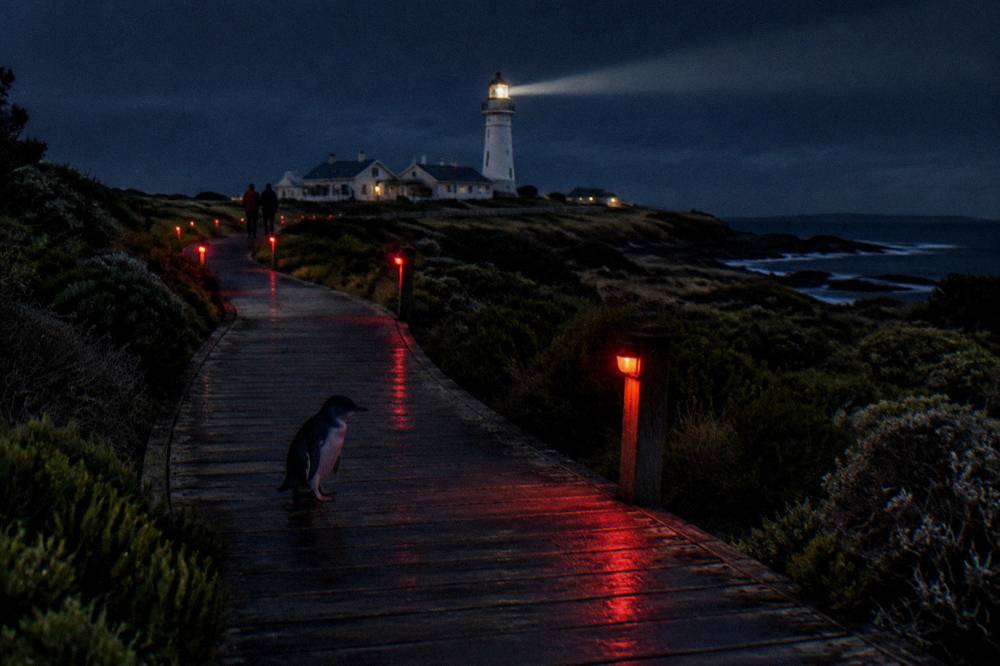
What can you actually see in that hour? The operator notes that penguin numbers vary by season, with higher numbers from November to February, and past operator descriptions have ranged from around 10 to 100 birds ashore in the quieter months to 100 to 200 on peak summer nights. Those are the operator's own seasonal descriptions, not a guarantee for any given evening, but they explain why some guests report a steady stream of birds and others see a handful of determined early arrivals.
The hour of viewing is also the part of the evening you cannot stretch. The birds finish coming in, the guide wraps up, and the group walks back to the transport. If you want a longer wildlife evening, the answer is not to linger at the reserve after the tour, it is to book a different kind of outing, and the roundup of Tasmanian wildlife tours lays out the options across the state.
How Does The Length Compare With The Bicheno Tour?
The Bicheno tour is the shorter commitment: 70 minutes with the guide, from $53 per person, rated 4.8 from 26 reviews. The Low Head tour with transfer is about 3 hours door to door, from $83, rated 5.0 from 22 reviews. One is a self-drive evening in an east coast beach town, the other a small-group outing collected from Launceston.
The two tours solve different problems, and the length is the clearest signal of which is which. At Bicheno you make your own way to the operator's shop on Burgess Street, take a short bus ride to a private rookery, then walk about 500 metres with the guide over roughly 50 minutes of the 70 minute tour. There are no accommodation pickups. You need a car, or a base in Bicheno itself, and the evening is over quickly once the walk ends.
| Low Head with transfer | Bicheno | |
|---|---|---|
| Total time | About 3 hours door to door | 70 minutes with the guide |
| Getting there | Central Launceston pickup and transfer | Meet at the operator's Burgess St shop, own transport |
| Guided viewing | About 1 hour at the coastal reserve | Walk of about 500 m over about 50 minutes |
| Group size | Maximum 10 guests | Small guided groups, no stated cap on the listing |
| Price | From $83 per person | From $53 per person |
| Rating | 5.0 from 22 reviews | 4.8 from 26 reviews |
| Cancellation | Free cancellation | Free cancellation |
The price gap is mostly the transfer. You are paying for the coach, the driver and the convenience of a door-to-door evening, not for a longer wildlife experience. If anything, the pure viewing time at Bicheno, about 50 minutes of walking among a private rookery, is comparable to the hour at Low Head. The Bicheno versus Low Head comparison goes deeper on the trade-offs, including the private rookery story at Bicheno, where the colony fell to about 40 birds in the early 1990s after dog attacks and recovered through land restoration.
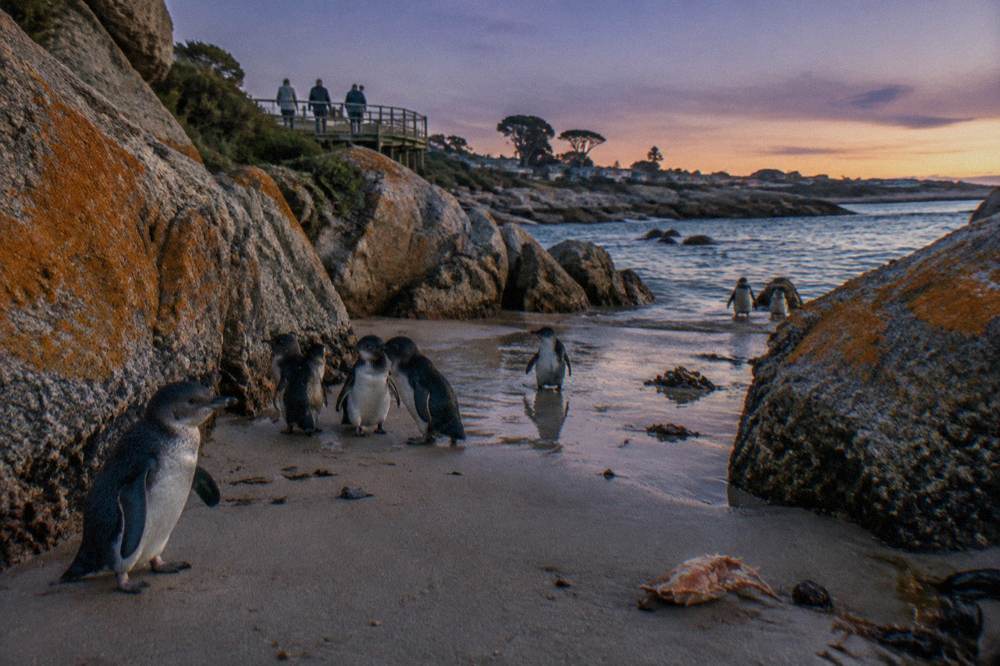
One more difference worth knowing before you choose: the Bicheno listing is flagged as often selling out, and the operator advises booking ahead, particularly in the September to January breeding season when activity at the rookery is highest. The Low Head tour carries no such flag, though with a maximum of 10 guests per departure, small group math applies on any night in peak summer. The Bicheno operator's own site is at bichenopenguintours.com.au for current seasonal departure windows.
What Can Make The Evening Run Longer Or Shorter?
Three things move the clock: the sunset time on your date, how quickly the birds come in, and the drive back to Launceston. Weather rarely cancels the night outright, and the Pilot Station cafe and toilets near the viewing area are closed pending a new lessee, so plan food and facilities around that.
Sunset is the biggest variable, and it is fixed the moment you pick your travel dates. A June evening and a December evening are, in clock terms, entirely different tours: the same hour of viewing, but one starts before 6pm and the other may not start until after 9pm. If late finishes are a problem, for children or for anyone who tires early, the winter months give you the whole experience back at a civilised hour, at the cost of fewer birds ashore.
The birds themselves are the second variable. The state guidelines describe most penguins coming ashore in small groups within an hour or so of darkness, but "within an hour or so" is not a promise. On a calm night the first rafts can arrive almost on cue. On a rough or bright night, the birds can hold offshore longer, and the guide's skill is in reading the conditions and positioning the group. The tour does not extend indefinitely to wait, which is why the viewing block stays around an hour.
The third factor is the road. The transfer runs on rural highways at night, and Tasmanian driving guidance is consistent about slowing down at dusk and dawn because of wildlife on the roads. The driver manages this, but a cautious night on the return leg can add minutes. Separately, the state's 2026 to 2027 road maintenance program includes resurfacing on multiple Bass Highway sections around Devonport, Ulverstone, Penguin and Heybridge, with delays of up to 15 minutes possible, though that corridor sits west of the Launceston to Low Head route.
Practical planning around the closure is worth a sentence of its own. The Low Head Pilot Station's cafe, accommodation and toilets have been closed since 22 April 2026 while the site waits for a new lessee, and the tours and grounds remain open. Eat before pickup in Launceston, use the facilities at your hotel, and treat the evening as a picnic-free outing. The operator's tour-details page is at penguintourstasmania.com.au for anything that has changed since this article was researched.
Finally, dress for standing still in the dark near the sea. Warm layers and enclosed shoes are the standing advice for Tasmanian penguin tours, and the what to wear on a penguin tour guide covers the reasoning: an hour of quiet, motionless watching on an exposed headland is colder than the same hour spent walking.
Common Questions About The Low Head Penguin Tour
How Long Is The Low Head Penguin Tour?
About 3 hours door to door, from central Launceston pickup to drop-off, including about 1 hour of guided penguin viewing at the Low Head Coastal Reserve near George Town. Groups are capped at 10 guests on the transfer listing, from $83 per person, with free cancellation.
What Time Does The Low Head Tour Start?
Tours run every night of the year, starting just after sunset. The start time shifts with the season, so a winter departure can be early evening while a midsummer departure may begin after 9pm. The exact time for your date is confirmed at booking.
How Much Of The Tour Is Actual Penguin Viewing?
About one hour of the roughly three hour total. The rest is the pickup in central Launceston, the transfer to the coast, and the return drive. Guides supply the only permitted lighting, low-intensity red and yellow units, and flash photography and personal torches are prohibited.
Can I Do The Low Head Tour Without The Launceston Transfer?
Yes. The operator sells the viewing tour directly at Low Head, described on their own tour-details page as nightly tours just after sunset with small groups, at $50 per adult. That direct price does not include the transfer; the from $83 listing on this site is the version with central Launceston pickup and drop-off included.
Is The Low Head Tour Long Enough For Children?
For most families, yes. The door-to-door span of about three hours is short by evening-tour standards, the viewing is about an hour of quiet watching, and the boardwalk route is described by the operator as wheelchair accessible. Winter departures finish earliest, which suits younger children best.
Does Weather Make The Tour Longer Or Shorter?
Not much. Tours run nightly year-round, and the viewing block stays around an hour regardless of conditions. What weather can change is how quickly the penguins come ashore: on rough or bright nights the birds can hold offshore longer, so the guide may reposition the group rather than extend the tour.