Can You See Penguins In Launceston?
No penguin colony lives in Launceston itself, but a nightly guided tour runs from the city to Low Head, about 3 hours door to door, from $83 per person.
Can You See Penguins In Launceston?
Not in the city itself. Launceston sits roughly 40 km up the Tamar River from the coast, and little penguins nest on the shoreline, not on an inland riverbank. The practical answer is a nightly guided tour that collects you in central Launceston and transfers you to Low Head, near George Town, for about 3 hours door to door, including about 1 hour of guided penguin viewing, from $83 per person. If you'd rather skip the tour and see a town that celebrates penguins year-round, our guide to the town of Penguin explains what to expect there.
That is the shape of the honest answer, and it is worth being clear about it before anything else. Travellers often assume a city the size of Launceston will have a colony within walking distance of the hotels. It does not. What it has is something arguably better for a short stay: a small-group tour that handles the entire evening for you, so you are not renting a car and driving unfamiliar coastal roads after dark, when Tasmanian wildlife is most active on the bitumen.
The tour in question is the Low Head penguin tour with Launceston transfer. The listing describes central Launceston pickup, a maximum of 10 guests, and about an hour of guided viewing at the Low Head Coastal Reserve, where penguins come ashore just after sunset. It carries a 5.0 rating from 22 reviews and a from-price of $83 per person, with free cancellation. If your base is Hobart rather than Launceston, the east coast option at Bicheno is the other guided tour sold on this site, and we cover how the two compare further down.
For anyone planning a wider Tasmanian itinerary, the penguin tours from Hobart and Launceston guide lays out both departure cities side by side, and the viewing-site comparison on the homepage does the same for the colonies themselves.
Where Do Launceston Penguin Tours Actually Go?
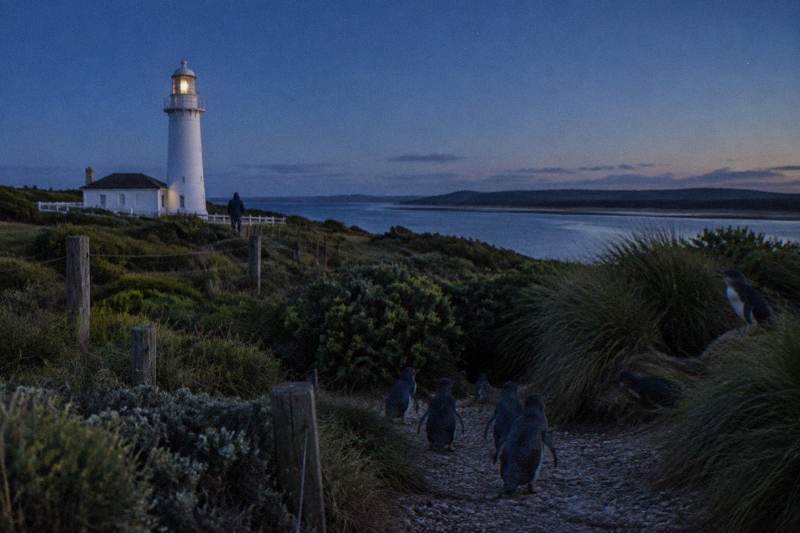
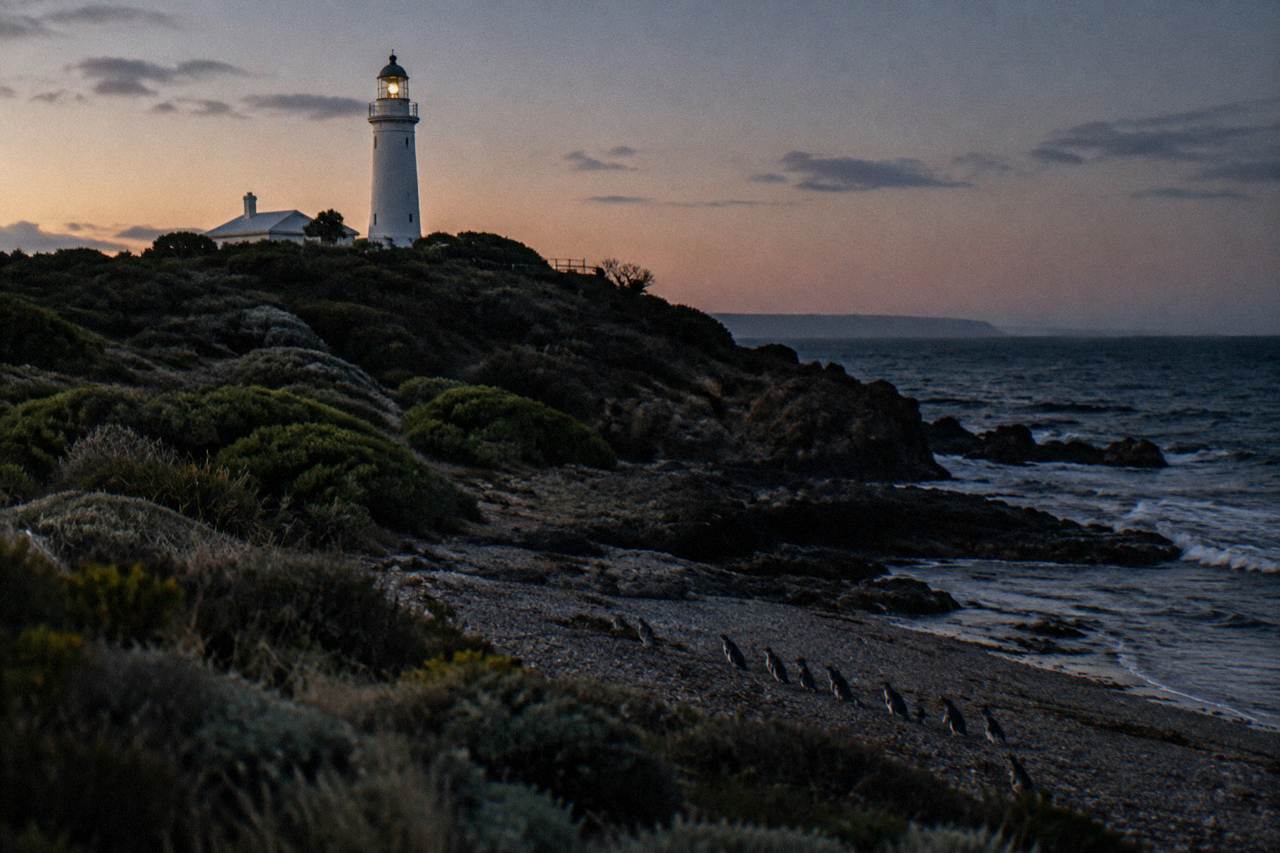
Every organised penguin tour departing Launceston goes to Low Head, on the coast north of George Town at the mouth of the Tamar. The operator runs nightly guided tours there just after sunset, lasting up to about an hour, in small groups, with red and yellow low-intensity lights supplied by the guides and no visitor torches of any kind permitted.
Low Head is a coastal reserve marked by its historic lighthouse, and the Parks and Wildlife Service lists the Low Head Lighthouse area among its named little penguin viewing sites alongside Bruny Island Neck, Lillico Beach, Burnie and Stanley. The penguins arrive in small groups within an hour or so of darkness, which is why the tour start time floats with the season rather than sitting at a fixed clock hour. In summer you might not be standing on the beach until after 9pm; in winter the same tour can begin shortly after 5pm.
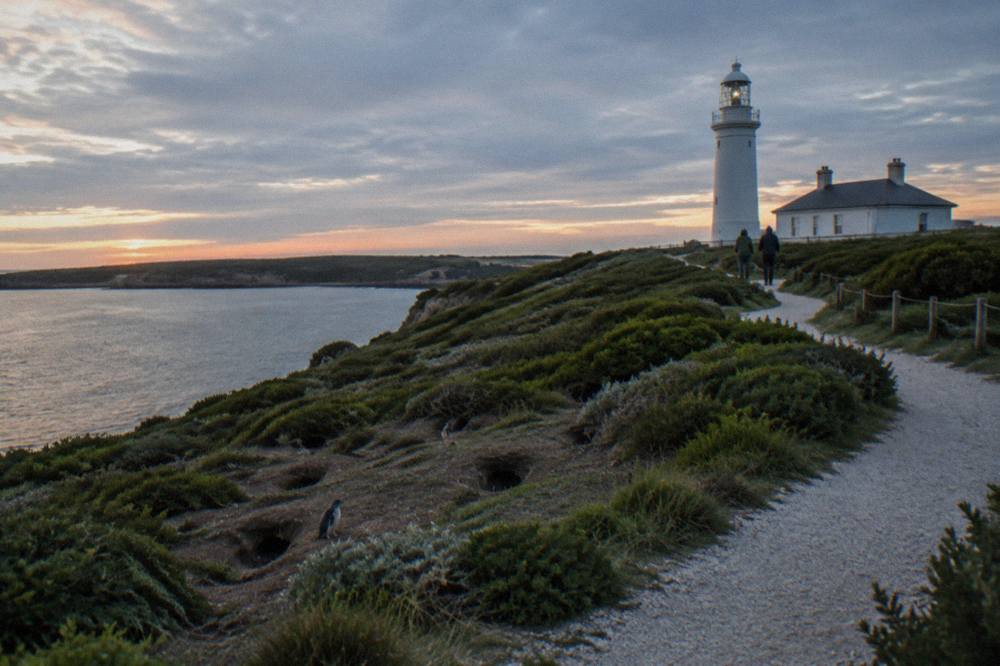
The operator's own tour-details page states the direct price at the reserve: $50 per adult, $25 per child, $40 per senior, with family packages at $140, $160 and $170 depending on size. That is the price without the Launceston transfer. The listing sold on this site bundles the guided viewing with central Launceston pickup and drop-off by Coach Tours Tasmania, which is why its from-price is $83 per person. Neither figure is wrong; they are simply two different products, and the transfer version is the one that makes sense if you are staying in the city without a car.
One practical note for the evening: the Low Head Pilot Station cafe, accommodation and toilets have been closed since 22 April 2026 while the site waits on a new lessee, though the tours and the grounds remain open. Eat before pickup, and plan around the fact that facilities at the reserve itself are limited while that closure stands.
What Does The Low Head Tour From Launceston Include?
The full package runs about 3 hours door to door: central Launceston pickup, the transfer north to Low Head, about 1 hour of guided penguin viewing at the reserve, and the return trip to your pickup point. Groups are capped at a maximum of 10 guests on the listing, the tour runs every night of the year, and free cancellation applies. For a closer look at how the evening is structured, the detailed tour timing guide covers each stage of the trip.
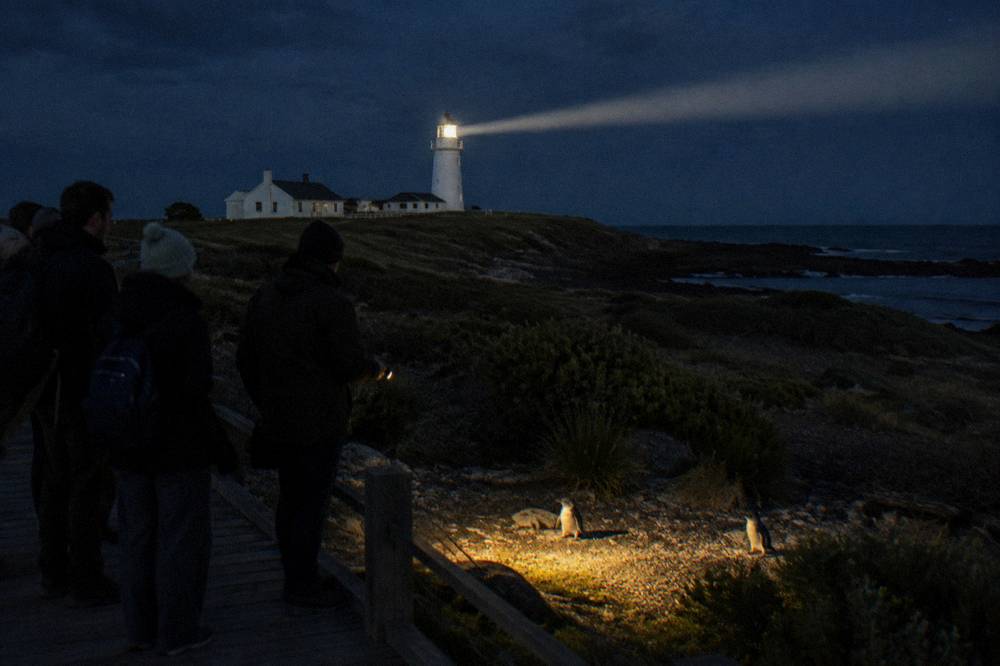
The small-group cap is the feature that most often decides it for people. A maximum of 10 guests means the group moves quietly, keeps together on the reserve, and the guide can answer individual questions as the birds come in. The operator supplies the lighting: red and yellow low-intensity lights that let you see the penguins without blasting their eyes, which is the single most important rule of penguin watching anywhere in Tasmania. Visitors cannot bring torches, selfie sticks or tripods, and flash photography is prohibited outright.
Wheelchair access is available at the reserve, which the operator states on its tour-details page, and the tour runs year-round with penguin numbers varying by season. The listing itself carries a 5.0 rating from 22 reviews, which is a small pool but an unbroken one: every reviewer to date has given it the top score. You can read the full breakdown and check current departure times on the Low Head penguin tours guide or go straight to the tour's page on this site.
Can You See Penguins Near Launceston Without A Tour?
Yes, in principle, but not in Launceston. The nearest self-guided viewing happens on the coast around Low Head and George Town, where the penguins come ashore at public beaches after dark, and the Parks and Wildlife Service names the Low Head Lighthouse area as a viewing site. Free guided viewing also exists further afield at Lillico Beach and Burnie, both well beyond a Launceston evening trip. If you're heading further along the northwest coast, the guide to penguin viewing seasons at Stanley's Godfreys Beach covers when the birds come ashore there.
Self-guided viewing is legal and free, but it demands discipline. The NRE Tasmania penguin watching guidelines, republished in May 2026, set the rules plainly: wear dark clothing, approach from the land rather than along the beach, use existing tracks, settle at least 3 m from any burrow, stay quiet, and use only dim red-light torches, never pointed at the water or directly at the birds. No dogs or cats under any circumstances, even leashed ones. Penguins are protected wildlife in Tasmania, and catching or harassing them is illegal. More of these guides are collected on Tasmania Penguin Tours.
The catch for a Launceston visitor is logistics. The reserve is a drive north from the city, the viewing window begins at last light, and Tasmanian road authorities and tourism bodies alike advise driving cautiously at dusk and dawn because of wildlife on the roads. Doing that in a rental car you picked up that morning, on roads you have never driven, in the dark, is a genuinely worse experience than the transfer tour for most short-stay visitors. The free options are better suited to travellers already based on the north-west coast, which the free penguin viewing in Tasmania guide covers in full.
| Option | Base | Cost | Guided | Best Suited To |
|---|---|---|---|---|
| Low Head tour with Launceston transfer | Central Launceston | From $83 per person | Yes, max 10 guests, about 1 hour viewing | Visitors staying in Launceston without a car |
| Low Head tour, direct at the reserve | Low Head | $50 adult, $25 child, $40 senior | Yes, small groups | Self-drivers already on the coast |
| Self-guided viewing at Low Head | Low Head | Free | No | Confident self-drivers who know the rules |
| Lillico Beach platform | Near Devonport | Free, donations welcome | Volunteer guides in season | Travellers based on the north-west coast |
| Burnie Observation Centre | Burnie | Free, donations welcome | Volunteer guides, 1 October to 31 March | Travellers based in or near Burnie |
When Is The Best Time Of Year To Go From Launceston?
September to January is the breeding season and the period of most activity at Tasmanian rookeries, including Low Head, where the operator notes higher penguin numbers from November to February. Winter viewing from June to August is quieter, with fewer birds ashore, but the tours run every night of the year and the colony never disappears entirely.
The biology behind that calendar comes from NRE Tasmania. Little penguins start nest preparation in winter, clutches of two eggs can be laid anywhere from May to December, incubation runs about 35 days with parents sharing shifts, and chicks fledge at about eight weeks. Breeding has become increasingly asynchronous in recent years, with winter breeding recorded on the north-west coast, so the old neat summer story is softer than it used to be. Moult falls roughly February to April, when adults stay ashore for two to three weeks replacing all their feathers, and February to August is what the Bicheno operator calls its quieter season.
What this means for a Launceston visitor is simple. Book the Low Head tour whenever your trip falls, because the penguins come ashore every night after sunset, but set expectations by season: a November to February evening gives you the busiest raft-ups, a June evening gives you a smaller, quieter show. The best time to see penguins in Tasmania guide breaks the year down month by month, and the question of what time the birds actually arrive has its own answer in what time of day penguins come ashore.
How Does The Launceston Option Compare With Bicheno?
The Low Head tour from Launceston costs from $83 per person and runs about 3 hours door to door with a maximum of 10 guests, while the Bicheno tour on the east coast costs from $53 per person and runs about 70 minutes, meeting at the operator's shop on Burgess Street with no accommodation pickups. They suit different itineraries: Low Head for a Launceston base, Bicheno for an east coast road trip.
The Bicheno tour is the shorter, cheaper, more spontaneous of the two. You meet at 1/70 Burgess Street, take a short bus ride to a private rookery, then walk about 500 m over roughly 50 minutes with the guide. It runs nightly year-round except Christmas Day and New Year's Eve, photography is permitted without flash, and enclosed shoes are required. It carries a 4.8 rating from 26 reviews, and the listing is flagged as often selling out, so advance booking is the sensible move if it is on your list. The full picture, including the operator's own breeding-season framing, is in the Bicheno versus Low Head comparison.
For a visitor based in Launceston with two or three nights and no car, the comparison is not really close: Bicheno is an east coast town, and no penguin tour from Launceston goes there. The choice only becomes live once you are shaping a whole itinerary, in which case the east coast Tasmania itinerary guide shows where Bicheno fits alongside Freycinet and the beaches.
What Should You Wear On A Launceston Penguin Tour?
Wear warm layers and enclosed, comfortable shoes, regardless of summer. The viewing happens at night on a coastal reserve where the wind comes straight off Bass Strait, the tour stands or walks for about an hour, and the operator bans torches, selfie sticks and tripods, supplying its own low-intensity red and yellow lights instead.
Tasmanian summer evenings on the north coast are cooler than the daytime temperature suggests, and the gap between a warm afternoon and a 9pm standing on a headland catches visitors every year. Dark clothing is not just a style suggestion: the NRE guidelines recommend it because penguins are less disturbed by shapes that blend into the night. Skip the white jacket and the phone flash entirely; the photography rules, and the reasons behind them, are laid out in the penguin photography rules for Tasmania guide, and the packing side has its own page in what to wear on a penguin tour.
One habit worth carrying from the tour into any self-guided evening: never point a light at the water or directly at a penguin, and never touch a bird, even one that waddles within arm's reach. Penguins that are disturbed stay at sea longer, which delays feeding of their chicks, so the quiet, still, dark-clothed group is not etiquette, it is conservation. If you want the reasoning in the birds' own terms, why you can't take photos of penguins covers it, and the short version of touching is in can you touch a fairy penguin.
Common Questions About Penguins Near Launceston
Can You See Penguins In Launceston?
Not in the city itself. Launceston is inland on the Tamar River and has no penguin colony. The nearest organised option is the Low Head penguin tour with central Launceston pickup, about 3 hours door to door including about 1 hour of guided viewing, from $83 per person.
How far is Low Head from Launceston?
Low Head sits on the coast north of George Town, at the mouth of the Tamar River. The listing describes the outing as about 3 hours door to door; check a map for your own driving time.; the tour listing describes the whole experience as about 3 hours door to door, and a mapping service will give you the current driving estimate.
Is the Low Head penguin tour good for families and older travellers?
Yes. The tour runs in small groups with a maximum of 10 guests, wheelchair access is available at the reserve, and the operator supplies the lighting so visitors do not need to carry anything. The total time commitment of about 3 hours is short enough for most children and older travellers.
Can you see penguins in Launceston in winter?
Yes, through the tour. Low Head tours run every night of the year, and winter viewing is quieter, with fewer birds ashore than in the November to February peak. Breeding activity is concentrated from September to January, so a winter booking trades crowd-free viewing for smaller nightly numbers.
Is there a free way to see penguins near Launceston?
Not within the city. Free viewing exists on the coast at Low Head itself and, further afield, at the Lillico Beach platform near Devonport and the Burnie Observation Centre, both volunteer-supported. All of them require self-driving at night and strict adherence to the red-light, no-flash, no-dogs rules in the NRE penguin watching guidelines.
Which is better from Launceston, Low Head or Bicheno?
From a Launceston base, Low Head is the only practical choice, since no tour runs from Launceston to Bicheno. Bicheno's tour is shorter and cheaper, from $53 per person for about 70 minutes, but it meets on the east coast at Burgess Street in Bicheno, so it suits an east coast itinerary rather than a Launceston one.