East Coast Tasmania Itinerary: A Five Day Route With A Penguin Night In Bicheno
The east coast of Tasmania runs from Hobart through Orford, Swansea and Coles Bay to Bicheno, and the two anchors that hold an itinerary together are Freycinet and a dusk penguin tour in Bicheno. This guide lays out a five day route with the penguin night as the fixed point.
Short answer
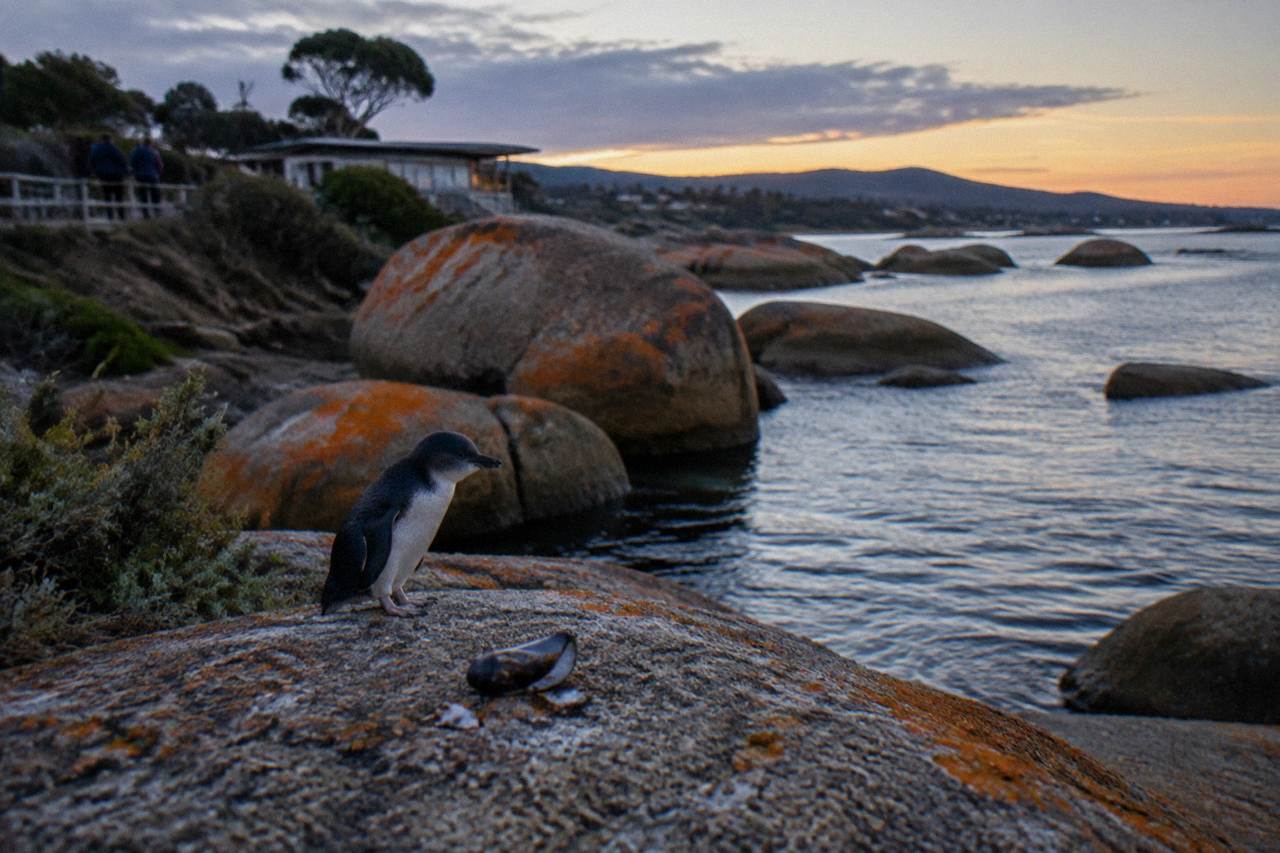
Five days is the comfortable length for an east coast Tasmania itinerary: Hobart to Orford, the Freycinet region and Coles Bay, then Bicheno, where the guided penguin tour runs from $53 per person, rated 4.8 from 26 reviews, and lasts about 70 minutes. September to January brings the most breeding activity; the Apsley road upgrade on the Tasman Highway is expected to finish in 2027.
The east coast of Tasmania is the strip most visitors actually drive: Hobart at one end, the beaches and pink granite of the Freycinet region in the middle, and the fishing town of Bicheno near the far end, where a private rookery delivers one of the most reliable little penguin experiences in the state. An itinerary here does not need to be complicated. It needs a spine, and the strongest spine is Freycinet by day and penguins at dusk. Timing matters for the penguin viewing, so check our guide to the best months for a Tasmania trip before you lock in dates.
This guide builds a five day route around that idea. It follows real operator timings and official visitor information for every stop, flags where a mapping service is the right tool for drive times, and treats the Bicheno penguin night as the fixed anchor that everything else schedules around. The route, the seasons, the road works and the packing list are all covered below.
What Does A Good East Coast Tasmania Itinerary Include?
A good east coast itinerary includes four things: a start or end in Hobart, at least one full day in the Freycinet and Coles Bay area, a dusk penguin tour at Bicheno, and enough slack that a delayed ferry or a windy afternoon does not unravel the plan. The Bicheno tour is the only fixed-time commitment, departing 5:00 to 7:30pm from February to August and 7:30 to 9:30pm from September to January. If you're still working out how many days to set aside for the whole island, the five to ten day Tasmania trip planner shows how to fit this east coast route into a longer loop.
Everything else flexes around that. The east coast is compact enough that a five day loop leaves room for a blowhole stop, a swim, a long lunch in Swansea and a second night in Bicheno if the weather turns. Travellers who try to compress the whole coast into two days end up driving the Tasman Highway in the dark, which is exactly when wildlife is on the road and when the standard Tasmanian advice is to slow down.
The Discover Tasmania east coast pages list Bicheno as the primary penguin option on this stretch, and no additional penguin tour operators or viewing platforms are confirmed for Freycinet, Coles Bay or Swansea in official or primary sources. That makes the Bicheno tour the natural dusk anchor for the whole coast. For the wider picture of where penguins appear around the state, the where to see penguins guide covers the free and self-guided sites.
How Many Days Do You Need For The East Coast?
Five days is the sweet spot for an east coast Tasmania itinerary: two days for the Freycinet and Coles Bay area, one full day anchored by the Bicheno penguin tour at dusk, and travel days at each end with room for stops. Four days works if you skip a region entirely; seven lets you add Maria Island or extend toward St Helens. The penguin night itself needs about 70 minutes on tour plus time to reach Burgess Street. If you're weighing how Bicheno's little penguins stack up against Victoria's famous parade, our comparison of Phillip Island and Tasmania penguin tours covers the differences in full.
The reason five days beats four is the penguin timing. The Bicheno tour meets at the operator's shop at 1/70 Burgess Street, a short bus ride from the rookery followed by a guided walk of about 500 metres over roughly 50 minutes. There are no accommodation pickups, so the evening needs a buffer: an early dinner, the walk or drive to the shop, and no second commitment after. A day built around that is a day, not an evening slot.
Season changes the shape of the day more than the shape of the itinerary. Sunset in the Hobart area sits near 6:20pm in early October and peaks around 8:50pm in late December and early January, which is why the operator's departure windows shift from 5:00 to 7:30pm in the February to August season to 7:30 to 9:30pm from September to January. In midsummer the penguin night starts late enough that dinner plans move with it. The best time to see penguins guide unpacks the breeding and moulting calendar in detail.
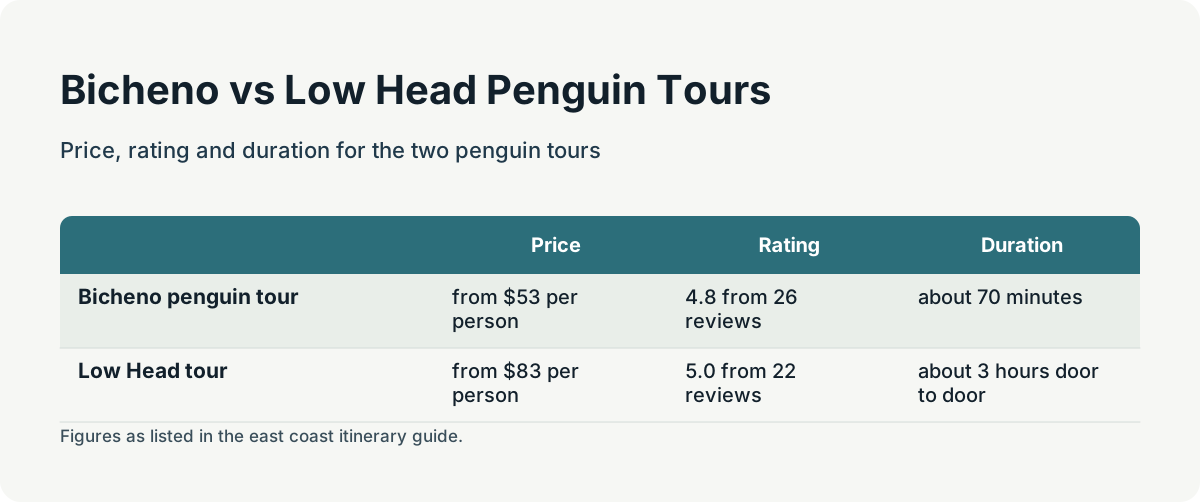
If your route starts in Launceston instead of Hobart, the coast still works in five days, but the penguin anchor changes character. The Low Head tour runs from Launceston with central pickup, about 3 hours door to door for about 1 hour of guided viewing near George Town, from $83 per person and rated 5.0 from 22 reviews with a maximum of 10 guests. It suits a northern start or finish rather than an east coast spine, and the comparison is laid out in the Bicheno versus Low Head guide.
Where Should You Stop Between Hobart And Bicheno?
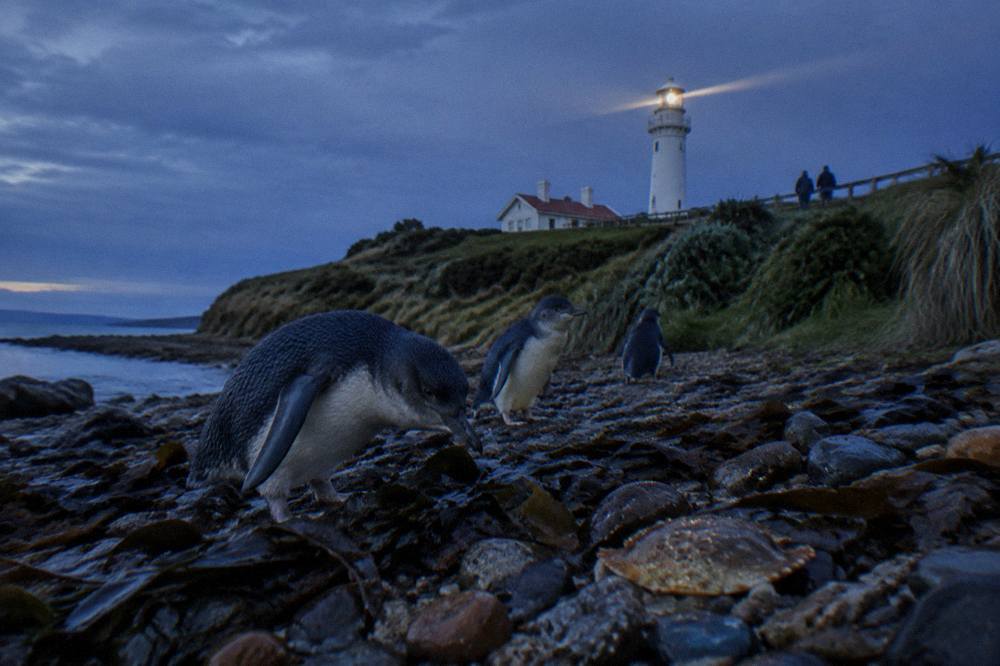
The classic stops between Hobart and Bicheno are Orford or Triabunna for a first leg break, Swansea for lunch and the bays on the northern edge of Great Oyster Bay, and the Coles Bay turn-off for Freycinet access, with the Bicheno blowhole, a free unfenced granite spot on the coast, as an easy add-on. Drive times vary with road works, so check a mapping service on the day rather than relying on fixed figures.
Orford and Triabunna sit where the highway first meets the water, and both work as a coffee stop before the coast proper begins. Swansea, further up the bay, is the natural halfway town: a long main street, bakery and pub, and views across Great Oyster Bay to Freycinet. From Swansea the highway runs north past the Coles Bay Road turn-off, which is the access point for the Freycinet region, and continues to Bicheno.
| Stop | Where It Sits | What It Is Good For |
|---|---|---|
| Orford | First coastal stretch out of Hobart | Coffee and a first look at the water |
| Triabunna | Slightly north of Orford | Fishing port, Maria Island ferry terminal |
| Swansea | Northern edge of Great Oyster Bay | Lunch, bakery, bay views toward Freycinet |
| Coles Bay Road turn-off | South of Bicheno | Access to the Freycinet region |
| Bicheno Blowhole | Coast near Bicheno | Free granite attraction, daylight stop only |
The Bicheno Blowhole, a natural granite coastal attraction, is open at all times with no fences, and the official advice is to exercise caution with waves and swell and never turn your back on the ocean. It costs nothing and takes minutes, which makes it a good daylight filler on the afternoon before a penguin tour. There are no current closures or alerts for the site on official pages.
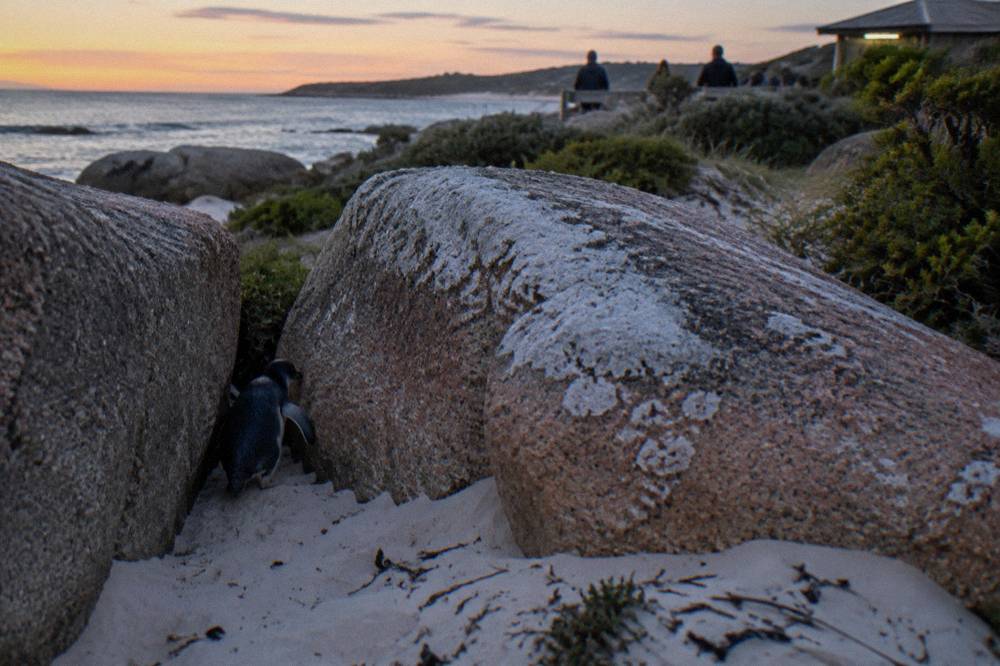
The Bicheno side of the coast also earns its second night. Beyond the penguin rookery there is a working fishing harbour, a blowhole, and beaches that face the sunrise, which is a novelty for a west-facing traveller. The things to do in Bicheno guide covers the town's full day and evening options, including how the penguin tour slots into a longer stay.
One planning note worth locking in early: the Bicheno penguin listing is flagged as often selling out, and the operator advises booking ahead, so treat it as the first reservation of the trip rather than the last. Both tours on this site carry free cancellation, which means the date can be set while the rest of the itinerary is still loose. The tour's own page, the 70 minute guided beach walk, carries the live times and availability.
How Do You Plan The Penguin Night At Bicheno?
Plan the Bicheno penguin night backwards from the departure window: book the tour first, eat early, wear enclosed shoes and dark clothing, meet at the shop on Burgess Street, and keep the camera on but the flash off. The tour costs from $53 per person, is rated 4.8 from 26 reviews, and runs about 70 minutes including the short bus ride and the roughly 500 metre guided walk.
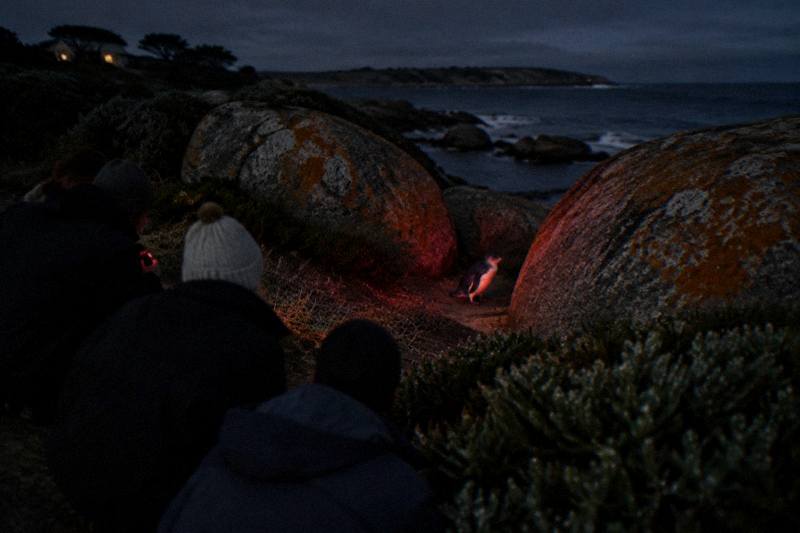
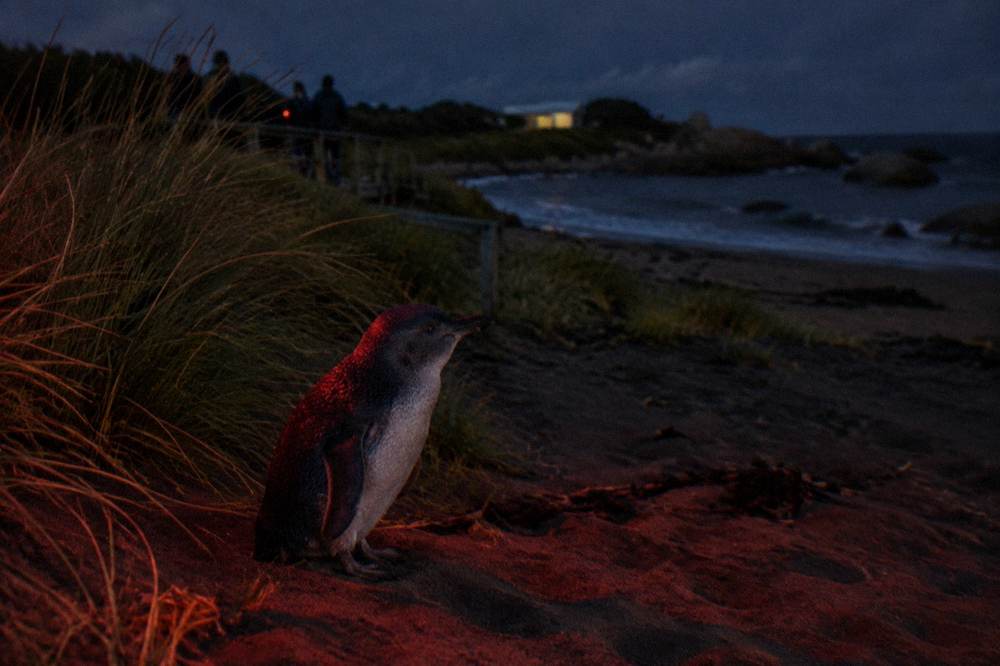
The mechanics are simple and worth knowing before you arrive. There is no pickup from accommodation, and there are no toilets at the rookery, so both are handled in town before the bus leaves. The operator requires enclosed, comfortable shoes, and photography is permitted without flash. The Natural Resources and Environment penguin watching guidelines underpin the rules everywhere in Tasmania: settle before last light, stay quiet, keep movement minimal, and never shine a light toward the water or directly at a penguin.
The rookery itself has a story that explains why it works so well. The operator, established in 1992, reports that the colony fell to about 40 birds in the early 1990s after dog attacks, then recovered through land restoration on the private site. That recovery is why the tour can promise a walk through active burrow country rather than a hopeful wait on a public beach. Dog attacks remain one of the standard threats listed by the state environment department, alongside feral cats, roadkill and harassment, which is why dogs are never permitted at penguin sites under any circumstances.
Timing the night against the season matters. September to January is the operator's breeding season with the most activity, February to April is the moulting window when adult birds stay ashore for two to three weeks replacing feathers, and the February to August stretch is quieter though tours run nightly year-round except Christmas Day and New Year's Eve. The when you can see penguins at Bicheno post goes deeper on month by month expectations.
What Should You Know About Road Works On The Tasman Highway?
The main road works on the east coast route are the Apsley upgrades on the Tasman Highway between Bicheno and the Coles Bay Road turn-off, plus a corner improvement north of Glen Gala Road, under way since early 2025 with completion expected in 2027, and the Triabunna package of the same program which began in April 2026. Expect delays, reduced speeds and lane closures, and check the transport department's roadworks map before each driving day.
The Apsley package includes widening, the east coast's first Hobart-bound overtaking lane, and curve realignments, all part of the Great Eastern Drive tourism support program. None of it closes the coast, but it does mean the section most itineraries drive twice, between Coles Bay and Bicheno, can carry short delays on both passes. The transport department's project page is the live source for status.
The practical itinerary impact is small but real: keep the Freycinet day and the Bicheno penguin night in separate day plans if you can, and if they must share a day, leave Coles Bay with more margin than the mapping service suggests. Dusk driving carries its own standard Tasmanian caution because wildlife is active at that hour, and a penguin departure window is a fixed time, not a flexible one. Everything else covered here is indexed on Tasmania Penguin Tours.
What Should You Pack And Wear For An East Coast Evening?
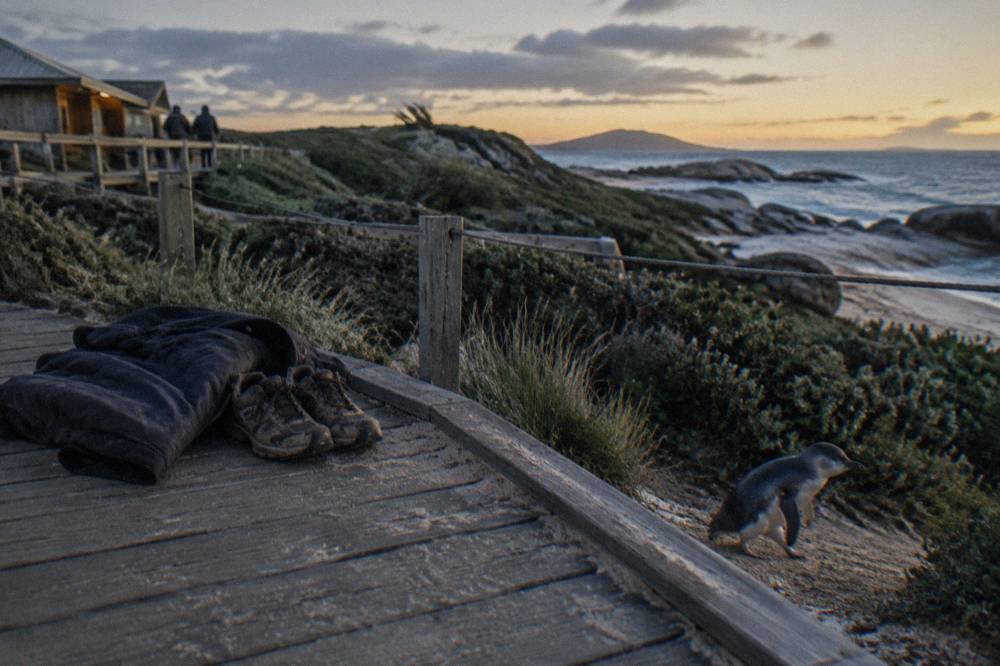
Pack warm layers, enclosed shoes and dark clothing for the penguin night, a windproof jacket for the coast, and binoculars if you have them, because evenings on the Tasmanian shore are cold even in summer. The Bicheno operator requires enclosed comfortable shoes, and the state guidelines recommend dark clothing, no torches except dim red light, and no flash photography on the beach.
The east coast looks subtropical in photographs and behaves like the Southern Ocean in person. Spring, from September to November, is the windiest period with rapid changes between sunshine, wind and occasional hail, and coastal sea breezes are common through summer. A penguin tour is a stationary, quiet hour near the water after sunset, which is the coldest combination on the itinerary. The what to wear on a penguin tour guide has the full checklist.
| Item | Why It Matters On This Route |
|---|---|
| Enclosed shoes | Required by the Bicheno operator for the roughly 500 metre rookery walk |
| Dark clothing | State penguin watching guidelines: dark colours, minimal movement |
| Warm layers and windproof jacket | Stationary dusk viewing on the coast, cold even in summer |
| Red light source only | Guides supply low-intensity light; visitor torches and flash are not permitted |
| Binoculars | Guidelines note they are useful for viewing without approaching burrows |
What Does The Five Day Itinerary Look Like Day By Day?
The five day itinerary runs Hobart to Orford on day one, Freycinet and Coles Bay on days two and three, Bicheno with the dusk penguin tour on day four, and a relaxed return with Swansea stops on day five. Each day keeps driving to one leg, keeps the penguin night on a day with nothing else scheduled after dark, and leaves the Freycinet days flexible for weather.
| Day | Base | Daytime Plan | Evening Plan |
|---|---|---|---|
| 1 | Orford or Triabunna | Leave Hobart, stop in Orford, short coastal walks | Early night; sunset near 6:20pm in October, later in summer |
| 2 | Coles Bay | Freycinet region walks and beaches | Dinner in Coles Bay; check road works before the next leg |
| 3 | Coles Bay or Bicheno | Freycinet day two, or move north past the Apsley works to Bicheno | Fishing harbour and early dinner in Bicheno |
| 4 | Bicheno | Blowhole, beaches, town day at an unhurried pace | Penguin tour: meet at Burgess Street, 70 minutes, from $53 |
| 5 | Return leg | Swansea lunch, Great Oyster Bay stops, Triabunna option | Arrive Hobart; avoid dusk driving where possible |
The shape is deliberately repeatable in either direction, and drive times are best checked on a mapping service on the day given the road works. A Launceston start can flip the route and finish on the east coast, though the northern penguin option at Low Head is a separate excursion from Launceston rather than part of this coastal spine. The two tours compared in the Bicheno and Low Head comparison make that choice explicit.
Day four is the anchor and deserves the loosest schedule of the trip. The tour needs enclosed shoes, an early dinner, and arrival at the shop on Burgess Street with time to spare, since there is no accommodation pickup and no toilet at the rookery. After the roughly 500 metre walk and about 50 minutes of guided viewing, the evening is done, which is why nothing else should be booked behind it.
What Are The Alternatives If Bicheno Does Not Fit?
If Bicheno does not fit the route, the main guided alternative is the Low Head penguin tour with Launceston transfer, from $83 per person, rated 5.0 from 22 reviews, about 3 hours door to door with central pickup and about 1 hour of viewing, capped at 10 guests. Free viewing platforms at Lillico, Burnie and Stanley exist further west and north, but none sits on an east coast itinerary without a significant detour.
The Low Head option earns its place on a northern loop rather than this one. It suits travellers flying into Launceston, staying in the Tamar Valley, or finishing a statewide trip from the north, and the small group cap of 10 gives it a different feel from the Bicheno walk. The full profile, including how the transfer works and what the operator's direct pricing covers, is in the Low Head penguin tours guide.
For a purely free evening, the self-guided options are real but demand discipline. The state guidelines apply everywhere: approach from land, stay at least 3 metres from burrows, settle before last light, red light only, and no dogs under any circumstances. The free penguin viewing guide lists the platforms and their seasons, including the volunteer-run evenings at Lillico and Burnie.
How Do You Book The East Coast Penguin Night?
Book the Bicheno penguin tour before you lock accommodation, because the listing is flagged as often selling out and the operator advises booking ahead; the tour carries free cancellation, so an early booking is low risk. Check availability on the live listing rather than relying on a printed time, since exact start times are confirmed at booking and shift with dusk across the two seasonal windows.
The booking order that works is: pick the date, check the tour's live listing for that night, then arrange the Bicheno accommodation around it. Because there is no pickup, staying in or near Bicheno on the penguin night is the difference between a relaxed dinner and a rushed drive. Free cancellation on both tours on this site means the plan can bend if the weather or the ferry schedule does.
A final practical note for anyone arriving by sea: the Spirit of Tasmania transition puts the new vessels on inaugural passenger sailings from 31 October 2026, initially night sailings only, which affects arrival-day energy more than the route itself. A night sailing into Devonport followed by a long drive to the east coast is a poor lead-in to a dusk penguin tour; give the coast a full first day instead.
Common Questions About An East Coast Tasmania Itinerary
How many days do you need for the east coast of Tasmania?
Five days is the comfortable length: two for the Freycinet and Coles Bay area, one anchored by the Bicheno penguin tour at dusk, and travel days at each end. Four days works if you drop a region; seven lets you add Maria Island or the St Helens stretch.
Where do the penguins fit into an east coast itinerary?
The Bicheno penguin tour is the dusk anchor: about 70 minutes, from $53 per person, rated 4.8 from 26 reviews, meeting at the operator's shop on Burgess Street. Schedule it on a day with nothing planned after dark, eat early, and wear enclosed shoes and dark clothing.
When is the best time of year for this route?
September to January is the Bicheno operator's breeding season with the most penguin activity, and it is also the warmest stretch for the coast. February to April is the moulting window, and February to August is quieter though tours still run nightly except Christmas Day and New Year's Eve.
Do the road works on the Tasman Highway affect the itinerary?
Yes, mildly. The Apsley upgrades between Bicheno and the Coles Bay Road turn-off have been under way since early 2025 with completion expected in 2027, and the Triabunna package began in April 2026. Expect short delays and check the transport department's roadworks map on driving days.
Can you do the east coast without a car?
It is difficult. There is no confirmed penguin tour operator or viewing platform at Freycinet, Coles Bay or Swansea, and the Bicheno tour has no accommodation pickups, so the route assumes self-drive or a private transfer. Check current transport options before planning a car-free version.
What does the penguin night cost?
The Bicheno tour runs from $53 per person on the live listing. The Low Head tour with Launceston transfer runs from $83 per person. Both carry free cancellation, and neither price should be assumed beyond what the listing shows on the day you book.