Best Time To Visit Tasmania: Months, Weather And Penguin Season
The best time to visit Tasmania depends on what you want from the evening: penguin activity peaks between September and January, the free volunteer-run sites run on their own calendars, and sunset shifts by more than two hours across the year. Here is how the months line up.
Short answer
September to January is the strongest window: it is the breeding season, when Bicheno reports the most activity and Low Head guides see roughly 100 to 200 penguins ashore nightly between November and February. Burnie's free guiding runs 1 October to 31 March and Lillico's platform season runs September to April. Tours start from $53 per person.
What Is The Best Time To Visit Tasmania?
For a trip built around penguins, the best time to visit Tasmania is September to January, the breeding season, when Bicheno reports its busiest activity and Low Head guides record roughly 100 to 200 birds coming ashore nightly from November to February. For fewer crowds and lower prices, May to August works, with quieter rookeries and earlier sunsets.
That is the short version. The longer answer is that Tasmania rewards travellers who match their month to two separate clocks: the penguin calendar, which swings between breeding, moulting and quiet winter months, and the daylight calendar, which moves sunset in the Hobart area from roughly 6:20 pm in early October to about 8:50 pm in late December, then back to around 7:30 pm by late March. A penguin evening in July starts before dinner; the same evening in the Christmas holidays can start close to 9:30 pm. Neither is wrong, but they feel like different trips.
The state's wildlife viewing is not limited to one coast or one operator. This site's two bookable tours anchor the east and north: the 70-minute guided beach walk at Bicheno, from $53 per person, and the Low Head tour with Launceston transfer, from $83 per person for about three hours door to door. Around them sit free, volunteer-run viewing sites at Burnie and Lillico, self-guided platforms at Stanley, and the Neck lookout on Bruny Island. The viewing-site comparison on the homepage of Tasmania Penguin Tours lays them out side by side, and the best month for one is not always the best month for another.
One thing worth deciding early: whether penguins are the reason for the trip or a bonus evening inside a bigger route. If they are the reason, book the tour first and let the dates follow it. If they are a bonus, the month table further down this page tells you which evenings are worth planning around and which are likely to be quiet.
When Is Penguin Season In Tasmania?
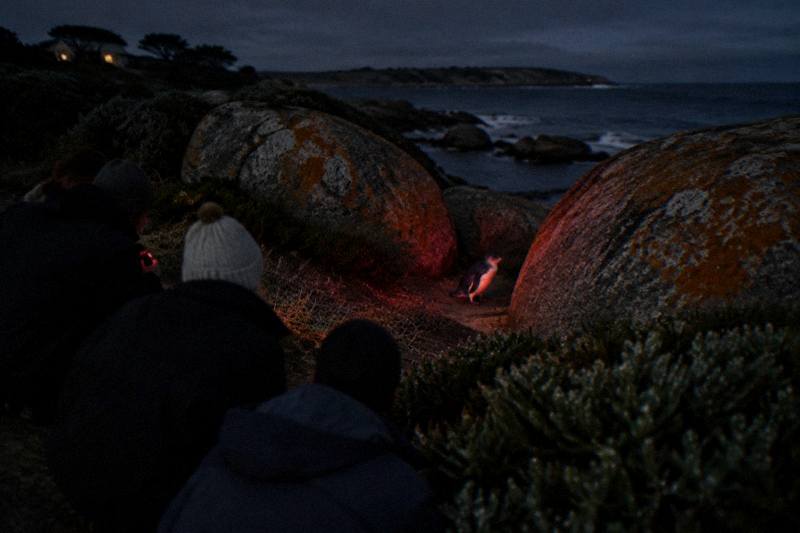
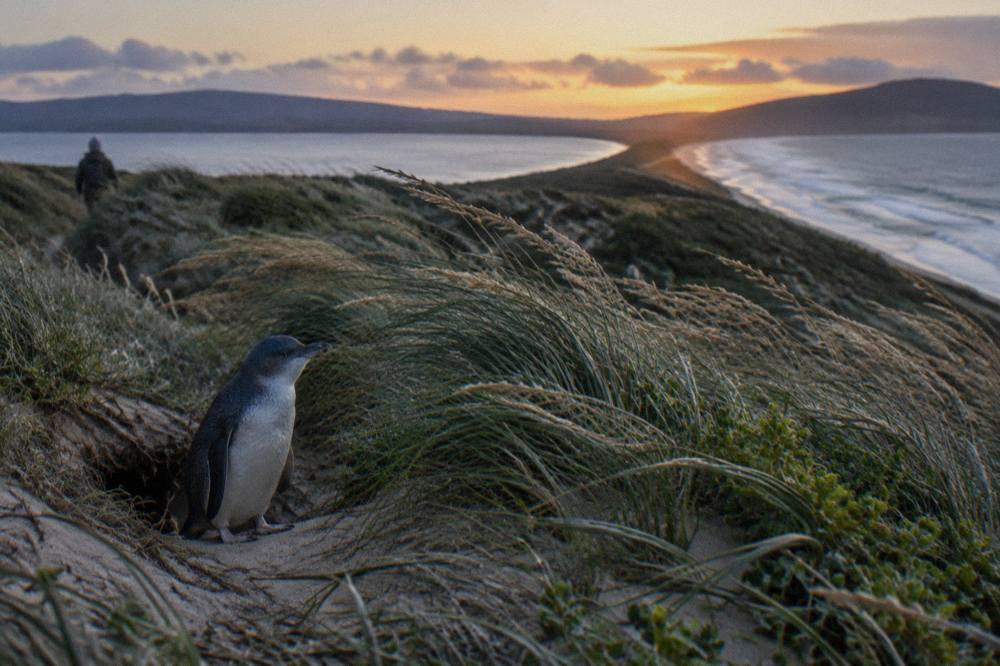
Little penguins are present in Tasmania all year, but activity is strongest from September to January, the breeding season, when nest-building, egg-laying and chick-rearing keep birds returning to burrows each night. February to April is moulting season, when adults stay ashore for two to three weeks, and May to August is the quietest stretch, though tours still run every night.
The Department of Natural Resources and Environment describes a season that varies by bird, place and year, commonly beginning with winter nest preparation, with clutches of two eggs laid anywhere from May to December, incubation of about 35 days, and chicks fledging at around eight weeks. In practice, that biology translates into a reliable rhythm at the viewing sites: spring and early summer bring the most comings and goings, late summer brings moulting adults parked in burrows, and winter brings smaller, steadier groups. The NRE Tasmania little penguins page is the primary source for the breeding detail, and it also makes the point that a guided tour is the ideal way to watch.
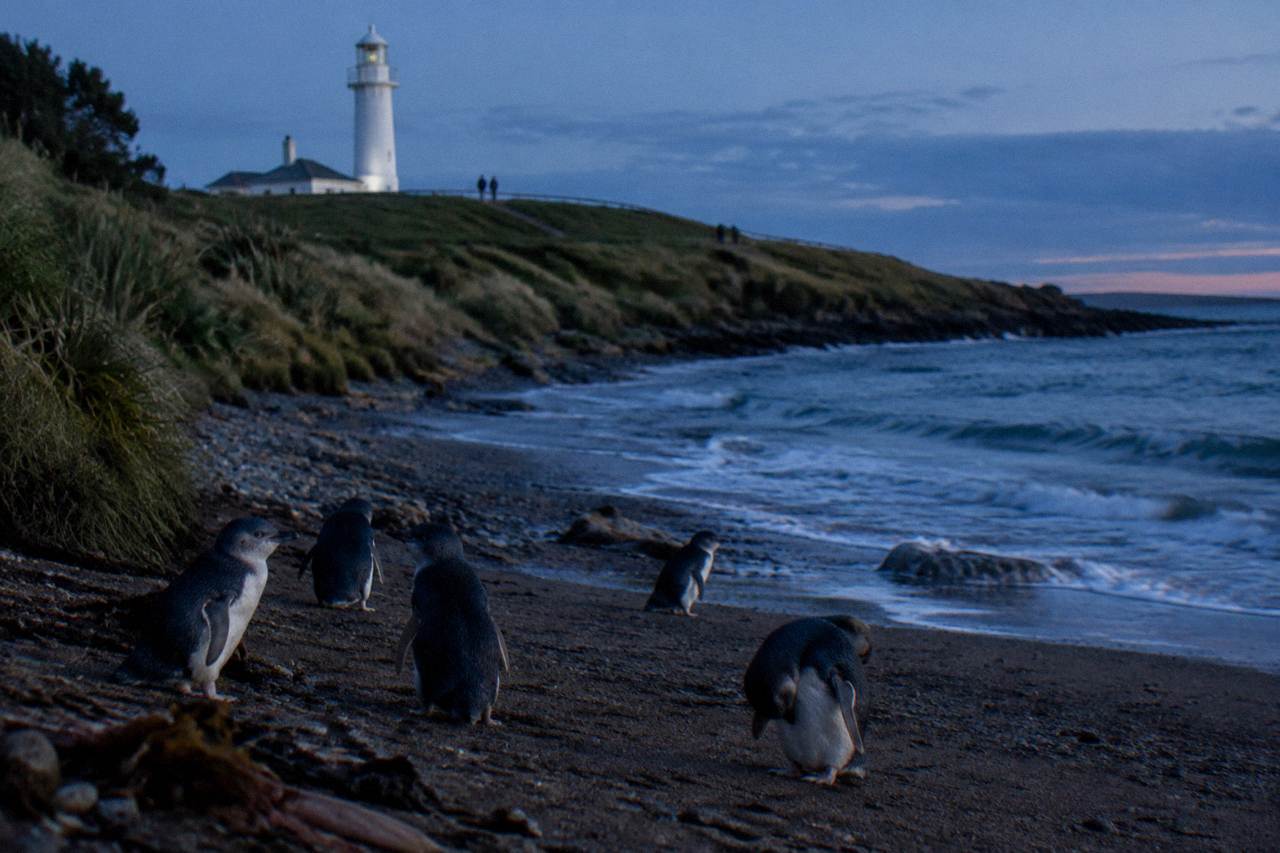
The two tour operators frame their own seasons in similar language. Bicheno calls September to January its breeding season with the most activity, and February to August its quieter winter season, with departures shifted earlier, between 5:00 pm and 7:30 pm, so guests are on the rookery before the early darkness. From September to January the same tour departs between 7:30 pm and 9:30 pm, adjusted to dusk, with the exact start time confirmed at booking. Low Head's operator reports higher numbers from November to February, roughly 100 to 200 penguins ashore nightly, against 10 to 100 from March to October. Those are the operator's own figures, and they are the most concrete season guide any Tasmanian penguin site publishes.
Moulting deserves a line of its own because it confuses people. Between February and April, adult penguins fatten at sea, then come ashore for roughly two to three weeks while they replace every feather, standing fast in or near their burrows and not feeding. Visitors sometimes read a moulting-month beach as a failed evening, when in fact the birds are simply at home rather than parading. If your travel dates land in that window, a guided tour is the better choice, because a guide can point out burrows and explain what you are looking at.
For the full picture of month against month, including the quieter sites and how the season compares across the coasts, our best months for penguins in Tasmania guide goes deeper on the calendar, and the comparison below adds the travel-side factors, sunset, crowds and road conditions, that the penguins themselves ignore.
How Do The Months Line Up, Month By Month?
October to January is the sweet spot for a first visit: breeding activity is at its peak, the free Burnie and Lillico seasons are running, and long evenings make tour scheduling easy, though sunset pushes start times as late as 9:30 pm in December. February to April suits travellers who want moulting-season viewing and warm seas, and May to August suits those who want quiet beaches and early nights.
The table below matches each month to what the penguins are doing and what it means for an evening's viewing. It deliberately avoids weather statistics, which vary enormously by coast and year; for forecasts, check the Bureau of Meteorology close to your travel date, since Tasmania's spring is the windiest period and conditions can change within an hour.
| Month | What The Penguins Are Doing | What It Means For Viewing |
|---|---|---|
| January | Late breeding season, chicks fledging, peak visitor season | Strong activity at Bicheno and Low Head, latest sunsets, book tours well ahead |
| February | Moulting begins, adults ashore for two to three weeks | Low Head still reports 100 to 200 birds nightly into February; activity thins later in the month |
| March | Moulting continues, guided seasons begin winding down | Burnie and Lillico seasons end 31 March and in April respectively; quieter beaches |
| April | Moulting tapers off, birds return to sea to feed | Last of the Lillico platform season; early sunsets make short, easy evenings |
| May | Quiet season begins, winter nest preparation starts | Small nightly groups, early departures, almost no crowds anywhere |
| June | Winter, occasional early egg-laying recorded in some years | Quietest viewing, but every paid tour still runs nightly |
| July | Winter, the deepest quiet stretch | Very early sunset, tours finish before a late dinner |
| August | Late winter, nest preparation builds toward spring | Numbers begin picking up at the end of the month |
| September | Breeding season begins at Bicheno, Lillico platform season starts | First month of stronger activity, still-fresh volunteer guiding |
| October | Breeding builds, Burnie's free guiding season opens 1 October | Strong viewing, shoulder-season prices and thinner crowds |
| November | Peak breeding, Low Head reports 100 to 200 ashore nightly | Excellent viewing on both coasts, evenings lengthening |
| December | Peak breeding, latest sunsets of the year around 8:50 pm in the Hobart area | Best activity, highest demand, book the Bicheno walk weeks ahead |
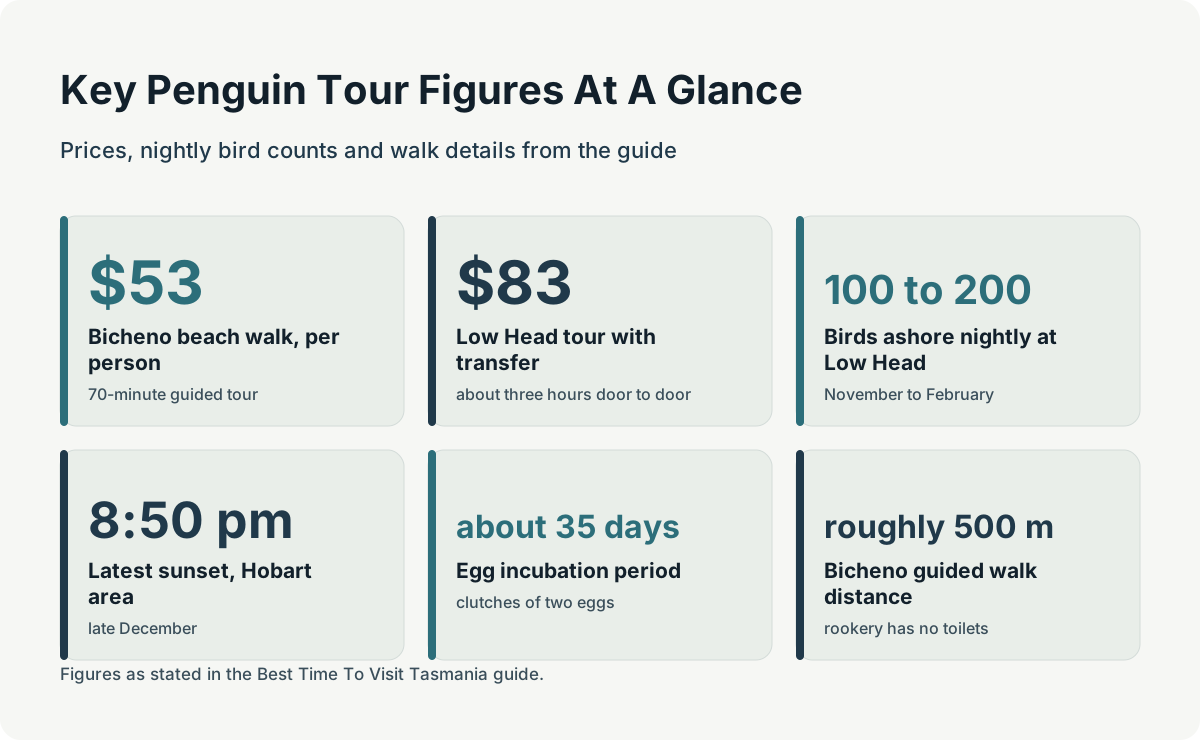
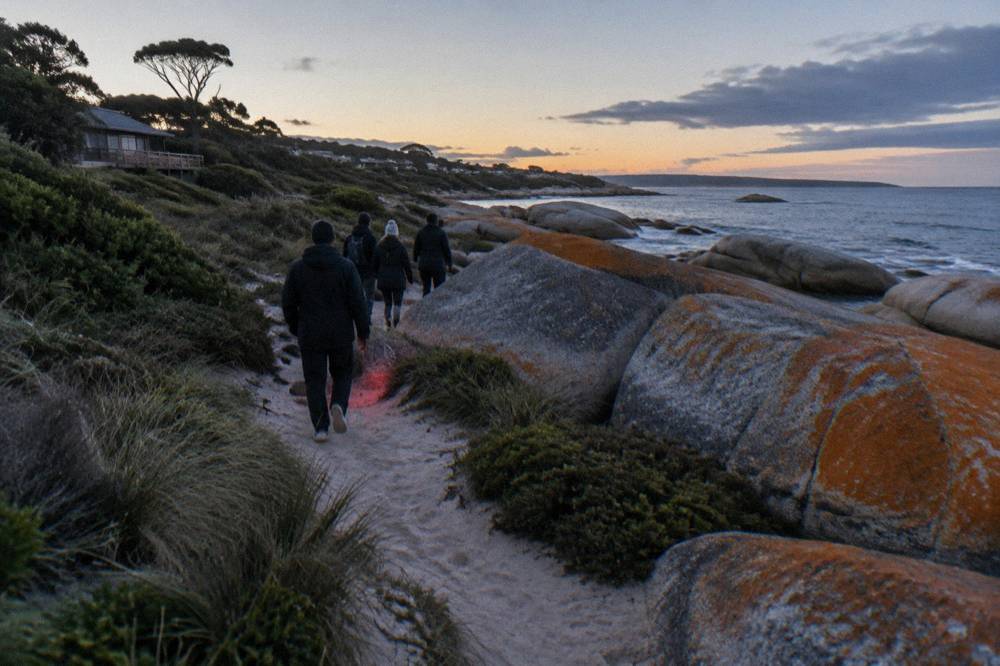
The seasonal departure windows matter more than many visitors expect. Bicheno's winter tours leave the shop between 5:00 pm and 7:30 pm, which means the whole evening, bus ride, roughly 500 m guided walk and all, can be finished before 8:00 pm in June. In the December school holidays the same tour leaves between 7:30 pm and 9:30 pm, adjusted to dusk, so dinner plans shift late. Low Head runs every night just after sunset with about an hour of guided viewing, and the Launceston transfer version runs about three hours door to door, a consideration if you are basing yourself in the city rather than on the coast. The listing for the Low Head tour with Launceston transfer shows the current from-price of $83 per person, with free cancellation and a maximum of 10 guests.
If you are weighing the two paid options against each other, the Bicheno versus Low Head comparison breaks down duration, price and group size in detail. The short version for timing purposes: both run year-round, both are dusk-dependent, and the month you choose changes the start time far more than it changes the odds of seeing birds.
What About Weather, Roads And Getting There?
Tasmania's weather is changeable in every month, but spring, September to November, is the windiest period, and coastal sea breezes are common through summer. The practical planning items are warm clothing and enclosed footwear for any penguin evening, wildlife-cautious driving at dusk, and road works on the Tasman Highway between Bicheno and the Coles Bay turn-off, with completion expected in 2027.
No month is reliably dry, and no month is reliably wet. Plan for rapid weather changes, especially in spring, especially in spring, when hail, strong wind and sunshine can all arrive in one afternoon. For penguin evenings specifically, the operators ask for warm clothing and enclosed, comfortable footwear; Bicheno's rookery has no toilets and the walk covers about 500 m of ground, and Low Head supplies red-tinted lighting while banning torches, selfie sticks and tripods. Our what to wear on a penguin tour guide covers the packing list in full, and the NRE Tasmania penguin watching guidelines explain the darker-clothing and red-light rules behind it.
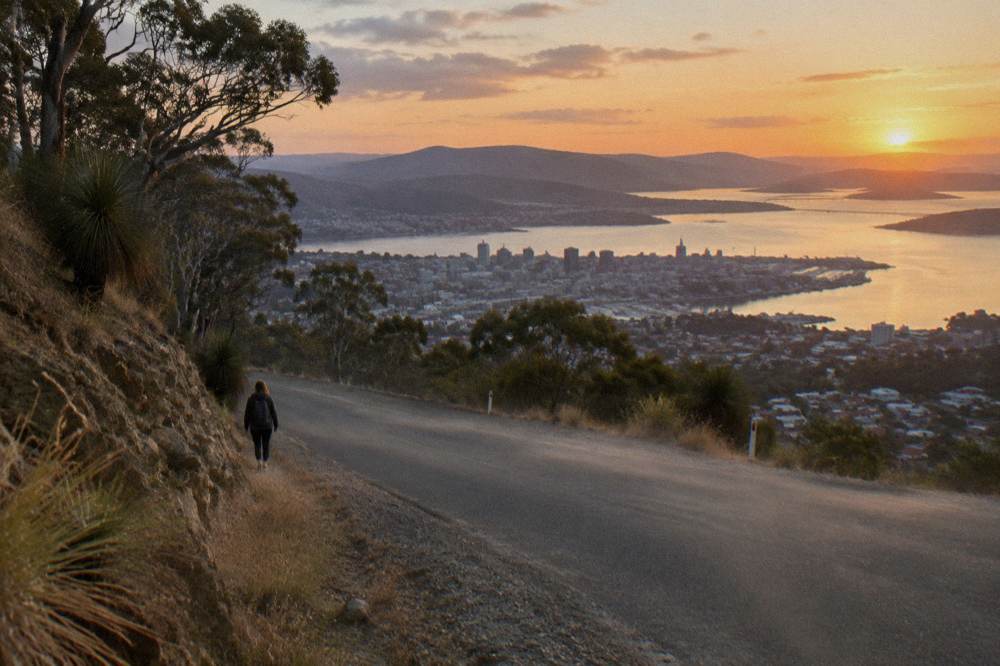
Two pieces of infrastructure news are worth building into a 2026 or 2027 itinerary. First, the Apsley upgrade on the Tasman Highway, covering the stretch from Bicheno to the Coles Bay Road turn-off plus a corner improvement further north, has been under construction since early 2025 and is expected to finish in 2027, with a second package near Triabunna beginning in April 2026; the state's roadworks map carries current status and delay estimates. Second, the Bass Highway resurfacing program touches sections around Devonport, Turners Beach, Lillico, Ulverstone, Penguin and Heybridge, with sealing scheduled from mid-October into early autumn, so north-coast travellers should allow up to 15 minutes of extra time and check the map before a dusk drive. Dusk driving anywhere in Tasmania calls for reduced speed anyway, because wildlife on the roads is a genuine and well-documented hazard.
The ferry picture matters if you are bringing a car. The current Spirit of Tasmania vessels operate until late October 2026, when the new vessels begin inaugural passenger sailings on 31 October 2026, initially night sailings only, with extra accommodation and pet-friendly cabins bookable since mid-September and the fuel surcharge removed from 1 September. If your penguin trip depends on a vehicle crossing, the transition weeks around the end of October deserve a close look at the sailing schedule before you commit to dates.
When Do The Free Viewing Sites Run?
Burnie's volunteer-guided viewing runs nightly from 1 October to 31 March, free with donations welcome, while the Lillico Beach platform near Devonport is generally used from September to April with volunteer guides in season. Stanley's Godfreys Beach platform and the beaches around the Penguin township are free and self-guided year-round, with the strongest self-guided viewing from November to March.
The free sites are the budget traveller's secret, but only in the right months. Burnie's program is the most generous: nightly guided viewing regardless of weather, starting 30 minutes before dusk at the Observation Centre on Parsonage Point, a level wheelchair-accessible boardwalk, no booking, and a request for donations. The Friends of Burnie Penguins site carries the current season details. Lillico, ten minutes west of Devonport, offers a volunteer-run platform experience with two to three guides on site each evening in season, red torches supplied, and no visitor torches or flash of any kind. Outside those windows both beaches can still be watched self-guided, but you lose the guides, the lighting discipline and most of the interpretation.
| Site | Season | Cost | What You Get |
|---|---|---|---|
| Burnie Observation Centre | 1 October to 31 March, nightly | Free, donations welcome | Volunteer guides, accessible boardwalk, arrive 30 minutes before dusk |
| Lillico Beach platform | Generally September to April | Free, donations welcome | Volunteer guides with red torches in season, no visitor torches |
| Stanley, Godfreys Beach | Year-round, best September to March | Free | Self-guided accessible platform with red lighting |
| Penguin township beaches | Year-round, best November to March | Free | Fully self-guided, no tours currently run |
| Bruny Island Neck | Year-round | Free platform | Self-guided, check Parks and Wildlife Service before going |
The self-guided sites carry the same obligations as the guided ones, and the rules are not optional extras. Dark clothing, approach from the land side along existing tracks, settle at least 3 m from any burrow and never block one, stay quiet, and use only dim red light, never pointed at the water or the birds. No dogs or cats under any circumstances, even leashed, and never touch a penguin, they are protected wildlife and handling them is illegal. If those rules feel like a lot to police yourself at a dark beach, that is precisely the argument for a guided evening in the shoulder months, when the free sites have no volunteers on duty.
Is Winter A Good Time To Visit Tasmania For Penguins?
Winter, May to August, is a genuinely good penguin season for travellers who value small groups and early nights over big numbers: every paid tour still runs nightly, Bicheno shifts departures to between 5:00 pm and 7:30 pm, and Low Head reports 10 to 100 birds ashore from March to October. You trade peak activity for quiet beaches, cheaper shoulder-season accommodation and evenings that end before 8:00 pm.
The winter case is underrated. Sunset in the Hobart area sits near its earliest in June and July, which means a penguin tour fits before dinner rather than after it, an underrated comfort with children or older travellers in the party. The rookeries are quieter in every sense: fewer birds, fewer people, and guides with time to talk. Bicheno's own story is a reminder that the birds are year-round residents, the colony fell to about 40 birds in the early 1990s after dog attacks and recovered through land restoration, and the operator runs every night except Christmas Day and New Year's Eve. Winter is also when the operator's Off Season experiences have appeared in past years, a signal that the coast actively courts off-peak visitors.
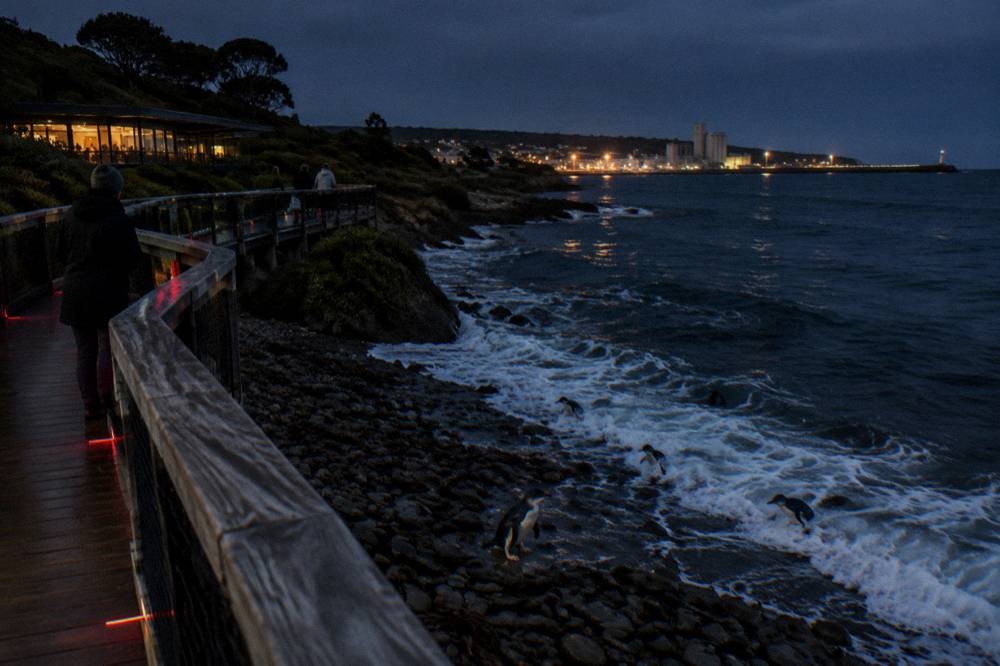
The honest trade-offs: you will likely see fewer penguins per evening than a November visitor, the weather is colder and less predictable, and the free volunteer sites at Burnie and Lillico are out of season, so a paid tour is the reliable option. Low Head's tour runs year-round with about an hour of guided viewing and a maximum group size that keeps the experience intimate, and the listing with the Launceston transfer, from $83 per person, is the easiest winter option for anyone based in the city without a car. Its rating stands at 5.0 from 22 reviews, and free cancellation applies.
For travellers pairing penguins with broader sightseeing, winter also opens the state's quiet-season attractions, shorter queues everywhere, and the possibility of snow on the highlands between penguin evenings on the coast. Our best guided tours of Tasmania for seniors post looks at low-stress ways to structure exactly that kind of mixed itinerary, and the same logic applies to any traveller who wants wildlife without a packed schedule.
How Do You Choose Your Dates And Book?
Pick September to January for peak activity and the running free seasons, November to February for the biggest nightly numbers at Low Head, February to April for moulting-season viewing with warm seas, or May to August for quiet and early evenings. Then book the Bicheno walk first, it is flagged as often selling out, and let everything else, ferry, accommodation, driving route, follow the tour date.
The booking-order advice is not marketing, it is arithmetic. A two-hour window on a small-group beach walk has a hard ceiling, and the listing's own flag says the Bicheno tour often sells out, the only tour on this site where that urgency line is warranted. Low Head caps groups at 10 guests, which is generous for intimacy and unforgiving for last-minute planners in peak weeks. Both listings carry free cancellation, so an early booking costs you nothing if the forecast turns. The Bicheno walk runs 70 minutes with the guide, from $53 per person, rated 4.8 from 26 reviews, meeting at the operator's shop on Burgess Street, with no accommodation pickups, so factor the drive or the walk into your evening.
| Season | Penguin Activity | Evening Timing | Best For |
|---|---|---|---|
| Spring, September to November | Breeding season builds, Burnie opens 1 October | Sunset moves from about 6:20 pm toward 8:00 pm | First-time visitors wanting activity and thin crowds |
| Summer, December to February | Peak activity, Low Head at 100 to 200 nightly | Sunset near 8:50 pm in late December, tours start as late as 9:30 pm | Families and visitors who like long days |
| Autumn, March to May | Moulting tapers, free seasons wind down | Sunset falls back toward 7:30 pm by late March | Warm seas, quieter beaches, easy evenings |
| Winter, June to August | Quietest viewing, 10 to 100 ashore at Low Head | Sunset at its earliest, tours finish before 8:00 pm | Small groups, budget travel, early nights |
Costs across the year are stable on the tour side, both listings price the same in every month, which makes the penguin tour cost comparison a simpler calculation than most wildlife experiences: from $53 at Bicheno, from $83 with the Launceston transfer at Low Head, and free at Burnie and Lillico in their seasons. What changes by month is everything around the ticket, accommodation rates, ferry availability, road conditions and sunset. A parks pass is worth checking too if national parks are on your route: the daily vehicle pass costs $49.15 for up to eight people, excluding Cradle Mountain, with holiday and annual options listed on the Parks and Wildlife Service passes page, though none of the penguin viewing sites themselves require one.
If you want the Bicheno evening specifically, the tour's own page, the 70-minute guided beach walk, shows live availability, and you can Check availability for your preferred dates before you book anything else on the trip.
Common Questions About The Best Time To Visit Tasmania
What is the best month to see penguins in Tasmania?
November to January combines peak breeding activity with the longest reliable viewing: Low Head's operator reports 100 to 200 penguins ashore nightly from November to February, and Bicheno calls September to January its most active season. Book early, the Bicheno walk is flagged as often selling out in peak weeks.
Can you see penguins in Tasmania in winter?
Yes. Both paid tours run every night of the year, and Low Head reports 10 to 100 birds ashore from March to October. Winter evenings start early, Bicheno departs between 5:00 pm and 7:30 pm from February to August, and crowds are at their smallest.
When do the free penguin viewing sites run?
Burnie's volunteer-guided viewing runs nightly from 1 October to 31 March, and the Lillico Beach platform near Devonport is generally used from September to April with volunteer guides in season. Outside those windows both can be watched self-guided, following the red-light and no-flash rules.
What time do penguin tours start in Tasmania?
Start times follow sunset. Bicheno departs between 7:30 pm and 9:30 pm from September to January and between 5:00 pm and 7:30 pm from February to August, with the exact time confirmed at booking. Low Head runs just after sunset every night, with about an hour of guided viewing.
Is February a good time to visit Tasmania for penguins?
February is a transition month: Low Head still reports strong numbers into February, but moulting runs from February to April, so many adults stay in their burrows rather than parading up the beach. A guided tour helps, because guides can point out moulting birds and explain the behaviour.
Do penguin tour prices change with the season?
No. The two bookable tours on this site price the same year-round: from $53 per person for the Bicheno beach walk and from $83 per person for the Low Head tour with Launceston transfer. What changes by season is availability, sunset time and what you spend on accommodation and travel around the ticket.