Can You See Penguins In Tasmania In May?
Yes, you can see penguins in Tasmania in May. Here is what is open, what is closed, and what the birds are actually doing in the quietest month of the year.
Can You See Penguins In Tasmania In May?
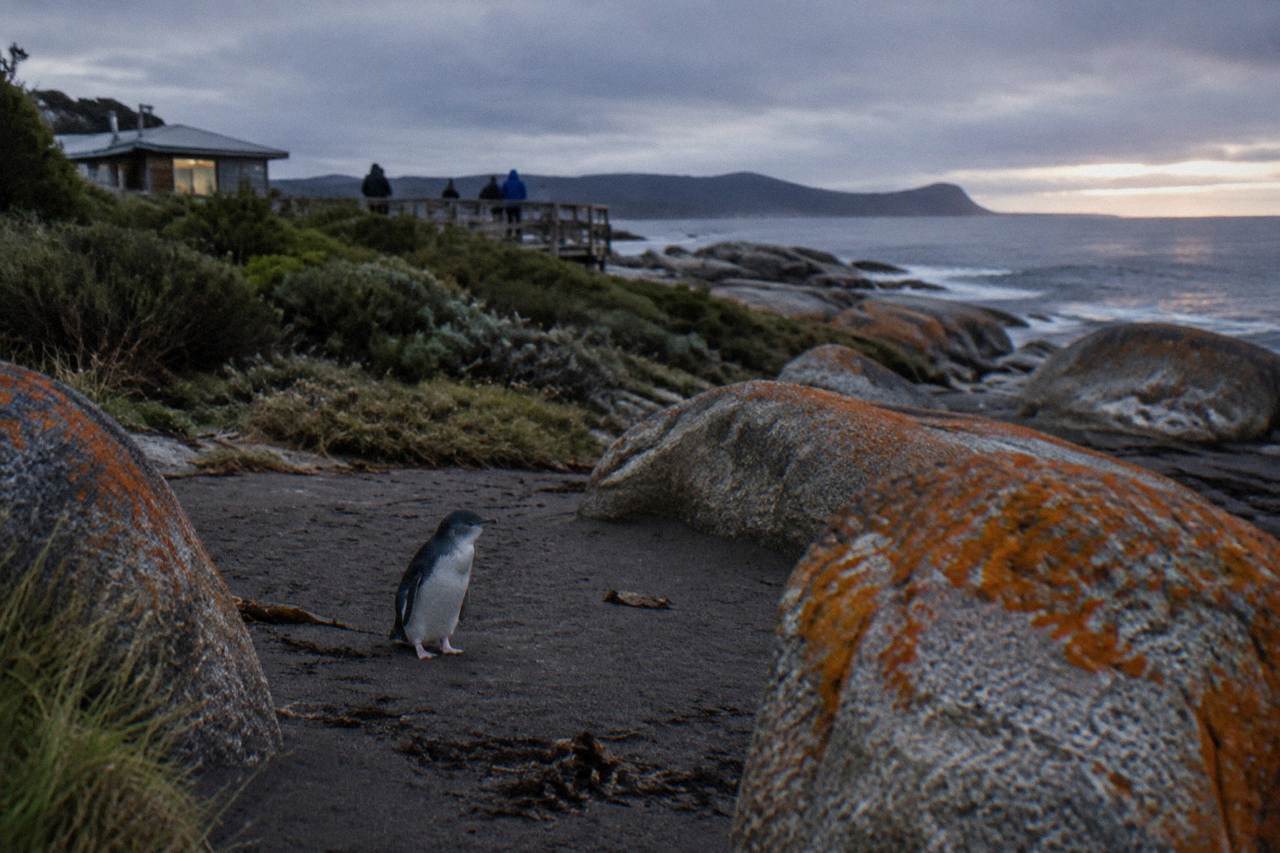
Yes, but May narrows your options. The two guided rookeries, Bicheno on the East Coast and Low Head on the North Coast, run tours every night in May, while the free volunteer-run sites at Burnie and Lillico Beach are out of season until spring. Bird numbers are lower than in the September to January breeding peak, so the pitch is fewer penguins, quieter beaches, and a real chance of a memorable sighting.
May is the month where Tasmania's penguin calendar turns. The moulting window, which runs roughly February to April, has just ended, and the earliest breeding birds are beginning nest preparation, with clutches of two eggs possible as early as May according to the state wildlife agency's little penguin pages. That makes May a genuine transition month: some birds are refurbishing burrows, some are feeding at sea, and the rafts coming ashore at dusk are smaller than the spring and summer groups.
It also matters where you are. Tasmania's little penguins, the smallest penguin species at around 40 cm and about 1 kg, are mostly found on offshore islands, with under 5 percent of the past estimated 110,000 to 190,000 breeding pairs on mainland Tasmania. The accessible mainland and near-mainland sites are exactly the ones visitors can reach, and in May the guided operators carry most of the weight. If you're curious about where these colonies actually sit and when the birds come ashore, the guide to little penguins living in Tasmania year-round covers the full picture.
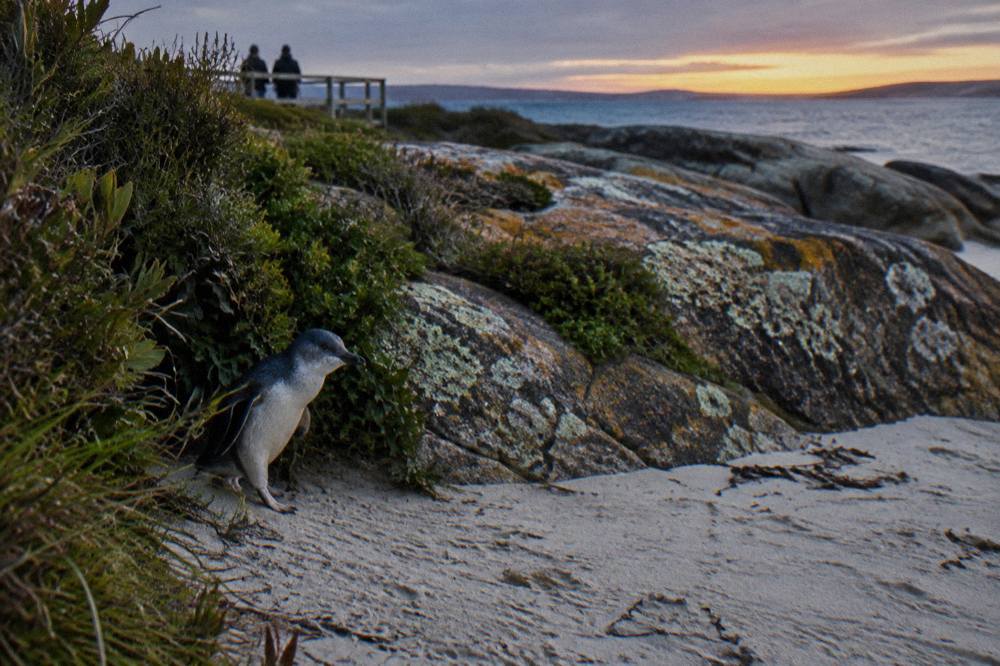
For most travellers the practical choice is between the two bookable tours. The Bicheno tour, a 70-minute guided experience from $53 per person, rated 4.8 from 26 reviews, runs year-round, and the Low Head tour from Launceston, from $83 per person with transfer and rated 5.0 from 22 reviews, also operates every night. We compared the listings and the May difference comes down to where you are staying and how much of the evening you want to spend travelling.
What Are Little Penguins Doing In May?
In May the breeding cycle is quietly restarting. The state wildlife agency notes that the season varies by bird, place and year, commonly beginning with winter nest preparation, and clutches of two eggs can be laid as early as May or as late as December. Moulting, which keeps adults ashore for roughly two to three weeks while they replace all their feathers, mostly finishes in April.
The moult is the part most visitors never hear about. Before moulting, adults fatten at sea, then remain ashore for around two to three weeks while they replace their entire plumage, because their feathers are no longer waterproof mid-moult and they cannot fish. The state habitat guidelines place moult evidence mostly in February to April. By May that period is closing, and the birds you see coming ashore are typically back in feeding routine, building condition for breeding.
Nest preparation is the other May activity, and it is earlier than many people expect. Burrows are tunnels of roughly 60 to 80 cm, and birds that bred last season will clean out, deepen or defend them through winter. Both parents share incubation in shifts of up to a week once eggs arrive, and chicks hatch after about 35 days and fledge at about eight weeks. A May nest preparation can therefore mean chicks on the beach by midwinter, and breeding in Tasmania has become increasingly asynchronous, with winter breeding more frequent in recent years in some north coast areas.
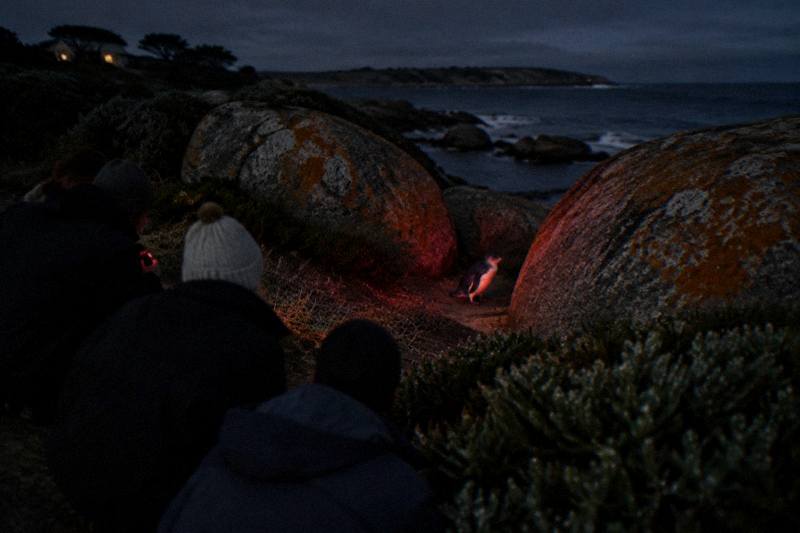
What this means for viewing is simple. The birds still come ashore at dusk, most within an hour or so of darkness, in small groups rather than the big rafts of the breeding peak. The state guidance says disturbed birds stay at sea longer, which stresses them and delays feeding, so the quiet, disciplined behaviour that matters all year matters even more when the birds are starting to invest in nests.
Which Penguin Sites Are Open In Tasmania In May?
In May the two guided tours are open and the free volunteer-run viewing sites are closed or out of season. Bicheno runs nightly except Christmas Day and New Year's Eve, Low Head runs every night just after sunset, Burnie's guided viewing season runs 1 October to 31 March, and the Lillico Beach platform is generally used September to April with volunteer guides in season.
This is the single biggest May fact, and it is worth a table.
| Site | Region | May status | Cost |
|---|---|---|---|
| Bicheno Penguin Tours | East Coast | Open nightly, guided, private rookery | From $53 per person |
| Low Head Penguin Tours | North Coast | Open nightly, guided, about 1 hour viewing | From $83 with Launceston transfer |
| Burnie Observation Centre | North West | Guided season runs 1 October to 31 March, so no guides in May | Free when in season |
| Lillico Beach platform | Devonport area | Out of season, volunteers generally September to April | Free when in season |
| Stanley, Godfreys Beach | North West | Self-guided viewing possible, fewer birds in winter | Free |
The Burnie and Lillico closures are not a secret, but they catch a lot of May travellers out. Burnie's volunteer guides are at the Observation Centre nightly from 1 October to 31 March, arriving about 30 minutes before dusk, and outside that window there is no guiding at all. Lillico's platform is a free, volunteer-run experience with guides generally on site from September to April, holding red torches for visitors, with no visitor torches or flash allowed at any time. In May you can stand at either spot, but you would be doing it alone, in the dark, with no red light provided and far fewer birds coming ashore, which is exactly the situation the state's penguin watching guidelines are written to prevent.
The guided rookeries are the reliable alternative. The Bicheno operator runs a private rookery reached by a short bus ride from the shop at 1/70 Burgess Street, followed by a guided walk of about 500 m over roughly 50 minutes, with photography permitted as long as there is no flash. The Low Head operator's tour details page describes nightly fully guided tours of up to about an hour at the Low Head Coastal Reserve, with red and yellow low-intensity lights provided by the guides and no personal torches, selfie sticks or tripods allowed.
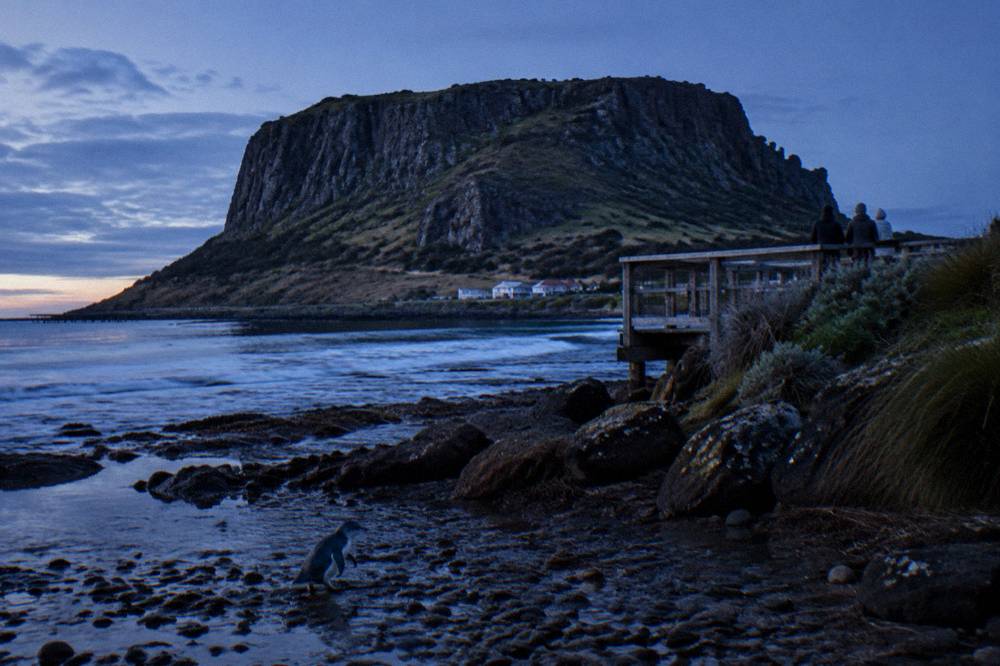
One more May wrinkle on the North Coast: the Low Head Pilot Station cafe, accommodation and toilets have been closed since 22 April 2026 pending a new lessee, while the tours and grounds stay open. If you are booking the Low Head tour in May, plan to eat and use facilities in George Town rather than at the lighthouse precinct.
What Is A May Evening Tour Actually Like?
A May evening tour is dark early, cold, quiet and short. At Bicheno the winter season departures run 5:00pm to 7:30pm, adjusted to dusk, versus 7:30pm to 9:30pm in the September to January season, so a May tour can finish before a summer tour would start. You walk about 500 m over roughly 50 minutes with a guide, in enclosed shoes and warm, dark clothing.
The early start is the thing people underestimate. May dusk in Tasmania falls early in the evening, and the operators adjust departure times to it, confirming the exact start time when you book. That has a pleasant side effect for May travellers: you are back in town by early evening with time for dinner, rather than standing on a beach at 9:30pm in a summer jacket you did not bring. More of these guides are collected on Tasmania Penguin Tours.
What to wear is not optional advice in May. The operators recommend warm clothing and enclosed footwear, and the state guidelines add dark clothing so you blend into the evening rather than presenting a pale silhouette. The Bicheno operator requires enclosed comfortable shoes and provides no accommodation pickups, so you meet at the Burgess Street shop, where there is free parking. There are no toilets at the rookery itself, another reason to plan ahead.
The viewing etiquette is consistent everywhere and worth internalising before you go. Approach from land rather than along the beach, use existing tracks, never walk through the colony, and settle at a spot at least 3 m from burrows before last light. Stay quiet, keep movement minimal, and never point a torch toward the water or directly at a penguin. No dogs or cats under any circumstances, even leashed. Penguins are protected wildlife in Tasmania, and catching or harassing them is illegal.
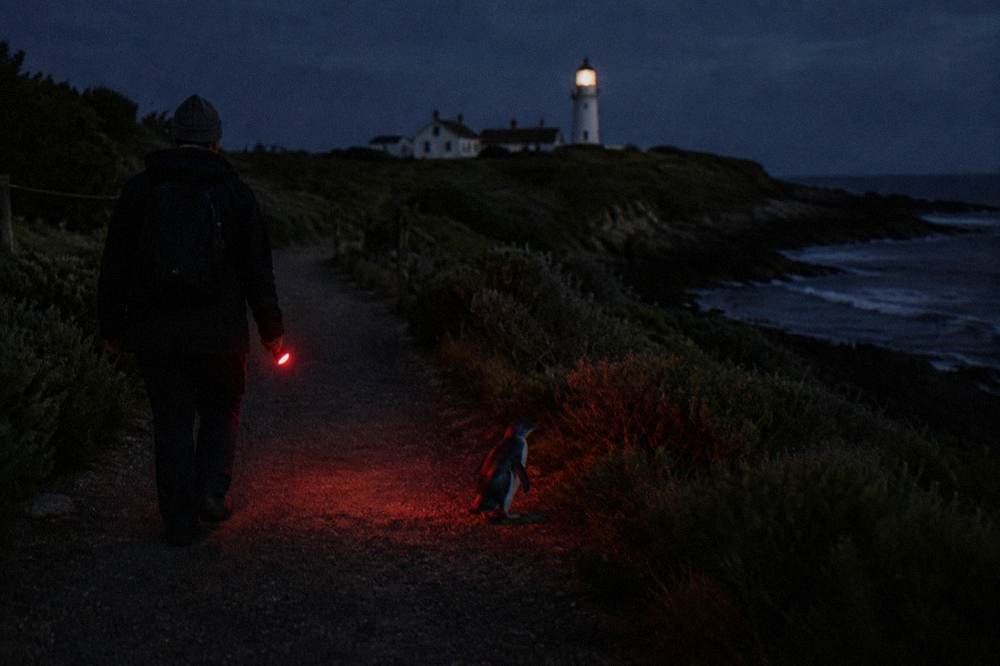
Photography in May deserves a specific word. The Bicheno rookery permits photography without flash, which is a genuine privilege compared with some mainland sites where no photography is allowed after sunset at all. A May night is fully dark by the time birds arrive, so a no-flash photo is a long exposure at high sensitivity at best, and most people are better served putting the camera away and watching. Our deeper guide to Tasmania penguin photography rules covers what is allowed where.
Is May A Good Month For A Penguin Tour In Tasmania?
May is a good month if you value quiet, low prices and early finishes, and a weak month if your only goal is maximum penguins. The September to January breeding season is when the most activity happens, and the Low Head operator describes winter numbers as roughly 10 to 100 birds ashore nightly from March to October, versus 100 to 200 in November to February.
That trade-off is worth being blunt about. A visitor who books a May tour expecting the summer spectacle can leave disappointed, and no honest guide should pretend otherwise. What May does offer is a genuinely uncrowded version of the experience: small groups, a guide with time to talk, a beach without the peak-season foot traffic, and the sense of being somewhere out of season in a way that is increasingly rare.
The Bicheno operator's own history is a useful frame for why guided access matters in the quiet months. The colony there fell to about 40 birds in the early 1990s after dog attacks, and recovered after land restoration work on the private rookery. The operator calls September to January its breeding season and February to August its quieter winter season, and tours continue through both, which tells you the winter experience is a normal, supported part of the year rather than a marginal add-on.
There is also a health context worth knowing in 2026. H5 bird flu has been detected in Tasmanian wild birds, with 46 positive events reported since 19 June 2026, including little penguins on King Island, and no viewing-site restrictions have been found as a result. The advice from Biosecurity Tasmania is to avoid contact with sick or dead wildlife and report anything unusual to the Emergency Animal Disease Hotline on 1800 675 888. If you see a bird behaving oddly on a May beach, that number is the right response, not a closer look.
For planning a wider trip, May sits inside the broader shoulder-season question, and our piece on the best time to visit Tasmania covers what else the month does well, from empty roads to crisp coastal walks. If your dates are flexible and penguins are the priority, the honest ranking puts September to January first, May as a respectable second for guided viewing, and the free sites off the table until spring.
How To Choose Between The Two May Tours
Choose Bicheno if you are based on the East Coast or visiting Freycinet, because the tour is short, from $53, and finishes early enough for a relaxed dinner. Choose the Low Head tour from Launceston if you are in the north, because it bundles a central Launceston pickup and transfer into about three hours door to door, from $83 per person, with a maximum of 10 guests and about an hour of guided viewing at Low Head near George Town.
The geography decides most of it. Bicheno is the East Coast option, reached from Hobart or Launceston along the Tasman Highway, where the Apsley upgrade between Bicheno and the Coles Bay Road turn-off has been under construction since early 2025 with completion expected in 2027, so allow extra time and check the transport authority's roadworks page before a May evening drive. Low Head suits anyone staying in or near Launceston, and the transfer version of the tour removes the need to drive at dusk on rural roads at all, which in wildlife-rich Tasmania is a real consideration, since the standard advice is to drive cautiously at dusk and dawn because of animals on the road.
The two experiences also differ in shape. The Bicheno tour is 70 minutes with the guide, a short bus ride to the private rookery and then the roughly 500 m walk, meeting at the operator's shop on Burgess Street with no accommodation pickups. It is rated 4.8 from 26 reviews, from $53 per person, with free cancellation, and the listing is flagged as often selling out, so booking ahead in May is still wise even in the quiet season. The Low Head tour from Launceston is rated 5.0 from 22 reviews, from $83 per person, about 3 hours door to door including the central pickup, capped at 10 guests, with free cancellation and no urgency line attached.
A note on prices if you research directly: the Low Head operator's own page lists a $50 adult price, but that is the direct ticket without the Launceston transfer, not a competitor to the $83 listing, and the Bicheno operator's own pages show conflicting season prices, so the from-price on the listing, $53, is the only figure we treat as firm. If you want the full cost picture across every site and season, our penguin tour cost guide for Tasmania breaks it down.
Both tours can be checked through the operator's live listing, and both carry free cancellation, which in a month of changeable Tasmanian weather is worth more than it sounds. May evenings can swing from still and mild to squally within an hour, and the tours run regardless, so the cancellation terms are your flexibility.
Common Questions About Seeing Penguins In Tasmania In May
Can You See Penguins In Tasmania In May?
Yes. The guided tours at Bicheno and Low Head run every night in May, though bird numbers are lower than in the September to January breeding peak. The free volunteer-run viewing at Burnie and Lillico Beach is out of season in May.
How Many Penguins Come Ashore In May?
Fewer than in summer. The Low Head operator describes roughly 10 to 100 birds ashore nightly from March to October, versus 100 to 200 in November to February. Birds come ashore in small groups within an hour or so of darkness.
What Time Do May Penguin Tours Start?
Bicheno's winter season departures run 5:00pm to 7:30pm, adjusted to dusk, with the exact start time confirmed at booking. Low Head tours run every night just after sunset. May tours start and finish much earlier than summer ones.
Is Burnie Or Lillico Beach Open In May?
No. Burnie's free guided viewing runs 1 October to 31 March, and the Lillico Beach platform is generally used September to April with volunteer guides in season. In May both sites have no guides and far fewer birds.
Are Penguins Breeding In May?
Some are starting. Nest preparation commonly begins in winter, and clutches of two eggs can be laid as early as May or as late as December. Moulting, which mostly runs February to April, has generally finished by May.
What Should I Wear On A May Penguin Tour?
Warm layers, dark clothing and enclosed comfortable shoes. The state guidelines recommend dark clothing, settling before last light, and staying quiet. Guides supply dim red lights where allowed, and flash photography is never permitted on the beach.