Little Penguins Vs Fairy Penguins: The Same Bird Explained
Fairy penguin or little penguin: two names, one bird, and a story about how Australia talks about its smallest penguin. Here is what each name means, what the science says, and where the bird fits into Tasmanian tour planning.
Short answer
Yes, a fairy penguin and a little penguin are the same bird, Eudyptula minor, the smallest penguin species in the world. Adults stand about 40 cm tall and weigh about 1 kg, with an average life of about six years. Official agencies now use little penguin, while fairy penguin survives in everyday Australian speech.
The bird that Tasmanians call a fairy penguin and the bird the state's wildlife agency calls a little penguin are one and the same animal. That single fact clears up most of the confusion travellers bring to Tasmania, because brochures, signs and dinner-table conversation still switch between the two names without warning. This guide sets out what each name means, where each is used, what the species actually looks like in numbers, and how the naming question feeds straight into planning a dusk tour on the east or north coast.
Are Fairy Penguins And Little Penguins The Same Bird?
Yes, completely. The fairy penguin and the little penguin are the same bird, Eudyptula minor, the smallest penguin species in the world. Adults stand about 40 cm tall, weigh about 1 kg, and live about six years on average. Fairy penguin is simply the older Australian name; little penguin is the name official agencies use today.
There is no difference in size, colour, behaviour or range between a "fairy penguin" and a "little penguin". A tour guide in Bicheno saying fairy penguin and a government fact sheet saying little penguin are describing the same animal sliding out of the same surf at the same hour. The scientific name, Eudyptula minor, has never changed, and it is the anchor both common names hang from.
The species is genuinely tiny. At about 40 cm and roughly 1 kg, an adult is smaller than most house cats and about the height of a standard ruler stood on end. The NRE Tasmania species page records those figures alongside an average lifespan of about six years in the wild, which surprises many visitors who assume penguins live for decades.
Tasmania matters disproportionately to this species. The majority of the Australian population of little penguins lives in Tasmania, which is why the state has both the guided tour industry and the free volunteer-run viewing platforms covered elsewhere on this site. Whether a page says fairy or little, the bird being discussed almost certainly breeds in a burrow within a few hundred metres of a Tasmanian beach.
Why Do Two Names Exist For One Penguin?
Both names are correct, but they come from different eras. Fairy penguin was the everyday Australian name for generations and still fills conversation and older guidebooks. Little penguin is the standard name on official pages in Tasmania and Victoria, and it lines up with the scientific name Eudyptula minor, in which minor means small.
The short version of the story is that naming conventions drifted. "Fairy penguin" was the colloquial name Australians grew up with, and it stuck in pub conversation, fishing-shed talk and a great deal of older tourism material. Conservation agencies, by contrast, write "little penguin", a plain descriptive name that translates the science and travels well across state and national borders. Neither name is a different species claim, and no tour operator using one or the other is selling you anything unusual.
You will notice the split in real documents quickly. NRE Tasmania's penguin watching guidelines say little penguin throughout. The Phillip Island Nature Parks pages in Victoria, home of the famous parade, also refer to little penguins. Meanwhile plenty of Tasmanian locals, older signage and casual travel writing still say fairy penguin, and everyone involved understands the exchange perfectly.
For a traveller, the practical takeaway is simple: search for both names when researching. A query for fairy penguin tours and a query for little penguin tours will surface the same operators, the same rookeries and the same dusk timetables, because the underlying product is identical. The two bookable guided tours compared on this site, the Bicheno beach walk and the Low Head tour from Launceston, both take you to this one species regardless of which name appears in the marketing copy.
How Big Is A Little Penguin And How Long Does It Live?
An adult little penguin stands about 40 centimetres tall and weighs about 1 kilogram, with an average lifespan of about six years. The burrow tunnel runs 60 to 80 cm into the ground. A clutch is two eggs, incubation lasts about 35 days, and chicks fledge about eight weeks after hatching. Adults moult ashore over two to three weeks, usually February to April.
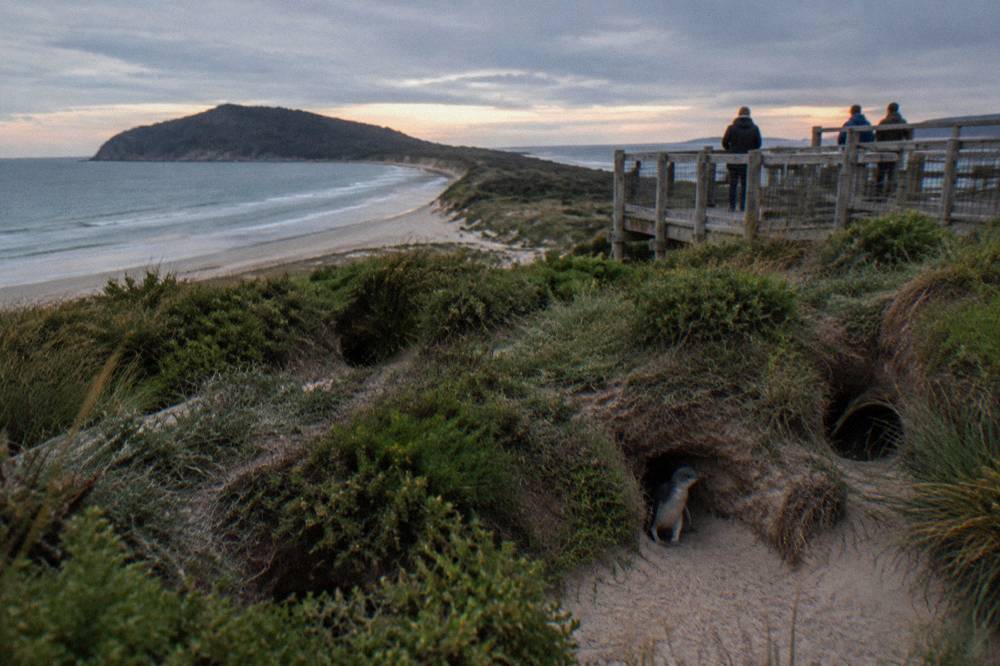
The numbers are worth knowing before a tour because they explain the behaviour you will see. A bird this small is vulnerable to gulls, dogs and feral cats, so it comes ashore in groups, at speed, in the dark, and it nests in a burrow rather than on open ground. The burrow tunnel, typically 60 to 80 cm long, is a defended hallway to a nest chamber, and the guideline about staying at least 3 m from burrows exists precisely because a frightened bird will not enter its own front door while a silhouette stands over it.
The breeding calendar is flexible. NRE Tasmania notes that the season varies by bird, place and year, commonly starting in winter, with a clutch of two eggs laid as early as May or as late as December. Both parents share incubation in shifts of up to a week, eggs hatch after about 35 days, and chicks fledge at about eight weeks. The Bicheno operator frames September to January as its breeding season with the most activity, February to August as the quieter winter window, and February to April as the moulting period, when adults stay ashore for two to three weeks while they replace every feather.
Seeing those numbers play out on a beach is the whole point of booking a guided walk. The Bicheno tour runs year-round except Christmas Day and New Year's Eve, departing from the operator's shop on Burgess St, and the seasonal start times shift with the sun. If the idea of standing quietly on a dark beach while birds the size of a wine bottle waddle past their own burrows appeals, that tour is the most direct way to experience the species this page is about.
Where Is Each Name Used Today?
Little penguin is the name used on official government and attraction pages across Australia, including NRE Tasmania and the Phillip Island Nature Parks site. Fairy penguin survives in everyday speech, in older books and in a great deal of tourism conversation, especially among Australians who grew up with it. Neither name is wrong; one is current and official, the other traditional.
The cleanest way to see the pattern is in a table. What follows is how the names distribute across the places a traveller is actually likely to encounter them, from booking pages to beach-side signs.
| Name | Where you will see it | Status |
|---|---|---|
| Little penguin | NRE Tasmania pages, Phillip Island Nature Parks, most current tour listings | Current official name |
| Fairy penguin | Everyday Australian speech, older guidebooks, casual travel writing | Traditional name, same bird |
| Eudyptula minor | Species listings, scientific literature, research reports | Scientific name, unchanged |
A few nuances sit behind that table. Official usage is not a law; nothing stops a local operator or a long-time resident from saying fairy penguin, and in Bicheno and George Town plenty do. Equally, a visitor who asks a guide "are these the fairy penguins?" will get a friendly yes, not a correction. The names are fully interchangeable on the ground in Tasmania.
The one place precision does matter is search. Researching "fairy penguin" tends to surface older articles and forum threads, while "little penguin" surfaces the current agency pages with the viewing guidelines, the breeding biology and the photography rules. Running both searches gives you the full picture, and the photography rules in particular are worth reading before any dusk visit, a topic covered in detail in our penguin photography rules guide.
How Many Little Penguins Live In Tasmania?
Past Tasmanian estimates put the state's little penguins at 110,000 to 190,000 breeding pairs, with most of those on offshore islands and under 5 percent on mainland Tasmania. No current published count exists for any individual named rookery. The majority of the Australian population lives in Tasmania, which is why the state remains the easiest place to see the species.
Those state-level figures are the only population numbers that should carry weight in your planning. Anyone quoting a precise colony size for Bicheno, Low Head, Bruny Island or Lillico is going beyond what official sources publish, and the honest answer at any single beach is simply that numbers vary by season, by night and by food supply.
The Bicheno story illustrates how local numbers can swing. The operator's own history records that the colony there fell to about 40 birds in the early 1990s after dog attacks, then recovered through land restoration work on the private rookery the tour now uses. That recovery is why the tour exists in its current form, and why the rules about dogs, leashes and quiet approach are enforced so firmly at every Tasmanian viewing site.
Where you can actually stand and watch is well documented. The Parks and Wildlife Service seabirds page names the Bruny Island Neck Conservation Area viewing platform, the Lillico Beach Conservation Area platform, Low Head Lighthouse, the Burnie penguin viewing platform and The Nut State Reserve at Stanley as dusk sites for little penguins and shearwaters. Our where to see penguins in Tasmania guide maps the free options against the two guided tours.
What Time Of Day Do Fairy Penguins Come Ashore?
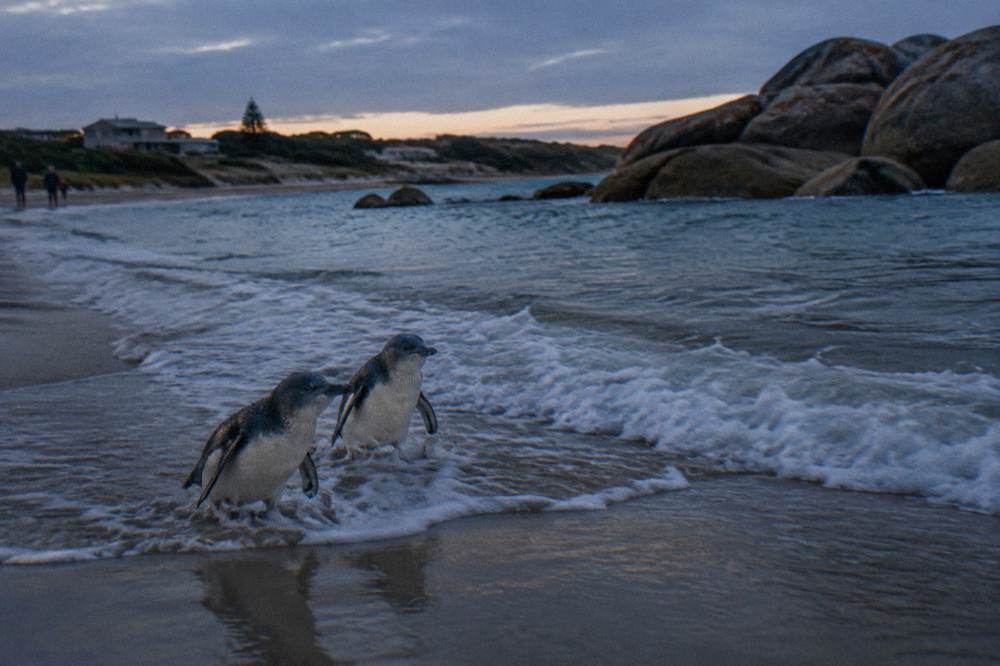
Little penguins leave the water at last light and most come ashore in small groups within an hour or so of darkness, so every tour times its departure to dusk. Disturbed birds stay at sea longer, which delays the feeding of chicks, which is why quiet, red-light-only viewing rules matter so much on the beach.
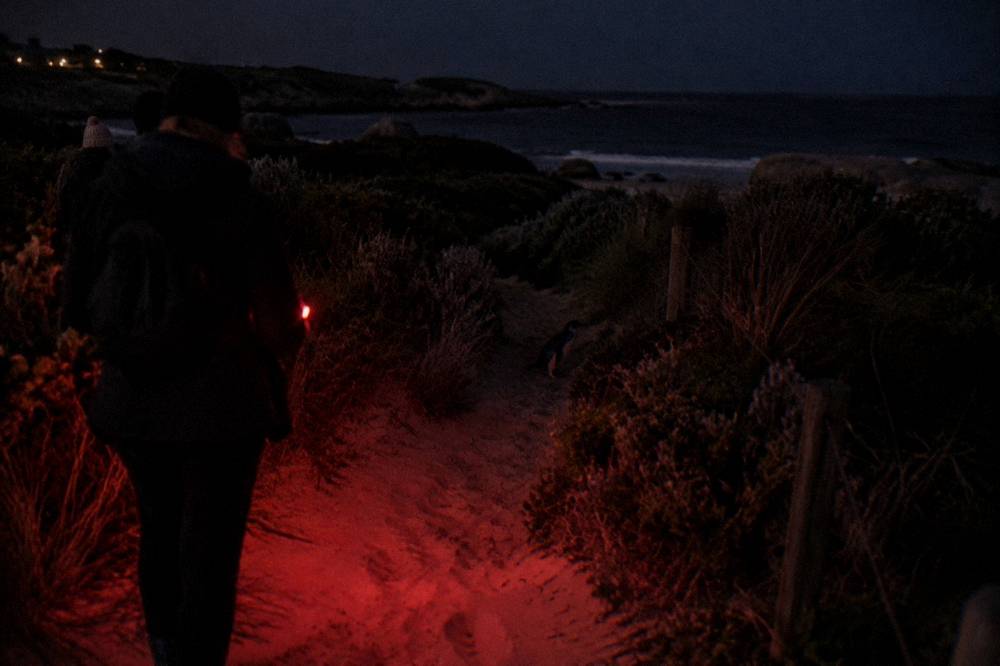
That last point is not etiquette, it is biology. The NRE guidelines record that penguins leave the water at last light and that disturbed birds remain at sea longer, stressing them and delaying chick feeding. A noisy group with a white torch can push an entire raft of birds back into the surf for another hour, which is why guided tours hand out dim red lights and ask for stillness. The full penguin watching guidelines cover dark clothing, approaching from land rather than along the beach, and keeping at least 3 m from burrows.
Tour start times follow the sun. The Bicheno operator runs fall and winter departures between 5:00pm and 7:30pm from February to August, and spring and summer departures between 7:30pm and 9:30pm from September to January, with the exact time confirmed at booking because it is adjusted to dusk. Sunset in southern Tasmania slides from roughly 6:20pm in early October to nearly 8:50pm in late December, so the same tour can start two and a half hours later in summer than in winter.
Season shapes the numbers on the beach as much as the clock does. September to January is the breeding season with the most activity, winter is quieter, and February to April is the moulting window when adults sit tight ashore. Our best time to see penguins in Tasmania guide breaks the calendar down month by month.
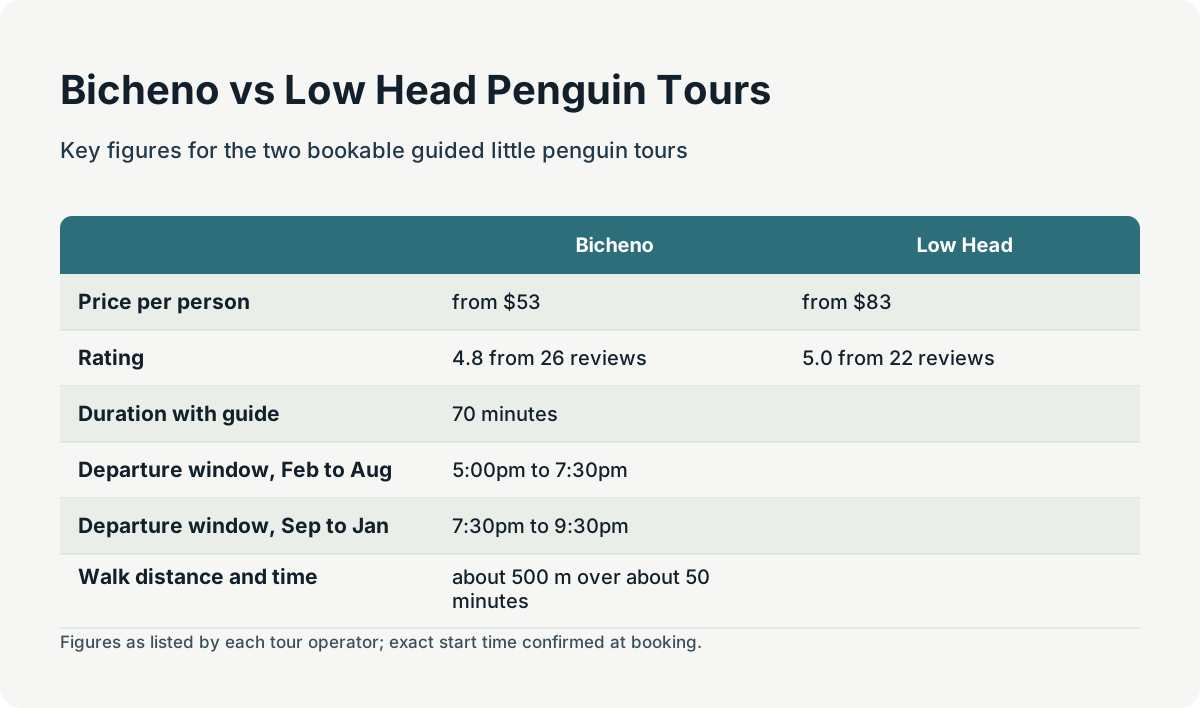
For visitors who want the timing handled for them, the Bicheno guided walk is the simplest option on the east coast: 70 minutes with the guide, from $53 per person, rated 4.8 from 26 reviews, with a short bus ride from the Burgess St shop to a private rookery and a walk of about 500 m over about 50 minutes. The listing is flagged as often selling out, so booking ahead is the safer play in peak months.
What Is The Best Way To See Little Penguins In Tasmania?
The two bookable guided options are the Bicheno tour on the east coast, from $53 per person and rated 4.8 from 26 reviews, and the Low Head tour from Launceston, from $83 per person and rated 5.0 from 22 reviews. Bicheno suits self-drivers staying in town; Low Head suits visitors based in Launceston who want a central pickup and transfer included.
NRE Tasmania's own guidance says the ideal way to watch little penguins is on a guided tour, and the reasoning is practical: a guide carries the red lights, knows where the birds land that night, and keeps the group still and quiet. The choice between the two Tasmania Penguin Tours listings mostly comes down to where you are sleeping that week.
Bicheno is the east coast pick. The 70-minute guided beach walk costs from $53 per person, holds a 4.8 rating from 26 reviews, and includes a short bus ride from the shop at 1/70 Burgess St to a private rookery, then a guided walk of about 500 m over about 50 minutes. There are no accommodation pickups, so it works best if you are driving yourself or staying in Bicheno. Cancellation is free, the listing is flagged as often sells out, and full details are on the Bicheno guided penguin walk page, where you can Check availability for your dates.
Low Head is the north coast pick, and it is built around the transfer. The tour runs about 3 hours door to door, including central Launceston pickup, the drive north towards George Town, and about 1 hour of guided penguin viewing at Low Head, with a maximum of 10 guests. It costs from $83 per person and carries a 5.0 rating from 22 reviews. The Low Head operator also sells tickets direct at its own adult price without the Launceston transfer, which is worth knowing if you have a car, but the listing here is the one with pickup included.
| Detail | Bicheno Penguin Tour | Low Head Tour From Launceston |
|---|---|---|
| Price | From $53 per person | From $83 per person |
| Rating | 4.8 from 26 reviews | 5.0 from 22 reviews |
| Total time | 70 minutes with the guide | About 3 hours door to door |
| Viewing format | Walk of about 500 m over about 50 minutes | About 1 hour of guided viewing |
| Group size | Not stated on the listing | Maximum 10 guests |
| Meeting point | Operator's shop on Burgess St, Bicheno | Central Launceston pickup |
| Cancellation | Free | Free |
What to wear matters on both, because both run in the dark on sand. Warm layers, enclosed shoes and dark clothing are the standard kit, and the operator supplies the red lighting. Our what to wear on a penguin tour guide has the full packing list.
Little Penguins In Tasmania Or The Phillip Island Parade In Victoria?
You would see the same species in both places, but the experiences differ sharply. Phillip Island in Victoria runs a ticketed, timed parade on the Summerland Peninsula, home to about 40,000 little penguins per the official page, with grandstand viewing and no photography after sunset. Tasmania offers small-group guided walks on wild beaches at Bicheno and Low Head.
First, the geography, because it trips up a lot of first-time visitors: Phillip Island and its Penguin Parade are in Victoria, on the Australian mainland, about 90 to 120 minutes from Melbourne. They are not in Tasmania and no Tasmanian tour sells them. The bird is the same little penguin, Eudyptula minor, the smallest penguin species in the world, and the official Phillip Island pages use exactly that name.
The difference is scale and staging. Phillip Island is a large, ticketed, timed event with tiered grandstands and premium viewing formats, open every night of the year, with penguins arriving at sunset and strict rules against photography or filming after sunset. Tasmania's guided tours are the opposite register: a guide, a small group, a dark beach and a red torch. The Tasmanian state-level estimates of 110,000 to 190,000 breeding pairs, mostly on offshore islands, mean the birds are plentiful here too, but the viewing is intimate rather than grandstand-scale.
| Aspect | Tasmania | Phillip Island, Victoria |
|---|---|---|
| Species | Little penguin, Eudyptula minor | Little penguin, Eudyptula minor |
| Scale | State estimates of 110,000 to 190,000 breeding pairs, mostly on offshore islands | About 40,000 little penguins on the Summerland Peninsula per the official page |
| Viewing style | Small-group guided walks and free volunteer-run platforms | Ticketed, timed grandstand and premium formats |
| Photography | No flash; dim red light only | No photography or filming after sunset |
| Getting there | Bicheno on the east coast, Low Head near George Town on the north coast | About 90 to 120 minutes from Melbourne |
Photography rules are the sharpest practical contrast. In Tasmania, photography is permitted on the guided beaches without flash, and red-light torches are supplied or restricted depending on the site. At Phillip Island, the official parade page bans cameras entirely after sunset. Our Phillip Island versus Tasmania comparison works through the choice in full, including who each experience suits.
Which Name Should You Use When Booking?
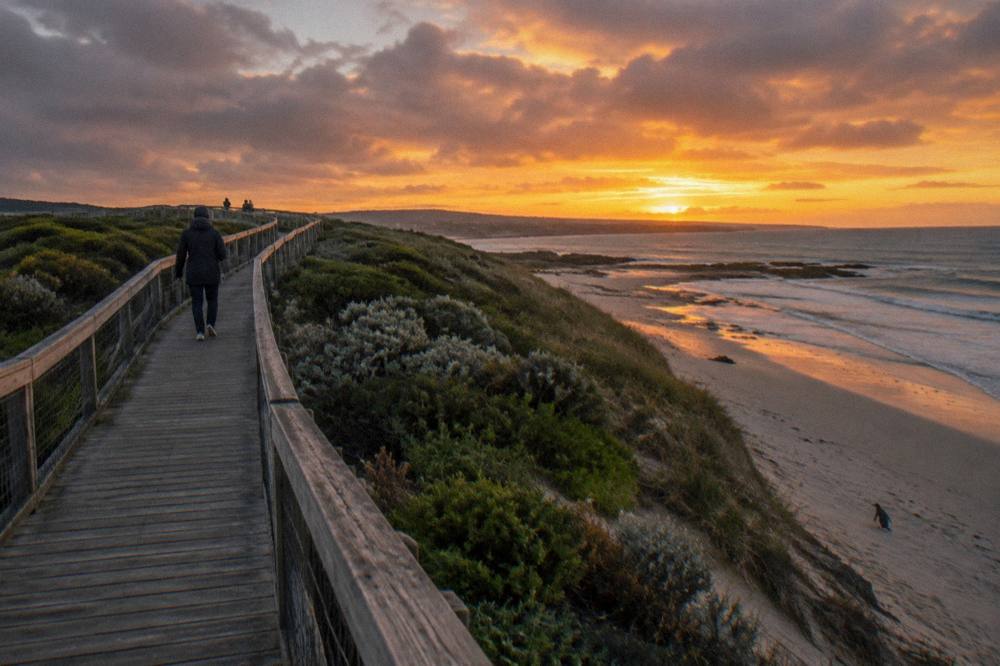
Use either name and you will be understood, but little penguin is the safer search term because it matches what official pages and current listings say. Fairy penguin still works in conversation and in older material. The bird, the tour, the price and the dusk timetable are identical under both names.
In practice, the naming question resolves itself the moment you book. The Bicheno walk from $53 and the Low Head tour from Launceston from $83 both put you on a beach with the world's smallest penguin within an hour of sunset, red light in hand, guide nearby. Whether you called it a fairy penguin when you typed the search matters far less than arriving warm, quiet and on time.
The bird deserves either name. It weighs about a kilogram, stands about 40 cm, lives roughly six years on average, and crosses a dark ocean every single evening to reach a burrow it dug itself. That is the animal behind both words, and Tasmania is one of the best places on Earth to watch it happen.
Common Questions About Little Penguins And Fairy Penguins
Are fairy penguins and little penguins the same bird?
Yes. Fairy penguin and little penguin are two common names for one species, Eudyptula minor, the smallest penguin in the world. Official agencies in Tasmania and Victoria use little penguin, while fairy penguin survives in everyday Australian speech. There is no difference in size, behaviour or range.
Is the fairy penguin the smallest penguin in the world?
Yes. The little penguin, or fairy penguin, is the smallest penguin species on Earth. Adults stand about 40 cm tall and weigh about 1 kg, with an average lifespan of about six years, according to NRE Tasmania's species page.
Why are they no longer called fairy penguins?
Official naming drifted towards little penguin, a plain descriptive name that matches the scientific name Eudyptula minor, in which minor means small. Fairy penguin was never incorrect; it remains the traditional Australian name and is still widely used in conversation and older guidebooks.
Can you see fairy penguins in Tasmania?
Yes, and Tasmania holds the majority of the Australian population. Guided tours run at Bicheno on the east coast and Low Head on the north coast, and free volunteer-run viewing operates at sites including Lillico Beach and Burnie in season. Most birds come ashore within an hour or so of darkness.
What is the scientific name of the fairy penguin?
Eudyptula minor. That name covers both common names and every population in Australia, including the roughly 40,000 little penguins on the Summerland Peninsula at Phillip Island in Victoria and the Tasmanian breeding population, most of which nests on offshore islands.