What Is Bruny Island Famous For?
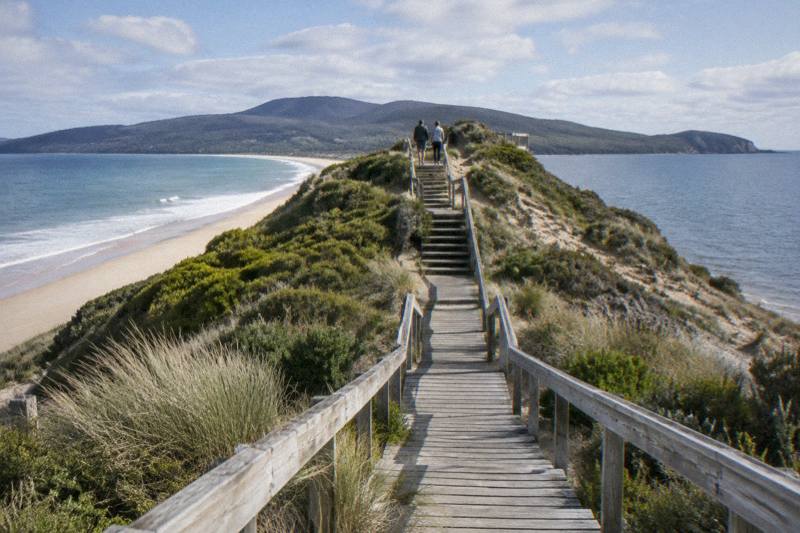
Bruny Island is famous for its ferry crossing, the Neck lookout with its penguin viewing platform, and little penguins coming ashore at dusk. Here is what the official sources actually say.
What Is Bruny Island Famous For?
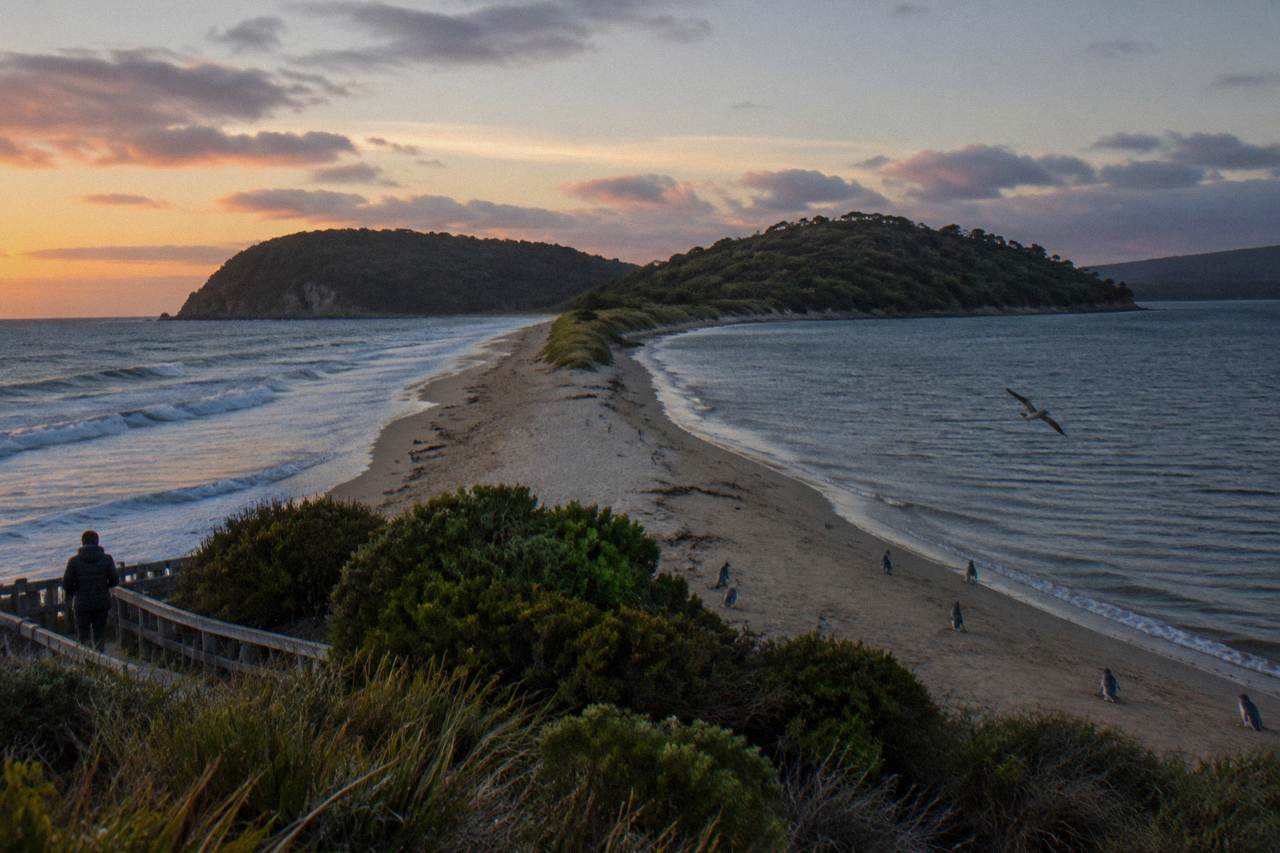
Bruny Island is famous for three things above all: the short SeaLink ferry crossing from Kettering, the Neck, a narrow isthmus with a Parks and Wildlife named penguin viewing platform, and colonies of little penguins and short-tailed shearwaters that come ashore at dusk. Everything else, the food trail, the cruises, the lighthouse, sits on top of that coastal foundation. If you want to see little penguins on the mainland too, the guide to penguin viewing near Devonport at Lillico Beach covers a similar volunteer-run platform on the north coast.
That is the honest answer, and it is worth being precise about it, because Bruny has accumulated a lot of reputation over the years and not all of it is anchored in anything an official source will confirm. The island sits south of Hobart across the D'Entrecasteaux Channel, reached only by boat, which shapes every visit. You cannot drive there on a whim without joining a queue. The ferry is the gate, the Neck is the postcard, and the penguins are the reason many travellers stay past dark in the first place.
The Neck is the strip of sand and bush that joins North Bruny and South Bruny into one island. Parks and Wildlife Service Tasmania names the Neck Conservation Area viewing platform as a place to see little penguins and shearwaters at dusk, alongside other sites around the state. The platform's hours, entry requirements and step counts are not published on an official page, so the honest move is to check the service before you go. What is certain is the view: two coastlines, one narrow neck of land, and a lookout that most visitors photograph at least once.
Then there is the wildlife angle, which is where this site lives. The South Bruny National Park page notes the area as a highlight for short-tailed shearwater and little penguin colonies. Little penguins, the smallest penguin species at about 1 kg and 40 cm as adults, return to their burrows in small groups within an hour or so of darkness. That dusk ritual is the same one that draws people to rookeries across Tasmania, and it is the reason an evening penguin stop fits so naturally onto a Bruny itinerary, whether on the island itself or on the east coast at Bicheno, where the guided Bicheno Penguin Tour walks visitors to a private rookery from $53 per person.
For travellers building a trip around that evening experience, the two bookable guided options in Tasmania are the Bicheno tour and the Low Head tour from Launceston, and both belong in any shortlist. The Bicheno listing is rated 4.8 from 26 reviews and carries an "often sells out" flag, so it rewards early booking. The Low Head listing, rated 5.0 from 22 reviews, includes central Launceston pickup and about three hours door to door.
How Does The Bruny Island Ferry Work?
The Bruny Island ferry runs from Kettering to Roberts Point every day of the year, with a crossing of about 20 minutes and sailings roughly every 20 minutes in busy periods. It works on a queueing system: you buy a ticket for the next available ferry, not a specific sailing, and return tickets stay valid for 365 days. No advance booking for a particular crossing is possible.
That queueing detail matters more than most first-time visitors expect. You turn up at Kettering, about a 35-minute drive from Hobart according to the ferry operator's own information, and you join the vehicle line. Tickets can be bought on arrival or pre-purchased online, but either way they are open fares valid for the next ferry with space. In peak summer periods the queue can stretch well down the road, which is why locals advise arriving early or travelling off-peak.
The fare structure changed with the summer timetable that commenced 28 September 2026. Visitor fares were simplified to two options, Regular and Saver, with Saver applying at designated times. From 1 December to April a 15 percent peak-season surcharge applies to the Visitor Regular fare only, leaving Saver and resident fares untouched. Example return fares for a vehicle under 6 metres are $58.60 on Regular before December, $67.30 from 1 December to April, and $50.90 on Saver. The operator's fares page lists other vehicle lengths, motorcycles and bicycles.
| Ferry fact | What applies |
|---|---|
| Route | Kettering to Roberts Point, 365 days a year |
| Crossing time | About 20 minutes |
| Frequency | Roughly every 20 minutes in many periods, extra services in peaks |
| Ticketing | Queueing system, next available ferry, no reserved sailings |
| Ticket validity | Return, open fare, valid 365 days |
| Summer timetable | Commenced 28 September 2026 |
| Peak surcharge | 15 percent on Visitor Regular fare, 1 December to April |
The ferry status page has been showing services operating as scheduled, with no current disruptions noted. If you are planning a dusk penguin stop on the island, the practical read is simple: check the last return sailing of the day against sunset, because penguins come ashore at last light and a missed ferry means an unplanned overnight. The Neck campsite, described on the Parks camping page as a signposted camping area about 3 km past the lookout, is one way people solve that problem.
One alert worth knowing about if you plan to walk on South Bruny: the national park page notes fire-related closures of walking tracks on the Labillardiere Peninsula from 31 October 2025, with Jetty Beach Campground and Old Jetty Road reopened from 28 November 2025. Those closures do not touch the Neck or its viewing platform. The official SeaLink ferry timetable page is the place to confirm sailing times before any evening plan.
If your heart is set on a guided penguin evening rather than a self-guided platform stop, the Bicheno option removes the ferry-timing problem entirely: it is a 70-minute guided walk with a set meeting point on Burgess Street in Bicheno, and it runs nightly year-round except Christmas Day and New Year's Eve. Free cancellation applies.
Can You See Penguins On Bruny Island?
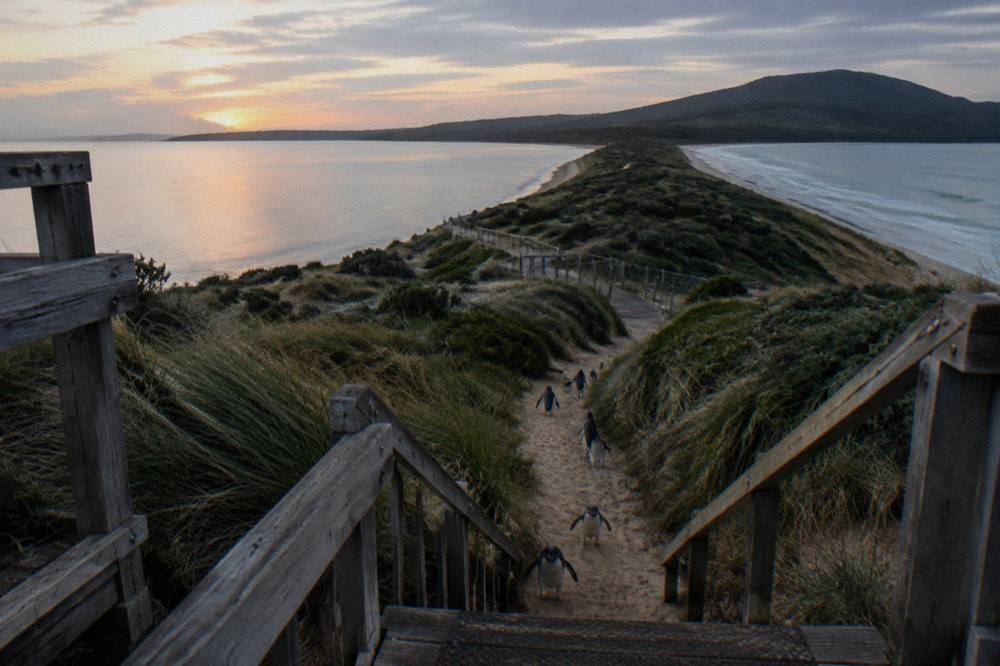
Yes, you can see little penguins on Bruny Island. The Parks and Wildlife Service names the Neck Conservation Area viewing platform as a dusk viewing site for little penguins and short-tailed shearwaters, and the South Bruny National Park page notes the area as a highlight for both colonies. Viewing is self-guided from the platform, with no tour operator running penguin walks on the island itself. For tips on timing your visit and what a dusk viewing experience actually looks like, see our guide to seeing little penguins on Bruny Island.
That distinction, self-guided versus guided, is the single most useful thing to understand about Bruny penguins. On the island you stand on the platform at last light, keep quiet, and wait. There is no guide with a red torch, no group, no fee that we could confirm on an official page, and no published hours for the platform. The Parks and Wildlife seabirds page groups the Neck with Lillico Beach, Low Head Lighthouse, Burnie and The Nut at Stanley as places where penguins and shearwaters appear at dusk, which is about as official as penguin viewing gets in Tasmania. Since the platform keeps you at a distance, you may wonder about the rules on contact, and our guide to touching fairy penguins explains why handling them is off limits and what you can do instead.
The rules that apply on that platform come from the NRE Tasmania penguin watching guidelines, and they are worth reading before any first visit: wear dark clothing, approach from land rather than along the beach, use existing tracks, never walk through the colony, settle at least 3 m from burrows and not blocking them, arrive before last light, stay quiet, and use only dim red-light torches, never pointed at the water or directly at penguins. No dogs or cats under any circumstances, even leashed. Penguins are protected wildlife, and catching or harassing them is illegal. The full guidelines are published by NRE Tasmania.
What Bruny does not offer is the guided rookery experience. For that, the two bookable tours in Tasmania are on the east coast at Bicheno and on the north coast at Low Head near George Town. The Bicheno Penguin Tour, a 70-minute guided beach walk to a private rookery rated 4.8 from 26 reviews, is the closest guided equivalent for anyone combining Bruny with an east coast drive. The Low Head tour from Launceston, rated 5.0 from 22 reviews and capped at 10 guests, suits travellers based in the north.
The Low Head listing runs about three hours door to door, including central Launceston pickup and about an hour of guided viewing, from $83 per person with free cancellation. It is the stronger pick for anyone who wants a guide, a small group and a transfer solved in one booking, while Bruny remains the pick for self-guided platform viewing in the south.
What Is The Neck And Why Does Everyone Photograph It?
The Neck is the narrow sandy isthmus, roughly a few hundred metres wide, that joins North Bruny and South Bruny into a single island. A viewing platform and lookout above it give the island its signature photograph: two coastlines curving away in opposite directions, beaches on both sides, and a timber stair climbing the dune. Parks and Wildlife names it as a penguin and shearwater viewing site.
It is the geography that makes the picture work. From the lookout you see the isthmus as a thin line of sand and bush with water on both sides, which reads as two islands joined in the middle. Most visitors climb, shoot the panorama, and leave within half an hour. The penguin watchers arrive later, when the day-trippers have gone and the light has dropped enough for the birds to consider coming home.
The Neck is also where the island's wildlife story is most visible. The same platform serves two species with two schedules: short-tailed shearwaters, which return to Tasmania colonies in late September and early October for a breeding season running to about April, and little penguins, which come ashore in small groups within an hour or so of darkness. On a good evening in the warmer months both are moving at once, shearwaters wheeling overhead and penguins shuffling up from the waterline.
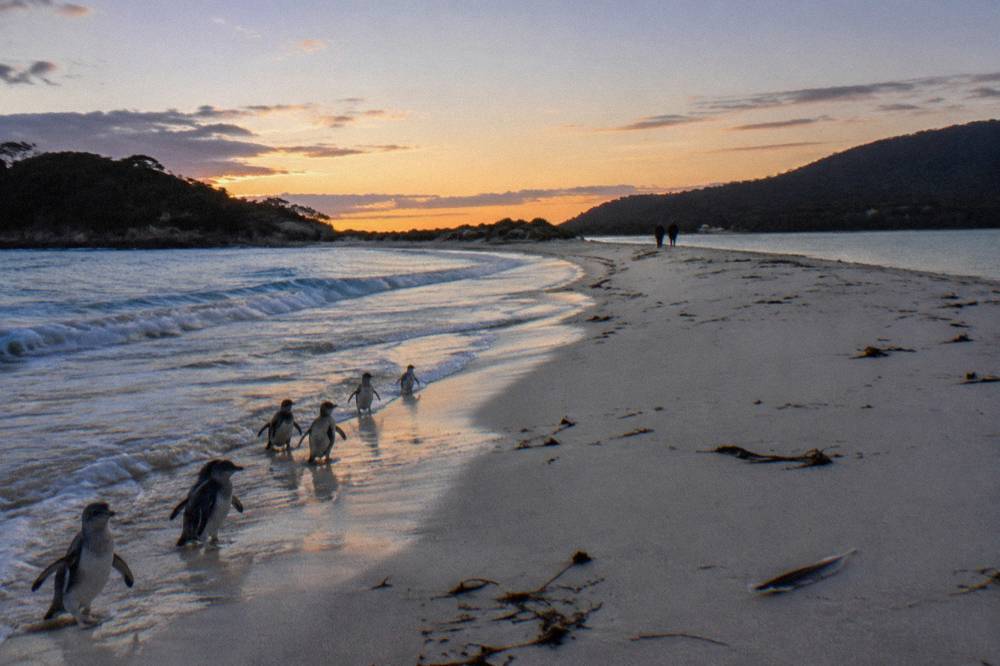
The Neck campsite sits about 3 km past the lookout, on the South Bruny camping page's own description, a signposted camping area outside the national park boundary. Staying there is the simplest way to be on the platform at last light without racing the last ferry back. Check the Parks and Wildlife Service before going for current alerts, platform access details and any pass requirements, since the Neck is a Conservation Area and the service's own pages are the authority on what applies.
Is Bruny Island A Day Trip Or An Overnight Stay?
Bruny Island works as a day trip from Hobart, and plenty of visitors do exactly that, but the penguin viewing pushes the decision toward an overnight stay. Penguins come ashore at last light, the ferry runs on a queueing system rather than reserved sailings, and sunset in late December falls close to 8:50 pm in southern Tasmania, so a dusk viewing plus a same-night return to Hobart is a tight, risky plan.
The day-trip version of Bruny is well established. Pennicott Wilderness Journeys runs the Bruny Island Traveller, a full-day sightseeing and produce tour from Hobart departing around 7:45 am and returning around 5:30 pm, which includes the Neck lookout among its stops. Bruny Island Safaris is referenced in tourism roundups for similar day trips highlighting produce and coastline. Those tours see the island in daylight, which is the point of them, and they leave before the penguins arrive.
The overnight version exists largely because of the dusk schedule. If the goal is standing on the Neck platform when the first little penguins come up from the water, you either camp near the Neck, book accommodation on the island, or accept a late ferry in the queue and a careful drive back to Hobart in the dark, mindful that Tasmanian roads carry wildlife at dusk and dawn. Timing matters here: in early October, sunset sits around 6:20 pm in the Hobart area, climbing to peaks near 8:50 pm in late December and early January, then easing to about 7:30 pm by late March. The later the sunset, the later the penguins, and the later the ferry you need.
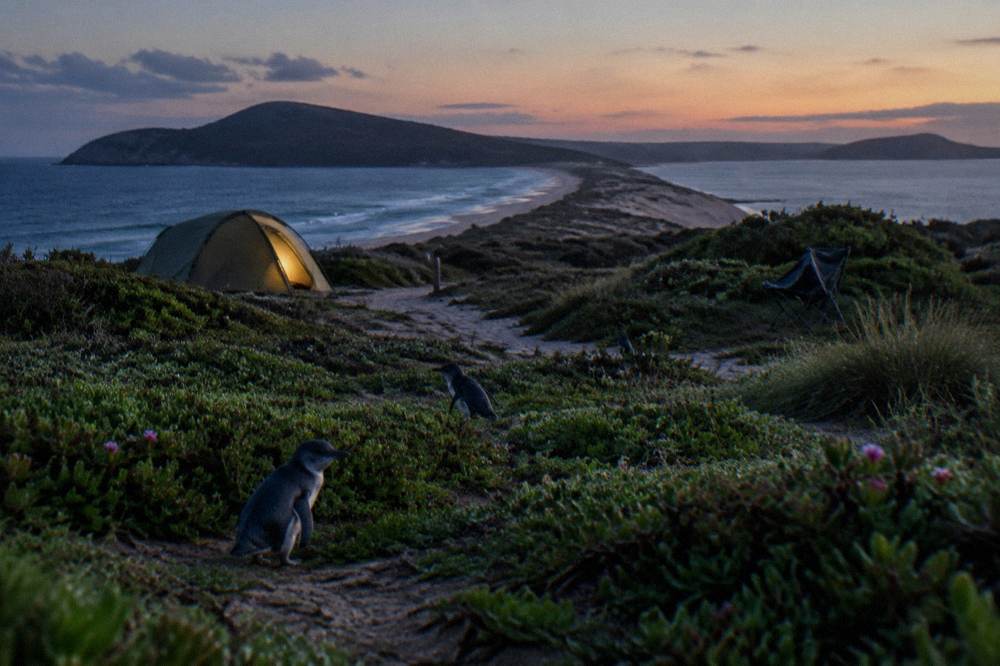
There is a third option that sidesteps the whole question: split the trip. Do Bruny by day for the Neck, the national park walks and the ferry crossing, then drive the east coast and end with the guided evening at Bicheno, where the 70-minute penguin walk starts from a set meeting point on Burgess Street and ends back at your car. The Bicheno tour, from $53 per person with free cancellation, is built for exactly that kind of evening, and its "often sells out" flag means the booking should come before the itinerary. Our Bicheno Penguin Tours guide covers the practical details.
How Does Bruny Island Compare With Bicheno For Penguin Watching?
Bruny offers self-guided platform viewing at the Neck, free to stand on with no operator involved, while Bicheno offers a guided walk into a private rookery from $53 per person. Bruny depends on your own discipline with the NRE viewing rules, red-light torches and timing. Bicheno hands you a guide, a set route and a 70-minute structure rated 4.8 from 26 reviews.
Neither is the better experience in the abstract; they suit different travellers. Bruny suits the self-sufficient visitor who is already on the island, happy to stand quietly at a platform and follow the guidelines without supervision. The trade is uncertainty: no guide means no one to tell you where the birds will land tonight, and the platform's published details are thin. Bicheno suits the visitor who wants the highest-probability evening, a guide who knows the rookery, and a tour that runs nightly year-round except Christmas Day and New Year's Eve. The trade is cost and the drive to the east coast.
| Factor | Bruny Island Neck | Bicheno Guided Tour |
|---|---|---|
| Style | Self-guided platform viewing | Guided 70-minute beach walk |
| Price | Free to view from the platform | From $53 per person |
| Rating | No tour rating, no operator | 4.8 from 26 reviews |
| Meeting point | The Neck viewing platform | Operator's shop, Burgess St, Bicheno |
| Transfers | None, self-drive plus ferry | Short bus ride to the rookery included |
| Cancellation | Not applicable | Free cancellation |
| Best for | Independent travellers already on the island | First-time penguin watchers wanting a guide |
The Bicheno rookery itself carries one of the better recovery stories in Tasmanian penguin conservation. The operator's own account says the colony fell to about 40 birds in the early 1990s after dog attacks, then recovered through land restoration work on the private rookery. Dog attacks remain one of the recognised threats to little penguins in Tasmania, alongside feral cats, roadkill and habitat loss, which is why the no-dogs rule at every viewing site is absolute. If you'd rather watch penguins without joining a tour, the guide to seeing Bicheno's penguins on your own explains what the rules actually allow.
For north-based travellers the comparison has a third column: Low Head. The listing from Launceston includes central pickup and transfer, about three hours door to door, a maximum of 10 guests and about an hour of guided viewing, from $83 per person, rated 5.0 from 22 reviews. It is the only one of the three that solves transport entirely. Our Bicheno versus Low Head comparison breaks that choice down in full.
Whichever evening you choose, the same two facts hold. Little penguins come ashore in small groups within an hour or so of darkness, and disturbed birds stay at sea longer, which stresses them and delays feeding of chicks. Standing quietly, in dark clothing, behind the rules, is not just etiquette. It is the mechanism that makes the evening work for the birds and for you.
Common Questions About Bruny Island
What Is Bruny Island Famous For?
Bruny Island is famous for the 20-minute SeaLink ferry crossing from Kettering, the Neck lookout and its penguin viewing platform, and colonies of little penguins and short-tailed shearwaters that come ashore at dusk. It is also known for full-day sightseeing tours from Hobart that include the Neck among their stops.
Can You See Penguins On Bruny Island?
Yes. The Parks and Wildlife Service names the Neck Conservation Area viewing platform as a dusk viewing site for little penguins and shearwaters, and viewing is self-guided. There is no penguin tour operator running guided walks on the island itself.
How Long Is The Bruny Island Ferry Crossing?
About 20 minutes from Kettering to Roberts Point, running 365 days a year with sailings roughly every 20 minutes in many periods. Tickets work on a queueing system for the next available ferry, and return tickets stay valid for 365 days.
Do You Need To Book The Bruny Ferry In Advance?
No. The queueing system means tickets are for the next available ferry, not a specific sailing, so no advance booking for a particular crossing is required or possible. You can buy on arrival at Kettering or pre-purchase online, and in peak periods the queue itself is the constraint.
What Time Do Penguins Come Ashore On Bruny Island?
Little penguins come ashore in small groups within an hour or so of darkness, so the platform visit starts at last light. Sunset in southern Tasmania runs from about 6:20 pm in early October to peaks near 8:50 pm in late December and early January.
Is There A Guided Penguin Tour Near Bruny Island?
Not on the island. The closest guided options are the Bicheno Penguin Tour on the east coast, a 70-minute guided beach walk from $53 per person, and the Low Head tour from Launceston, about three hours door to door from $83 per person. Both have free cancellation.
The Neck, the ferry and the penguins are the core of Bruny's fame, and the evening wildlife is the part most day-trippers miss. If a guided dusk experience is the priority, the Bicheno Penguin Tour listing is the east coast option, and the viewing-site comparison on Tasmania Penguin Tours puts every self-guided platform beside it. For the full island picture, our Bruny Island penguins guide covers the platform in detail.