Can I See Penguins On Bruny Island?
Yes, you can see little penguins on Bruny Island at dusk from the Neck Conservation Area platform. No tour is needed, but this guide covers what to expect, how to get there, and the best guided alternatives.
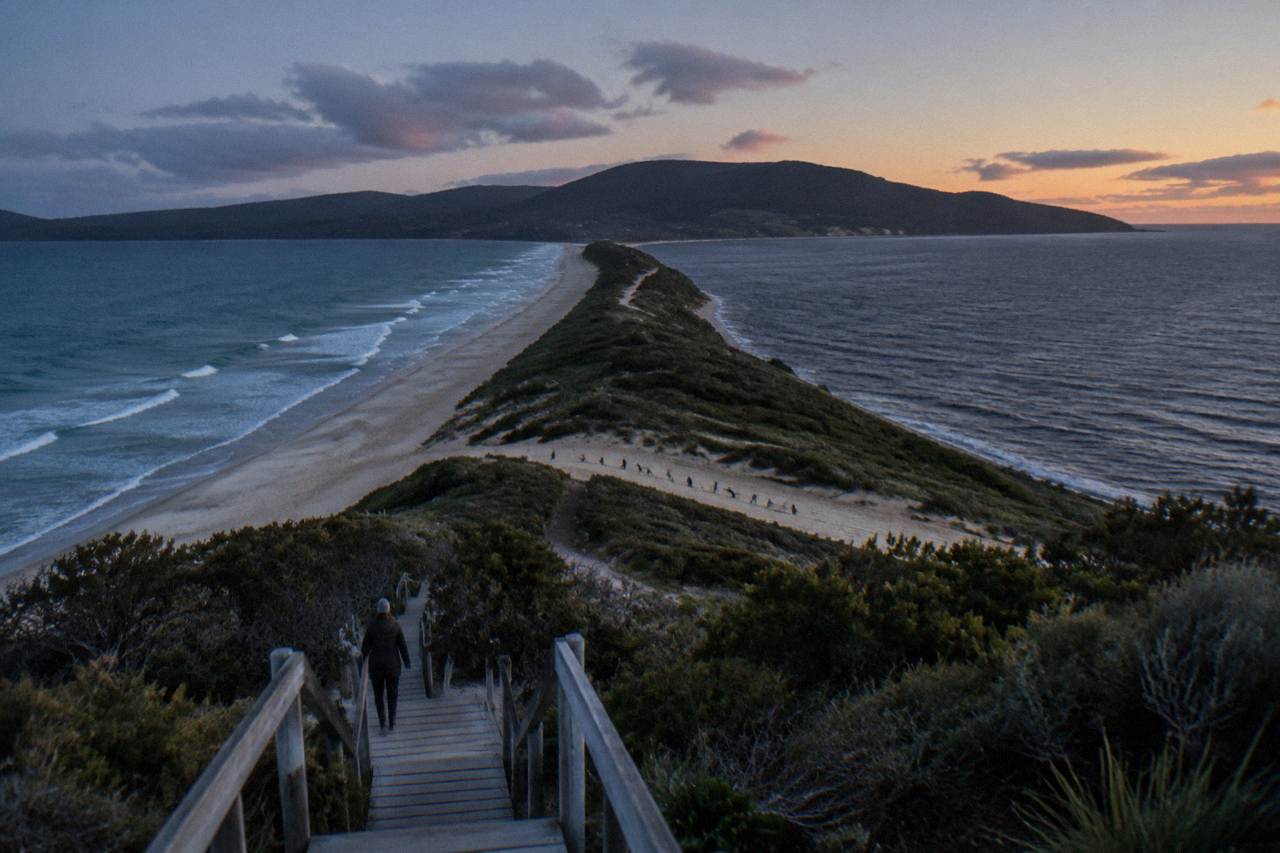
Bruny Island sits off the south-east coast of Tasmania, a short drive and a ferry crossing from Hobart (see Hobart To Bruny Drive). Most visitors come for the cheese, oysters, and the sweeping view from the Neck lookout. But the island also has a little-known wildlife secret: after sunset, little penguins waddle ashore at the Neck Conservation Area, and anyone can watch them for free. This page explains exactly where to go, what time to arrive, and how the experience stacks up against the guided tours sold by Tasmania Penguin Tours.
Can I See Penguins On Bruny Island?
Yes, you can see little penguins on Bruny Island at dusk from the Neck Conservation Area viewing platform. It is a free, self-guided site named by Tasmania’s Parks and Wildlife Service, with no tour or ticket required. You will need your own transport, a red-light torch, and the patience to wait quietly as the birds come ashore after dark, but the encounter is genuine and costs nothing. If you're planning more penguin watching around Tasmania, the season and timing guide for seeing penguins at Stanley covers another free viewing spot in the state's northwest.
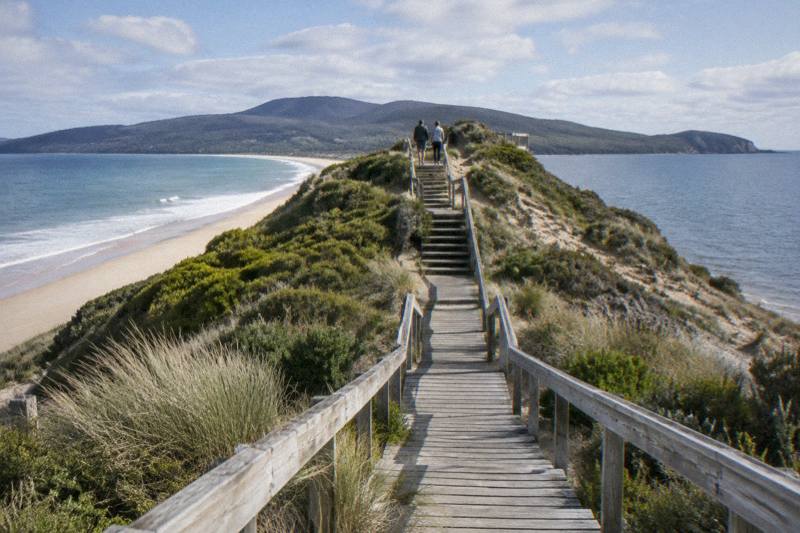
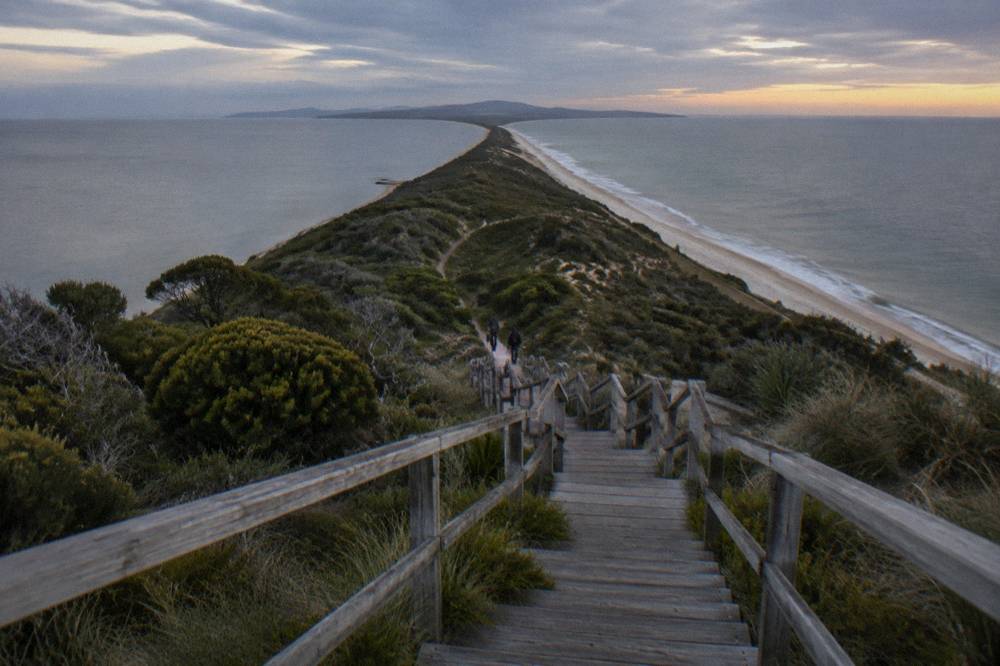
The Neck is the narrow isthmus that links North and South Bruny. During the day it is a popular photo stop, with a wooden staircase leading to a lookout that surveys Adventure Bay on one side and the D’Entrecasteaux Channel on the other. At dusk, the same stretch of coast becomes a penguin highway. Little penguins, the world’s smallest penguin species, nest in burrows among the coastal scrub and return from the sea each evening to feed their chicks.
The Parks and Wildlife Service lists the Neck Conservation Area viewing platform as a recognised seabird site, alongside other Tasmanian platforms at Lillico Beach and Low Head. There are no ticket booths, no guides, and no fixed schedule beyond the birds’ own rhythm. The experience is raw and quiet, and on a clear evening the setting alone is worth the trip.
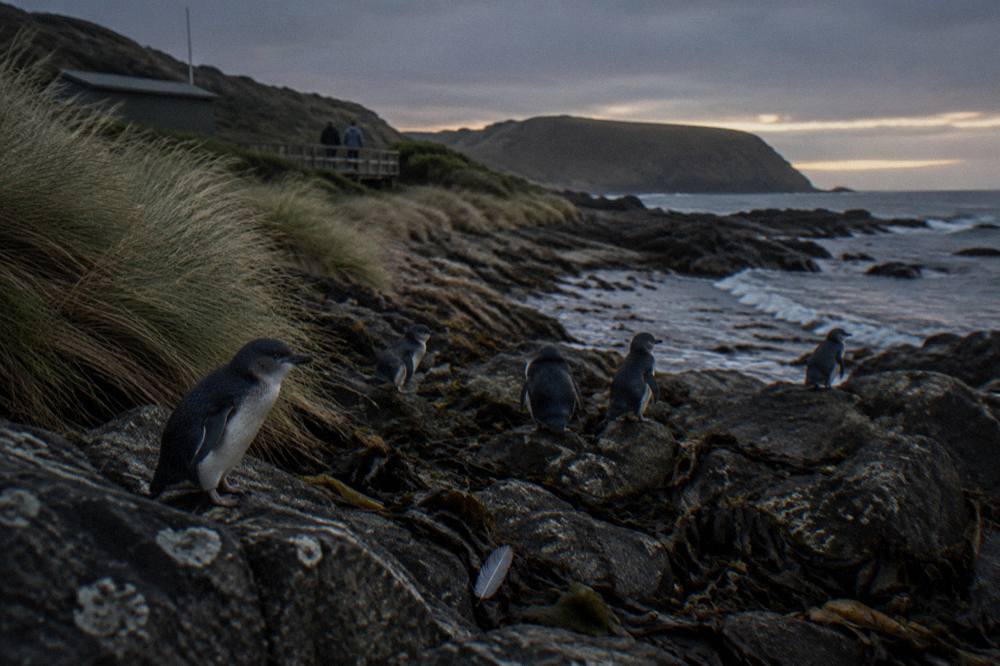
The number of penguins you see will vary by season and weather. September to January is the breeding season, when adults are actively feeding chicks and activity tends to be highest. February to April is the moulting period, when birds stay ashore for weeks at a time and may be less visible on the beach. Winter evenings are quieter but still offer a chance, especially if you stay until full dark.
Because the Neck is a public conservation area, you share the space with other visitors. Arrive early to secure a spot with a clear view of the beach, and keep noise and movement to a minimum once the light begins to fade.
Where On Bruny Island Can You See Penguins?
The only official, named penguin viewing spot on Bruny Island is the Neck Conservation Area viewing platform, on the narrow isthmus between North and South Bruny. It is a free site with a wooden boardwalk and viewing deck that overlooks the beach where the penguins come ashore. There are no other developed viewing areas on the island, and no commercial penguin tours operate here. The Neck is also the island's most iconic landmark, so if you want the fuller picture, our guide to what Bruny Island is best known for covers the ferry crossing, the lookout, and everything in between.
The platform sits right beside the staircase that climbs to the Neck lookout, the timber staircase that climbs to the lookout. During the day, the car park fills with tourists taking in the panorama. After sunset, the same car park empties out, and the platform becomes a quiet vantage point for watching little penguins emerge from the surf and scurry into the dunes.
There are no lights on the platform itself, which is deliberate: bright lights disorient penguins and can stop them coming ashore. Bring a torch with a red filter, or cover a standard torch with red cellophane. The red beam lets you see the birds without disturbing them. Never shine any light directly at a penguin or toward the water, and never use a camera flash.
While the Neck platform is the only official viewing site, some visitors report seeing penguins at other beaches on Bruny, such as Adventure Bay or Cloudy Bay. These sightings are sporadic and not supported by any signage or infrastructure. If you try a different beach, follow the same viewing rules, stay on the sand, and never walk through vegetated dunes where burrows may be hidden.
Because Bruny has no guided tours, the experience is completely self-reliant. That can be rewarding, but it also means there is no guarantee of a good sighting. For travellers who want a near-certain encounter with a knowledgeable guide, the two tours sold on this site are the most reliable options in Tasmania. The highest-rated is the Bicheno Penguin Tour, a 70-minute walk to a private rookery on the east coast.
The Bicheno tour operates year-round from the operator’s shop on Burgess Street, with a short bus ride to a restored rookery where a colony that once dipped to about 40 birds has recovered through decades of land restoration. The other tour, from Launceston, takes small groups to the Low Head Coastal Reserve on the north coast. Both are guided with free cancellation; Low Head supplies red lights and Bicheno allows photos without flash on the listing. For a side-by-side look at the two experiences, read our Bicheno vs Low Head penguin tours guide.
If you are already planning a trip to Bruny Island, the Neck platform is a wonderful add-on after a day of sightseeing. But if seeing penguins is the main goal of your evening, a guided tour removes the guesswork and gives you a trained interpreter who knows exactly where the birds will appear. The broader picture of free and paid viewing spots across the state is covered in our where to see penguins in Tasmania guide.
What Time Of Day Do Penguins Come Ashore At The Neck?
Little penguins return to the Neck at dusk, typically within an hour of sunset. The exact time shifts with the seasons, from around 6:20 pm in early October to as late as 8:50 pm near the summer solstice, and back to roughly 7:30 pm by late March. Plan to arrive at least 30 minutes before sunset to find a spot and let your eyes adjust to the fading light.
Penguins are visual hunters at sea and navigate by the last light of the day. They gather in small groups just beyond the breakers, then ride the waves onto the sand once the light is low enough to offer some protection from gulls and other predators. The parade is not a single wave; birds trickle ashore in clusters over 30 to 60 minutes, sometimes longer if the moon is bright or the sea is rough.
The table below gives approximate sunset times for the Bruny Island area across the viewing season. These are planning ranges only, and the exact minute will vary by a few days either side. Check a weather app or the Bureau of Meteorology for the precise sunset on your date.
| Month | Approximate Sunset (AEDT) | Suggested Arrival |
|---|---|---|
| October | 6:20 pm to 7:10 pm | 5:50 pm |
| November | 7:15 pm to 8:15 pm | 6:45 pm |
| December | 8:20 pm to 8:50 pm | 7:50 pm |
| January | 8:30 pm to 8:50 pm | 8:00 pm |
| February | 7:50 pm to 8:30 pm | 7:20 pm |
| March | 7:00 pm to 7:30 pm | 6:30 pm |
Daylight saving runs from early October to early April in Tasmania, so all times in the table are Australian Eastern Daylight Time. If you visit in late March after clocks go back, sunset will jump earlier by an hour; re-check the time for your specific date.
Once the penguins start moving, stay seated or stand very still. Sudden movement can send them back into the water. If you are patient, you may see birds waddle right past the platform and disappear into the scrub just metres away.
Are There Any Penguin Tours On Bruny Island?
No, there are no commercial penguin tours that operate on Bruny Island. Some full-day sightseeing tours from Hobart, such as those run by Pennicott Wilderness Journeys, visit the Neck lookout during the day but do not include evening penguin viewing. The only way to see penguins on Bruny is to drive yourself and wait at the platform after sunset.
The absence of tours is not a sign that penguins are scarce. The colony at the Neck is well established enough for Parks and Wildlife to name it as a viewing site. The reason is practical: Bruny is a day-trip destination, and last ferry times vary by season, so check the SeaLink timetable before an evening visit. Staying overnight on the island is possible, but the small number of accommodation options means most visitors do not stay late.
For a guaranteed guided encounter, the two tours sold on this site are the best options in Tasmania. The Low Head Penguin Tour with Launceston transfer is particularly suited to travellers based in the north. It collects guests from central Launceston, drives to the Low Head Coastal Reserve near George Town, and includes about an hour of guided penguin viewing under red torchlight.
The tour runs every night just after sunset, with a maximum of 10 guests, so the group is small and the guide can answer questions as the birds come ashore. The listing includes door-to-door transport, and the operator supplies red torches and clear instructions. If you are staying in Launceston and want a hassle-free evening, this is the closest guided penguin tour to the city.
How Do I Get To Bruny Island?
The only way to reach Bruny Island is by vehicle ferry from Kettering, a 35-minute drive south of Hobart. The SeaLink ferry runs 365 days a year, with a crossing time of about 20 minutes, and operates on a queueing system: you buy a return ticket and join the line for the next available sailing. No advance booking for a specific departure is needed. For the full picture on getting there from the city, the drive time from Hobart to Bruny Island covers the route, fares, and what to expect once you arrive.
The ferry terminal at Kettering is well signed from the Channel Highway. Once you arrive, you can purchase a ticket at the booth or use a pre-purchased online ticket. The summer timetable began on 28 September 2026, with sailings roughly every 20 minutes during peak periods. From 1 December to April, a 15 percent peak-season surcharge applies to the Visitor Regular fare only; Saver fares and resident fares are not affected.
The table below shows the main return fares for a standard vehicle under six metres, based on the fares published by SeaLink for the 2026-27 season.
| Fare Type | Off-Peak (28 Sep to 30 Nov) | Peak (1 Dec to Apr) |
|---|---|---|
| Visitor Regular | $58.60 | $67.30 |
| Visitor Saver | $50.90 | $50.90 |
Motorcycles, bicycles, and larger vehicles have separate rates. The Saver fare is available on designated sailings only; check the timetable on SeaLink’s website for the day you travel. The crossing itself is scenic, with views of the D’Entrecasteaux Channel and often a pod of dolphins riding the bow wave.
Once on the island, the drive to the Neck takes about 30 minutes from Roberts Point. The roads are sealed but narrow in places, and after dark wildlife is active, so drive slowly and watch for wallabies and possums. Visitors park at the Neck lookout area when coming for the penguins.
If you want a guided penguin encounter without the ferry logistics, the Bicheno Penguin Tour on the east coast is a strong alternative. It operates from the mainland town of Bicheno, a scenic drive from Hobart or Launceston, and includes a private rookery with a guide who knows the colony’s history.
The Bicheno tour is rated 4.8 from 26 reviews on the live listing, and the operator notes it often sells out, so booking ahead is wise. The meeting point is the operator’s shop on Burgess Street, with free parking and no accommodation pickups.
What Are The Penguin Viewing Rules At The Neck?
The viewing rules for the Neck platform are the same as for every penguin colony in Tasmania: no flash photography, no white lights, stay at least three metres from any burrow, and never touch or chase a penguin. The NRE Tasmania guidelines, last published in March 2026, also ask visitors to wear dark clothing, approach from the land side, and keep noise to a minimum.
Little penguins are protected wildlife in Tasmania, and disturbing them is illegal. A bird that is frightened on the beach may stay at sea longer, delaying the feeding of chicks and wasting energy it needs for the moult or breeding season. The rules are not optional, and they apply to every visitor, whether you are on a tour or watching on your own.
The key points to remember are:
- Use only a dim red torch, and never point it directly at a penguin or toward the water.
- Do not use a camera flash, and avoid video spotlights.
- Pick a spot at least three metres from any burrow entrance, and do not block the birds’ path.
- Stay on existing tracks and boardwalks; never walk through vegetated dunes.
- No dogs or cats, even on a leash.
- Take all rubbish with you, including food scraps.
If you see a sick or injured penguin, do not touch it. Report it to the Marine Conservation Program on 0427 942 537 or the Emergency Animal Disease Hotline on 1800 675 888. Tasmania’s wild bird population has had 46 positive H5 bird flu events since June 2026, including little penguins on King Island, so reporting unusual deaths is important.
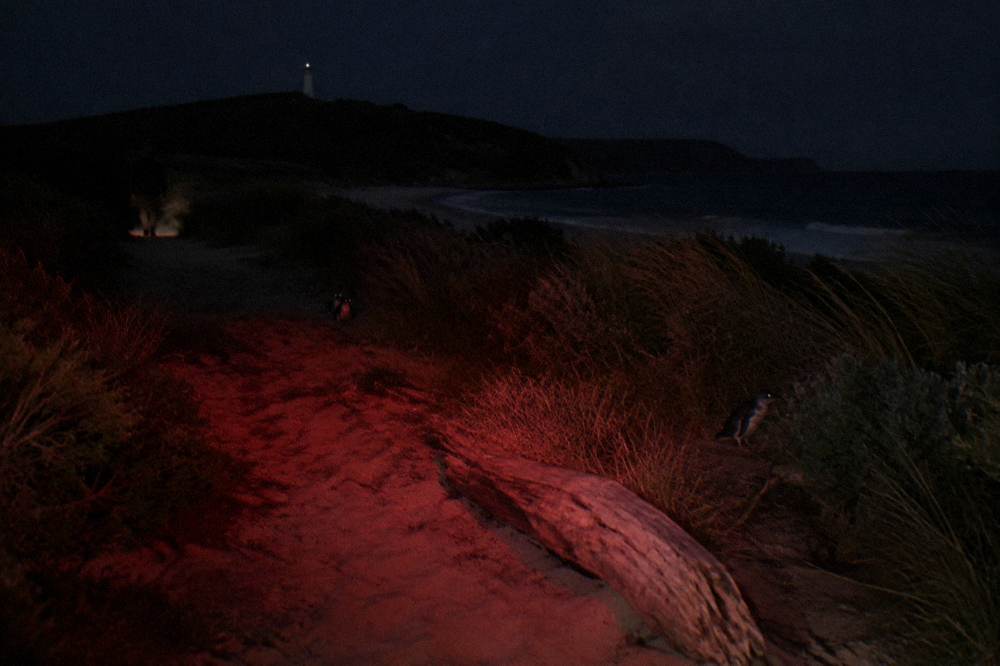
The rules are the same whether you are at the Neck, Lillico Beach, Burnie, or any other free viewing platform. Guided tours handle the red torches for you and brief the group before you step onto the beach, which is one reason many first-time visitors prefer a tour over a self-guided attempt.
What Else Should I Know Before Visiting?
A few practical points make the difference between a rewarding evening and a cold, disappointing one. Dress warmly, check the ferry timetable, and bring binoculars if you have them. Plan to be self-sufficient at the Neck platform for at least an hour after dark. A red headlamp leaves your hands free and is more practical than a handheld torch.
First, dress warmly. Even in summer, the Neck can be windy after dark, and you will be standing still for an hour or more. A waterproof jacket, closed shoes, and long pants are sensible. The platform has no shelter, no toilets, and no drinking water, so plan accordingly.
Second, bring binoculars if you have them. The penguins often stage just beyond the breakers before coming ashore, and a pair of binoculars lets you watch the rafts of birds bobbing in the swell while you wait. A red headlamp is more practical than a handheld torch because it leaves your hands free.
Third, check the ferry timetable for your return journey. Last ferry times from Bruny to Kettering vary by season, so check the SeaLink timetable before you go, but in winter the gap can be tight. Confirm the final sailing on the SeaLink website before you drive to the Neck, and allow extra time for the drive back to Roberts Point in the dark.
If you are combining Bruny Island with a longer Tasmania itinerary, the east coast offers a completely different penguin experience. The Bicheno Penguin Tour is a private, guided walk that takes you into a rookery restored from near-collapse, and the operator’s knowledge of the colony’s history adds a layer of story that a self-guided platform cannot match. For a north-coast alternative, the Low Head tour from Launceston pairs a small-group viewing with a convenient transfer.
Both tours are bookable on the live listings, with free cancellation and clear meeting instructions. They are the two guided penguin experiences sold on this site, and each covers a different corner of Tasmania.
Common Questions About Seeing Penguins On Bruny Island
Can I See Penguins On Bruny Island?
Yes, you can see little penguins at dusk from the Neck Conservation Area viewing platform. It is free, self-guided, and named by Tasmania’s Parks and Wildlife Service. No tour or ticket is needed, but you must bring a red torch and follow the viewing rules.
Where On Bruny Island Can You See Penguins?
The only official viewing spot is the Neck Conservation Area platform, on the isthmus between North and South Bruny. There are no other developed viewing sites and no commercial penguin tours on the island.
Do I Need A Tour To See Penguins On Bruny Island?
No, you do not need a tour. The Neck platform is a free, public site. However, guided tours in other parts of Tasmania, such as the Bicheno Penguin Tour or the Low Head Penguin Tour from Launceston, offer a more reliable encounter with a trained guide.
What Time Do Penguins Come Ashore At The Neck?
Penguins return at dusk, roughly within an hour of sunset. Times range from about 6:20 pm in early October to 8:50 pm in late December, and back to around 7:30 pm by March. Arrive 30 minutes before sunset.
Are There Any Facilities At The Neck Platform?
There are no toilets, no shelter, and no drinking water at the Neck platform. The car park is free, and the boardwalk is accessible, but you need to bring everything you require for an hour or more outdoors after dark.
What Are The Penguin Viewing Rules?
Use only a dim red torch, never a flash or white light. Stay at least three metres from burrows, keep quiet, and never touch or chase a penguin. Dogs and cats are not permitted, even on a leash. The full guidelines are published by NRE Tasmania.